

Ashwagandha (Withania somnifera) works primarily by downregulating the hypothalamic-pituitary-adrenal (HPA) axis, reducing cortisol output, and engaging GABA receptor systems to produce its well-documented stress-relieving and calming effects. The pharmacological term for this multi-pathway activity is adaptogenic neuroendocrine modulation, and it is driven by a class of steroidal lactones called withanolides. Understanding ashwagandha's mechanism of action matters because it explains why the herb affects everything from morning cortisol levels to sleep architecture, and why the quality of the extract you choose determines how much of that benefit you actually get.
How does ashwagandha affect the HPA axis and cortisol levels?
The HPA axis is the body's central stress-response circuit. When the brain perceives a threat, the hypothalamus releases corticotropin-releasing hormone (CRH), which signals the pituitary to release adrenocorticotropic hormone (ACTH), which then triggers the adrenal glands to secrete cortisol. Chronic activation of this cascade keeps cortisol elevated, contributing to anxiety, poor sleep, weight gain, and immune suppression.
Ashwagandha interrupts this cascade at multiple points. Withanolides, particularly withaferin A, appear to interact with glucocorticoid receptors in a way that reduces the sensitivity of the HPA axis to ongoing stress signals. The result is a measurable drop in circulating cortisol, especially the morning cortisol spike that sets the hormonal tone for the entire day.

Human clinical evidence supports this mechanism directly. A systematic review and meta-analysis published in BJPsych Open found statistically significant reductions in cortisol, Hamilton Anxiety Scale scores, and Perceived Stress Scale scores after eight weeks of supplementation compared to placebo. Eight weeks is the threshold worth remembering: effects on cortisol biomarkers are measurable by that point, even when subjective quality-of-life improvements may take longer to appear.
Key findings from randomized controlled trials on HPA axis modulation include:
- Reduced serum cortisol concentrations versus placebo in multiple trials
- Improved scores on validated anxiety scales including the Hamilton Anxiety Rating Scale
- Lower perceived stress scores on the Perceived Stress Scale (PSS)
- Reduced morning cortisol, the most clinically relevant cortisol measurement for HPA axis tone
The NIH Office of Dietary Supplements confirms that withanolides drive many of ashwagandha's effects, though it notes that the precise receptor-level mechanisms are not yet fully characterized in humans. This distinction matters: the cortisol reduction is well-established in human trials, but the exact molecular handshake between withaferin A and glucocorticoid receptors is still being mapped in preclinical models.
What role do GABA pathways play in ashwagandha's calming effects?
GABA (gamma-aminobutyric acid) is the brain's primary inhibitory neurotransmitter. When GABA binds to GABA-A receptors, it reduces neuronal excitability, producing feelings of calm and facilitating sleep. Benzodiazepines like diazepam work by enhancing GABA-A receptor activity, which is why understanding ashwagandha's relationship with this system is significant.
Preclinical research shows that ashwagandha compounds act as GABA-A receptor agonists, directly activating the receptor rather than simply modulating it. In animal studies, GABA-A receptor antagonists blocked the sedative currents induced by ashwagandha extracts, confirming that this pathway is a genuine mechanism rather than a secondary effect. This is the biological basis for ashwagandha's reputation as a sleep-supporting supplement.
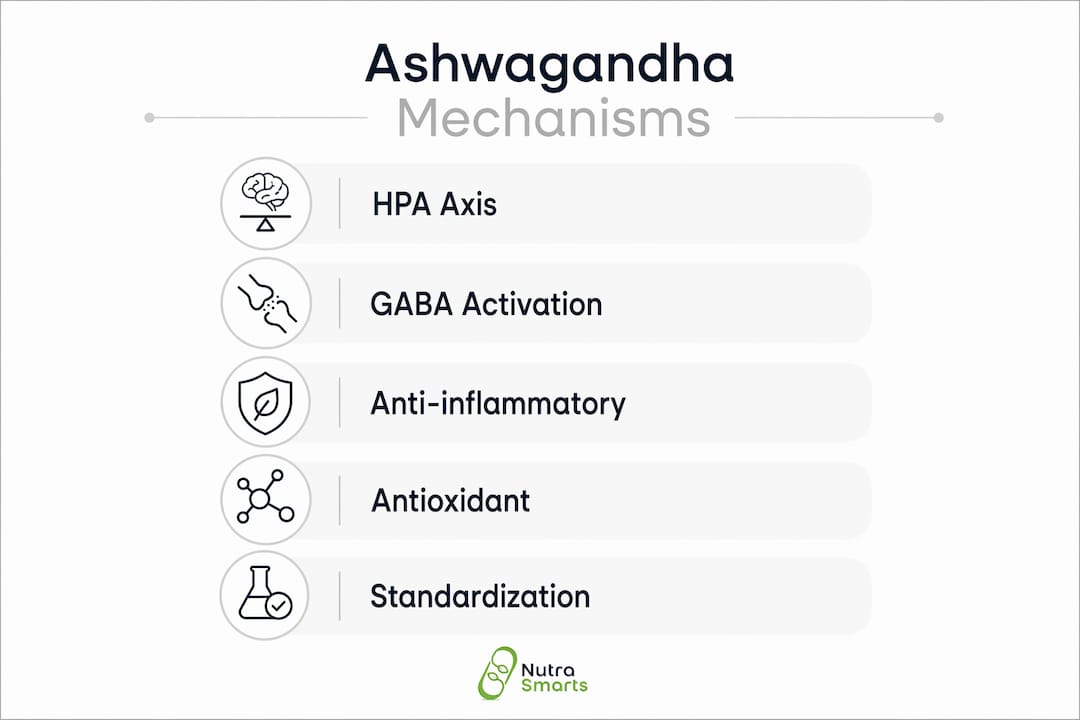
The GABAergic pathway also connects to ashwagandha's anxiolytic properties. Anxiety is partly driven by excessive neuronal firing in the amygdala and prefrontal cortex. By enhancing inhibitory tone through GABA-A receptors, ashwagandha compounds reduce this overactivity. You can explore how GABA receptor activity translates into measurable anxiety relief to understand why this mechanism is so clinically relevant.
There is also emerging evidence that ashwagandha influences serotonergic pathways, which regulate mood, appetite, and sleep cycles. While this mechanism is less characterized than the GABAergic one, it may explain why some users report mood improvements that go beyond simple stress reduction.
Here is a step-by-step view of how the GABAergic mechanism produces calming effects:
- Withanolide compounds from ashwagandha cross the blood-brain barrier.
- These compounds bind to GABA-A receptor sites in the central nervous system.
- Receptor activation increases chloride ion influx into neurons.
- Increased chloride influx hyperpolarizes the neuron, reducing its firing rate.
- Reduced neuronal excitability in stress-related brain regions produces anxiolytic and sedative effects.
Pro Tip: If you are taking ashwagandha primarily for sleep, look for products standardized to withanolide content and take them 30 to 60 minutes before bed to align the GABAergic activity with your sleep window.
How do antioxidant and anti-inflammatory mechanisms contribute?
Chronic stress and elevated cortisol generate oxidative stress, a state where free radicals outpace the body's antioxidant defenses. This oxidative burden accelerates cellular aging, promotes systemic inflammation, and contributes to conditions ranging from metabolic dysfunction to neurodegeneration. Ashwagandha addresses this through two coordinated molecular pathways.
The first is the suppression of NF-κB and MAPK signaling. These are master regulators of the inflammatory response. When withanolides downregulate NF-κB and MAPK pathways, the production of pro-inflammatory cytokines like TNF-alpha and interleukin-6 decreases. This anti-inflammatory action has neuroprotective implications, since neuroinflammation is a driver of cognitive decline and mood disorders.
The second pathway involves Nrf2 activation. Nrf2 is a transcription factor that switches on the body's internal antioxidant defense genes, including those coding for superoxide dismutase and glutathione peroxidase. Ashwagandha constituents activate Nrf2, effectively upregulating the body's own antioxidant machinery rather than simply supplying exogenous antioxidants.
| Mechanism | Target | Observed Effect |
|---|---|---|
| NF-κB suppression | Pro-inflammatory cytokines | Reduced systemic inflammation |
| MAPK pathway inhibition | Cellular stress signaling | Lower inflammatory marker levels |
| Nrf2 activation | Antioxidant defense genes | Increased SOD and glutathione activity |
| HPA axis modulation | Cortisol secretion | Reduced stress-driven oxidative load |
These anti-inflammatory and antioxidant effects are particularly well-documented in preclinical models, with some human data supporting reductions in C-reactive protein and other inflammation markers. The practical implication is that ashwagandha's health benefits extend beyond stress relief into broader metabolic and immune health territory.
Why does ashwagandha's efficacy vary between products and people?
Not all ashwagandha supplements produce the same results, and the reason is biochemical. The chemical composition of ashwagandha extracts differs significantly depending on whether the product uses root only, leaf only, or a root-plus-leaf combination. Root extracts contain a different withanolide profile than leaf extracts, and the two are not interchangeable in terms of physiological activity. Most clinical trials use root-only extracts, so comparing a root-plus-leaf product to trial data is not straightforward.
Standardization is the key variable. A product standardized to 5% withanolides delivers a predictable dose of active compounds. An unstandardized product might contain anywhere from negligible to high withanolide concentrations depending on the harvest, processing method, and storage conditions. Shoden®, for example, is standardized to 35% withanolide glycosides, which is among the highest concentrations available commercially and explains why it appears in clinical research at lower absolute doses than conventional root extracts.
Recent genomic research adds another layer of complexity. Scientists have identified gene clusters including CYP87G1, CYP749B2, CYP88C7, and CYP88C10 that code for the enzymes responsible for withanolide biosynthesis. This discovery has implications for supplement manufacturing: metabolically engineered yeast can now produce withanolide intermediates that match plant-derived compounds, opening the door to more consistent and scalable production.
The multi-pathway nature of ashwagandha also explains individual variability in response. Someone with primarily HPA axis dysregulation may respond strongly to cortisol-lowering effects within four to six weeks. Someone whose primary issue is sleep disruption driven by GABAergic deficits may notice sleep improvements first. A person dealing with chronic inflammation may see the most benefit from the Nrf2 and NF-κB mechanisms over a longer timeframe.
Pro Tip: When comparing ashwagandha products, always check the certificate of analysis for withanolide percentage. A product listing "500 mg ashwagandha root extract" without a standardization percentage tells you almost nothing about its actual potency.
If you want to see how ashwagandha compares to other adaptogens that work through different mechanisms, the ashwagandha vs Rhodiola comparison breaks down the mechanistic differences clearly.
Key takeaways
Ashwagandha works through at least three distinct biological pathways simultaneously: HPA axis suppression, GABA-A receptor activation, and Nrf2-driven antioxidant upregulation, which is why extract standardization determines whether you get clinical-grade results or an expensive placebo.
| Point | Details |
|---|---|
| HPA axis modulation | Withanolides reduce cortisol secretion, with measurable effects confirmed in human trials by eight weeks. |
| GABAergic mechanism | Ashwagandha compounds activate GABA-A receptors, producing anxiolytic and sleep-promoting effects in preclinical models. |
| Anti-inflammatory pathways | NF-κB and MAPK suppression combined with Nrf2 activation reduces oxidative stress and systemic inflammation. |
| Extract standardization | Root-only vs. root-plus-leaf extracts have different withanolide profiles; always check standardization percentages. |
| Multi-pathway variability | Individual responses differ based on which biological pathway is most relevant to a person's health profile. |
Why mechanism knowledge changes how I think about ashwagandha
At Nutrasmarts, we review hundreds of supplement ingredients every year, and ashwagandha is one of the few where the mechanistic picture actually changes the practical advice in meaningful ways.
The most common mistake I see is people buying the cheapest ashwagandha product available and then concluding the herb does not work. They are often right that their specific product did not work. An unstandardized extract with minimal withanolide content will not modulate your HPA axis in any clinically meaningful way. The mechanism requires a threshold dose of active compounds, and most budget products do not deliver it.
The second misconception is expecting immediate results. Cortisol regulation through HPA axis adaptation takes time. The meta-analysis data shows significant effects at eight weeks, not eight days. People who quit after two weeks are abandoning the protocol before the biology has had time to respond.
What I find genuinely interesting about ashwagandha is that its multi-pathway mechanism means it works differently for different people, and that is not a weakness. It is a feature of a compound that engages the body's own regulatory systems rather than overriding them. The ongoing genomic research into withanolide biosynthesis suggests we are still in early days of understanding exactly how this plant works, and that future standardized extracts may be considerably more precise than what is available today.
— NutraSmarts
Find science-backed supplements for stress, sleep, and metabolic health
If understanding ashwagandha's mechanisms has you thinking more carefully about what you put in your body, Nutrasmarts is built for exactly that mindset.

Nutrasmarts maintains a database of over 800 ingredients, each linked to peer-reviewed studies and clinical trial citations. You can search supplements by symptom to find options targeting anxiety, stress, or sleep, with evidence grades attached to each recommendation. For those focused on hormonal balance and cortisol management, the metabolic health picks section reviews 130 products with the same scientific rigor applied here. Every recommendation is grounded in the kind of mechanistic evidence this article covers, not marketing claims.
FAQ
What is ashwagandha's primary mechanism of action?
Ashwagandha primarily works by modulating the HPA axis to reduce cortisol secretion and by activating GABA-A receptors to produce calming effects. Both mechanisms are driven by withanolides, the herb's key bioactive compounds.
How long does ashwagandha take to lower cortisol?
Human clinical trials show statistically significant cortisol reductions by eight weeks of consistent supplementation. Effects on anxiety scores may appear earlier, but cortisol biomarker changes require sustained use.
Does ashwagandha work the same as a sedative?
Ashwagandha activates GABA-A receptors similarly to how sedatives work, but with a much milder effect profile and without the dependency risks associated with pharmaceutical GABAergic drugs like benzodiazepines.
Why do some ashwagandha supplements work better than others?
Extract standardization determines potency. Products standardized to a specific withanolide percentage deliver consistent active compound doses, while unstandardized products vary widely in actual biological activity.
Is ashwagandha's anti-inflammatory effect proven in humans?
The NF-κB and Nrf2 mechanisms are well-established in preclinical models, with some human data supporting reductions in inflammatory markers like C-reactive protein. Robust large-scale human trials on inflammation specifically are still limited.