
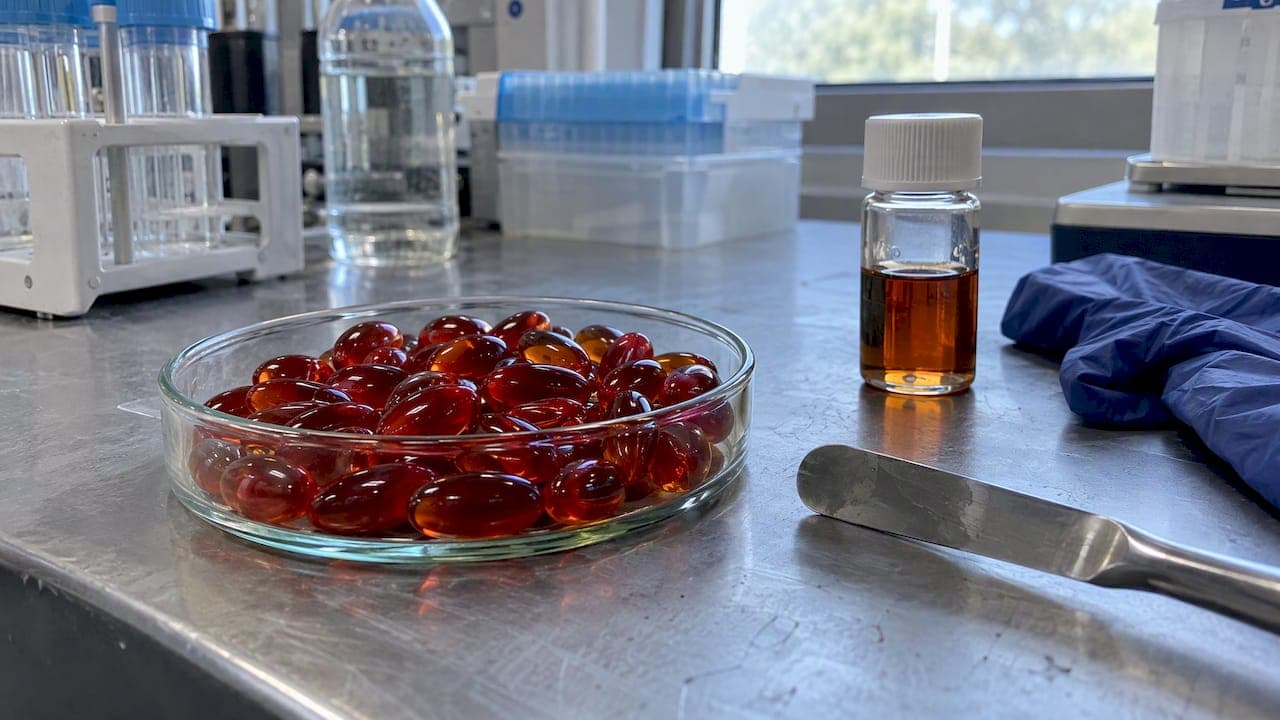
Current human research supports astaxanthin for a few specific outcomes rather than as a general health fix. The clearest signals show up in oxidative-stress biomarkers, skin moisture and elasticity, and modest lipid changes in people with prediabetes or dyslipidemia. Overall certainty is low to moderate because trials are small and dosing varies widely. Across randomized controlled trials, astaxanthin has generally been well tolerated.
TL;DR:
- Benefits are most supported for skin moisture and elasticity, with moderate effects observed after eight to twelve weeks of supplementation at doses of 12 milligrams per day or higher.
- Lipid and inflammatory marker improvements, such as reduced LDL cholesterol and CRP, are evident mainly from longer trials of at least 12 weeks using doses above 12 milligrams daily.
- Evidence for eye health, cognition, or lifespan extension remains preliminary, relying on mechanistic reasoning or animal studies without confirmed human data.
- Most trials report good tolerability with occasional mild gastrointestinal side effects, but people on medications or pregnant should consult a healthcare professional first.
- Variability in study design and supplement formulations limits definitive conclusions, emphasizing the need for standardized dosing and transparent reporting in future research.
Table of Contents
- Quick evidence snapshot: meta-analyses and major RCTs
- Skin and cosmetic outcomes
- Cardiometabolic and lipid effects
- Reproductive outcomes and fertility trials
- Eye and brain signals: retinal protection and cognition
- Animal lifespan and aging studies: what they do and do not prove for humans
- Dosage, bioavailability, formulations, and safety
- Study quality, heterogeneity, and research gaps
- NutraSmarts perspective: how to interpret and act on the evidence
- Check the research before you buy astaxanthin
- FAQ
- Sources
Quick evidence snapshot: meta-analyses and major RCTs
Pooled data give a more consistent picture than any single trial. A systematic review and meta-analysis of human skin studies found that oral astaxanthin meaningfully improved skin moisture and elasticity, while a separate 24-week randomized trial in prediabetes and dyslipidemia reported reductions in LDL and total cholesterol alongside shifts in cardiovascular risk markers. A 2026 GRADE-assessed meta-analysis in overweight and obese adults pooled 16 trials and 694 participants and reported improvements in oxidative stress, inflammation, and several lipid parameters.
A pattern emerges across these pooled analyses: benefits cluster around specific dose and duration combinations rather than appearing uniformly.
- Trials lasting 12 weeks or longer tend to show stronger biomarker changes than shorter studies.
- Doses at or above 12 milligrams per day appear more often in trials with positive lipid and inflammatory findings.
- Oxidative-stress markers (MDA, SOD, TAC) respond more consistently than hard clinical endpoints like cardiovascular events.
- Many outcomes in the 2026 meta-analysis carried low-to-very-low certainty ratings, reflecting small sample sizes and inconsistent methods.
The 2026 meta-analysis of 694 participants across 16 trials found reductions in markers like MDA, CRP, and IL-6, with subgroup analyses showing stronger effects at doses of 12 milligrams per day or higher sustained for 12 weeks or more, according to the GRADE-assessed review. That dose-duration relationship repeats across the skin, lipid, and reproductive literature, which is why the sections below treat it as a recurring theme rather than a one-off finding.
Skin and cosmetic outcomes
Skin is where astaxanthin has the most consistent human trial support, though even here the picture is uneven. The 2021 systematic review and meta-analysis pooled nine human studies and found a standardized mean difference of 0.53 for skin moisture and 0.77 for elasticity, both statistically significant. Wrinkle depth, by contrast, did not improve significantly across the pooled data.
The mechanistic rationale fits what researchers already know about carotenoids: astaxanthin's antioxidant and anti-inflammatory activity may protect collagen and skin barrier function from oxidative damage, particularly from UV exposure, as detailed in this photobiomodulation benefits overview. Oral supplementation appears to outperform topical application for these systemic effects, likely because ingested astaxanthin reaches the dermis through circulation rather than relying on penetration through the skin's outer layers.
- Pooled moisture improvement reached a statistically significant standardized mean difference indicating moderate benefit, with a confidence interval supporting this effect.
- Pooled elasticity improvement reached a statistically significant standardized mean difference indicating moderate benefit, with a confidence interval supporting this effect.
- Wrinkle depth showed no statistically significant pooled change across the included trials.
A meta-analysis of nine human studies found significant gains in skin moisture and elasticity but not wrinkle reduction, according to the skin aging review, which means consumers chasing smoother, less dry skin have more trial support than those expecting fewer visible wrinkles. Trial regimens in this body of evidence generally ran for eight to twelve weeks, which is a reasonable minimum window to expect any visible change. Readers comparing options can see how astaxanthin stacks up against other ingredients on our skin health supplements page.
Cardiometabolic and lipid effects
The strongest cardiometabolic signal comes from a 24-week, double-blind, placebo-controlled trial in adults with prediabetes and dyslipidemia. That study found LDL cholesterol fell by an average of 0.33 millimoles per liter and total cholesterol fell by 0.30 millimoles per liter, alongside changes in fibrinogen, fetuin A, and L-selectin, three markers tied to cardiovascular risk, according to the prediabetes and dyslipidemia trial. The same trial reported trends toward improved insulin sensitivity, though the primary glycemic endpoint did not reach conventional statistical significance.
Broader meta-analytic data reinforce a modest but real effect on lipids. The 2026 cardiometabolic meta-analysis reported reductions in triglycerides and total cholesterol alongside increases in HDL, with the clearest signals in trials using doses of 12 milligrams per day or more for at least 12 weeks.
- LDL cholesterol dropped by a small but statistically significant amount in the 24-week trial.
- Total cholesterol dropped by a small but statistically significant amount over the same period.
- Insulin sensitivity trends were observed but did not reach statistical significance.
- Pooled data from 694 participants showed reductions in triglycerides and increases in HDL at higher doses.
A 24-week randomized trial reported LDL and total cholesterol reductions alongside favorable shifts in cardiovascular risk markers, according to this prediabetes study. These are biomarker changes, not confirmed reductions in heart attacks or strokes, so the clinical significance remains a step removed from hard outcomes. Readers tracking metabolic markers can browse evidence-rated options on our metabolic health supplements page.
Reproductive outcomes and fertility trials
Two overlapping randomized trials in women with endometriosis undergoing assisted reproductive technology offer the most specific reproductive evidence available. Both used 6 milligrams per day for 12 weeks and measured oxidative stress in follicular fluid alongside oocyte and embryo quality. The 2024 trial and a related 2023 triple-blind RCT both reported increased total antioxidant capacity and superoxide dismutase, reduced malondialdehyde, and improvements in the number of oocytes retrieved and high-quality embryos formed.
Neither trial found a clear difference in clinical pregnancy rates between astaxanthin and placebo groups. Sample sizes hovered around 50 participants in each study, which limits statistical power to detect differences in live-birth or pregnancy outcomes even if a real effect exists.
- Both RCTs used 6 milligrams per day for 12 weeks in women with endometriosis undergoing ART.
- Follicular fluid antioxidant capacity and SOD activity increased in the astaxanthin groups.
- Oocyte numbers and high-quality embryo counts improved, but pregnancy rates showed no clear difference.
These findings position astaxanthin as a plausible adjunct for women undergoing fertility treatment, best discussed with the clinician managing the ART cycle rather than self-directed. Readers researching fertility-focused options can compare evidence on our fertility supplements page.
Eye and brain signals: retinal protection and cognition
Human evidence for eye and cognitive outcomes is thinner than for skin or lipids, resting mostly on small trials and mechanistic plausibility rather than large confirmatory studies. Astaxanthin crosses the blood-retinal barrier and accumulates in retinal tissue, which gives a biological rationale for interest in visual function and age-related eye changes, but confirmatory trials with hard visual or cognitive endpoints remain limited.
- Small trials have explored visual fatigue and accommodation, with some reporting modest subjective improvements.
- The antioxidant and anti-inflammatory activity seen in other tissues provides a plausible mechanism for retinal protection.
- Cognitive endpoints have not been studied with the same depth or sample size as skin or lipid outcomes.
Until larger trials with objective visual and cognitive measures are completed, this remains one of the more tentative areas of astaxanthin research. Readers interested in evidence for eye-focused ingredients can review comparisons on our eye health supplements page.
Animal lifespan and aging studies: what they do and do not prove for humans
Mouse studies have reported that astaxanthin supplementation extended median lifespan in male mice, a finding that generated interest in astaxanthin as a longevity compound. These results are hypothesis-generating rather than conclusive for humans, and translating a mouse dose into a human equivalent is not a simple linear conversion, since body size, metabolic rate, and absorption pathways differ substantially between species.
- Mouse lifespan extension studies used specific formulations that may not match what is sold in consumer supplements.
- Pharmacokinetic differences between rodents and humans make direct dose translation unreliable.
- No human longevity trial has replicated these findings, and none would be feasible within a normal research timeline.
Animal aging data are useful for generating research questions, not for setting a human dosing recommendation or promising a lifespan benefit.
Dosage, bioavailability, formulations, and safety

Trial doses across the astaxanthin literature range widely, from about 4 milligrams per day up to 24 milligrams per day, with the strongest biomarker signals clustering at doses of 12 milligrams per day or higher sustained for 12 weeks or longer, based on subgroup patterns in the 2026 meta-analysis. Because astaxanthin is fat-soluble, absorption improves meaningfully when taken alongside a meal containing dietary fat rather than on an empty stomach.
Formulation matters too. Most human trials use astaxanthin derived from the microalga Haematococcus pluvialis, and products vary between esterified and free forms, which can affect how much reaches circulation. Safety data from the RCTs reviewed here consistently describe astaxanthin as well tolerated, with occasional mild gastrointestinal complaints and no serious adverse events reported.
- Trial doses ranged from roughly 4 to 24 milligrams per day, with stronger effects at 12 milligrams or more.
- Taking astaxanthin with a fat-containing meal supports better absorption given its lipid solubility.
- Haematococcus pluvialis is the source used in most clinical trials, with esterified and free forms varying in bioavailability.
- Reported adverse events were generally mild, most often gastrointestinal, with no serious safety signals in the trials reviewed.
Pro Tip: Check whether a supplement label specifies the astaxanthin source and form, since trial results don't automatically transfer to products using different extraction or esterification methods.
Pregnant individuals, people on blood thinners or other medications, and anyone managing a chronic condition should talk to a clinician before starting astaxanthin, since none of the trials above were designed to establish safety in those groups specifically.
Study quality, heterogeneity, and research gaps
The biggest obstacle to stronger conclusions is not a lack of interest but a lack of methodological consistency. Trials range from a handful of participants to several hundred, use doses anywhere from 2 to 40 milligrams per day, and run anywhere from a few days to several months. That variability makes it difficult to pool results cleanly or to say with confidence which dose and duration combination works best for a given outcome.
- Sample sizes in many trials remain small, often under 60 participants, limiting statistical power.
- Dosing and duration vary enormously across studies, undermining direct comparison.
- Many trials rely on surrogate biomarkers (MDA, SOD, TAC) rather than hard clinical endpoints like cardiovascular events or live births.
- Selective outcome reporting and limited preregistration reduce confidence in some positive findings.
Future trials would benefit from standardized dosing arms, follow-up periods extending well past 12 weeks, and endpoints that matter clinically rather than only biochemically. Preregistration and transparent reporting of the exact formulation used would also let researchers and readers compare studies on equal footing rather than guessing whether a "positive" trial used the same astaxanthin as the one before it.
NutraSmarts perspective: how to interpret and act on the evidence
The honest read of this evidence is that astaxanthin earns a place as a targeted, evidence-supported adjunct rather than a broad wellness cure. Skin moisture and elasticity, oxidative-stress markers, and modest lipid changes have the most consistent human trial support. Eye, cognitive, and longevity claims lean heavily on mechanism and animal data that have not yet translated into confirmed human benefit.
We think the responsible approach is to treat astaxanthin as one tool among several, verify the dose and source against what trials actually used, and loop in a clinician before combining it with medications or using it during pregnancy or chronic illness management.
— NutraSmarts
Check the research before you buy astaxanthin
Reading trial data is one thing. Matching it against what's actually on a supplement label is another problem entirely, since many products use doses or forms that don't match what researchers tested. Our astaxanthin ingredient profile breaks down the clinical citations and dosage benchmarks referenced throughout this article in one place, so you can see exactly which trial supports which claim.
For anyone formulating a product or simply curious whether a label matches trial-tested amounts, our free Supplement Facts label creator generates an FDA-compliant label without spreadsheets or guesswork about formatting rules. It works whether you're checking your own supplement stack or building a product from scratch. Start with the astaxanthin research page to see the dosage ranges tied to each outcome covered here.
This article is general information, not a substitute for advice from a qualified doctor. Consult a qualified healthcare professional about your own circumstances before acting on anything here.

FAQ
Are the claims about astaxanthin true?
Some claims hold up better than others under scrutiny. Human trials support moderate improvements in skin moisture, elasticity, and oxidative-stress markers, along with modest lipid changes in people with dyslipidemia, according to meta-analytic data, but claims about longevity or cognitive enhancement rest mostly on animal studies and mechanistic reasoning rather than confirmed human outcomes.
What does the Mayo Clinic say about astaxanthin?
This article does not reference Mayo Clinic guidance directly, and we recommend checking a primary medical source for their current position rather than relying on a secondhand summary. For dosage and safety information grounded in clinical trials, our astaxanthin ingredient profile compiles the peer-reviewed research referenced throughout this piece.
Is there a downside to taking astaxanthin?
Across the randomized trials reviewed here, astaxanthin was generally well tolerated, with occasional mild gastrointestinal complaints and no serious adverse events reported in the prediabetes and dyslipidemia trial. People who are pregnant, on blood-thinning medication, or managing a chronic condition should still consult a clinician first, since trial populations did not specifically include those groups.
Does astaxanthin raise estrogen?
None of the randomized trials reviewed for this article measured estrogen levels as an outcome, so there is no direct human trial evidence either confirming or ruling out an effect on estrogen. The reproductive trials available focused on antioxidant markers and oocyte quality in women with endometriosis rather than hormone levels, according to the fertility RCTs discussed above.
Sources
- Systematic review and meta-analysis on the effects of astaxanthin on human skin ageing
- Astaxanthin supplementation and cardiometabolic risk factors in overweight and obese adults: a GRADE-assessed systematic review and meta-analysis