
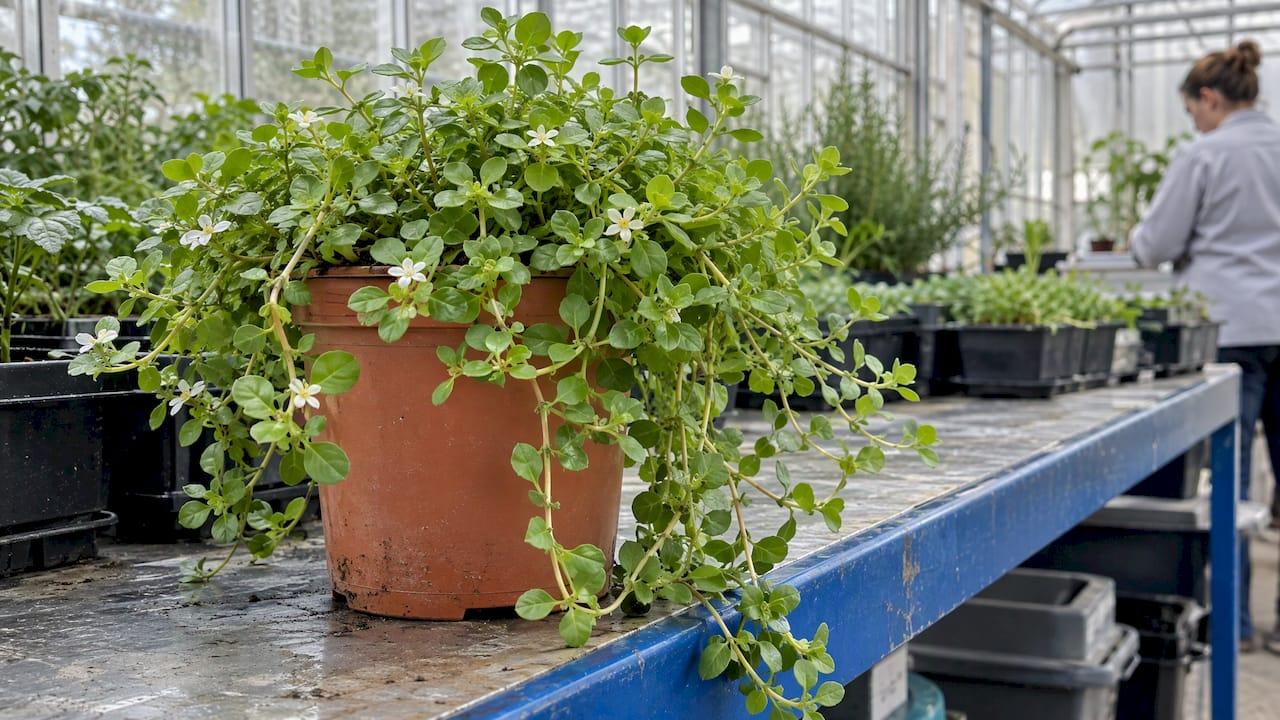
Bacopa monnieri has some of the most-studied human data of any memory herb, and the picture is mixed. Several randomized trials report better verbal learning and delayed recall after about 12 weeks at 300 mg of extract per day. Others find no difference from placebo, and the largest reviews call the overall evidence limited. Below, we go through what was tested, at what dose, for how long, and what to check if you are considering it.
TL;DR
- The best-known positive result is a trial of healthy adults over 55 who took 300 mg/day of a standardized extract for 12 weeks and improved on verbal learning and delayed recall.
- A 2012 review of six 12-week trials found gains on 9 of 17 memory free-recall tests and little change in other cognitive domains.
- Larger meta-analyses and a 2025 trial in adults with memory complaints were far less positive, so expect modest effects at most.
- Studies point to about 12 weeks of daily use before judging results, at doses of 300 to 450 mg of extract.
- Bacopa can interact with some medications, including anticholinergic, cholinergic and thyroid drugs. Talk to your pharmacist or physician first.
Table of Contents
- What the human trials actually measured
- The strongest positive trial: older adults and word recall
- What the systematic reviews found
- A recent trial that did not find a benefit
- What about Alzheimer's and dementia?
- Dose, extract and timing used in studies
- Safety and interactions
- Who is most likely to find the research relevant
- Our perspective
- Check the evidence for your own goal
- FAQ
- Sources
What the human trials actually measured
Most bacopa research is not about "memory" in general. Trials pick specific tests, usually word-list tasks, and report whether scores moved. That detail matters when you read a headline.
The typical design: adults take a standardized extract daily for about 12 weeks, and researchers compare their scores with a placebo group on tests of verbal learning, delayed recall, attention and processing speed. Some trials test healthy young adults, some healthy older adults, and a few people with age-related memory complaints or dementia.
Because each study chose different tests, results are hard to stack neatly. A meta-analysis by Brimson and colleagues (2021) noted that no two studies found significant changes on the same neuropsychological tests. Most found only one or two memory measures improved, and those changes were small. That raises the chance that some findings are statistical noise, because many variables were tested at once.
The strongest positive trial: older adults and word recall
The study most often cited in favor of bacopa is a randomized, double-blind, placebo-controlled trial by Morgan and Stevens in healthy Australians over 55. It enrolled 98 people, and 81 completed it. Participants took 300 mg/day of the BacoMind extract for 12 weeks.
The group taking bacopa did significantly better on the Rey Auditory Verbal Learning Test, which measures how many words you learn across repeated trials and how many you can recall after a delay. Verbal learning, memory acquisition and delayed recall all improved. Other measures in the same study, including the Complex Figure Test, the MAC-Q self-rating and the Trail Making Test, did not differ significantly between groups.
The Merck Manual's bacopa entry describes similar findings from other small trials. In one, 54 adults aged 65 or older without signs of dementia took 300 mg daily and improved on memory tests compared with placebo. In another, 60 medical students in India took 150 mg of standardized extract twice daily for 6 weeks. They improved on some memory and cognitive tests but not others.
Take from this: the signal is real enough to keep researchers interested, and it shows up most clearly for learning and recalling word lists, in older adults, after about three months. It is a narrower claim than "bacopa boosts memory."

What the systematic reviews found
Reviews pool trials to see whether a pattern holds. Four are worth knowing.
| Review | What it pooled | Main finding |
|---|---|---|
| Pase et al., 2012 | Six randomized trials, 12 weeks each, 300 to 450 mg/day | Improvement on 9 of 17 memory free-recall tests; little evidence of enhancement in other cognitive domains |
| Kongkeaw et al., 2014 | Nine randomized, placebo-controlled trials, 518 subjects | Shorter Trail B time and faster choice reaction time; authors point to speed of attention |
| Brimson et al., 2021 | 11 studies, 645 healthy adults | Very little effect on memory and attention overall; one significant outcome, logical memory, with publication bias risk |
| Alzheimer's Discovery Institute summary, 2024 | A systematic review of 22 clinical trials in varied populations | Promising, but trials varied widely in dose and duration and tended to be small or not rigorous |
Reading the numbers fairly
The Kongkeaw analysis reported that bacopa shortened the Trail B test by 17.9 ms and decreased choice reaction time by 10.6 ms, both statistically significant. Those are tiny differences in milliseconds. Statistical significance and everyday usefulness are not the same thing, and the authors themselves say a large, well-designed head-to-head trial using a standardized preparation would be needed for definitive data.
The Brimson meta-analysis is the most cautious. Its one significant result, logical memory, had a large effect size (SMD 1.11) but a wide confidence interval (0.43 to 1.80) and a risk of publication bias. When a single outcome out of many reaches significance, researchers treat it as a lead to confirm, not a conclusion.
The pattern across all four: when pooled, results lean toward verbal memory and processing speed, not toward a broad lift in thinking. That is consistent with how the studies were designed, so it is the most defensible way to describe bacopa today.

A recent trial that did not find a benefit
A 2025 randomized, double-blind, placebo-controlled trial tested a different extract, Bacumen, in 101 adults with self-reported memory and attention problems. Eighty-seven finished. After 12 weeks the bacopa group did not improve more than placebo on verbal learning (p=0.391), attention (p=0.713) or working memory (p=0.610). Stress reactivity was reduced in the bacopa group (p=0.03).
The Alzheimer's Discovery Institute also notes an open-label study of 320 mg of bacopa in 35 people that found no difference in cognition or mood after 3 months.
Why might trials disagree? Possible reasons include:
- Different extracts. Pase et al. found three different extracts across just six trials.
- Different people. Healthy older adults, healthy students and people with subjective memory complaints are not the same group.
- Different tests. A word-list test and an attention task measure different things.
- Small samples. Trials of 35 to 100 people can swing either way by chance.
This is the reason we show evidence ratings next to every ingredient rather than a single verdict. A mixed record is information you can plan around.
What about Alzheimer's and dementia?
The evidence in disease is thinner. The Merck Manual notes a systematic review of five randomized trials comparing bacopa with placebo or donepezil in people with Alzheimer disease. It reported no difference between treatments, though the trials were highly heterogeneous and had quality limitations.
If you or a family member has a diagnosed memory condition, bacopa is not a stand-in for prescribed treatment. Bring any supplement you are considering to the treating physician, especially since some Alzheimer's medications interact with it (more on that below).
Dose, extract and timing used in studies
Here is what the trials actually used, which is a better guide than marketing copy.
- Dose: The Pase review covered 300 to 450 mg of extract per day. The Operation Supplement Safety brain health guide reports that some research shows improvements with 300 to 320 mg/day, while other research shows no improvement, especially at higher amounts of 450 to 640 mg/day. It also concludes that higher serving sizes show no benefit over lower ones in the short term.
- Duration: Most positive trials ran 12 weeks. The Alzheimer's Discovery Institute summary says treatment for at least 3 months might be needed, although a couple of small trials saw immediate effects on a handful of tests.
- Extract: Studies use standardized extracts, not raw powder. Our database has profiles for several branded extracts, including BacoMind, Bacopin, Synapsa and BaCognize, so you can compare the clinical dosing attached to each.
A practical way to use this: match the label to what was studied. Look for a standardized extract, check the milligrams of extract per serving, and give it a full 12 weeks of consistent use before deciding anything. Tracking one or two concrete things, such as how many items you remember from a short list or how you do on a recurring task, is more informative than a general impression.
Safety and interactions
Bacopa is not risk-free, and the details sit with medications more than with the herb alone.
According to the Merck Manual, bacopa can increase acetylcholine. It may decrease the effect of anticholinergic medications and increase the adverse effects of cholinergic ones, such as medications for glaucoma or Alzheimer disease. It also advises that people taking thyroid hormone medications should not take bacopa.
A 2022 case report describes suspected cholinergic toxicity in a 58-year-old woman taking cevimeline after she used a supplement containing bacopa and phosphatidylserine. The authors hypothesized that bacopa's effects on CYP enzymes involved in cevimeline metabolism contributed. The report also stresses that herbal supplements are regulated differently from drugs, and that patients often do not mention them to clinicians.
The OPSS guide adds that the safety of both short-term and long-term bacopa use is uncertain, and that in multi-ingredient products it is nearly impossible to know which substance causes a benefit or an adverse event.
What to do with that:
- Tell your pharmacist or physician about bacopa before starting, especially if you take thyroid medication, glaucoma drops or pills, Alzheimer's medication, or anything with anticholinergic effects.
- Prefer single-ingredient products so any effect or reaction can be traced.
- Stop and contact a clinician if you notice new symptoms after starting.
Good supplement habits apply across the board. For another example of weighing benefits against open safety questions, see this look at melatonin and bone density after menopause.
Who is most likely to find the research relevant
The human data cluster around a few groups:
- Healthy adults over 55, where the best-known positive trials were run.
- Adults with everyday memory complaints, where results are mixed, as the 2025 trial shows.
- People focused on stress and attention, since stress reactivity and attention speed appeared in some results.
If you are a wellness coach, formulator or researcher, the useful move is to cite the specific trial, extract and dose rather than "bacopa" in general. Our bacopa monnieri ingredient page lays out dosage benchmarks and study citations, and our honest-evidence write-up on bacopa goes deeper on individual studies. If you are weighing it against another popular memory herb, the ginkgo evidence overview is a good companion read.
Our perspective
Bacopa is a good example of why evidence ratings matter. The same herb has a respectable positive trial in older adults, a cautious meta-analysis in healthy adults and a recent null result in people with memory complaints. Each is true. A good resource shows all of them.
That is how we build NutraSmarts. Every ingredient profile links to the underlying PubMed-cited studies, states the clinical dose used, and carries an honest evidence rating, across a database of 1,300+ ingredients and 3,000+ clinical trials. For bacopa, that means you can see which extract was tested, at how many milligrams, for how many weeks, and in whom, before you decide.
We think that is the most useful thing we can offer: the specifics of the evidence, free, with no sign-up and no hype, so you can judge whether a result applies to your situation.
NutraSmarts
Check the evidence for your own goal
If memory is one of several concerns, start from the symptom rather than the herb. Our free supplements-by-symptom search lets you look up concerns such as brain fog and see which ingredients have clinical support, and our ingredient database puts evidence ratings and dosage benchmarks side by side. There is no sign-up or paywall.
If you formulate products, the free Supplement Facts label creator builds FDA-compliant labels in your browser, so a bacopa extract at its studied dose goes on a clean, correct panel without spreadsheets.
FAQ
Does bacopa really help with memory?
Some small trials show a modest benefit, mostly on verbal learning and delayed recall in healthy adults, while the Merck Manual notes there are no high-quality studies showing bacopa improves memory or treats any disorder. Larger reviews and a 2025 trial found little or no effect in some groups. Treat it as a possible modest effect, not a guaranteed one.
How long does bacopa take to work?
Most trials ran 12 weeks, and the Alzheimer's Discovery Institute summary says treatment for at least 3 months might be needed. A few small trials saw immediate effects on a handful of tests. Plan on a consistent 12-week trial period before judging results.
What dose of bacopa was used in studies?
Pase et al. reviewed trials using 300 to 450 mg of extract per day. The OPSS guide reports benefits at 300 to 320 mg/day and notes that higher amounts did not show added benefit in the short term. Check the milligrams of standardized extract on the label, not just the herb's name.
Who should avoid bacopa?
Anyone taking thyroid hormone medication is advised against it by the Merck Manual. People on anticholinergic drugs or cholinergic drugs, such as glaucoma or Alzheimer's medications, should speak with a pharmacist or physician first. Safety during long-term use is uncertain, per the OPSS guide.
Sources
- Bacopa, Merck Manual Professional Edition
- Operation Supplement Safety Brain Health Guide
- Brimson et al. (2021), Scientific Reports
- Pase et al. (2012), Journal of Alternative and Complementary Medicine
- Kongkeaw et al. (2014), PubMed
- Morgan and Stevens, older Australians trial, PubMed
- Bacumen trial in adults with memory complaints (2025), PubMed
- Alzheimer's Discovery Institute, Bacopa monnieri
- Case report on suspected cholinergic toxicity with cevimeline