

For pure vasodilation and pump, plain L-citrulline is the simpler, cleaner choice because you know exactly how much active ingredient you're getting. For long, high-volume training sessions where fatigue matters more than vasodilation, citrulline malate has a plausible edge, though no dose-matched trial has proven it. The core rule: whichever form you pick, target about 6 to 8 grams of true citrulline, not the total weight of the citrulline malate blend itself.
TL;DR:
- Both citrulline malate and pure L-citrulline are effective at increasing nitric oxide, but current evidence does not clearly favor malate for performance benefits.
- Dosing accuracy depends on understanding ratios; true citrulline intake should be targeted at around 6 to 8 grams, regardless of product form.
- Studies show no significant advantage of citrulline malate over pure citrulline in strength or endurance outcomes when doses are matched.
- Proprietary blends or unlabeled ratios often lead to underdosing, underscoring the importance of checking label details before purchasing.
- Individual testing through personal trial protocols can reveal which form benefits your training more, as responses vary among lifters.
Table of Contents
- Citrulline Malate or Citrulline: A Quick Decision Checklist
- What Does the Clinical Evidence Actually Show?
- Why Might Malate Matter? The Biology Behind Both Forms
- How Much Should You Take, and When?
- Are There Side Effects or Interactions to Watch For?
- How Do You Calculate True Citrulline From a Citrulline Malate Label?
- Test It Yourself: Two Simple Training Protocols
- How NutraSmarts Reviews the Citrulline Research
- A Pragmatic Take on Citrulline Malate vs Citrulline
- Where to Check Citrulline Products Before You Buy
- Primary Sources Behind This Comparison
- Sources
Citrulline Malate or Citrulline: A Quick Decision Checklist
Most of this decision comes down to what you're training for and how much you care about precise dosing. Here's how to sort it out fast.
Choose pure L-citrulline when:
- You want label clarity. A bottle that says "citrulline 6,000 mg" tells you exactly what you're getting, with no ratio math required.
- Your priority is vasodilation and pump for shorter, moderate-volume lifting sessions.
- You've had GI discomfort with malate-containing products before and want to isolate the variable.
- You're stacking with other nitric oxide boosters and want to control the citrulline dose precisely.
Consider citrulline malate when:
- You're doing long, high-volume endurance or metabolic conditioning work where the malate component's role in energy metabolism might matter.
- The product clearly lists its ratio (2:1 or 1:1) so you can calculate true citrulline content.
- You want to test whether the malate addition changes how you feel during extended training compared to citrulline alone.
Before buying either, run three checks. First, look for the ratio on the label. Second, do the math to find actual citrulline grams, not total compound weight. Third, start with a lower dose for a few sessions to gauge GI tolerance before pushing to a full serving.
Pro Tip: If a citrulline malate label doesn't state a ratio anywhere, treat that as a red flag. Reputable brands specify 2:1 or 1:1 because the difference changes your real citrulline dose by nearly half.
The practical variable that matters most isn't which form you choose. It's whether you're actually getting enough true citrulline to matter, a point echoed by practitioners who focus on total citrulline intake over brand naming conventions. Get that number right first, then worry about which form delivers it.
What Does the Clinical Evidence Actually Show?
The evidence comparing citrulline malate to plain L-citrulline is thinner than supplement marketing suggests, and what exists doesn't clearly favor the malate version.
A 2024 randomized, double-blind, placebo-controlled crossover trial tested both forms head-to-head in 43 trained adults. The result: neither citrulline malate nor L-citrulline showed a significant advantage over placebo for maximal neuromuscular performance, ballistic strength, or strength-endurance in low- to moderate-volume sessions. Malate didn't outperform citrulline alone, and in this trial, neither outperformed doing nothing.
That's a meaningful data point given how often citrulline malate gets marketed as the superior, more "complete" option.
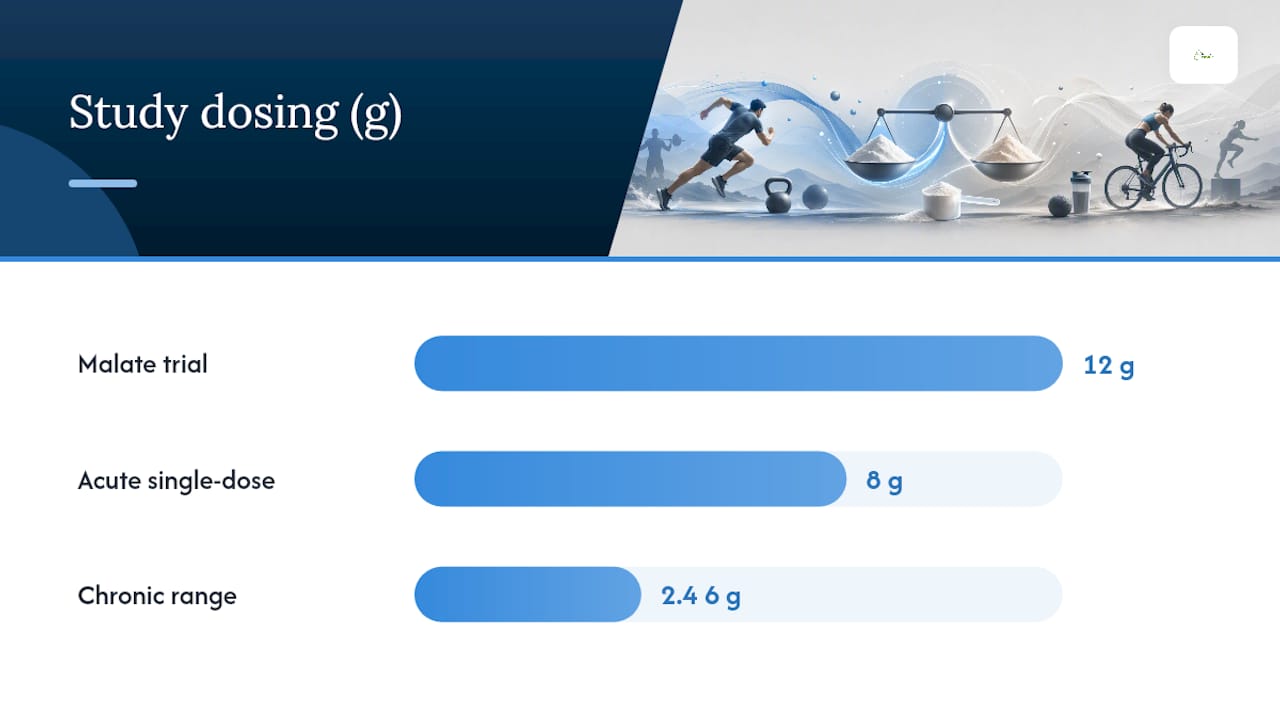
A longer trial tells a similar story. Over six weeks, resistance-trained men took either 8 grams of L-citrulline or 12 grams of citrulline malate at a 2:1 ratio (working out to roughly the same true citrulline dose). Both groups showed some improvement in upper-body muscular endurance compared to placebo, but the study found no consistent difference between the two forms across most outcomes measured. When you dose-match the citrulline content, the malate doesn't appear to add a measurable edge over the six-week window tested.
Zooming out to the review level, a 2021 critical analysis of citrulline malate research concluded that while a mechanistic rationale for malate exists, human evidence isolating a malate-specific effect is limited. The review's authors called for head-to-head, dose-matched trials, which is a polite academic way of saying: nobody has actually proven this yet.
A broader 2023 review looking at arginine, citrulline, and citrulline malate research found that 2.4 to 6 grams per day of citrulline over 7 to 16 days increased nitric oxide synthesis in some studies, while acute doses of 8 grams of citrulline malate produced inconsistent results. The consistent finding across chronic citrulline supplementation is more encouraging than the inconsistent single-dose data on citrulline malate specifically.
What meta-analyses generally agree on: pooled data shows a small ergogenic effect from citrulline supplements, roughly the equivalent of a few extra reps per set, and the certainty behind that effect is rated low to moderate. That's not nothing, but it's a modest, context-dependent benefit, not the dramatic pump-and-performance transformation supplement ads imply.
Here's the honest summary of where the science stands:
- No dose-matched head-to-head trial has proven citrulline malate outperforms plain L-citrulline for strength or endurance outcomes.
- Chronic citrulline dosing (both forms) shows more consistent benefits than acute single-dose citrulline malate.
- The malate contribution specifically remains an open research question, not a settled advantage.
- Pooled ergogenic effects across citrulline supplementation are real but modest.
If a product claims citrulline malate is proven superior to citrulline alone for strength-endurance, that claim is running ahead of the data currently available.
Why Might Malate Matter? The Biology Behind Both Forms
The case for L-citrulline rests on a well-mapped biochemical pathway. Once you swallow citrulline, your kidneys convert it into arginine, the direct precursor to nitric oxide. Nitric oxide relaxes smooth muscle in blood vessel walls, which widens vessels and increases blood flow, the mechanism behind the "pump" lifters chase in the gym. Citrulline is actually more effective at raising blood arginine levels than eating arginine directly, because dietary arginine gets broken down heavily by the liver before it reaches circulation, while citrulline bypasses that first-pass metabolism almost entirely. That's the biological reason citrulline outperforms arginine supplementation for raising plasma arginine.
Citrulline has a second job worth mentioning: it plays a role in the urea cycle, helping clear ammonia that builds up during intense exercise. Ammonia accumulation contributes to fatigue and perceived exertion, so citrulline's ammonia-clearing function may partly explain why some lifters report feeling like they can push longer before hitting a wall.
Malate's proposed role is different, and it's where the theory gets more speculative. Malate is an intermediate in the Krebs cycle (also called the TCA cycle), the metabolic pathway your cells use to generate ATP from carbohydrates and fats. The hypothesis behind citrulline malate is that supplying extra malate supports "anaplerosis," essentially replenishing TCA cycle intermediates that get depleted during sustained, high-intensity effort, which theoretically helps sustain ATP production and delays fatigue.
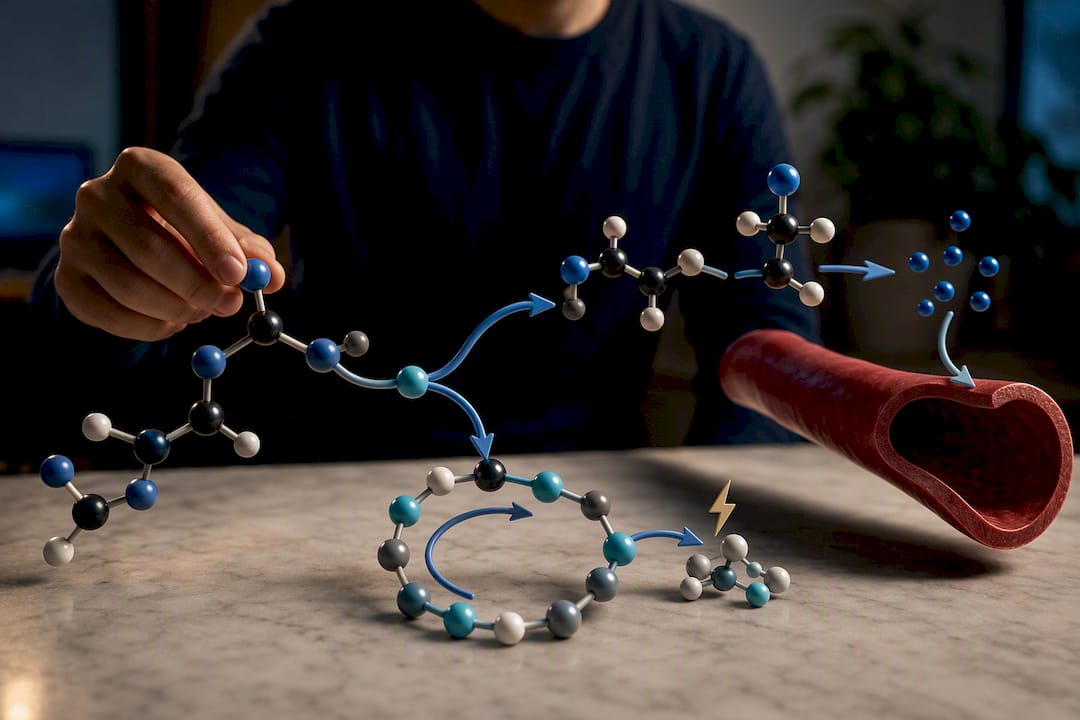
There's a small piece of mechanistic evidence supporting this. A small study using 31P magnetic resonance spectroscopy found citrulline malate supplementation was associated with an increased rate of oxidative ATP production and faster phosphocreatine recovery after exercise. That's a genuinely interesting signal, but it comes from a small mechanistic study, not a performance trial with dozens of athletes lifting weights or running intervals.
This is the gap between plausible biology and proven benefit. The TCA cycle story for malate makes physiological sense on paper. Whether that translates into more reps, faster recovery, or better endurance in actual training sessions is exactly what the head-to-head trials above have failed to consistently confirm. Mechanism gives you a reason to be curious about citrulline malate. It doesn't give you a reason to assume it beats citrulline alone.
How Much Should You Take, and When?
Study doses vary more than most supplement labels admit, and the difference between "citrulline malate grams" and "true citrulline grams" trips up a lot of buyers.
Here's how the math typically breaks down in published trials:
- 8 grams of L-citrulline was the dose used in the six-week resistance training study, delivering 8 full grams of active citrulline with no ratio conversion needed.
- 12 grams of citrulline malate at a 2:1 ratio was the matched comparison dose in that same trial, which works out to roughly 8 grams of true citrulline plus 4 grams of malate.
- 8 grams of citrulline malate (a common commercial serving size) at a 2:1 ratio delivers only about 5.3 grams of actual citrulline, which is meaningfully below the doses shown to move the needle in trials.
That third example is where a lot of pre-workout supplements quietly underdose their consumers. If your tub says "8g citrulline malate" without listing the ratio, you genuinely can't know whether you're getting a research-relevant dose or a fraction of it.
For timing, most acute-effect studies dosed participants 40 to 90 minutes before training to allow plasma citrulline and downstream arginine levels to peak. For sustained or chronic use, the 2023 review found that daily doses of 2.4 to 6 grams over 7 to 16 days improved nitric oxide markers in some studies, suggesting a loading period may matter more than a single pre-workout dose for some outcomes.
Practical starting protocol:
- Begin with 6 grams of true citrulline (adjust malate products for ratio) taken 60 minutes pre-training.
- Hold that dose for two weeks to assess GI tolerance and subjective pump or endurance changes.
- If tolerated well and you want to test the upper range, increase toward 8 grams, which is closer to doses used in the more favorable trial outcomes.
- If GI symptoms appear at any point, drop back to your last tolerated dose rather than pushing through.
There's no strong evidence that exceeding 8 grams of true citrulline adds further benefit, and higher doses mainly raise the risk of stomach discomfort without a matching performance payoff.
Are There Side Effects or Interactions to Watch For?
Both forms are generally well tolerated, but they aren't free of side effects, and the two matter differently depending on what else you're taking.
Gastrointestinal discomfort is the main complaint across trials. In one bench-press study, citrulline malate at 8 grams was associated with roughly 14 to 15% of participants reporting stomach discomfort, a rate worth knowing before you load up a full serving on a heavy training day. Pure L-citrulline has generally been tolerated at single doses up to around 15 grams in trials without major issues, though individual tolerance varies and starting lower is the safer approach regardless of which form you choose.
The bigger safety conversation involves interactions. Because citrulline raises nitric oxide and promotes vasodilation, combining it with prescription medications that work the same way, such as PDE5 inhibitors prescribed for erectile dysfunction or pulmonary hypertension, can compound blood-pressure-lowering effects. If you're on any vasodilatory medication, or you take blood pressure medication generally, talk to your doctor before adding citrulline or citrulline malate to your routine. The same caution applies to nitrate-based heart medications.
Practical monitoring is simple: track how you feel in the first few sessions, note any lightheadedness or unusual drops in blood pressure symptoms, and don't stack multiple nitric oxide boosting supplements simultaneously without understanding your cumulative dose.
How Do You Calculate True Citrulline From a Citrulline Malate Label?
Citrulline malate labels list the total compound weight, not the active citrulline content, and that distinction changes your real dose more than most buyers realize.
Here's how to do the conversion:
- Find the ratio. Reputable products state it directly: 2:1 (two parts citrulline to one part malate) or 1:1 (equal parts). If it's not listed anywhere on the label or the brand's website, that's already a warning sign.
- Apply the math. For a 2:1 ratio, multiply total grams by 0.667 to estimate citrulline content. So 6 grams of 2:1 citrulline malate gives you roughly 4 grams of true citrulline. For a 1:1 ratio, simply divide the total in half.
- Compare against trial doses. Studies showing benefits generally used 6 to 8 grams of true citrulline. If your product's math lands well below that after conversion, you may need a larger serving than the label suggests, or a different product entirely.
Shopping checklist before you buy:
- The ratio is clearly stated (2:1, 1:1, or otherwise).
- Grams of active citrulline are listed, not just total compound weight.
- The product isn't hidden inside a proprietary blend, where total blend weight is listed but individual ingredient amounts aren't disclosed.
- Third-party testing or a certificate of analysis is available if you want to verify label accuracy.
Pro Tip: If two ratio-labeled products cost about the same, do the true-citrulline math for both before deciding. A cheaper 1:1 product often delivers more actual citrulline per dollar than a pricier 2:1 blend at the same serving size. NutraSmarts' citrulline malate ingredient page breaks down common ratios and typical dosing if you want a reference while reading labels.
Proprietary blends are the single biggest reason people end up underdosed. If a label buries citrulline malate inside a "pump matrix" with six other ingredients and one combined weight, you have no reliable way to know how much citrulline you're actually getting.
Test It Yourself: Two Simple Training Protocols
Reading trial data only gets you so far. Since individual response to citrulline varies, running your own short comparison can tell you more about your body than any published study.
- Protocol A: pump-focused session with L-citrulline. Take 6 to 8 grams of pure L-citrulline 60 minutes before a moderate-volume lifting session (3 to 4 sets per exercise, 8 to 12 reps). Match your hydration and sodium intake across test days, since pump depends heavily on intravascular fluid volume, and inconsistent hydration can mask or mimic a supplement effect. Rate your perceived pump and muscle fullness on a 1 to 10 scale immediately post-session.
- Protocol B: high-volume session with citrulline malate. Choose a product with a clearly stated ratio, dose it to deliver the same 6 to 8 grams of true citrulline (adjusting for ratio), and take it 60 to 90 minutes before a higher-volume or endurance-style session (5+ sets per exercise, or extended conditioning work). Keep hydration and sodium matched to Protocol A.
- Track the same three metrics each time: rate of perceived exertion (RPE) during the session, reps completed to failure on a benchmark set, and a subjective endurance rating comparing how the last third of the session felt versus the first two-thirds.
- Run each protocol three to four times over two to three weeks, alternating forms, before drawing conclusions. A single session tells you almost nothing; a pattern across multiple sessions tells you whether the difference is real or noise.
If you notice a consistent gap between the two, favoring one form for one type of training, that's more useful personal data than any average pulled from a 43-person trial. Individual variation in how people respond to nitric oxide boosters is well documented, even when population-level trial results come back flat.
How NutraSmarts Reviews the Citrulline Research
Sorting through citrulline research means wading through trials with different doses, different ratios, and different outcome measures, which is exactly the kind of inconsistency that makes supplement claims hard to verify on your own.
NutraSmarts built its citrulline malate and L-citrulline ingredient pages specifically to cut through that noise. Each page links back to the peer-reviewed studies and clinical trials behind the dosing ranges and tolerability notes, so you're not taking a brand's word for it when a label claims a "clinically studied dose." The comparison format also flags where evidence is solid versus where it's still preliminary, which matters a lot for a topic like malate's added benefit, where the honest answer right now is "still being studied."
For anyone formulating or double-checking serving sizes, the Supplement Facts Tool generates FDA-compliant labels directly in your browser, which helps confirm that a serving's citrulline math actually adds up before it goes to print or before you trust someone else's math on a bottle you're considering buying.
If you're comparing citrulline against other nitric oxide support options, the L-citrulline vs L-arginine comparison page and the Nitrosigine ingredient profile give broader context on how different NO-boosting compounds stack up on bioavailability and dosing. None of these tools make the decision for you, but they make sure the decision is based on what a study actually found rather than what a product label wants you to believe it found.
A Pragmatic Take on Citrulline Malate vs Citrulline
The honest answer here is less exciting than supplement marketing wants it to be: dose matters more than form. The trials that dose-match citrulline content between L-citrulline and citrulline malate consistently show similar outcomes, not a clear malate advantage. That doesn't mean malate is worthless. It means nobody has proven its specific contribution yet. Until someone runs the right dose-matched trial, "citrulline malate is superior" remains a marketing claim dressed up as science.
My practical rule-of-thumb: buy whichever form lets you hit 6 to 8 grams of true citrulline most reliably and affordably. For most lifters, that's pure L-citrulline, because there's no ratio math and no proprietary blend to decode. If you want to test citrulline malate for longer, high-volume sessions, do it with a clearly labeled ratio product and run the self-test protocol above before assuming it's working.
Be skeptical of any label that hides its ratio or buries citrulline inside a blend. That's usually where the real gap between price and dose shows up.
— NutraSmarts
Where to Check Citrulline Products Before You Buy
If you've made it this far, you already understand more about label math than most people standing in the supplement aisle. Nutrasmarts turns that knowledge into a shopping advantage: instead of guessing whether a "citrulline malate 8g" label delivers a real dose, you can check the ingredient's evidence and ratio norms directly against trial data before you spend a dollar.

Start with the citrulline malate and L-citrulline ingredient pages to see dosing ranges and tolerability data pulled directly from the trials cited throughout this article. If you're shopping for a pre-workout or standalone citrulline product, the Best Athletic Performance Supplements page rounds up 131 reviewed options so you're comparing products that actually disclose their dosing, not blends that hide it. And if you formulate your own supplements or just want to double-check a bottle's serving math yourself, the free Supplement Facts Tool builds an FDA-compliant label directly in your browser, no spreadsheet required. Pull up the citrulline malate page now and run the ratio math on whatever's currently in your gym bag.
Primary Sources Behind This Comparison
The trial data and mechanistic explanations throughout this article draw from a small set of primary sources worth reading directly if you want to dig deeper:
- Malate or Not? Acute Effects of L-Citrulline Versus Citrulline Malate on Neuromuscular Performance in Young, Trained Adults, the 2024 crossover trial comparing both forms head-to-head.
- A critical review of citrulline malate supplementation and exercise performance, covering mechanistic rationale and evidence gaps.
- Review of arginine, citrulline, and citrulline malate supplements and exercise/cardiovascular effects, summarizing dose-response findings across multiple studies.
- Changes in resistance training performance after six weeks of L-citrulline vs L-citrulline DL-malate supplementation, the six-week dose-matched resistance training trial.
- NutraSmarts' citrulline malate and L-citrulline ingredient profiles for ongoing reference and updated dosing summaries.
This article is general information, not a substitute for advice from a qualified doctor. Consult a qualified healthcare professional about your own circumstances before acting on anything here.
Sources
- Malate or Not? Acute Effects of L-Citrulline Versus Citrulline Malate on Neuromuscular Performance in Young, Trained Adults
- Changes in resistance training performance after six weeks of L-citrulline vs L-citrulline DL-malate supplementation