
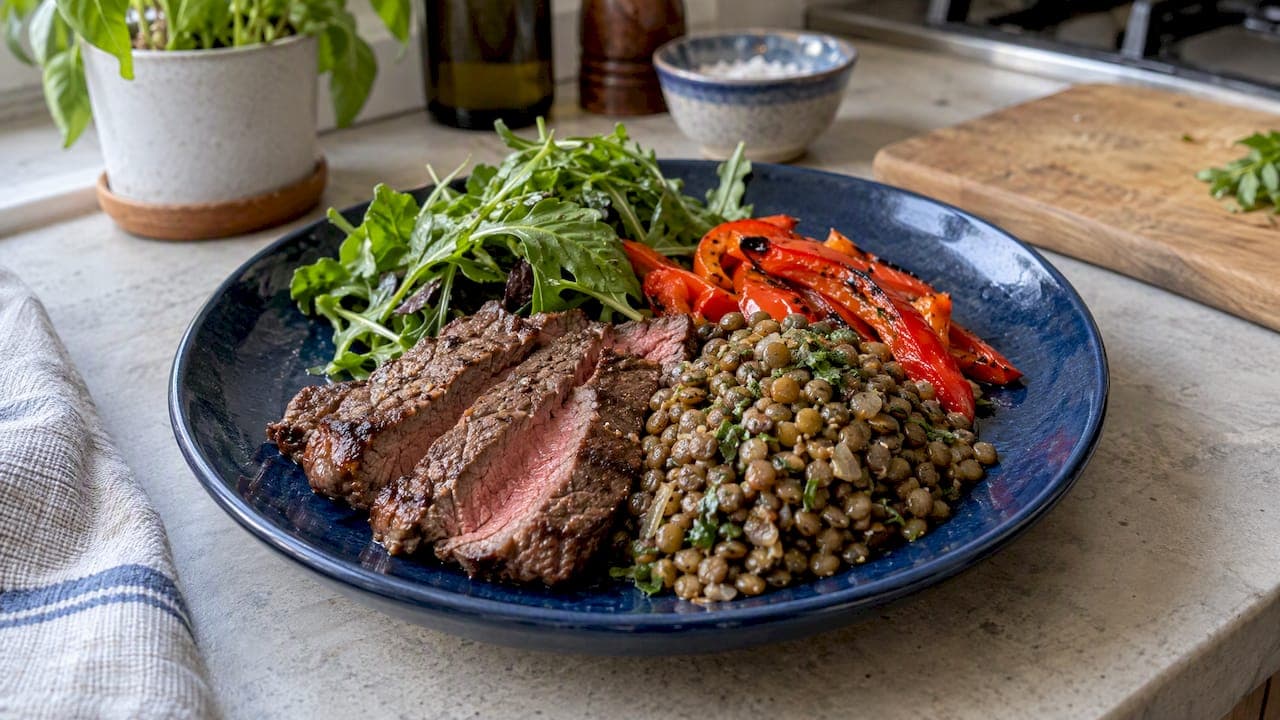
Heme iron, found in animal foods, is absorbed more efficiently and consistently than non-heme iron from plants and fortified foods, whose uptake swings with what else is on your plate. That single difference shapes how much iron actually reaches your bloodstream, and it explains why vegetarians and people who eat little red meat often need to think harder about meal pairing and total intake.
TL;DR:
- Heme iron from animal foods absorbs at around 15% to 35%, making it more reliable and efficient than non-heme iron, which varies more and absorbs less.
- Plant-based non-heme iron absorption can be improved with vitamin C foods and animal protein, but inhibitors like tea, coffee, calcium, and oxalates significantly reduce uptake.
- Vegetarians need approximately 1.8 times higher iron intake than omnivores to compensate for lower absorption of plant-based non-heme iron.
- Consuming organ meats, shellfish, or fortified grains can help boost iron intake, with meal pairing strategies maximizing absorption efficiency.
- Regular blood testing for ferritin and iron levels is essential to identify deficiency, as diet adjustments alone may not suffice if iron stores are severely depleted.
Table of Contents
- What heme and non-heme iron actually are
- Absorption and bioavailability: what the numbers actually mean
- Where to find heme and non-heme iron in food
- Meal rules that actually move the needle on non-heme absorption
- RDAs and how much vegetarians should actually aim for
- Testing and when diet alone isn't enough
- Iron supplements: forms, evidence, and tolerability
- Build an iron-friendly plate: a quick checklist
- Why evidence and testing matter more than trends
- How NutraSmarts supports evidence-based iron decisions
- FAQ
- Sources
What heme and non-heme iron actually are
The split between heme and non-heme iron comes down to where the iron sits at a molecular level, and that structural difference decides how your intestine handles it.
Heme iron is iron locked inside hemoproteins, mainly hemoglobin and myoglobin, the molecules that carry oxygen in blood and muscle. Because it comes exclusively from animal tissue, meat, poultry, fish, and organ meats are its only natural sources. Your intestinal cells absorb heme iron through a dedicated uptake pathway built specifically for this molecule, according to the NIH Office of Dietary Supplements. The whole heme complex gets taken up largely intact, then broken apart inside the cell to release the iron, which joins the same internal iron pool used by non-heme iron.
Non-heme iron is a different story. It exists as inorganic iron ions, either Fe3+ (ferric) or Fe2+ (ferrous), bound loosely to plant compounds, added to fortified foods, or present in supplement salts. Before your gut can absorb it, ferric iron generally needs to be converted to the ferrous form and released from whatever it is bound to, a process sensitive to the chemistry of the entire meal. Acids help, certain plant compounds hinder, and the iron has to compete with other substances for the same absorption machinery. This is why non-heme absorption varies so much between a plate of lentils eaten alone and the same lentils eaten with citrus fruit.
Once inside the intestinal cell, though, heme-derived and non-heme-derived iron converge. Both enter a shared intracellular pool, and from there the body decides how much gets exported into circulation versus stored. That shared endpoint is worth remembering: the two forms start differently and travel different routes to get absorbed, but once they're in, your body treats the iron the same way. The practical consequence is that the differences between heme and non-heme iron matter almost entirely at the point of absorption, not afterward.

Absorption and bioavailability: what the numbers actually mean
The headline fact: heme iron typically absorbs at something like 15% to 35%, while non-heme iron absorption is both lower and far more variable, often landing in the single digits to low teens depending on the meal, according to the NIH Office of Dietary Supplements. That gap is the reason heme iron punches above its weight nutritionally.

Heme iron makes up only about 10% to 15% of dietary iron in Western diets, yet because of its higher and steadier absorption rate, it can account for a substantial share of total absorbed iron in a mixed diet, according to a dietary iron review. In other words, a relatively small slice of intake delivers a disproportionately large share of what your body actually takes in.
The same review places overall bioavailability estimates in context: mixed diets that combine animal protein with vitamin C tend to deliver moderate bioavailability higher than purely vegetarian diets, which rely on non-heme sources and thus typically have lower absorption rates, according to the dietary iron review. That lower ceiling is not a flaw in plant foods so much as a structural feature of non-heme chemistry.
One more piece matters here: how your body's existing iron stores change the equation. Non-heme absorption is heavily regulated by ferritin levels. When stores are low, the intestine ramps up non-heme uptake; when stores are high, it dials uptake back. Heme iron absorption responds to iron status too, but the effect is smaller and less pronounced, which is part of why heme iron delivers more predictable results meal to meal.
A 2024 systematic review and meta-analysis of randomized controlled trials found that heme iron may improve markers of iron status more than non-heme iron in some contexts, though the authors describe the clinical evidence as limited and mixed, not a clear case for routine superiority across every population.
What this means in practice: if you eat a varied diet with some meat, fish, or poultry, you are likely absorbing a meaningfully larger fraction of your iron intake than someone eating the same total milligrams from plant sources alone. That is the gap meal strategy is designed to close.
Where to find heme and non-heme iron in food
Knowing the absorption math only helps if you know which foods actually deliver the iron.
Heme iron sources are limited to animal tissue, and richness varies a lot by cut and species. Organ meats and certain shellfish are the standouts, with muscle meats providing a steady but smaller amount per serving. According to Harvard's Nutrition Source, common heme-rich foods include:
- Beef, lamb, and other red meats, with higher concentrations in darker cuts.
- Liver and other organ meats, among the most concentrated heme sources.
- Clams, oysters, and mussels, which deliver substantial iron per serving.
- Poultry and fish, lower in heme iron than red meat but still contributing meaningfully.
Non-heme iron shows up across a much wider range of plant foods and fortified products, but bioavailability varies widely and some well-known "iron foods" absorb poorly on their own. Harvard's Nutrition Source lists common non-heme sources including lentils, beans and other legumes, fortified breakfast cereals, spinach and other leafy greens, tofu, nuts, seeds, and dark chocolate. Spinach is a useful cautionary example: it is genuinely high in iron by weight, but its oxalate and polyphenol content blunts absorption substantially, so pairing strategy matters more for spinach than for many other plant sources.
Fortified foods deserve their own mention. Fortified grains and cereals supply a large share of dietary iron in typical diets, according to Harvard's Nutrition Source, and for people who eat little meat, fortified products often function as a practical backbone of total iron intake rather than an occasional extra.
Meal rules that actually move the needle on non-heme absorption
Non-heme iron absorption is not fixed. It shifts up or down depending on what you eat alongside it, and the shifts are large enough to matter.
On the enhancer side, vitamin C is the most reliable lever. It helps convert ferric iron to the more absorbable ferrous form and can counteract the inhibitory effect of phytates in the same meal, according to a review of iron absorption factors. Meat, fish, and poultry contribute their own enhancing effect on non-heme iron in the same meal, sometimes called the "meat factor," which can boost non-heme absorption by roughly two to three times in some studies.
Inhibitors work in the other direction. Phytates, found in whole grains, legumes, and nuts, bind non-heme iron and reduce its availability. Polyphenols in tea, coffee, and cocoa do the same. Calcium, whether from dairy or supplements, competes with iron for absorption, and oxalates in foods like spinach and chard further limit uptake. The effects are strongest in single-meal studies and get somewhat attenuated across a varied diet eaten over days and weeks, so the goal is a consistent pattern rather than a perfect every single meal.
A few practical rules follow directly from this:
- Pair plant iron sources with a vitamin C food, citrus fruit, bell peppers, or tomatoes work well, at the same meal.
- Add a small portion of meat, fish, or poultry to a plant-heavy meal when possible, since the meat factor boosts non-heme absorption too.
- Keep tea and coffee away from iron-containing meals, waiting an hour or so before or after helps avoid their polyphenol effect.
- Take calcium supplements or antacids between meals rather than alongside iron-rich food.
- Soak, sprout, or ferment grains and legumes before cooking, since these processes reduce phytate content and improve mineral availability.
Pro Tip: Squeeze lemon juice over lentils or beans instead of relying on a vitamin C supplement elsewhere in the day, since the enhancing effect works best when the vitamin C and the iron are eaten together.
RDAs and how much vegetarians should actually aim for
Iron needs differ sharply by age, sex, and life stage, and the numbers are set with typical dietary absorption already factored in.
According to the NIH Office of Dietary Supplements, adult men generally need less dietary iron than adult women of reproductive age, since menstrual blood loss raises requirements substantially. Pregnancy pushes the requirement higher still, reflecting the demands of a growing blood volume and fetal development. Children and adolescents have their own age-specific targets tied to growth.
Because non-heme iron absorbs less efficiently than iron from mixed diets containing meat, the RDA for vegetarians is set higher than for people who eat meat, reflecting the need to compensate for the lower average bioavailability, according to the NIH Office of Dietary Supplements.
A worked example makes this concrete. Say a vegetarian meal provides 10 milligrams of non-heme iron from lentils and fortified cereal. A mixed meal with the same 10 milligrams of iron split between red meat and vegetables, at a bioavailability closer to 16%, would deliver around 1.6 milligrams absorbed, double the amount from the same starting intake. That gap is exactly why the vegetarian RDA multiplier exists.
Testing and when diet alone isn't enough
Diet strategy only gets you so far if your iron stores are already low, and the only reliable way to know is testing, not symptoms or dietary estimates.
Serum ferritin is the most useful single marker of how much iron your body has stored, according to NIH/ODS clinical guidance. Transferrin saturation shows how much iron is actively available for transport in the blood, and hemoglobin reflects whether iron deficiency has progressed to anemia. A clinical hematology study resource walks through how these markers are interpreted together in practice, since no single number tells the full story on its own.
When ferritin is low but hemoglobin is still normal, dietary changes and meal timing adjustments are often enough to rebuild stores over weeks to months. When anemia is already present or ferritin is very low, clinicians typically move to oral iron supplementation, and in more severe or poorly tolerated cases, intravenous iron. This is general context, not a dosing recommendation, since the right course depends on lab values a clinician needs to see directly.
High-dose iron taken without medical supervision carries real risk, including gastrointestinal distress and, in cases of accidental overdose, serious toxicity. Iron status should guide supplementation, not the other way around.
Iron supplements: forms, evidence, and tolerability
Standard oral iron supplements use inorganic iron salts, most commonly ferrous sulfate, ferrous gluconate, or ferrous bisglycinate. Ferrous bisglycinate is a chelated form often chosen for better gastrointestinal tolerability, a distinction worth understanding if you have tried iron pills before and found them hard on your stomach; our ferrous bisglycinate ingredient page breaks down the evidence on that form specifically.
Heme iron polypeptide is a different category altogether: a supplement form derived from animal hemoglobin rather than an inorganic salt. The 2024 meta-analysis of randomized trials found heme iron supplementation may improve iron status markers more than non-heme supplementation in some contexts, though the authors note the overall clinical evidence base is limited and mixed rather than settled. The same review and related literature point to GI tolerability differences across formulations, with some ferrous salts causing more constipation or nausea than chelated or heme-based alternatives.
Interactions matter too. High-dose iron can interfere with zinc absorption when taken together, and calcium can blunt iron uptake from the same dose. The general, evidence-aligned approach is to base supplementation decisions on actual lab testing and a clinician's advice rather than guessing, since the right form and dose depend on why your iron is low in the first place. Our iron ingredient page covers the evidence behind each form in more detail.
Build an iron-friendly plate: a quick checklist
Pulling the science into something usable at mealtime comes down to a short set of habits.
- Add a vitamin C source, citrus, peppers, tomatoes, to any plant-based iron meal.
- Include a small portion of meat, fish, or poultry when eating a plant-heavy meal, since both the heme iron and the meat factor help.
- Skip tea or coffee for an hour before and after iron-rich meals.
- Take calcium supplements between meals, not alongside iron-containing food.
- Favor soaked, sprouted, or fermented grains and legumes over unprocessed versions.
- Choose fortified cereals or grains on days when other iron sources are light.
Three quick examples: an omnivore plate of beef stir-fry with bell peppers delivers both heme iron and a vitamin C boost in one dish. A vegetarian plate of lentil soup with a squeeze of lemon and a side salad pairs non-heme iron with its enhancer directly. A vegan plate of fortified cereal with sliced strawberries swaps meat-based enhancement for fortification plus vitamin C, covering the same bases without animal products.
Why evidence and testing matter more than trends
Iron is one of those nutrients where internet advice runs ahead of what the evidence actually supports, and the gap between a confident claim and a confirmed finding matters for your health. The honest picture is that heme iron has a clearer absorption advantage, but the clinical evidence comparing heme and non-heme supplementation head to head is still limited, and much of what sounds settled is actually still being studied.
That gap is exactly why we built NutraSmarts around ingredient pages that link directly to the clinical trials behind them, rather than general claims. Before changing your iron intake or adding a supplement, check your actual iron status with a blood test, and loop in a clinician, especially during pregnancy, for infants, or if your labs come back abnormal.
— NutraSmarts
How NutraSmarts supports evidence-based iron decisions
Figuring out whether you need more iron, and which form makes sense, gets a lot easier with the right research in front of you instead of a dozen conflicting blog posts. NutraSmarts was built for exactly that gap: every ingredient page links to the clinical trials behind it, so you can see the actual evidence rather than take a claim on faith.
A few resources worth checking before you buy anything:
- The iron ingredient page covers absorption, dosage research, and clinical considerations across common forms.
- The heme iron polypeptide page walks through the evidence specific to that form.
- Our deficiency symptom guide helps you connect symptoms to likely causes before you guess at a fix.
- The free Supplement Facts label tool is useful if you formulate or sell supplements and need an FDA-compliant label without spreadsheet headaches.
Start with a blood test, read the evidence on the form you're considering, and talk to a clinician before adding a new iron supplement to your routine. Browse our full supplement database to compare ingredient evidence side by side.
This article is general information, not a substitute for advice from a qualified doctor. Consult a qualified healthcare professional about your own circumstances before acting on anything here.
FAQ
Which is better, heme iron or non-heme iron?
Heme iron absorbs more efficiently and consistently, typically in the range of 15% to 35%, compared with non-heme iron's lower and more variable absorption, according to the NIH Office of Dietary Supplements. That makes heme iron a more reliable source on its own, but a well-planned non-heme diet with enhancers like vitamin C can still meet iron needs effectively.
Which food is highest in heme iron?
Organ meats like liver are among the most concentrated heme iron sources, with clams, oysters, and mussels also providing substantial amounts per serving, according to Harvard's Nutrition Source. Red meat and lamb provide heme iron at lower but still meaningful concentrations.
Do eggs have heme or nonheme iron?
Eggs contain non-heme iron, not heme iron, despite coming from an animal source, since heme iron specifically comes from hemoglobin and myoglobin found in muscle tissue and blood. Egg yolk iron is also known to absorb relatively poorly compared with other non-heme sources.
Does coffee block the absorption of heme iron?
Coffee's polyphenols primarily inhibit non-heme iron absorption rather than heme iron, according to research on iron absorption factors; a review of tea consumption notes similar polyphenol effects relevant to timing choices around meals. Heme iron is far less affected, so the common advice to separate coffee or tea from meals matters most for plant-based iron sources.
What is the RDA for iron for vegetarians?
Vegetarians are generally advised to aim for about 1.8 times the standard RDA for their age and sex group, since non-heme iron from plant foods absorbs less efficiently than iron from mixed diets, according to the NIH Office of Dietary Supplements. Pairing plant iron sources with vitamin C at meals helps close some of that gap.
Sources
- Iron — Office of Dietary Supplements (NIH)
- A comparative analysis of heme vs non-heme iron administration: a systematic review and meta-analysis of randomized controlled trials
- Dietary Iron - StatPearls (NCBI Bookshelf)
- Iron — The Nutrition Source (Harvard T.H. Chan School of Public Health)