
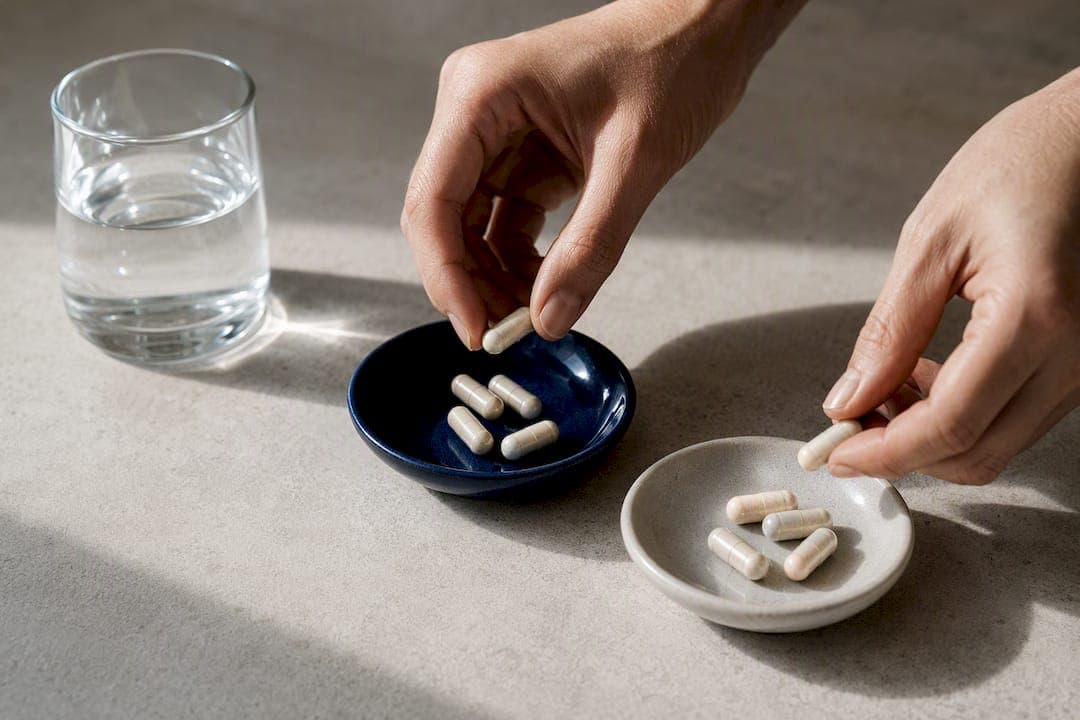
For calm focus without jitters, L-theanine is usually the better first choice. For short-term resilience under acute stress, sleep loss, or a demanding one-off task, L-tyrosine tends to fit better. Neither has strong evidence as a general-purpose cognitive enhancer, and the research behind both is still early, so treat them as tools to test, not guaranteed fixes, and check with a clinician if you take other medications.
TL;DR:
- L-theanine is best for calm focus and alertness in normal conditions, especially when combined with caffeine, with doses typically around 100 to 200 mg.
- L-tyrosine shows benefits mainly under high-stress situations or sleep deprivation, with doses around 1,000 to 2,000 mg taken 60 to 120 minutes before stress.
- Both amino acids have mild side effects and require caution for pregnant individuals, those on certain medications, or with metabolic conditions like phenylketonuria.
- Evidence from recent trials indicates no significant change in stress biomarkers from either supplement, suggesting effects depend heavily on baseline stress or task demands.
- Combining L-theanine and L-tyrosine is mostly supported in high-stakes or athletic contexts, but daily use is better tested with single ingredients first.
Table of Contents
- What is L-theanine and how do people use it?
- What is L-tyrosine and when does research support it?
- Why do these two amino acids work so differently?
- What do the actual trials and reviews show?
- How much should you take, and what should you watch for?
- Can you take L-theanine and L-tyrosine together?
- Which one should you actually try first?
- How NutraSmarts verifies the evidence behind these claims
- A measured take on amino-acid supplements
- Check the research and build your own supplement label
- Sources
- FAQ
What is L-theanine and how do people use it?
L-theanine is an amino acid found naturally in tea leaves, most concentrated in green tea. Most supplements use an isolated, standardized form, and one common branded version is Suntheanine, which several trials have used to keep dosing consistent. People take it for a calm, alert feeling rather than sedation, often alongside caffeine.
Clinical trials have tested a range of doses, and most commercial supplements typically include moderate amounts per serving. Researchers have studied it for a handful of outcomes:
- Attention and alertness, particularly when paired with caffeine
- Mood measures, including reported calmness and reduced tension
- Sleep quality endpoints in some smaller trials
Safety data from clinical research looks reassuring so far. A recent meta-analysis covering acute doses of 50 to 500 mg found side effect rates similar to placebo. You can review dosing benchmarks and trial citations on the L-theanine ingredient page.
What is L-tyrosine and when does research support it?
L-tyrosine is a non-essential amino acid your body makes from phenylalanine, and it also comes from protein-rich foods like meat, eggs, and dairy. Biochemically, it serves as the direct precursor to dopamine and norepinephrine, the catecholamines your brain relies on for alertness and stress response.
Most acute studies use doses commonly around a gram or more, typically taken 60 to 120 minutes before an expected stressor or demanding task. The evidence points to a fairly narrow use case:
- Strongest signal in acute, unusually demanding conditions: sleep deprivation, cold exposure, or intense cognitive load
- Rationale ties to catecholamine depletion during sustained stress, when extra precursor may help
- Weak or absent evidence for routine focus benefits in rested, unstressed adults
A 2015 systematic review of 15 studies found this pattern held consistently: tyrosine helped most when the brain was already under real strain, not as a daily productivity booster. More dosing detail is on the L-tyrosine ingredient page.
Why do these two amino acids work so differently?
L-theanine appears to modulate GABA and glutamate activity in the brain, and researchers have linked it to specific EEG changes associated with relaxed alertness. That distinction, calm without sedation, is what separates it from most anti-anxiety compounds. You can see how this compares to other calming ingredients on the GABA vs L-theanine comparison.
L-tyrosine works upstream, as raw material for dopamine and norepinephrine synthesis. Under normal conditions, your body already has enough tyrosine on hand, so extra supplementation does little. During sustained stress, when catecholamine turnover speeds up, the available precursor pool can run low, and that is the gap tyrosine supplementation is thought to fill.
This is also why co-ingredients matter. Caffeine amplifies theanine's attention effects in several trials, and your baseline state, rested versus sleep-deprived or stressed, changes which compound is likely to do anything measurable at all.
What do the actual trials and reviews show?
The clearest head-to-head data comes from a 2024 randomized trial built around a virtual reality active shooter training drill, a genuinely acute stress challenge. Researchers randomized 80 adults to 2,000 mg L-tyrosine, 200 mg L-theanine, or placebo before the drill. Neither supplement changed stress biomarkers or state anxiety scores. Tyrosine did produce fewer missed responses on a Stroop task compared to placebo, a narrow but real cognitive signal under pressure.
A 2024 meta-analysis pooling five randomized trials (148 healthy adults) found dose-dependent improvements on specific tasks like rapid visual information processing, but rated overall certainty low to very low under GRADE criteria. That is a meaningful caveat: the pool of trials is small, and effects vary by task.
Separate work on caffeine, theanine, and tyrosine combinations in athletes suggests short-term improvements in alertness and movement accuracy with low-dose stacks, though these trials mix ingredients and cannot isolate tyrosine's individual contribution. Across this evidence base, the recurring limitations are small sample sizes, inconsistent dosing, and frequent caffeine confounds that make it hard to credit theanine alone for every reported benefit.
How much should you take, and what should you watch for?
Trial doses give a reasonable starting reference: L-theanine studies commonly use 50 to 400 mg, and most supplement labels land at 100 to 200 mg per serving. L-tyrosine acute studies often use 1,000 to 2,000 mg, taken roughly an hour or two before an expected stressor.
Both amino acids have generally mild reported side effects, but a few groups should check with a clinician first:
- Pregnant or nursing individuals, since supplement safety data in these groups is limited
- Anyone taking MAOIs or levodopa, due to interaction risk with catecholamine precursors
- People with phenylketonuria, since tyrosine metabolism connects to phenylalanine handling (see the L-phenylalanine page for background)
- Anyone on prescription medication, who should review interactions with a pharmacist or doctor before adding either compound
Buy from brands that list third-party testing, since amino acid purity varies across manufacturers.
Pro Tip: Start at the low end of the trial dose range and track how you feel for a week before adjusting.

Can you take L-theanine and L-tyrosine together?
The strongest combination evidence involves caffeine and theanine together, a pairing repeatedly linked to short-term gains in alertness and attention switching. Evidence for adding tyrosine to that stack is thinner, mostly drawn from athletic performance trials that tested multiple ingredients at once.
Stacking makes more sense in specific situations:
- Athletic or performance contexts where combination trials exist, such as the caffeine plus theanine plus tyrosine protocols tested in athletes
- Acute, high-stakes tasks where you want both calm attention and catecholamine support
For everyday use, single-ingredient trials give you a cleaner read on what is actually working. If you already drink coffee or take other stimulants, factor that into your total caffeine load, since stacking multiple stimulating compounds can raise heart rate or blood pressure in sensitive individuals.
Which one should you actually try first?
Match the supplement to the situation rather than picking one as an all-purpose choice:
- Calm, sustained focus (studying, work tasks, mild everyday stress): try L-theanine first, 100 to 200 mg, alone or with your usual caffeine.
- Acute stress or fatigue (sleep loss, a big presentation, cold exposure): consider L-tyrosine, 1,000 to 2,000 mg, taken 60 to 120 minutes beforehand.
- Clinical ADHD or a diagnosed mood disorder: speak with a clinician rather than self-treating with either amino acid.
- Either case: run a 2 to 4 week trial, log your sleep, caffeine intake, and subjective performance, then decide if it is worth continuing.
Pro Tip: Write down your baseline sleep hours and caffeine intake before starting, so you can tell whether the supplement or your routine changed.
How NutraSmarts verifies the evidence behind these claims
Ingredient pages exist for both compounds, each linked to the clinical trials and evidence ratings cited here, covering many ingredients and clinical trials across the database. You can check dosing benchmarks yourself on the L-tyrosine and L-theanine pages, or explore a branded form like Suntheanine. This article is educational content, not personalized medical advice.
A measured take on amino-acid supplements
Neither of these compounds is a universal fix for focus or stress. The 2024 head-to-head trial found no change in actual stress biomarkers for either supplement, a detail easy to miss if you only skim the headline about the Stroop task result. Context, your baseline state, the task, and what else you have taken, determines whether either one does anything noticeable. Trial cautiously, and loop in a clinician if you take medication or manage a diagnosed condition.
— NutraSmarts
Check the research and build your own supplement label
If you want to dig deeper before trying either compound, the L-Theanine and L-Tyrosine pages link every trial cited here plus additional dosing research.
For anyone formulating a supplement or double-checking a label, the free Supplement Facts label creator builds an FDA-compliant label without spreadsheets, and the Supplements by Symptom pages help you browse other evidence-rated options for stress and focus.
This article is general information, not a substitute for advice from a qualified doctor. Consult a qualified healthcare professional about your own circumstances before acting on anything here.
FAQ
Can you take L-theanine and L-tyrosine together safely?
Most healthy adults can take both together, since neither has shown serious adverse effects in clinical trials at studied doses. Evidence for a combined benefit beyond either compound alone is limited, so check with a clinician if you take other medications or have a health condition.
What does L-tyrosine do for ADHD?
L-tyrosine is not an established ADHD treatment, and the clinical evidence in this area is old and limited. It should not replace evidence-based ADHD care, and anyone considering it for this purpose should talk to a clinician first.
Does L-theanine raise cortisol levels?
Research does not show L-theanine raising cortisol. In the 2024 head-to-head trial, it did not change measured stress biomarkers at all, which points to a gap between feeling calmer and any actual shift in stress physiology.
Which amino acid is better for focus, tyrosine or theanine?
It depends on your state at the time. L-theanine has more support for calm attention during normal, low-stress conditions, while L-tyrosine shows its clearest benefit for cognitive resilience during acute stress, sleep loss, or unusually demanding tasks rather than everyday focus.