

Yes, magnesium supplements are a common cause of loose stools, and the risk climbs with certain forms and higher doses. If you started a new magnesium supplement and your gut has been off since, the supplement is the likely suspect, not a coincidence.
Do this now: cut your dose in half or pause it for a few days, switch to a gentler form like magnesium glycinate, and take whatever dose you resume with alongside a meal. Water helps too, since loose stools pull fluid and electrolytes out with them.
The NIH Office of Dietary Supplements sets the tolerable upper intake level for supplemental magnesium at 350 mg per day for adults. Going over that number regularly is when diarrhea, cramping, and nausea become far more likely.
- Lower the dose or split it into two smaller servings
- Take it with food instead of on an empty stomach
- Switch from oxide or citrate to glycinate or malate
- Seek medical care if diarrhea is severe, bloody, or paired with dizziness or muscle weakness
Table of Contents
- Why Magnesium Diarrhea Happens in the First Place
- Which Magnesium Types Are Most Likely to Cause Diarrhea
- How Much Magnesium Is Too Much, and How to Fix It
- When Magnesium Diarrhea Signals a Bigger Problem
- The Evidence Behind Magnesium and Diarrhea
- Compare Magnesium Forms Before You Switch
- A Simple Plan If You Want to Keep Taking Magnesium
- Sources
Why Magnesium Diarrhea Happens in the First Place
Magnesium diarrhea comes down to basic plumbing. Magnesium salts that your intestine doesn't fully absorb stay in the gut, and because magnesium is osmotically active, it pulls water into the intestine to balance the concentration. More water in the colon means softer stool and more frequent trips to the bathroom.
This isn't a defect in your gut. It's chemistry. Magnesium citrate and magnesium oxide, in fact, are the active ingredients in several over-the-counter laxatives for exactly this reason. Some people take advantage of that osmotic pull on purpose; if you're taking magnesium for sleep, muscle cramps, or general supplementation, though, that same mechanism becomes a nuisance side effect.
Not all magnesium behaves the same way in your gut. Inorganic salts, oxide, hydroxide, and sulfate, are absorbed less efficiently, so more of the dose lingers unabsorbed and draws in water. Chelated or "organic" forms like magnesium glycinate bind magnesium to an amino acid, which the body tends to absorb through a different pathway and tolerate better. The NIH consumer fact sheet on magnesium backs this pattern up directly.
A few other variables shape how strong the effect is:
- Dose size. A bigger single dose overwhelms absorption capacity faster than the same total spread out.
- Meal timing. Food slows gut transit and gives your intestine more time to absorb magnesium before it reaches the colon.
- Individual gut transit speed. Faster movers tend to feel the osmotic effect more acutely.
- Kidney function. Healthy kidneys clear excess magnesium efficiently; impaired kidneys let it build up instead.
Pro Tip: If you want to test whether a specific form is the problem, switch only one variable at a time. Change the form first and keep the dose and timing the same for a week before touching anything else. That way you actually know what fixed it.
Which Magnesium Types Are Most Likely to Cause Diarrhea
Some forms are built to move your bowels. Others are built to get absorbed quietly and stay out of the way. Knowing which bucket your supplement falls into explains most magnesium side effects before they happen.
Higher-risk forms:
- Magnesium oxide. Cheap, common in generic supplements, and poorly absorbed, so a large share of each dose stays in the gut and pulls water with it.
- Magnesium citrate at higher doses. Better absorbed than oxide, but still osmotic enough that it's sold as a laxative in doses above typical supplement ranges. Magnesium citrate's profile covers this dual role.
- Magnesium hydroxide. The active ingredient in milk of magnesia, which tells you exactly what it does to stool.
- Magnesium sulfate. Used medically as a laxative and, in some settings, an IV treatment, not typically meant for daily oral supplementation.
Lower-risk forms worth considering instead:
- Magnesium glycinate, generally the gentlest option for people prone to loose stools
- Magnesium malate, a reasonable pick for those also managing fatigue or muscle soreness
- Magnesium taurate, often chosen for cardiovascular support with a milder gut profile
- Magnesium L-threonate, notable for crossing into the brain more readily, though it's pricier per elemental milligram
The glycinate versus citrate comparison lays out the absorption and tolerability tradeoffs side by side, and threonate versus glycinate is worth a look if cognitive support is your goal but your gut is sensitive. One caveat: if constipation is what you're actually trying to fix, oxide or citrate isn't a mistake, it's the tool for the job. NutraSmarts covers that use case directly in its roundup of constipation supplements.
How Much Magnesium Is Too Much, and How to Fix It
Supplement labels list elemental magnesium, the actual amount of magnesium your body can use, separate from the total weight of the compound. Magnesium oxide is roughly 60% elemental magnesium by weight, while glycinate sits closer to 14%, which is why pill counts and mg amounts vary so much between brands offering "the same" dose.

The NIH's tolerable upper intake level of 350 mg per day applies specifically to supplemental (not dietary) elemental magnesium in adults. Food sources don't count toward that ceiling because the body regulates absorption from food more tightly than absorption from concentrated supplement doses.
If diarrhea shows up, work through this sequence rather than quitting outright:
- Cut the total dose. Drop to half your current amount for a week and watch what happens.
- Split it into two doses. 200 mg once tends to hit the gut harder than 100 mg twice.
- Take it with a meal. Food slows transit and gives your gut more time to absorb the dose, a point Drugs confirms directly.
- Switch to a lower-osmotic form, like glycinate or malate, if the first three steps don't solve it.
- Look at food sources (leafy greens, nuts, seeds) to close small gaps without adding more supplemental load.
A few more practical notes: avoid stacking magnesium with other osmotic agents like sorbitol, high-dose vitamin C, or over-the-counter laxatives, since the effects compound. If you switch to a slow-release or "buffered" formula, give it a full week before judging whether it helped, since gut adaptation isn't instant.
Pro Tip: Keep a simple log for two weeks: dose, form, whether you took it with food, and stool consistency the next day. Patterns that feel random usually aren't once you write them down.
When Magnesium Diarrhea Signals a Bigger Problem
Most magnesium-related diarrhea is annoying, not dangerous, and it resolves once you adjust dose or form. Some situations, though, need a doctor rather than a spreadsheet.
Watch for these red flags:
- Severe dehydration (dizziness, dark urine, fainting)
- Progressive muscle weakness
- Chest pain or irregular heartbeat
- Trouble breathing
- Blood in the stool
Anyone with impaired kidney function faces a materially higher risk, since the kidneys are what clear excess magnesium from the body. A clinical review on magnesium toxicity notes that severe hypermagnesemia mostly happens when renal excretion can't keep pace, either from kidney disease or a very large exogenous dose. Older adults and anyone taking multiple magnesium-containing products, antacids and laxatives included, should also be more cautious about stacking doses without realizing it.
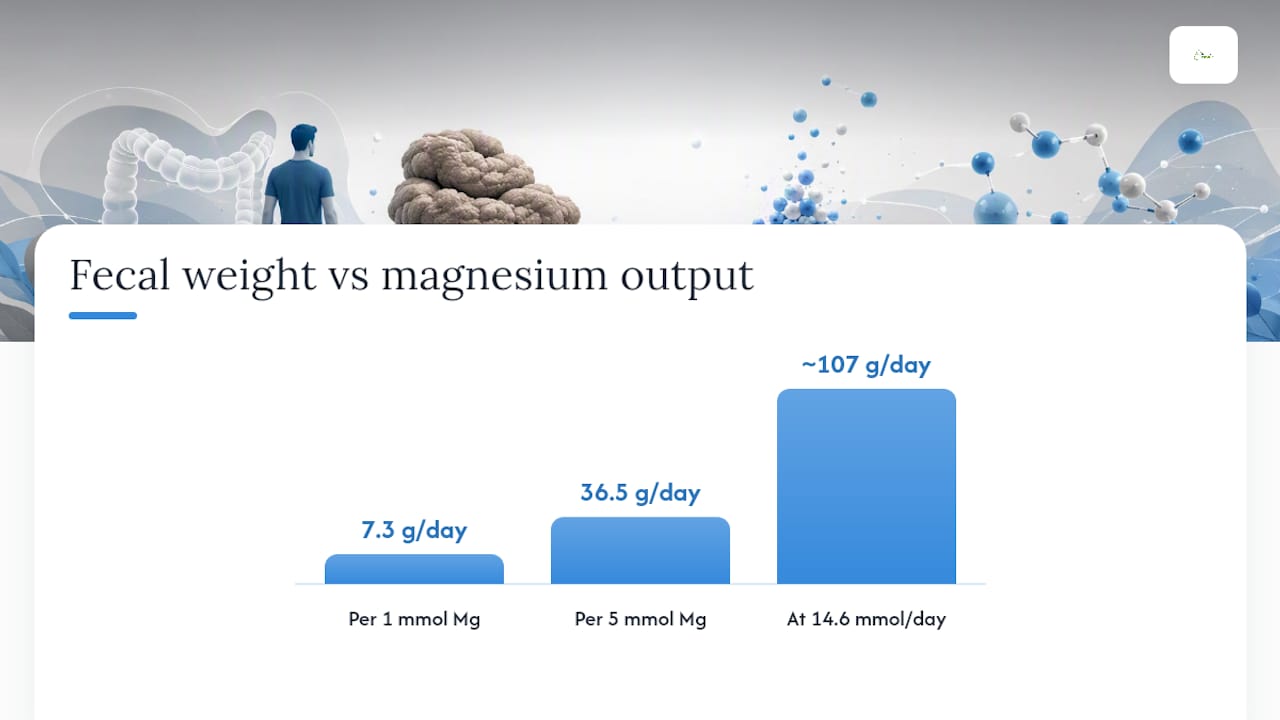
In diagnostic settings, clinicians can confirm magnesium as the specific cause of diarrhea through fecal testing rather than guesswork. NEJM research established that fecal soluble magnesium output above 14.6 mmol per day, or a concentration above 45.2 mmol/L, points to magnesium as the driver. That same research found each additional millimole of fecal soluble magnesium adds roughly 7.3 grams of fecal weight, a fairly direct measure of how much water a given amount of unabsorbed magnesium pulls into the gut.
The Evidence Behind Magnesium and Diarrhea
The dosing guidance here isn't a house opinion. The NIH Office of Dietary Supplements sets the 350 mg supplemental upper limit specifically because higher intakes reliably increase diarrhea, nausea, and cramping in adults. WebMD's clinical summary lists the same trio of side effects and echoes that doses under 350 mg daily are generally safe for most adults.
On the diagnostic side, NEJM's fecal magnesium thresholds remain the reference point clinicians use when they need to confirm magnesium, rather than something else, is behind a patient's diarrhea. That's a higher bar than a consumer guessing based on symptom timing alone.
If you're deciding which form to try next, a few resources make the comparison concrete:
- Magnesium oxide profile for elemental content and laxative use
- Magnesium malate profile as a middle-ground option
Yes, this is a common claim, but the NIH data behind it is specific: the 350 mg threshold isn't arbitrary, it's the point where the research consistently shows side effect rates climbing.
| Point | Details |
|---|---|
| Form matters | Oxide, citrate at high dose, hydroxide, and sulfate are more likely to trigger loose stools than glycinate or malate. |
| Dose has a ceiling | The NIH upper limit for supplemental magnesium is 350 mg per day for adults. |
| Food changes the outcome | Taking magnesium with a meal slows absorption timing and reduces immediate gut upset. |
| Diagnosis exists | Clinicians can confirm magnesium as the cause using fecal soluble magnesium thresholds from NEJM research. |
| NutraSmarts helps you compare | NutraSmarts's ingredient profiles and comparison tools let you check elemental content and tolerability across forms before switching. |
Compare Magnesium Forms Before You Switch
Choosing between oxide, citrate, and glycinate shouldn't be a guessing game with your own digestive system as the test subject. NutraSmarts is built for exactly this decision: instead of reading five separate label panels, you can compare magnesium glycinate against citrate side by side, with absorption and tolerability data pulled from clinical sources rather than brand marketing copy.

If dosing math is the confusing part, the free Supplement Facts label creator shows exactly how elemental magnesium translates across compounds, so you're not left multiplying percentages by hand. And if diarrhea is just one symptom among several you're trying to solve, the supplements by symptom directory points you toward forms and ingredients matched to what you're actually dealing with, not just what happened to be on the shelf. Start with the comparison tool if you already know your current form is the problem.
A Simple Plan If You Want to Keep Taking Magnesium
Don't overthink this. If magnesium is giving you trouble, work through it in order: lower the dose first, split it into two smaller servings second, and only switch forms if those two steps don't fix things. Most people never need to go past step two.
If you have kidney issues, take other medications that affect magnesium levels, or you're not seeing improvement after a week of adjustments, involve a doctor rather than continuing to experiment. For everyone else, comparing elemental magnesium content across glycinate, citrate, and oxide before buying your next bottle will save you more trial and error than any single tip in this article.
— NutraSmarts
This article is general information, not a substitute for advice from a qualified doctor. Consult a qualified healthcare professional about your own circumstances before acting on anything here.
Sources
- Magnesium - Health Professional Fact Sheet (NIH ODS)
- Diagnosis of magnesium-induced diarrhea (NEJM, 1991)
- Clinical review: magnesium toxicity and management (NCBI Bookshelf, 2026)
- Drugs
- Magnesium - WebMD