

Pantothenic acid deficiency is defined as an insufficient level of vitamin B5 in the body, producing a recognizable set of neurological and systemic symptoms that most people will never experience. Pantothenic acid deficiency symptoms explained in clinical literature center on paresthesia, the tingling or burning sensation in the feet, alongside fatigue, digestive upset, and mood disturbances. Because B5 is present in nearly every whole food, true deficiency is exceptionally rare and almost always tied to extreme malnutrition or a serious absorption disorder. Recognizing these symptoms matters because they overlap heavily with B12 deficiency, diabetic neuropathy, and other far more common conditions. Sources including UF Health, Harvard's Nutrition Source, and the NIH confirm that accurate diagnosis requires professional evaluation, not self-assessment.
What are the neurological symptoms of pantothenic acid deficiency?
The most clinically distinctive sign of B5 vitamin deficiency is paresthesia, specifically a tingling or burning sensation concentrated in the feet. This symptom has a name in historical medical literature: burning feet syndrome. It was documented in prisoners of war during World War II who survived on severely restricted diets, and it represents the clearest signal that B5 levels have dropped to a critical point. The fact that it took extreme starvation conditions to produce this symptom tells you something important about how resilient the body's B5 supply normally is.
Pantothenic acid plays a direct role in synthesizing acetylcholine, the neurotransmitter that carries signals between nerve cells. When B5 levels fall, peripheral nerve function degrades, which is why the feet, where the longest nerve fibers terminate, show symptoms first. This is the same anatomical logic behind diabetic peripheral neuropathy, which is one reason the two conditions are so easily confused.
The neurological picture of B5 deficiency includes:
- Paresthesia: Burning, tingling, or numbness, most pronounced in the soles of the feet
- Burning feet syndrome: A historically documented presentation from severe, prolonged deficiency
- Peripheral neuropathy: Weakness or loss of sensation in the extremities in advanced cases
- Headache and fatigue: Secondary neurological effects from impaired energy metabolism in nerve tissue
- Sleep disturbances: Disrupted rest linked to nervous system dysregulation
The overlap with B12 deficiency neuropathy is clinically significant. Both conditions produce foot tingling, both affect peripheral nerves, and both are worsened by poor diet. The difference is that B12 deficiency neuropathy is far more common and detectable through standard blood panels, while B5 deficiency requires a more comprehensive clinical assessment.
Pro Tip: If you experience persistent tingling or burning in your feet, ask your doctor to check B12 levels and fasting glucose before assuming B5 is the cause. These are statistically far more likely culprits.
How do fatigue, digestive issues, and mood changes connect to B5 deficiency?
Fatigue is the most reported symptom across nearly every nutrient deficiency, which makes it one of the least useful diagnostic signals on its own. In the context of B5 deficiency, fatigue stems from impaired coenzyme A synthesis. Coenzyme A is the molecule that drives the Krebs cycle, the cellular process that converts food into usable energy. Without adequate B5, that conversion slows down, and the result is a persistent, low-grade exhaustion that does not resolve with rest.

Common symptoms documented by Harvard's Nutrition Source include irritability, restlessness, disturbed sleep, nausea, vomiting, and stomach cramps. These digestive symptoms arise because B5 also supports the synthesis of digestive enzymes and the integrity of the gut lining. When B5 is insufficient, the gut's ability to process food efficiently is compromised, producing cramping and nausea that can mimic irritable bowel syndrome or food intolerance.
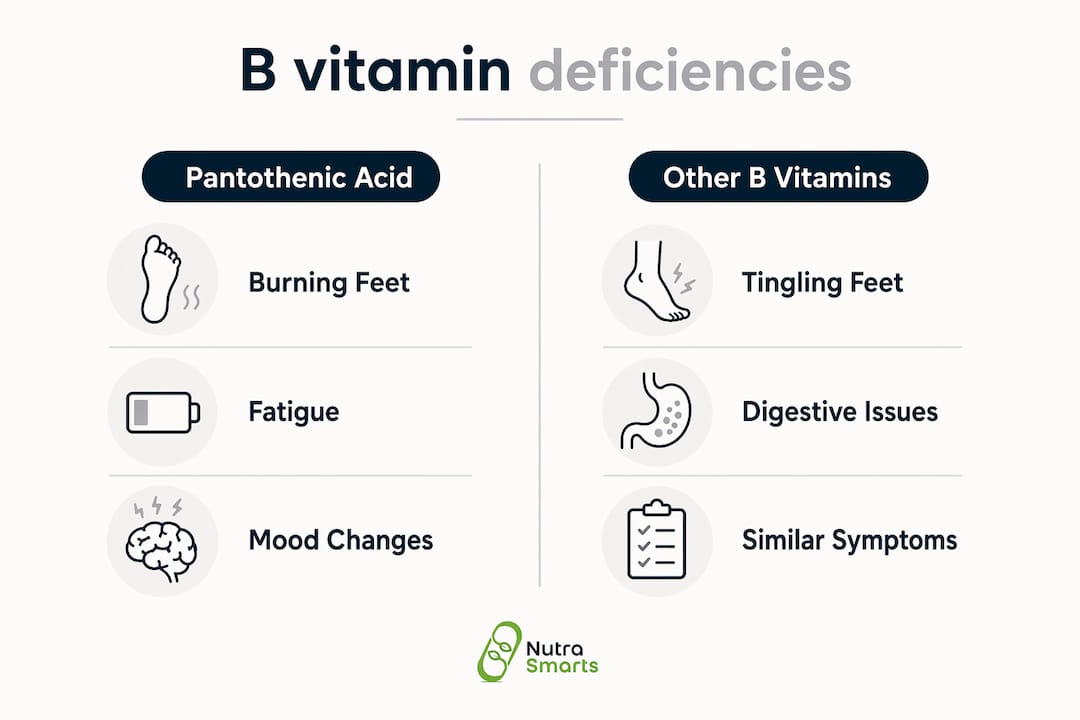
Mood disturbances, including irritability and low-grade depression, connect to B5's role in producing stress hormones via the adrenal glands. The adrenal cortex depends on pantothenic acid to synthesize cortisol and other steroid hormones. Reduced output of these hormones under stress contributes to the emotional dysregulation seen in deficiency states.
The table below compares the symptom profiles of B5 deficiency against two more common B-vitamin deficiencies to illustrate why self-diagnosis is unreliable:
| Symptom | B5 deficiency | B12 deficiency | B1 (thiamine) deficiency |
|---|---|---|---|
| Foot tingling or burning | Yes, primary sign | Yes, common | Yes, in beriberi |
| Fatigue | Yes | Yes | Yes |
| Mood changes or irritability | Yes | Yes | Yes |
| Digestive upset | Yes | Occasional | Occasional |
| Detectable by routine blood test | No | Yes | Rarely |
| Associated with alcoholism | Yes | Yes | Yes |
The table makes the diagnostic challenge clear. Every symptom of B5 deficiency appears in at least one other B-vitamin deficiency, and B12 deficiency is detectable through a standard complete blood count while B5 is not. General symptoms require medical evaluation because the same cluster of fatigue, mood changes, and digestive issues can originate from a dozen different conditions.
Pro Tip: Track your symptoms in a simple log for two weeks before your appointment. Note timing, severity, and any dietary patterns. This gives your doctor far more to work with than a verbal summary.
Why is pantothenic acid deficiency so rare, and how is it diagnosed?
Pantothenic acid earns its name from the Greek word pantos, meaning "everywhere." The vitamin is present in meat, fish, eggs, dairy, legumes, whole grains, and most vegetables. Water solubility means the body does not store B5 in significant quantities, but because dietary intake is so consistent across almost any varied diet, depletion rarely occurs. The populations genuinely at risk are narrow and specific.
The groups most likely to develop true B5 deficiency include:
- Severely malnourished individuals who have had prolonged, extreme caloric and nutritional restriction
- People with malabsorption disorders such as Crohn's disease or celiac disease, where nutrient uptake from the gut is compromised
- Chronic alcohol users, since alcohol interferes with B-vitamin absorption and increases urinary excretion
- Individuals on highly restrictive diets that eliminate most whole food groups for extended periods
- Those with rare genetic mutations affecting pantothenate kinase, an enzyme critical to B5 metabolism
Diagnosing B5 deficiency is not straightforward. Routine labs often don't detect B5 deficiency because standard metabolic panels do not include pantothenic acid levels. Clinicians instead rely on a combination of dietary history, symptom pattern, and the systematic exclusion of more common diagnoses. A doctor evaluating foot tingling will check blood glucose for diabetes, serum B12, and thyroid function before considering B5.
Medical evaluation includes a thorough diet review, assessment of medical conditions that impair absorption, and consideration of medications that deplete B vitamins. Only after ruling out more prevalent causes does B5 deficiency become a working diagnosis. This is not a flaw in the system. It reflects the statistical reality that B5 deficiency is genuinely rare while diabetes and B12 deficiency are not.
How to differentiate B5 deficiency symptoms from other conditions
Distinguishing pantothenic acid deficiency from other causes of similar symptoms requires understanding which features are specific to B5 and which are shared across multiple conditions. The signs of vitamin B5 deficiency that most closely mimic other conditions are peripheral neuropathy symptoms, since diabetes, B12 deficiency, and even hypothyroidism all produce foot tingling and fatigue.
Several factors help clinicians and patients think through the differential:
- Diabetes produces peripheral neuropathy in a stocking-and-glove distribution and is confirmed by fasting glucose or HbA1c testing. It is the most common cause of foot tingling in adults over 40.
- B12 deficiency produces neuropathy alongside macrocytic anemia and is detectable through a standard blood panel. Risk increases with age, veganism, and use of metformin.
- Thiamine (B1) deficiency produces a condition called beriberi, which includes peripheral neuropathy and is associated with chronic alcohol use, the same risk group as B5 deficiency.
- Hypothyroidism produces fatigue, mood changes, and occasionally peripheral tingling, and is confirmed through TSH testing.
- Iron deficiency anemia produces fatigue and weakness that closely mirrors the energy symptoms of B5 deficiency but is confirmed through a complete blood count.
The practical implication is that self-diagnosis of B5 deficiency is unreliable without professional assessment. If you are experiencing foot tingling, persistent fatigue, or mood instability, the correct first step is a blood panel that checks B12, glucose, thyroid function, and iron. You can explore deficiency symptoms by cause to understand the broader pattern before your appointment, but that research should inform your conversation with a doctor, not replace it.
The pantothenic acid benefits that make deficiency so rare are also what make it easy to correct once identified. Increasing dietary intake through eggs, beef liver, sunflower seeds, and avocado, or supplementing with a B-complex, typically resolves symptoms within weeks in confirmed cases.
Key takeaways
Pantothenic acid deficiency is rare, neurologically distinctive, and almost always misattributed to more common conditions before the correct diagnosis is made.
| Point | Details |
|---|---|
| Primary neurological sign | Burning or tingling feet (paresthesia) is the most specific symptom of B5 deficiency. |
| General symptoms are nonspecific | Fatigue, mood changes, and digestive upset appear in many deficiencies and require clinical evaluation. |
| Deficiency is genuinely rare | True B5 deficiency occurs almost exclusively in severe malnutrition, malabsorption disorders, or chronic alcohol use. |
| Routine labs won't confirm it | Diagnosis relies on dietary history, symptom pattern, and exclusion of more common causes. |
| Correct first steps | Check B12, glucose, thyroid, and iron before attributing symptoms to B5 deficiency. |
The uncomfortable truth about B5 deficiency diagnoses
At Nutrasmarts, we review hundreds of supplement inquiries each month from people convinced they have pantothenic acid deficiency based on symptoms they read about online. The pattern is consistent: someone experiences foot tingling or persistent fatigue, searches their symptoms, lands on a B5 deficiency article, and concludes they need to supplement. The problem is that in the vast majority of these cases, the actual cause is B12 deficiency, prediabetes, or iron deficiency anemia, all of which are confirmed by a $40 blood panel.
This is not a criticism of people doing their own research. It is a structural problem with how symptom information is presented online. Most articles list the symptoms of B5 deficiency without adequately communicating how rare the condition is or how thoroughly it overlaps with far more common diagnoses. The result is that people spend money on B-complex supplements when what they actually need is a doctor's visit.
The one scenario where B5 awareness genuinely matters is in populations with known absorption issues or severely restricted diets. If you have Crohn's disease, have recently undergone bariatric surgery, or are managing chronic alcohol use, B5 status is worth discussing with your physician as part of a broader nutritional assessment. For everyone else, the vitamin deficiency risk factors that matter most are the ones your blood work can actually confirm.
— NutraSmarts
Find the right support for your symptoms

If you have ruled out common causes and are working with a healthcare provider to address a confirmed or suspected nutrient deficiency, Nutrasmarts offers a research-backed resource to guide your next steps. The metabolic health supplement reviews cover 130 products evaluated against peer-reviewed evidence, with each ingredient linked to clinical trial citations. For readers dealing with fatigue or neurological symptoms, the supplements by symptom tool lets you filter by specific complaint, from brain fog to nerve discomfort, and see which ingredients have the strongest evidence base. Every recommendation on Nutrasmarts is FDA-compliant and grounded in the same scientific rigor you would expect from a clinical source. Always consult your healthcare provider before starting any new supplement regimen.
FAQ
What is the most distinctive symptom of pantothenic acid deficiency?
The most specific sign is paresthesia, a tingling or burning sensation in the feet, sometimes called burning feet syndrome. This neurological symptom is the clearest clinical indicator of B5 deficiency, though it also appears in B12 deficiency and diabetic neuropathy.
How rare is pantothenic acid deficiency?
True pantothenic acid deficiency is extremely rare in people who eat a varied diet, since B5 is present in nearly all whole foods. It occurs almost exclusively in cases of severe malnutrition, chronic alcohol use, or malabsorption disorders like Crohn's disease.
Can fatigue alone indicate a B5 deficiency?
Fatigue alone is not a reliable indicator of B5 deficiency. It is a nonspecific symptom that appears across dozens of conditions, including iron deficiency anemia, hypothyroidism, and B12 deficiency, all of which are more common and detectable through standard blood tests.
How is pantothenic acid deficiency diagnosed?
There is no routine blood test for B5 deficiency. Clinicians diagnose it by reviewing dietary history, ruling out more common causes of the same symptoms, and assessing risk factors like malabsorption or restricted eating patterns.
What foods prevent pantothenic acid deficiency?
Pantothenic acid food sources include beef liver, eggs, sunflower seeds, avocado, chicken, and whole grains. A diet that includes any combination of these foods consistently provides sufficient B5 for most adults.