
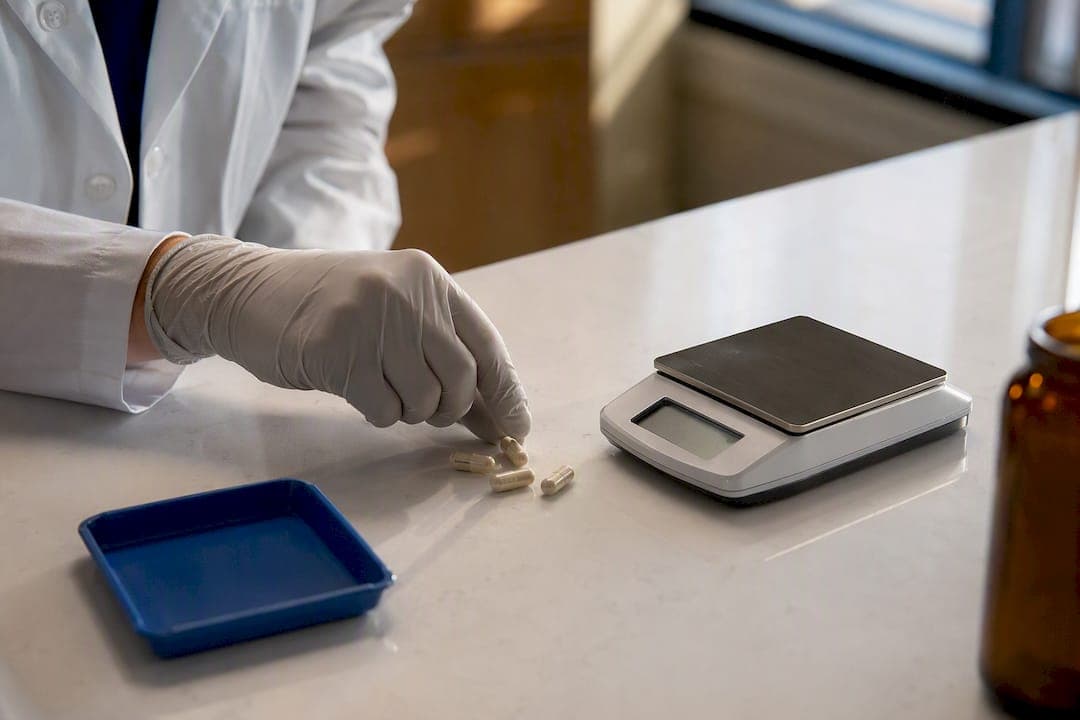
Selenium toxicity, or selenosis, happens when intake climbs past the body's tolerance and causes garlic-smelling breath, a metallic taste, hair loss, and brittle nails. The adult tolerable upper intake level (UL) is 400 mcg per day, and anyone with these symptoms after high-dose supplements or a selenium-heavy diet should stop intake immediately and get evaluated by a clinician.
TL;DR:
- Consuming six to eight Brazil nuts daily can approach or exceed the 400 mcg upper intake limit, especially when combined with other selenium sources.
- Chronic toxicity usually develops over weeks or months from consistent intake above 900 mcg per day, leading to symptoms like hair loss and brittle nails.
- Acute toxicity can result from a manufacturing error delivering doses hundreds of times higher than intended, causing severe systemic symptoms.
- The main signs of selenium poisoning include garlic-smelling breath, metallic taste, hair loss, nail changes, and in severe cases, organ involvement.
- To prevent toxicity, always calculate total daily intake from food and supplements and avoid stacking multiple selenium-containing products.
Table of Contents
- What Is Selenium Toxicity? Acute vs. Chronic Selenosis
- Signs and Symptoms: Early, Chronic, and Severe Presentations
- How Much Selenium Is Too Much?
- Common Causes and Exposure Routes
- Diagnosing Selenium Toxicity: Tests and Interpretation
- Treating Selenium Toxicity: What Actually Works
- Complications, Prognosis, and Long-Term Outcomes
- Preventing Selenium Toxicity and Using Supplements Safely
- Checking Selenium Content Before You Take a Supplement
- What the Evidence Actually Tells Us About Selenium Risk
- Sources
What Is Selenium Toxicity? Acute vs. Chronic Selenosis
Selenium is an essential trace mineral, meaning your body needs a small daily amount to run enzymes involved in antioxidant defense and thyroid hormone metabolism. The trouble starts because that "small amount" window is narrow. Selenium behaves less like a nutrient you flush out and more like one you bank, accumulating in the liver and kidneys over time. There's no efficient purge mechanism, so a diet or supplement routine that runs even modestly high, day after day, can quietly build toward toxic levels.
Clinicians generally split selenium toxicity into two distinct patterns. Acute toxicity comes from a single large dose or a short burst of extreme exposure, usually a supplement dosing error, and hits fast with severe gastrointestinal distress, cardiac strain, or respiratory symptoms. Chronic toxicity, the more common presentation, develops over weeks to months from a diet or supplement habit that consistently exceeds the UL. This is the classic "selenosis" picture: garlic breath, hair thinning, and nail changes that creep in gradually.
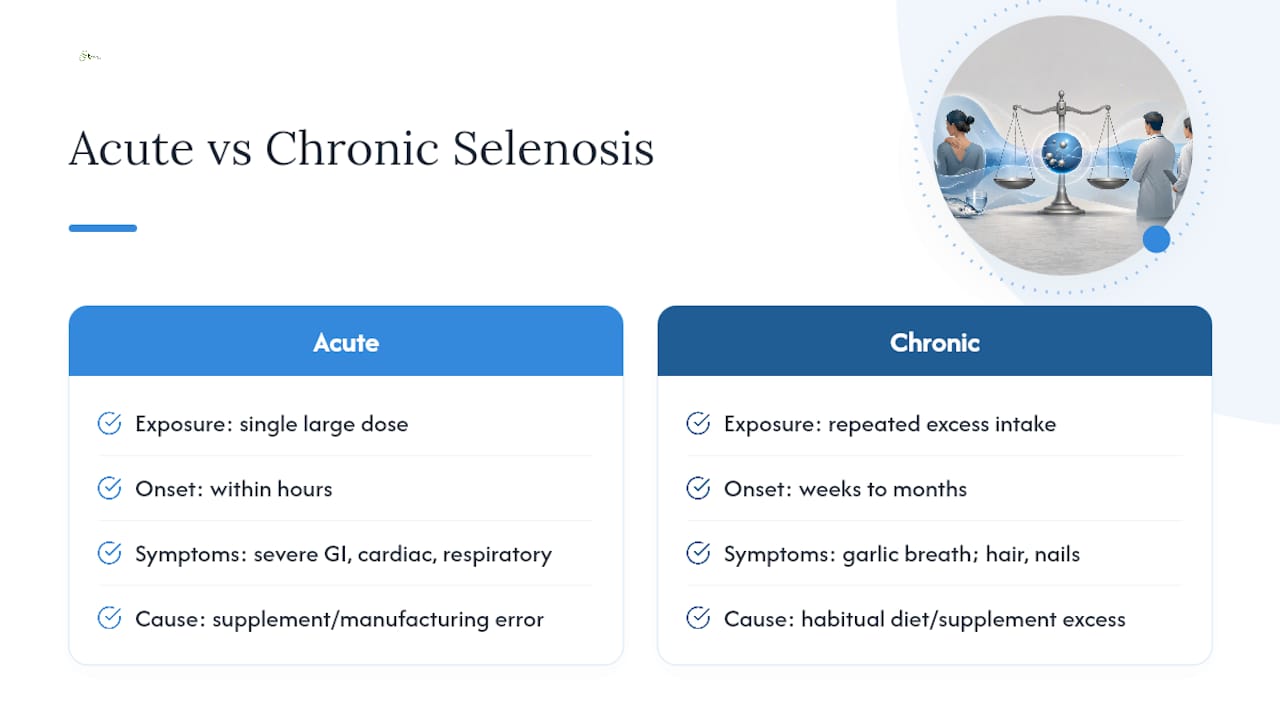
The clearest illustration of how bad acute poisoning can get comes from a documented case series where a liquid dietary supplement was manufactured with roughly 200 times its labeled selenium content. More than 200 people who took it developed severe adverse reactions, ranging from hair loss to cardiac and neurologic symptoms. That single manufacturing error did more to demonstrate real-world selenium risk than most textbook descriptions ever could. It's also the reason regulators and clinicians treat supplement quality control as a genuine safety issue, not a technicality.
Signs and Symptoms: Early, Chronic, and Severe Presentations
The earliest tip-off is often something you smell before you feel sick: a distinctive garlic-like odor on the breath, paired with a metallic taste that lingers regardless of what you eat. These two signs alone should prompt a hard look at recent selenium intake, whether from supplements, fortified foods, or a Brazil-nut habit.
Early symptoms (hours to days after high exposure):
- Garlic breath and metallic taste
- Nausea, vomiting, and diarrhea
- Fatigue and irritability
Chronic signs (weeks to months of excess intake):
- Hair thinning or loss
- Brittle, discolored, or deformed nails
- Skin rashes or dermatitis
- Persistent fatigue and mood changes
Severe or advanced features, seen mostly in acute mass-exposure cases or long-neglected chronic overexposure, include peripheral neuropathy, tremor, respiratory distress, and in the worst cases, cardiac or renal involvement. The documented supplement-poisoning outbreak that affected more than 200 people showed exactly this spectrum: some patients had mild GI upset, others developed nail and hair changes, and a subset experienced more serious systemic effects.
Pro Tip: Garlic breath with no garlic on the menu is one of the most reliable, low-tech clues in toxicology. If a patient or a family member notices it alongside new hair or nail changes, ask about every supplement bottle in the house, not just the one labeled "selenium."
Timeline matters here. A patient who took one contaminated capsule and became sick within hours is a different clinical animal than someone whose nails have been crumbling for three months on a daily multi-mineral stack. The first needs urgent care; the second needs a careful intake history and probably a change in supplement routine.
How Much Selenium Is Too Much?
The tolerable upper intake level for adults sits at 400 mcg per day, a threshold the Food and Nutrition Board set specifically to prevent hair and nail brittleness, the earliest reliable marker of chronic overexposure. That number isn't arbitrary. It reflects the dose at which measurable signs start showing up in otherwise healthy adults, not a theoretical ceiling.
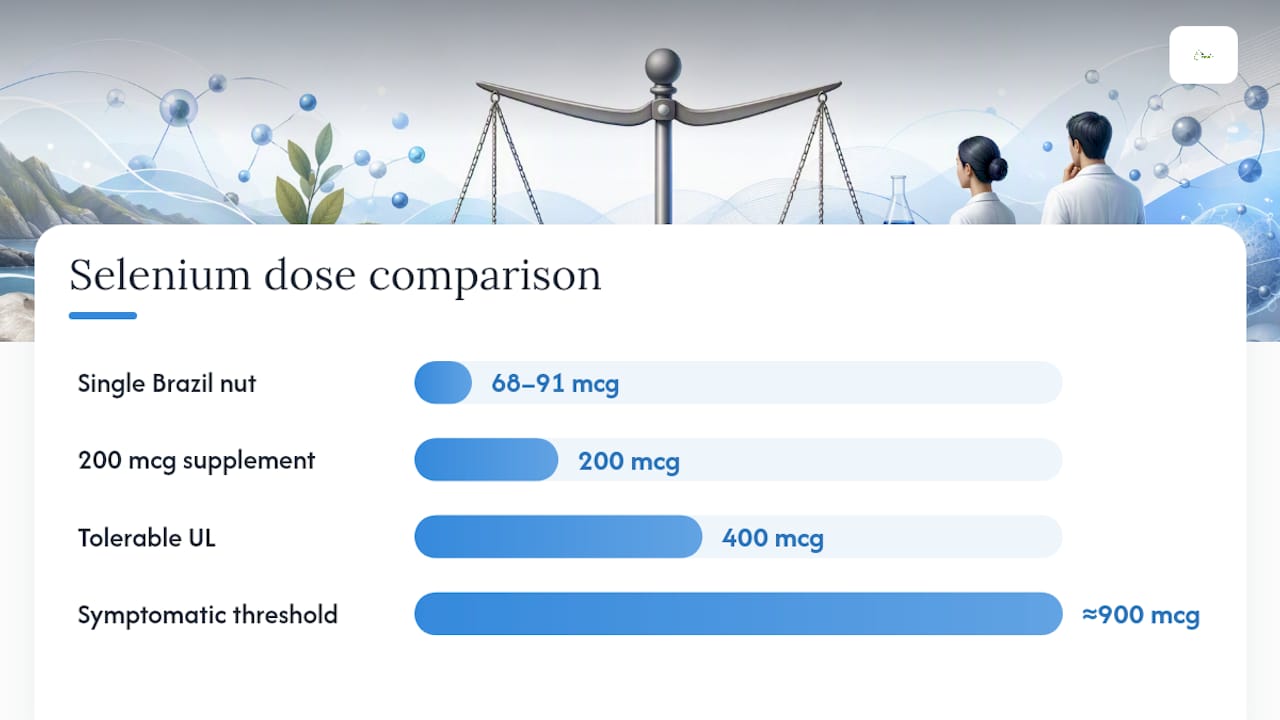
Case literature and clinical references point to sustained intakes above roughly 900 mcg per day as a threshold where symptomatic toxicity becomes common, though the Merck Manual notes plasma toxic levels aren't precisely defined, which is exactly why history and physical exam carry so much diagnostic weight. On the extreme end, the manufacturing-error cases involved doses in the multiple-milligram range, hundreds of times the intended amount, which is a different category of exposure entirely from dietary overreach.
Real-world dose math:
- A single Brazil nut typically contains 68 to 91 mcg of selenium.
- Eating six to eight Brazil nuts a day can already put you near or over the 400 mcg UL, before counting anything else.
- Add a 200 mcg selenium supplement on top of a seafood-heavy dinner and an organ-meat-based diet, and exceeding the UL becomes easy without anyone realizing it.
A daily Brazil-nut habit combined with a general multivitamin containing selenium is one of the most common, and most overlooked, ways health-conscious people accidentally cross the UL. Nobody thinks of a handful of nuts as a supplement, but selenium doesn't care what food category it arrived in.
Common Causes and Exposure Routes
Selenium toxicity almost always traces back to one of a handful of sources, and figuring out which one applies is the first step in stopping it.
- Selenium-rich foods eaten habitually: Brazil nuts top the list, followed by certain seafood and organ meats, which can carry meaningfully high selenium content depending on soil and feed conditions.
- Single-ingredient selenium supplements: often sold in 100 to 200 mcg doses, easy to stack unintentionally with a multivitamin that already contains selenium.
- Multi-ingredient supplement stacking: multivitamins, thyroid-support formulas, and antioxidant blends frequently include selenium, and taking two or three such products daily adds up fast without anyone doing the math.
- Occupational and environmental inhalation: workers in selenium refining, electronics manufacturing, or certain agricultural settings face inhalation exposure that the general population rarely encounters, since most public exposure comes through ingestion rather than air.
- Manufacturing and labeling errors: the most dangerous route by far, responsible for the largest documented acute poisoning clusters, because a single batch error can deliver toxic doses to hundreds of people simultaneously.
One detail clinicians should keep in mind: people with existing selenium deficiency tend to absorb dietary selenium more efficiently, which means a person correcting a deficiency with aggressive supplementation can overshoot the UL faster than someone with normal baseline status.
Diagnosing Selenium Toxicity: Tests and Interpretation
There's no single lab value that definitively confirms selenosis. Diagnosis leans heavily on a good exposure history and physical findings, with blood and urine testing serving as supporting evidence rather than a stand-alone verdict.
- Serum or whole-blood selenium: reflects recent exposure, useful within days of a suspected high dose, but toxic cutoffs aren't sharply defined in clinical practice.
- Urinary selenium: also captures recent intake and can help confirm an acute exposure event, particularly useful when a specific supplement lot is suspected.
- Hair and nail selenium: reflects exposure over the preceding months, which makes it valuable for chronic cases where the timeline of overexposure is unclear.
- Ancillary labs: renal function, liver enzymes, and an ECG when cardiac symptoms are present, since severe cases can involve organ-level strain.
Pro Tip: Order both a blood and a urine sample when acute poisoning is suspected, and add a hair or nail sample if the history suggests weeks or months of overexposure. One snapshot rarely tells the whole story.
Communicating uncertainty to the patient matters here. A blood selenium result that comes back "elevated" doesn't map cleanly to a specific symptom severity, so the diagnosis really rests on the whole clinical picture: symptoms, timeline, and exposure history together, not a lab number in isolation.
Treating Selenium Toxicity: What Actually Works
The first and most important step in any selenium toxicity treatment plan is stopping the source. There's no specific antidote, and chelation therapy hasn't been established as effective for selenium poisoning, so management is almost entirely about removing exposure and supporting the body while it recovers.
For mild to moderate chronic cases, that often means:
- Discontinuing all selenium-containing supplements and reviewing every product label in the house, including multivitamins and thyroid-support formulas.
- Outpatient monitoring of symptoms, with follow-up on hair and nail changes over the following weeks.
- Dietary adjustment, cutting back on Brazil nuts or other selenium-dense foods that were driving the excess.
Severe acute cases, particularly those tied to a manufacturing error or a large single dose, need a different level of care. Emergency referral is warranted for anyone showing respiratory distress, cardiac symptoms, significant neurologic signs, or persistent vomiting that risks dehydration. Inpatient management centers on IV fluids, respiratory support if needed, and close cardiac and renal monitoring until the acute phase resolves.
Pro Tip: Hair and nail regrowth is a genuinely useful recovery marker. Once selenium exposure stops, most patients see nail brittleness improve within a few months as new, healthy nail growth replaces the affected tissue.
Counsel patients clearly before they consider returning to any selenium supplementation: confirm actual dietary intake first, ideally with a specific target well under the 400 mcg UL, and avoid restarting a supplement blindly just because symptoms resolved.
Complications, Prognosis, and Long-Term Outcomes
Most chronic selenosis cases carry a genuinely good prognosis once the exposure stops. Hair and nail changes are typically reversible, with visible improvement over subsequent weeks and months as the tissue regenerates. This is the pattern seen across most reported chronic cases, where symptoms track closely with intake and resolve once intake normalizes.
Severe acute poisoning is a different story. In the more serious documented cases, particularly those involving very high manufacturing-error doses, some patients experienced lingering effects such as peripheral neuropathy or organ strain that took longer to resolve, or in rare instances didn't fully reverse. Risk of these more persistent outcomes tracks with how high the dose was and how long exposure continued before it was caught.
It's worth being honest about the limits of the evidence here. Much of what's known about severe outcomes comes from case reports and occupational exposure series rather than large controlled studies, so individual prognosis after an unusual or extreme exposure carries real uncertainty. That uncertainty is itself a reason to treat any suspected acute poisoning seriously rather than waiting to see how symptoms evolve.
Preventing Selenium Toxicity and Using Supplements Safely
Preventing selenosis mostly comes down to arithmetic: knowing what you're already getting from food before adding a supplement on top.
- Add up your sources: tally selenium from diet and every supplement you take daily, and keep the combined total under the 400 mcg UL.
- Read labels carefully: check whether a product uses selenium yeast or selenomethionine, and confirm whether the listed dose is per serving or per capsule, since multi-capsule servings can double the real intake.
- Skip the daily Brazil-nut habit: a few nuts a week is very different from a handful every day.
- Check multi-ingredient products: thyroid-support and antioxidant blends often bury selenium in the formula, and stacking two such products is an easy way to overshoot the UL.
- Watch iodine and thyroid interactions: excess selenium can affect thyroid hormone metabolism, so anyone with existing thyroid concerns should be more cautious about high-dose selenium.
- Note drug interactions: certain chemotherapeutic agents, including cisplatin, affect selenium status, so patients on these medications should discuss selenium supplementation with their care team before adding it.
If your total daily intake is unclear, or a label doesn't make the math obvious, that ambiguity is itself a reason to get testing or a clinician's input before continuing.
Checking Selenium Content Before You Take a Supplement
The fastest way to avoid selenosis is to know the numbers before you swallow anything. Start with the ingredient profile for selenium to see typical dosing ranges and the studies behind them. Compare that against what your current multivitamin or thyroid formula already lists on its label.
For anyone formulating their own stack, or just trying to verify a label that lists selenium per "serving" instead of per capsule, the free Supplement Facts label creator lets you calculate exact per-day totals across multiple ingredients instead of doing the math by hand.
These tools are most useful when a label is ambiguous, a product combines several selenium sources, or you're trying to reconcile food intake with a supplement routine. They're not a substitute for a clinician when symptoms are already present. If you're seeing early signs like garlic breath or nail changes, verifying doses after the fact doesn't replace medical evaluation.
What the Evidence Actually Tells Us About Selenium Risk
The conventional advice on selenium, "it's an antioxidant, more is better," is exactly backwards, and the case literature makes that clear. Selenium's toxicity margin is unusually narrow for a nutrient sold so casually in gas-station multivitamins. A 400 mcg UL sounds generous until you stack a Brazil-nut habit, a multivitamin, and a thyroid formula on the same day.
What gets underestimated is how often toxicity comes from stacking, not from any single reckless dose. Nobody sets out to take 900 mcg of selenium. They take three products that each seem reasonable alone. That's the gap conventional supplement advice rarely addresses: total daily load across every source, not just the one bottle labeled "selenium."
If there's one priority for readers here, it's this: do the math before you add another selenium-containing product to your routine, not after symptoms show up. Garlic breath and nail changes are your body's way of telling you the math already failed.
— NutraSmarts
Sources
- Selenium • Linus Pauling Institute
- Selenium Toxicity - Merck Manual Professional
- Acute Selenium Toxicity Associated With a Dietary Supplement (case series)
- Toxicological profile for selenium (ATSDR)