
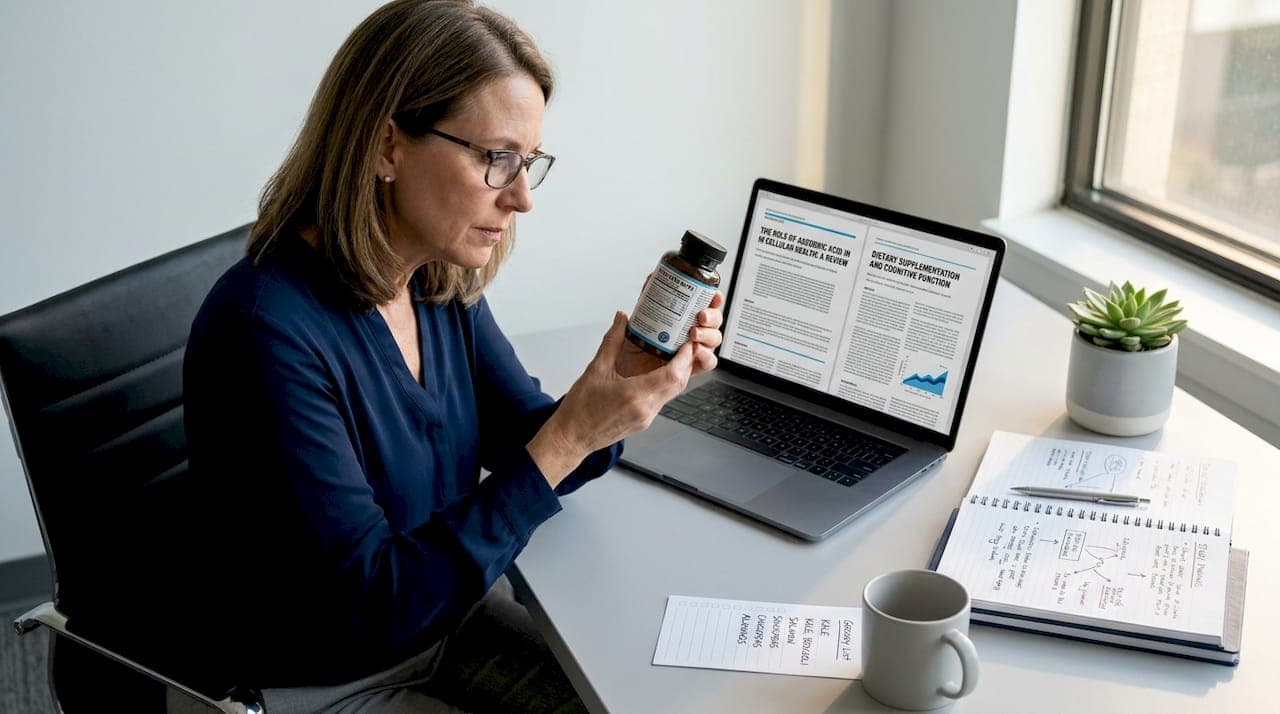
Most supplement labels look professional and trustworthy. But a closer look reveals a problem most shoppers never suspect: supplement ingredient transparency explained properly shows that only a fraction of products actually match their label claims exactly. That gap between what's printed and what's inside a bottle affects your safety, your results, and your ability to make genuinely informed health decisions. This article breaks down what the law requires, where the system falls short, how to read labels like an expert, and how to protect yourself when buying supplements.
Table of Contents
- Key takeaways
- Supplement ingredient transparency explained: what the law actually requires
- The regulatory gaps consumers rarely hear about
- How to read supplement labels and spot red flags
- Why dosage amounts matter as much as ingredient names
- Choosing supplements that actually deliver on transparency
- My take on where the industry needs to go
- Find supplements you can actually trust
- FAQ
Key takeaways
| Point | Details |
|---|---|
| Labels follow strict rules but have gaps | FDA mandates nine label elements, yet pre-market approval is not required for supplements. |
| Proprietary blends hide real doses | Blends list ingredients without amounts, making it impossible to verify clinical effectiveness. |
| Ingredient form changes everything | Magnesium bisglycinate absorbs far better than magnesium oxide, yet both can appear on a label. |
| Adulteration is a real risk | Weight loss and sexual enhancement supplements show contamination rates between 12% and 58%. |
| Third-party seals fill the gap | Certifications from USP, NSF, and ConsumerLab provide the verification FDA does not require pre-sale. |
Supplement ingredient transparency explained: what the law actually requires
The FDA does not approve dietary supplements before they hit store shelves. What it does require is that labels meet specific standards under 21 CFR Part 101, and that list is longer than most consumers realize.
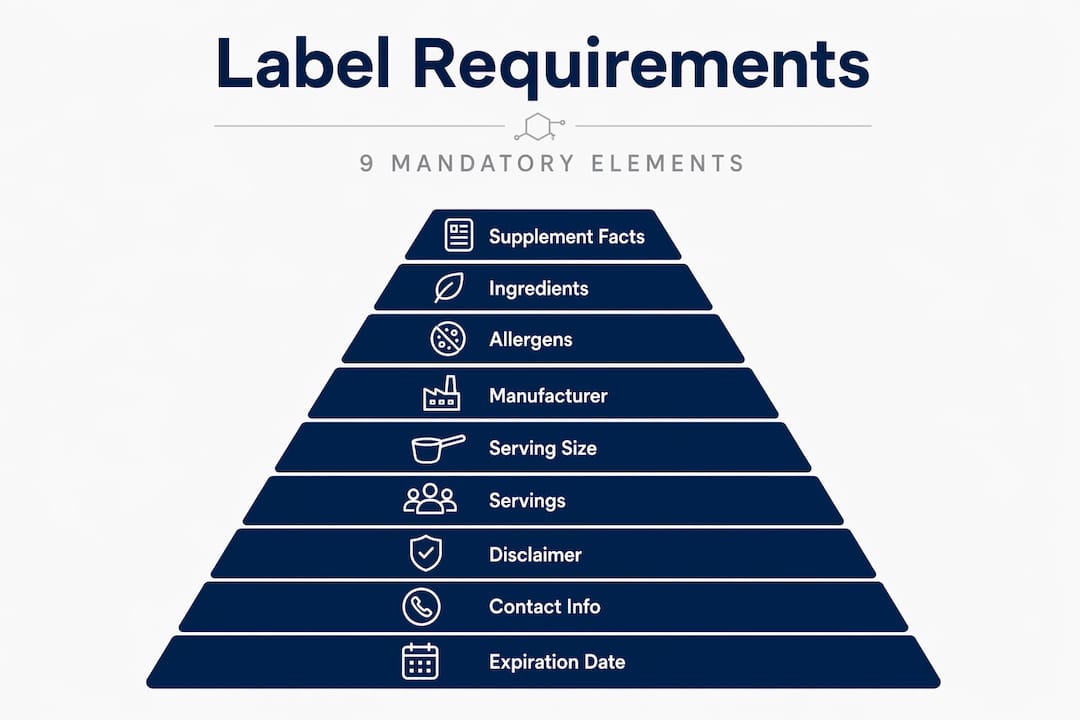
The nine mandatory label elements
Every compliant supplement label must include a Supplement Facts panel, a full ingredient list, allergen declarations, the manufacturer's contact information, net quantity of contents, and a structure-function claim disclaimer. That disclaimer reads: "This statement has not been evaluated by the Food and Drug Administration. This product is not intended to diagnose, treat, cure, or prevent any disease." It sounds routine, but missing or undersized disclaimers have triggered FDA warning letters repeatedly.
Allergen disclosures got stricter in January 2023 when the FASTER Act added sesame as the ninth major allergen. Manufacturers must now declare sesame either within the ingredient list or in a separate "Contains" statement. For consumers with allergies, this is a meaningful change worth checking on any product purchased before 2023.
| Label Element | What to Look For |
|---|---|
| Supplement Facts panel | Serving size, servings per container, ingredient amounts |
| Ingredient list | All other ingredients including fillers and binders |
| Allergen declaration | Sesame, milk, eggs, fish, shellfish, tree nuts, peanuts, wheat, soybeans |
| Structure-function disclaimer | Full FDA disclaimer text, legible font size |
| Manufacturer info | Name and address for accountability |
Pro Tip: If a supplement's structure-function claim sounds like a disease treatment ("reduces blood sugar," "treats anxiety"), that is a red flag. Legal structure-function claims describe how a nutrient affects normal body function, not disease outcomes.
The FDA's enforcement role here is reactive, not proactive. Manufacturers are responsible for compliance, and the agency investigates after problems surface. That reality shapes everything downstream.
The regulatory gaps consumers rarely hear about
Here is the uncomfortable truth about supplement ingredient labeling: there is no comprehensive federal registry where manufacturers must submit their product formulas before selling. Researchers, regulators, and even responsible manufacturers sometimes call this the "Aisle of Darkness" problem. Nobody knows exactly what is on store shelves at any given moment.

Industry groups like the Council for Responsible Nutrition have pushed hard for change. Their Dietary Supplement Listing Act campaign, nicknamed "Sergeant Searchlight," calls on manufacturers to voluntarily submit label data to the FDA so the agency can maintain a public product database. The goal is simple: if regulators and consumers can see what is being sold, bad actors have fewer places to hide.
The core problem traces back to the 1994 Dietary Supplement Health and Education Act (DSHEA). Under DSHEA's framework, supplements reach market without pre-market safety testing. The FDA can act after harm is reported, but by then consumers may already be affected. This reactive model creates real gaps, especially in high-risk product categories.
Why does this matter for you as a buyer?
- You cannot assume a product is safe just because it is sold at a major retailer
- No public database currently lets you verify a specific product's formula before purchase
- Manufacturers who want to hide poor formulations face few pre-market barriers
- Responsible companies that invest in quality have no automatic way to stand out from those that do not
- Increased transparency benefits honest manufacturers too, because it separates them from low-quality competitors
Legislation requiring a product registry would change this dynamic significantly. Until that happens, the burden of verification falls on you.
How to read supplement labels and spot red flags
Understanding supplement ingredients on a label goes beyond scanning the ingredient list. The details buried in parentheses and fine print often tell a more honest story than the front panel ever will.
Active ingredients vs. other ingredients
The Supplement Facts panel lists your active dietary ingredients with their amounts per serving. Below the panel, you will find "Other Ingredients," which covers excipients: fillers, binders, flow agents, and coatings. These are not inert for everyone. Titanium dioxide, carrageenan, and artificial dyes appear in this section and have raised questions in the research community. Knowing the difference between what is doing the work and what is just holding the pill together helps you evaluate a product more accurately.
Why proprietary blends are a transparency problem
A proprietary blend lists multiple ingredients under one umbrella name with a single combined weight. You might see "Energy Matrix 500 mg" containing caffeine, green tea extract, and tyrosine, but you have no idea how much of each is actually present. True ingredient transparency means knowing the exact dose of every ingredient and the clinical rationale behind it. A proprietary blend makes that impossible.
Ingredient forms and bioavailability
This is where health supplement ingredient clarity gets technical in a way that genuinely matters. The chemical form of an ingredient determines how well your body absorbs and uses it. Magnesium bisglycinate absorbs significantly better than magnesium oxide, yet both can appear on a label simply as "magnesium." The form is usually listed in parentheses after the ingredient name. If you see "Magnesium (as magnesium oxide)" on a product charging a premium price, that is a signal worth noting.
Pro Tip: When comparing two supplements with the same ingredient, check the form in parentheses first. A lower-dose product using a chelated or bisglycinate form can outperform a higher-dose product using an oxide or carbonate form.
- Check the Supplement Facts panel for exact milligram amounts per serving
- Look at the form listed in parentheses for each mineral or specialized compound
- Search the "Other Ingredients" section for additives you may want to avoid
- Verify that any structure-function claim has the required FDA disclaimer
- Look for a third-party certification seal from USP, NSF International, or ConsumerLab
Third-party certifications are not just marketing badges. They represent independent laboratory verification that what is on the label is actually in the bottle, at the stated amounts, and free of common contaminants.
Why dosage amounts matter as much as ingredient names
Listing an ingredient is not the same as listing an effective dose. This distinction sits at the heart of ingredient transparency in supplements and is where many products quietly fail.
Clinical research should drive dosage decisions, not just the minimum amount needed to justify a label claim. A product containing 50 mg of ashwagandha can technically list ashwagandha as an ingredient, but the clinical studies supporting stress reduction typically use 300 to 600 mg of a standardized extract. That gap between label presence and clinical dose is a common way companies create the appearance of a science-backed formula without delivering the science.
"Supplements are tools to bridge nutritional gaps, not primary treatments. Consumers benefit most when they can adjust doses based on personal health data, which makes full ingredient disclosure genuinely essential for personalized use."
Fat-soluble vitamins add another layer of complexity. Vitamins A, D, E, and K accumulate in body tissue rather than flushing out daily. Overdosing is a real risk, and the safe upper limit varies significantly by individual. The test and titrate approach recommends checking blood levels before supplementing and adjusting doses based on actual measurements rather than following a generic serving size.
The risks of undisclosed ingredients go beyond underdosing:
- Weight loss supplements show adulteration rates up to 58% with hidden drugs like sibutramine, a withdrawn cardiovascular risk medication
- Sexual enhancement products frequently contain undisclosed sildenafil, which interacts dangerously with nitrate medications
- Hidden stimulants in pre-workout and fat-burning products have contributed to adverse cardiovascular events
- Consumers with chronic conditions or on prescription medications face the highest risk from these hidden additions
Knowing the dose is not just about getting results. It is about not accidentally harming yourself.
Choosing supplements that actually deliver on transparency
Applying everything above to a real purchase decision does not need to be complicated. A few consistent habits separate informed buyers from everyone else.
- Reject proprietary blends for core supplements. If a product hides its doses behind a blend name, move on. Full disclosure products exist in every major category.
- Prioritize third-party tested products. Independent testing seals from USP, NSF, or ConsumerLab confirm that the label reflects reality. No seal does not mean the product is bad, but it does mean you are taking the manufacturer's word for it.
- Be extra cautious with weight loss and sexual enhancement products. These categories carry the highest documented adulteration rates. If you choose to use them, third-party testing is not optional.
- Cross-reference ingredient doses against clinical literature. You do not need a research degree for this. Databases like the one at Nutrasmarts link each ingredient to peer-reviewed studies and clinical trial citations, so you can check whether a product's dose matches what the research actually used.
- Use comparison tools before buying. Seeing two products side by side on ingredient forms, doses, and certifications reveals differences that individual labels obscure.
The supplements by symptom approach also helps narrow your search. Rather than starting with a brand and working backward, starting with your specific health concern and matching it to evidence-backed ingredients puts the science first.
My take on where the industry needs to go
I've spent years watching consumers get burned by supplement labels that look credible but deliver very little. The pattern is consistent: a flashy front panel, a proprietary blend in the back, and doses that would not move the needle in any clinical trial. The current regulatory framework makes this easy to get away with.
What frustrates me most is that the tools for doing this right already exist. Clinical dosing data is publicly available. Third-party testing infrastructure is mature. Transparent labeling is not expensive. The companies that choose opacity do so because it is profitable, not because transparency is out of reach.
My honest advice: treat any supplement without full ingredient disclosure as an unknown quantity. Not necessarily dangerous, but unverifiable. And unverifiable means you cannot make a genuinely informed decision. The science-backed research model that Nutrasmarts is built on reflects what I believe the whole industry should look like. Every ingredient listed, every dose justified by clinical evidence, every claim tied to a study you can actually read.
Consumers who demand this standard push the market in the right direction. Every time you choose a fully disclosed product over a proprietary blend, you vote with your wallet for a more honest industry.
— NutraSmarts
Find supplements you can actually trust
Knowing how to read a label is only half the work. The other half is finding products that hold up when you look closely.
Nutrasmarts was built specifically for this kind of research. The ingredient database covers over 800 ingredients, each linked to peer-reviewed studies and clinical trial citations, so you can verify doses before you buy. If you are searching by health concern rather than brand name, the supplements by symptom tool matches your specific needs to evidence-backed options. For head-to-head product evaluation, the side-by-side comparison guides make it easy to see exactly how two products differ on ingredients, forms, and doses. No spreadsheets, no guesswork.
FAQ
What does supplement ingredient transparency mean?
Supplement ingredient transparency means a product fully discloses every ingredient by name, exact amount, and chemical form, with doses supported by clinical research. It goes beyond basic label compliance to give consumers the information needed to verify safety and effectiveness.
Why do proprietary blends reduce transparency?
Proprietary blends list multiple ingredients under a single combined weight, hiding individual doses. This makes it impossible to confirm whether any ingredient is present at a clinically effective amount.
How can I tell if a supplement dose is clinically effective?
Compare the dose on the label to amounts used in peer-reviewed clinical trials for that specific ingredient. Databases like the Nutrasmarts ingredient database link each ingredient to published research, making this comparison straightforward.
Are weight loss supplements safe to use?
Weight loss supplements carry some of the highest documented adulteration rates, with contamination between 12% and 58% involving hidden prescription drugs. Only use products verified by third-party testing organizations like USP or NSF International.
What third-party certifications should I look for on supplement labels?
Look for seals from USP, NSF International, or ConsumerLab. These organizations independently test products to confirm that label claims are accurate and that no harmful contaminants are present.