

Finding a supplement ingredient database with clinical citations, label support, or AI-powered evidence extraction makes research and development slower than it should be. Many platforms lack integrated clinical citation links, useful label builders, or transparent genomics-driven validation, forcing teams to patch together multiple solutions. This list compares supplement ingredient databases on evidence detail, label features, and scientific validation so clinicians, researchers, and formulators can match tools to their workflow.
Table of Contents
NutraSmarts
At a Glance
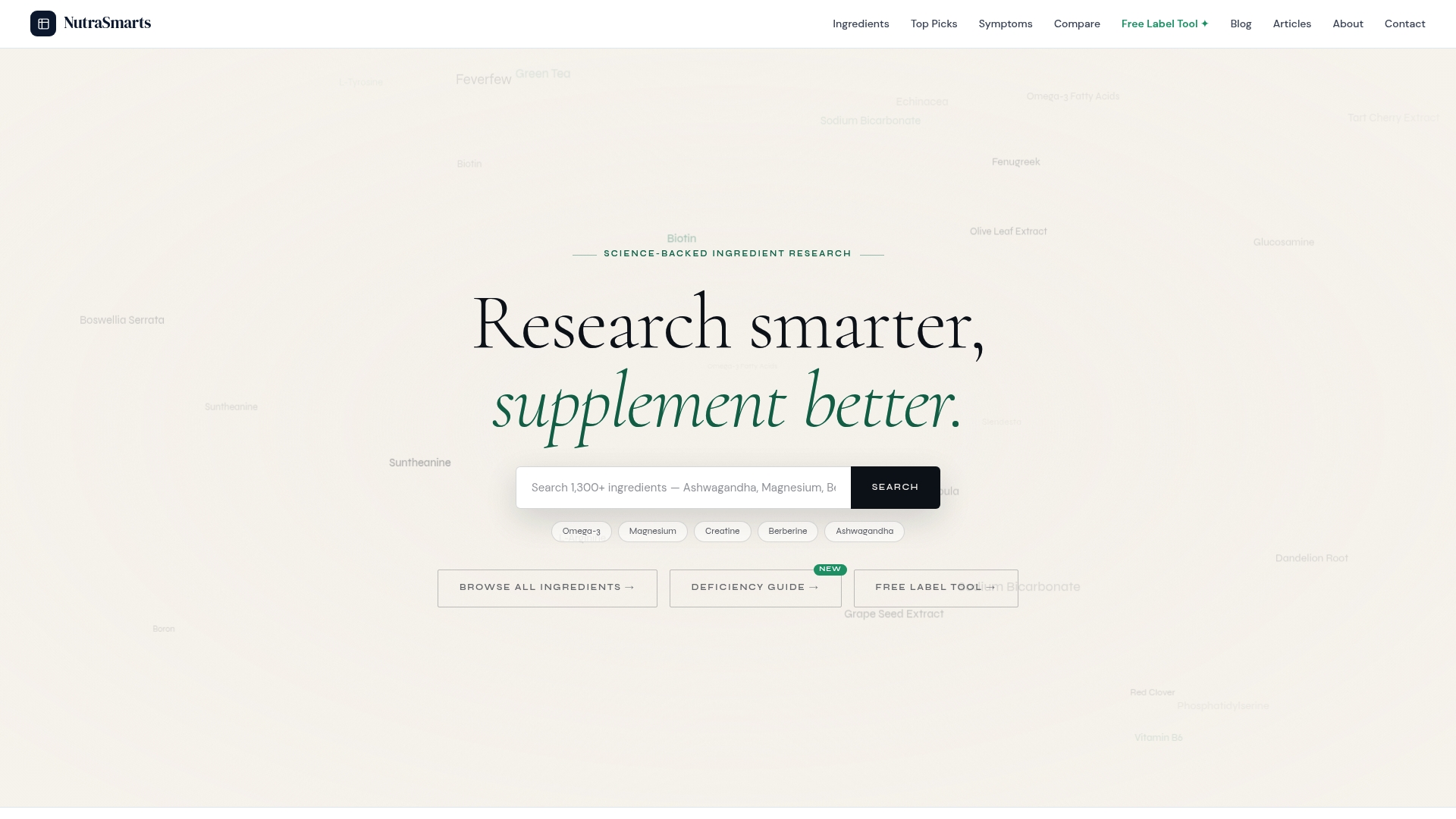
NutraSmarts reports a database of 1,300+ supplement ingredients. According to the company, many entries link to PubMed-cited clinical studies and list dosage benchmarks. The vendor also states the platform includes a free FDA-compliant label builder for Supplement Facts panels.
Core Features
The searchable ingredient database pairs each entry with clinical citations and dosage benchmarks for clinical decision making. Symptom-focused hubs let you filter ingredients for sleep, anxiety, joint pain, and other complaints while a side-by-side comparison tool highlights differences in evidence and dosing. The free label builder exports FDA-compliant Supplement Facts panels so you can create labels without spreadsheets.
Key Differentiator
What separates NutraSmarts is the pairing of ingredient-level clinical citations with an integrated label builder. That combination puts primary literature and regulatory labeling in the same workflow. For clinicians and formulators, this reduces the need to jump between citation databases and separate label tools.
Pros
Listing clinical trials and dosage benchmarks for ingredients helps you make evidence-based choices when advising patients or clients. Symptom hubs cut the time needed to find candidate ingredients for a specific complaint. Side-by-side comparisons and the included label builder streamline the check from literature to a regulatory-style label.
Cons
- Limited to ingredient-level data and label building; it does not include proprietary formulations or brand-specific information.
Who It's For
Clinicians and researchers who need quick access to primary citations and dosing information will find this useful. Supplement formulators and small companies that prepare their own labels can use the label builder to speed regulatory review. Health professionals advising clients on supplements will benefit from the symptom hubs and comparison features.
Unique Value Proposition
The free label builder generates FDA-compliant Supplement Facts panels directly from ingredient entries. That feature shortens the handoff between literature review and label creation, which reduces time spent editing spreadsheets. When paired with ingredient citations, it makes documentation for a clinical recommendation or a small-batch label easier to assemble.
Real World Use Case
A nutritional coach checks PubMed-cited trials for ingredient dosing in NutraSmarts, then uses the label builder to produce a Supplement Facts panel before recommending a blended protocol. This process keeps dosing tied to citations and speeds client-facing documentation.
Website: https://nutrasmarts.com
Canomiks

At a Glance
The company reports receiving NSF SBIR grants and recognition from Techstars and PepsiCo Greenhouse. That recognition signals investor and accelerator interest in its scientific approach. The vendor advertises certification of biological efficacy and safety for ingredients and formulations.
Core Features
Canomiks reports using proprietary genomics and AI platforms to develop and validate formulations for supplements, functional foods, beverages, and cosmeceuticals. The service includes laboratory-backed validation and a certification pathway that the company presents as evidence of biological effect and safety. It also emphasizes proprietary intellectual property intended to improve transparency between brands and consumers.
Key Differentiator
That approach pairs genetic-level profiling with algorithmic screening to prioritize ingredient combinations with biological signals. The company’s proprietary IP separates its methods from routine in vitro screening or basic literature review. This focus targets formulation science and evidence generation rather than retail or marketing services.
Pros
Combines genomics with machine learning to prioritize candidate ingredients and reduce guesswork in early formulation. That recognition from NSF SBIR grants and industry accelerators supports credibility with R&D teams evaluating third-party partners. The company centers transparency and scientific provenance, which helps brands that need documented safety and biological plausibility for label claims.
Cons
- Limited public product detail and no clear pricing or packaged offerings available online.
- Several specific service pages appear missing, making scope and deliverables hard to verify without direct contact.
- Focuses on formulation science and validation, not distribution or marketing support for finished products.
- Smaller vendor presence means some clients will need to engage for custom quotes and timelines.
When It May Not Fit
If your priority is a turnkey commercialization partner that handles marketing and distribution, this provider is the wrong fit. Brands that need transparent, published pricing or self-service tools will likely find the public information inadequate. Companies seeking broad retail support should look for a different vendor that includes channel or launch services.
Who It's For
Food and supplement industry R&D teams and product formulators who require laboratory validation and scientific documentation. Brands aiming to substantiate safety and biological activity for ingredient claims. Research groups that prioritize evidence generation over packaged marketing services.
Real World Use Case
A supplement manufacturer engages Canomiks to run genomic profiling and algorithmic screens on candidate botanicals. The vendor helps prioritize a formulation and provides laboratory validation and certification materials. That certification then supports the brand’s safety and efficacy messaging to clinicians and quality teams.
Website: https://canomiks.com
Trialo
At a Glance
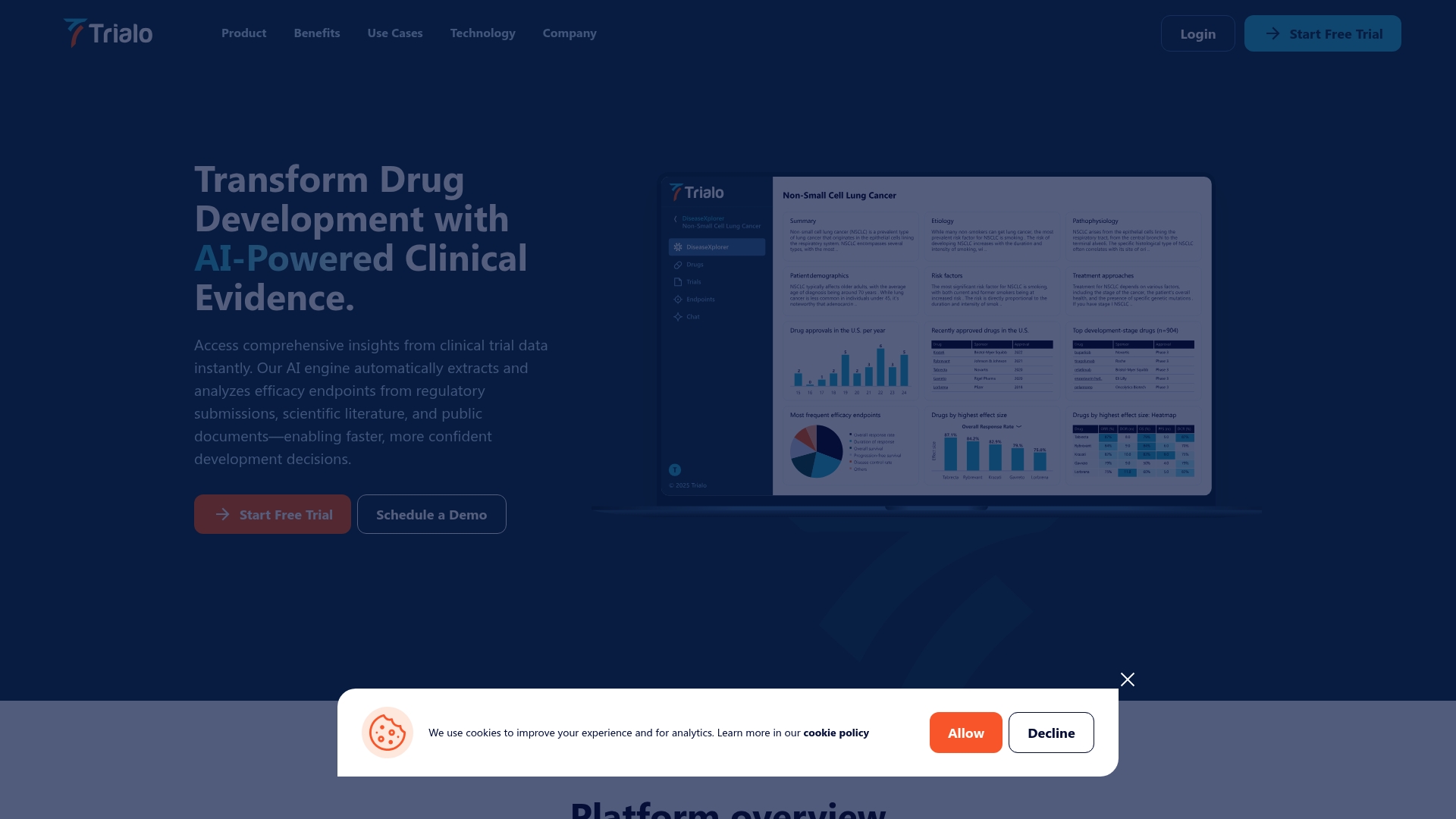
The vendor advertises that its AI engine automatically extracts and analyzes efficacy endpoints from trial reports to speed evidence review. Trialo pairs that extraction with source document verification and indication centric dashboards. The result aims to shorten the time clinicians and researchers spend on manual trial curation.
Core Features
Trialo offers AI powered extraction of clinical trial data, structured efficacy endpoint records, and source document verification that link claims back to original reports. The platform includes an indication centric analytics dashboard called DiseaseXplorer for side by side comparisons of drug efficacy, outcomes, and market dynamics. An AI research assistant generates summary insights and supports hypothesis testing across the collected evidence.
Key Differentiator
The standout feature is the AI driven extraction workflow that converts narrative trial reports into structured efficacy endpoint data. That extraction is paired with source verification so reviewers can trace a result to a specific table or figure. This combination speeds evidence synthesis for drug development decisions.
Pros
Trialo provides fast access to AI analyzed clinical trial insights, which reduces time spent on manual data extraction and improves comparability across trials. The platform supports pharma, biotech, investors, and health technology assessors, so cross functional teams can use the same evidence set. User friendly dashboards simplify therapeutic landscape navigation while the vendor reports secure cloud infrastructure and compliance features.
Cons
- Limited public detail on integrations with clinical data systems makes connecting Trialo to internal pipelines unclear.
- The free plan has noted restrictions for non US or non branded drug datasets, which may limit early global research.
- The documentation does not describe multi user collaboration features, which could hinder concurrent team review.
When It May Not Fit
If your group requires out of the box syncing with a specific clinical data warehouse, Trialo may not fit. If your work depends on exhaustive global trial coverage on the free tier, the basic plan could be too limited. Teams that need built in concurrent editing or advanced user roles should verify collaboration capabilities before committing.
Who It's For
Trialo fits pharmaceutical and biotech teams that need rapid, evidence based comparisons across candidate drugs. It serves investment analysts and CROs who want structured endpoints rather than raw PDFs. Health technology assessors can use the platform to compile source verified efficacy summaries for decision dossiers.
Real World Use Case
A biotech startup used Trialo to extract and compare primary and secondary efficacy endpoints across competing candidates in a target indication. The team reviewed structured endpoint tables in DiseaseXplorer to refine trial inclusion criteria and prioritize the most promising compound. That process shortened internal evidence review and focused their next protocol design meeting.
Pricing
Trialo offers a Free option and a Pro plan at $200/month. Enterprise pricing is available on a waitlist for larger implementations or custom contracts.
Website: https://trialo.com
Phesi Trial Accelerator
At a Glance
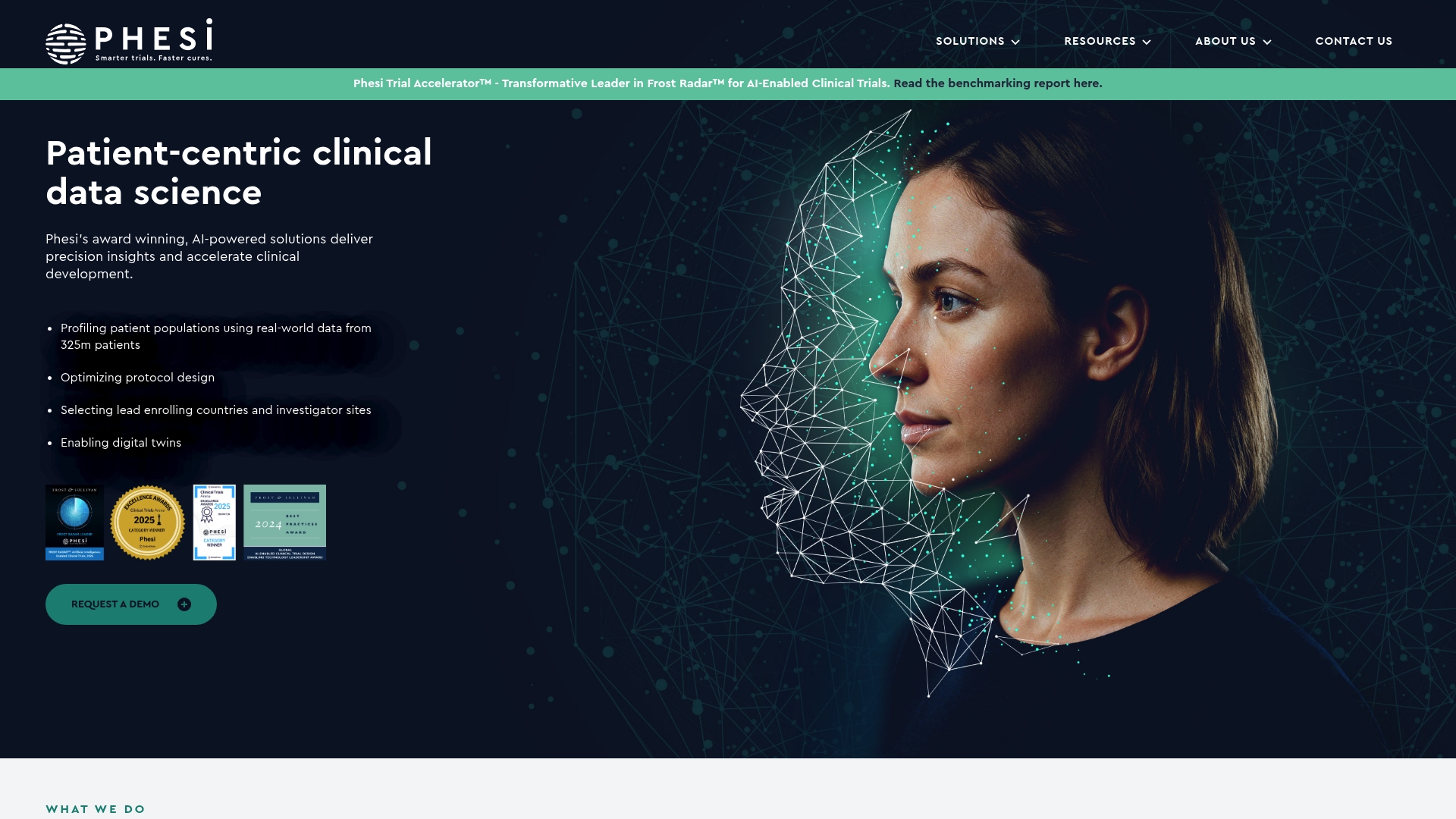
Phesi reports a database covering over 325 million patients and more than 4,000 disease indications. The vendor describes its data set as the world’s largest clinical trials database. That combination supports modeling and patient-level simulation to inform protocol choices and site selection.
Core Features
The platform combines real-world data with protocol design and optimization tools to refine eligibility criteria and endpoints. It offers Digital Twins and external control arm modeling to simulate patient trajectories and expected outcomes. Predictive views include patient profiles, projected trial performance, country selection, and investigator site forecasting.
Key Differentiator
Phesi’s main distinction is the pairing of a massive trial and patient database with AI-driven digital twin technology. The vendor claims this mix lets teams test protocol variants virtually and estimate recruitment and outcome risks before locking a study design. That approach targets fewer protocol amendments and shorter development timelines.
Pros
Phesi is frequently used by large pharmaceutical companies for complex trial planning, which suggests it fits enterprise workflows. The platform emphasizes model-driven decisions such as simulated external control arms and site selection profiles, which reduce guesswork during design. Its predictive outputs address enrollment risk, cohort composition, and likely endpoint performance, helping clinical operations and data science teams make informed tradeoffs.
Cons
- Limited public detail: marketing materials supply high-level claims but independent third-party reviews are sparse.
- Integration complexity: adopting AI models and synthetic cohorts can require substantial process and IT work.
- Vendor-centric evidence: performance and outcome timelines are presented by the company rather than independent validators.
Who It's For
Pharmaceutical and biotech companies running clinical development programs, especially teams focused on protocol optimization, patient recruitment strategy, and trial modeling. Clinical operations, biostatistics, and data science groups responsible for study feasibility and site selection will find the product most relevant.
Real World Use Case
A sponsor used Phesi to test multiple protocol scenarios and adjust inclusion criteria to improve eligibility without widening risk exposure. The simulation work reduced projected enrollment timelines and lowered the projected need for additional sites, helping the team reallocate operational budget to higher-yield countries.
Pricing
Pricing is not published. The product listing describes the offering as informational only, so procurement typically requires direct vendor engagement for scope, data access, and custom modeling fees. Expect enterprise licensing discussions rather than off-the-shelf tiers.
Website: https://phesi.com
Comparison of alternatives
NutraSmarts provides a unique integration of clinical evidence sourcing and regulatory-focused label creation, a combination by its competitors.
Evidence and validation capabilities
Canomiks excels in leveraging genomics and proprietary algorithms to tailor ingredient formulations. This capability provides specialized insights into biological safety and efficacy, in the industry. However, this platform lacks straightforward access to premade tools for immediate label creation or citation assembly.
Clinical trial comparative tools
Trialo and Phesi Trial Accelerator specialize in clinical trial data analysis and predictive modeling. Trialo stands out for its DiseaseXplorer analytics, helping biotech firms analyze cross-trial outcomes with precision. Phesi, offering digital twin simulations for clinical trial designs, supports risk identification and outcome forecasting. NutraSciences lacks advanced trial modeling but offers faster sourcing and arrangement tools for health professionals.
Best fit
- NutraSmarts is suited for health professionals seeking integrated tools combining ingredient databases and regulatory-proof label builders.
- Canomiks is an excellent platform for teams prioritizing deep genomic validation of ingredient efficacy and safety.
- Trialo serves users focusing on extracting concise clinical trial efficacy data with confirmed sources.
- Phesi Trial Accelerator supports organizations modeling patient outcomes or trial scenarios for protocol optimization.
Our pick
For an all-in-one solution combining clinical research and regulatory labeling, NutraSmarts is the recommended platform. Participants who solely require deep genomic data are better accommodated by Canomiks.
The comparison focuses on platforms providing tailored supplement ingredient insights, with Nutrasmarts excelling due to its integrated clinical citations and FDA-compliant label builder.
| Product | Core Feature | Key Differentiator | Pricing | Limitation |
|---|---|---|---|---|
| Nutrasmarts | Clinical citations and FDA label builder | Ingredient data with compliance features | Price not published | Limited to ingredient-level data without proprietary formulations |
| Canomiks | Genomic and AI platform for formulation validation | Genetic profiling with proprietary algorithms | Price not published | Limited publicly available detail on service scope |
| Trialo | AI-powered clinical trial data extraction and analysis | AI-driven efficacy endpoint structuring and verification | Free and Pro at $200/month | Limited integration options with clinical data systems |
| Phesi Trial Accelerator | AI modeling with extensive patient database | AI-driven digital twin technology | Price not published | High integration complexity and vendor-centric evidence claims |
How can you find trusted, research-backed supplement insights beyond therapeuticresearch.com alternatives?
Nutrasmarts meets the demand for credible, clinically supported data on dietary supplements. The platform offers a database of over 800 ingredients, each tied directly to peer-reviewed studies and clinical trial citations. This focus helps clinicians, researchers, and supplement formulators find effective options tailored to specific health concerns such as brain fog or joint pain without guesswork.
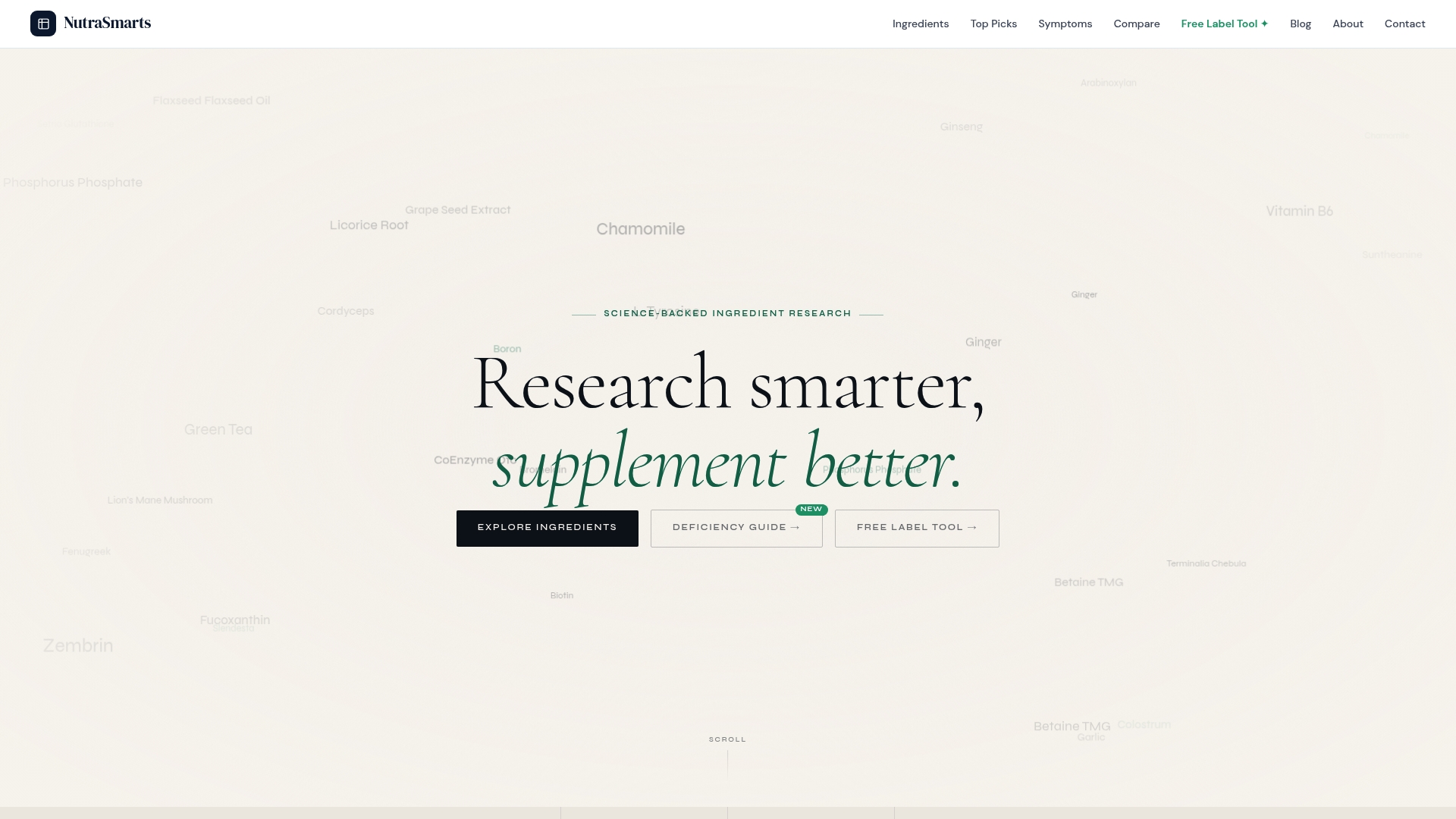
Explore Nutrasmarts to access symptom-focused ingredient hubs and an FDA-compliant Supplement Facts label builder that simplifies creating accurate labels. Visit Nutrasmarts and begin using documented evidence to support your supplement recommendations and product labels.
FAQ
What are the features of NutraSmarts that make it a good alternative to therapeuticresearch.com?
NutraSmarts provides a comprehensive database with over 1,300 supplement ingredients, which includes clinical citations and dosage benchmarks. This detailed information allows you to make evidence-based choices when advising patients or clients.
How does NutraSmarts compare to Canomiks for ingredient validation?
Canomiks uses proprietary genomics and AI to validate formulations, providing a scientific approach to ingredient efficacy and safety. NutraSmarts, on the other hand, excels with its user-friendly label builder that creates FDA-compliant Supplement Facts panels directly from ingredient entries, making it ideal for smaller companies preparing labels quickly.
What unique feature does NutraSmarts offer that enhances regulatory compliance?
NutraSmarts features a free FDA-compliant label builder which allows users to create Supplement Facts panels without spreadsheets. This functionality simplifies the process of ensuring compliance in supplement labeling, making it a practical tool for formulators.
Can I efficiently access clinical trial data using NutraSmarts?
NutraSmarts focuses on ingredient-level data rather than clinical trial data. For users seeking detailed trial insights, platforms like Trialo may be more suitable since they utilize AI to extract and analyze efficacy endpoints from trial reports.
How does the pricing of NutraSmarts stack up against other alternatives?
NutraSmarts does not publicly list pricing details on its website, making it challenging to compare directly with alternatives. Users may contact the vendor for specific pricing information, while other platforms may offer clear subscription models.