
The best available clinical evidence shows creatine does not cause hair loss in most people. A 2025 randomized controlled trial measured actual hair outcomes, not just hormone levels, and found no difference between creatine users and a placebo group. If you notice new, patterned thinning while taking creatine, see a dermatologist rather than assuming the supplement is the cause.
TL;DR:
- The 2025 trial directly measuring hair confirmed that creatine does not impact hair density, thickness, or follicle count in resistance-trained young men over 12 weeks.
- The 2009 hormone study involved high-dose loading phases and did not evaluate actual hair loss, making its claims about DHT increases and hair risk unreliable.
- Hair thinning caused by androgenetic alopecia is primarily driven by genetics, and most non-genetic causes like nutrient deficiencies or thyroid issues should be ruled out first.
- Continuing with a maintenance dose of 5 grams daily, without a loading phase, minimizes hormonal fluctuations that could have influenced past concerns.
- Regular, consistent scalp photos over three to six months are the best way to monitor real hair changes, while anecdotal reports lack the scientific rigor to establish causation.
Table of Contents
- What the research shows about creatine and hair loss
- Where the rumor started: the 2009 rugby study and loading phases
- Who is actually at risk for hair thinning
- When to test, treat, or simply keep taking creatine
- Monitoring yourself without unnecessary alarm
- NutraSmarts evidence corner: reading trials instead of headlines
- Do different creatine forms affect hair differently?
- Anecdotal reports versus what the trial actually measured
- Treatment options that work alongside continued creatine use
- Keeping an eye on your hair while you keep lifting
- Balanced reassurance, and when caution still makes sense
- Research tools to check the evidence yourself
- FAQ
- Sources
What the research shows about creatine and hair loss
For years, the creatine hair loss worry rested on a single hormone measurement from 2009. That changed with a 12-week randomized, double-blind, placebo-controlled trial that gave resistance-trained men 5 grams of creatine daily and tracked their hair directly, using tools built for that purpose rather than relying on blood work alone.
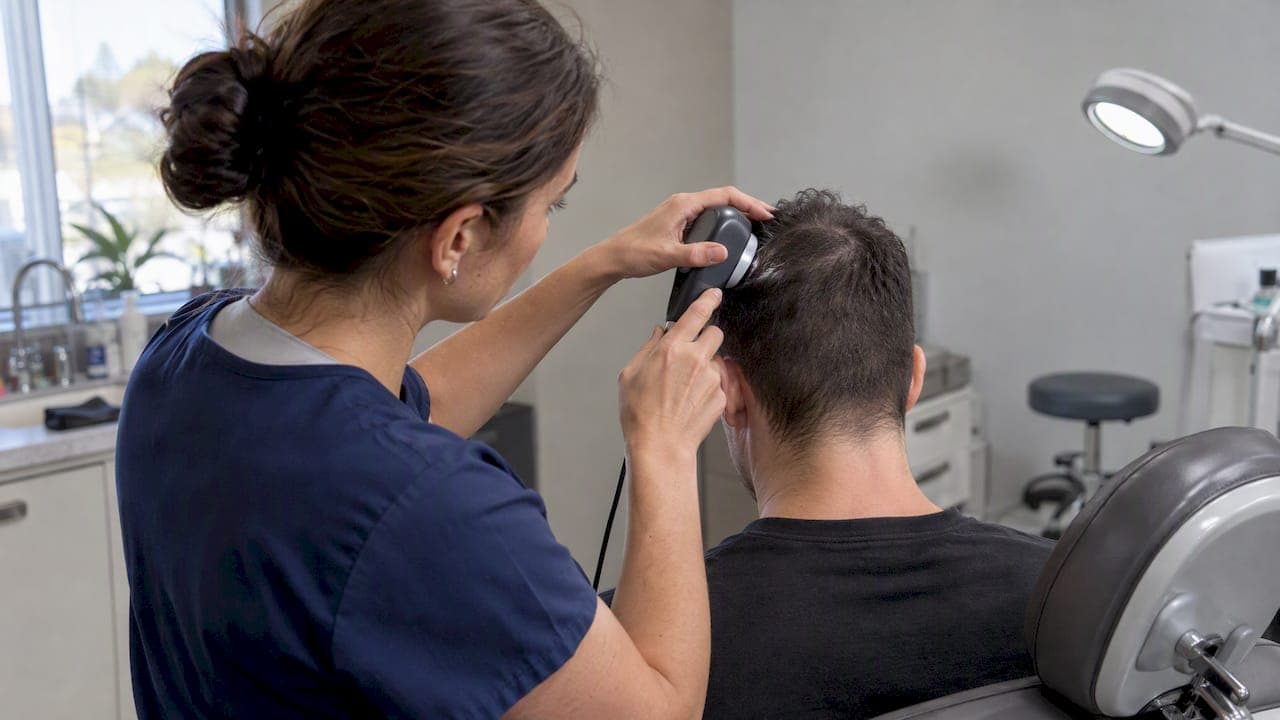
The full trial data show no meaningful changes in hair density, follicular unit count, or cumulative hair thickness between the creatine and placebo groups after 12 weeks. Researchers used phototrichogram imaging and FotoFinder scalp analysis, the same objective measurement tools dermatologists use to track hair loss progression or treatment response, rather than guessing from hormone proxies alone.
A separate safety review found creatine mentions in adverse-event reports occurred in just 0.00072% of cases, with no signal pointing to hair loss specifically. That large-scale adverse-event analysis compared creatine against placebo across many trials and found overall adverse-event rates did not differ meaningfully between groups.
The trial does have real boundaries worth knowing before you generalize the result to your own situation:
- The study population was young, resistance-trained men, so results may not translate directly to older adults, women, or people with existing androgenetic alopecia.
- The 12-week duration captures short-term effects but cannot rule out subtle changes that might emerge over a year or longer.
- No trial has yet specifically enrolled people already experiencing early pattern hair loss to see how creatine interacts with that process.
Those gaps matter, but they do not undercut the core finding: when researchers actually measured hair, they found nothing.
Where the rumor started: the 2009 rugby study and loading phases
Almost every creatine hair loss claim traces back to one small study from 2009 that measured hormone levels before and after a creatine loading protocol in college rugby players. That study reported increased DHT levels during loading and maintenance phases, but did not measure hair loss.
That finding spread widely, but the study itself never measured hair. There was no scalp exam, no density count, no follow-up on who actually lost hair. It measured a hormone and stopped there.
A few details got lost in translation as the story spread online:
- The sample size was small, around 20 participants, which limits how confidently the results generalize to anyone else.
- The protocol used a high-dose loading phase, not the lower maintenance dose most people take long-term.
- DHT levels, while higher than baseline, stayed within normal physiological ranges throughout the study.
That last point matters because hair loss risk depends more on how sensitive your hair follicles are to DHT than on the raw serum level circulating in your blood. A temporary rise within a normal range, during a loading protocol most people never use, is a thin basis for a sweeping claim about hair.
Who is actually at risk for hair thinning
Androgenetic alopecia, the technical name for typical pattern hair loss, comes down to genetics far more than supplement choices. Some hair follicles carry a hereditary sensitivity to DHT that causes them to shrink and eventually stop producing visible hair, a process called follicular miniaturization. People without that genetic sensitivity can have elevated DHT and keep a full head of hair; people with it can experience thinning even with ordinary hormone levels.
If you are noticing thinning, creatine is rarely the most likely explanation. Several common, diagnosable conditions cause hair shedding or thinning and have nothing to do with supplementation:
- Iron or ferritin deficiency, which dermatology guidance lists among the testable causes of hair loss.
- Thyroid dysfunction, both underactive and overactive, which disrupts the normal hair growth cycle.
- Telogen effluvium, a stress or illness-triggered shedding pattern that often appears two to three months after the triggering event.
- Autoimmune alopecia areata, which causes patchy hair loss distinct from the gradual thinning seen in pattern baldness.
Family history is one of the strongest clues available to you. If a parent or grandparent experienced a receding hairline or crown thinning at a similar age, genetics is a far more plausible driver than anything in your supplement stack.
Pro Tip: Take a close look at where the thinning is happening. Androgenetic alopecia follows a predictable pattern (crown and hairline in men, diffuse thinning at the part line in women), while diffuse shedding across the whole scalp points more toward a deficiency, illness, or stress trigger.

When to test, treat, or simply keep taking creatine
Deciding whether to pause creatine comes down to a few practical questions rather than a gut reaction. Ask yourself whether the thinning started shortly after you began supplementing or whether it has been a slow, ongoing pattern that predates creatine entirely. Ask whether it matches a classic pattern (hairline, crown, or part-line widening) or looks diffuse and sudden. Ask whether close relatives have experienced similar hair loss at a similar age.
If the timing is coincidental, the pattern looks diffuse, and there's no strong family history, continuing creatine while investigating other causes is reasonable. If the pattern looks genetic or has been progressing for months, a dermatologist visit makes more sense than stopping a supplement and hoping for the best.
A dermatologist typically works through a short list of checks:
- Ferritin and iron panel to rule out a nutrient deficiency that commonly causes diffuse shedding.
- TSH and thyroid panel to catch hormonal thyroid dysfunction, another frequent, treatable cause.
- Complete blood count (CBC) to screen for underlying illness or anemia.
- Scalp exam and, if needed, a phototrichogram or biopsy to confirm whether miniaturization or scarring is present.
For confirmed androgenetic alopecia, dermatology guidance points to topical minoxidil and, where appropriate, oral finasteride as effective options, though both typically require three to six months of consistent use before visible improvement and ongoing use to maintain results. Stopping either treatment typically reverses the benefit within months, which is worth knowing before you start.
Finasteride is FDA-indicated for men only. Women who are or may become pregnant must not handle crushed or broken finasteride tablets, due to the risk of harm to a male fetus. It can also cause sexual side effects (reduced libido, erectile dysfunction) in a minority of men, which usually resolve after stopping treatment. Discuss these risks with a physician before starting.
Monitoring yourself without unnecessary alarm
A simple photo log beats memory every time. Take a well-lit photo of your crown and hairline under the same lighting roughly once a month, and expect any real change, for better or worse, to take 3 to 6 months to become visible. Hair growth cycles are slow, so judging a supplement's effect after a few weeks is a recipe for false alarm.
- Keep lighting and camera angle consistent so photos are actually comparable over time.
- Note any new medications, illnesses, major stress, or diet changes alongside your creatine use, since these are more common shedding triggers.
- Treat a temporal link as suspicious only when thinning starts shortly after a dose change and follows a recognizable pattern, not just because the timing feels coincidental.
Most people taking creatine use a 5 gram daily maintenance dose, the same amount tested in the 2025 trial. Some protocols use a short loading phase of 20 to 25 grams per day for about a week, a practice that saturates muscle creatine stores faster. That loading approach is also what produced the 2009 hormone findings, which is one reason that study doesn't map cleanly onto how most people actually supplement today.
Pro Tip: If you want to rule out creatine specifically, stick with 5 gram daily maintenance dosing and skip the loading phase. It gets you to the same steady-state levels over a few extra weeks with less hormonal fluctuation to second-guess.
NutraSmarts evidence corner: reading trials instead of headlines
We rate evidence by trial design, sample size, whether outcomes were measured directly or inferred, and whether findings have been replicated. A single small study measuring one hormone ranks lower in our framework than a randomized, placebo-controlled trial that measured hair density directly, which is exactly the gap between the 2009 study and the 2025 trial.

Our creatine monohydrate page breaks down dosing and safety data with citations if you want the source-level detail. If you're weighing supplement options for thinning hair generally, our hair loss supplements review covers the evidence behind common ingredients. For anyone formulating or checking a label, our Supplement Facts Tool generates FDA-compliant labels without a spreadsheet.
Do different creatine forms affect hair differently?
No clinical trial has tested creatine HCL, creatine ethyl ester, buffered creatine, or any other form specifically for hair outcomes. The 2025 trial used plain creatine monohydrate, the most studied and most common form on the market, which means the null result on hair applies directly to monohydrate and only by extension to other forms.
There's no mechanistic reason to expect a meaningful difference. All creatine forms ultimately raise intramuscular creatine levels through the same pathway, and the DHT question has nothing to do with the delivery form itself, it's about total creatine exposure and how your body converts testosterone. Our side-by-side comparison of creatine monohydrate and creatine HCL covers absorption and dosing differences between forms, none of which point to a hair-specific distinction.
Brand quality matters more for purity and dosing accuracy than for any hair-related risk. A poorly manufactured product with inconsistent dosing or contaminants could theoretically cause broader health issues, but that's a quality control concern, not evidence of a creatine-specific hair mechanism. If you're choosing between forms, base the decision on absorption, digestive tolerance, or cost, covered on our creatine HCL page, rather than on hair loss risk, since no data supports a difference there.
Anecdotal reports versus what the trial actually measured
Search any fitness forum and you'll find people reporting thinning hair after starting creatine. Those reports are real experiences, but they aren't evidence of causation, and the gap between anecdote and clinical data matters here specifically.
Pattern hair loss typically begins gradually and becomes noticeable only once significant thinning has already occurred, often coinciding by chance with other life changes, including starting a new supplement or training program. Confirmation bias also plays a role: someone worried about a known rumor is more likely to scrutinize their hairline and notice changes they might otherwise overlook.
The 2025 trial exists precisely because anecdotal reports needed a real test. Researchers measured follicular unit count and cumulative hair thickness with imaging tools, removing guesswork and self-report bias from the equation, and found no treatment effect over 12 weeks. That doesn't mean every individual anecdote is false. It means a forum post describing one person's experience, without a control group or objective measurement, can't distinguish a real drug effect from coincidence, pre-existing genetic thinning, or another trigger entirely. When anecdote and a well-designed randomized trial disagree, the trial carries more weight because it's built specifically to rule out the explanations anecdote can't.
Treatment options that work alongside continued creatine use
If a dermatologist confirms androgenetic alopecia, you don't need to choose between treating your hair and continuing creatine. The two aren't in conflict, since nothing in the current evidence suggests creatine interferes with standard hair loss treatments or vice versa.
Topical minoxidil remains a first-line option, applied directly to the scalp to extend the hair growth phase, and it's available without a prescription. Oral finasteride, where a clinician determines it's appropriate, works by reducing DHT conversion at the follicle level, the same hormone pathway the creatine rumor centers on, though its appropriateness depends on individual factors a dermatologist should evaluate. Both typically require several months of consistent use before visible change and ongoing use to sustain results.
For deficiency-driven thinning rather than genetic pattern loss, correcting the underlying issue, iron repletion for low ferritin or thyroid medication for hypothyroidism, often resolves the shedding without any dedicated hair treatment at all. Our deficiency symptom guide can help you connect specific symptoms to likely nutrient gaps worth discussing with a clinician.
Scalp health support, including antioxidant-focused approaches, is sometimes discussed as a complementary strategy alongside medical treatment, though it addresses general scalp condition rather than the hormonal mechanism behind pattern loss. None of these options require stopping creatine, and the current trial data give no reason to think continuing creatine would blunt their effectiveness.
Keeping an eye on your hair while you keep lifting
You don't need a dermatology appointment to start monitoring sensibly. The photo log described earlier, taken monthly under consistent lighting, is the single most useful tool available to you, since it turns a vague impression into something you can actually compare over time.
Pay attention to shedding volume as a secondary signal. Finding a few more hairs on your pillow or in the shower drain occasionally is normal; a sustained increase over several weeks is worth noting. Track any other changes happening in the same window, illness, major stress, new medications, significant weight loss, since these are more common shedding triggers than a supplement most people have already been taking for months without issue.
If three to six months of photos show no real change, you likely have your answer. If they show a clear, patterned progression, that's the point to involve a dermatologist rather than experimenting further on your own.
Balanced reassurance, and when caution still makes sense
The strongest evidence we have, a randomized trial that directly measured hair, found no effect from creatine. That's reassuring, not a guarantee. If you notice new, patterned thinning, get it evaluated rather than assuming creatine explains it or stopping before you know the real cause. Future long-term studies, especially in people already experiencing early pattern loss, will likely sharpen these recommendations further.
— NutraSmarts
Research tools to check the evidence yourself
If you'd rather verify dosing claims and trial citations than take anyone's word for it, we built our resources for exactly that.

- Our creatine monohydrate ingredient page links the primary trial data behind dosing and safety claims, so you can read the source instead of a summary of it.
- If hair thinning has other possible causes you want to rule out, our hair loss supplements review and deficiency guide break down evidence-rated options by symptom.
- Formulating your own supplement or checking a label's accuracy? Our free Supplement Facts Tool generates an FDA-compliant label without spreadsheet guesswork.
Talk to a clinician before changing any treatment plan, hair-related or otherwise. Start with our ingredient database if you want the citations in hand before that conversation.
This article is general information, not a substitute for advice from a qualified doctor. Consult a qualified healthcare professional about your own circumstances before acting on anything here.
FAQ
Will my hair grow back if I stop taking creatine?
If creatine isn't actually the cause of your thinning, stopping it won't regrow hair, and you'll have delayed addressing the real cause. The 2025 randomized trial found no hair changes from creatine use in the first place, so for most people there's nothing to reverse by quitting.
Why do some doctors advise caution with creatine?
Caution typically centers on hydration needs, kidney function in people with pre-existing kidney disease, or appropriate dosing rather than hair loss specifically. A large safety analysis found adverse-event rates for creatine did not differ meaningfully from placebo across trials.
Is creatine good for hair, or does it have no effect either way?
Current evidence doesn't support creatine as a hair-health supplement; it simply doesn't appear to harm hair for most people. The 2025 trial measured hair density and thickness directly and found creatine neither improved nor worsened those outcomes compared with placebo.
What happens after one month of taking creatine?
Most people notice strength and muscle performance changes within the first few weeks, especially with a loading phase, but hair follicle cycles move far slower than that. A single month is too short to detect any real hair change in either direction, which is part of why the 2025 trial ran for a full 12 weeks before measuring outcomes.
Sources
- Does creatine cause hair loss? A 12-week randomized controlled trial
- Does creatine cause hair loss? A 12-week randomized controlled trial (full text)