
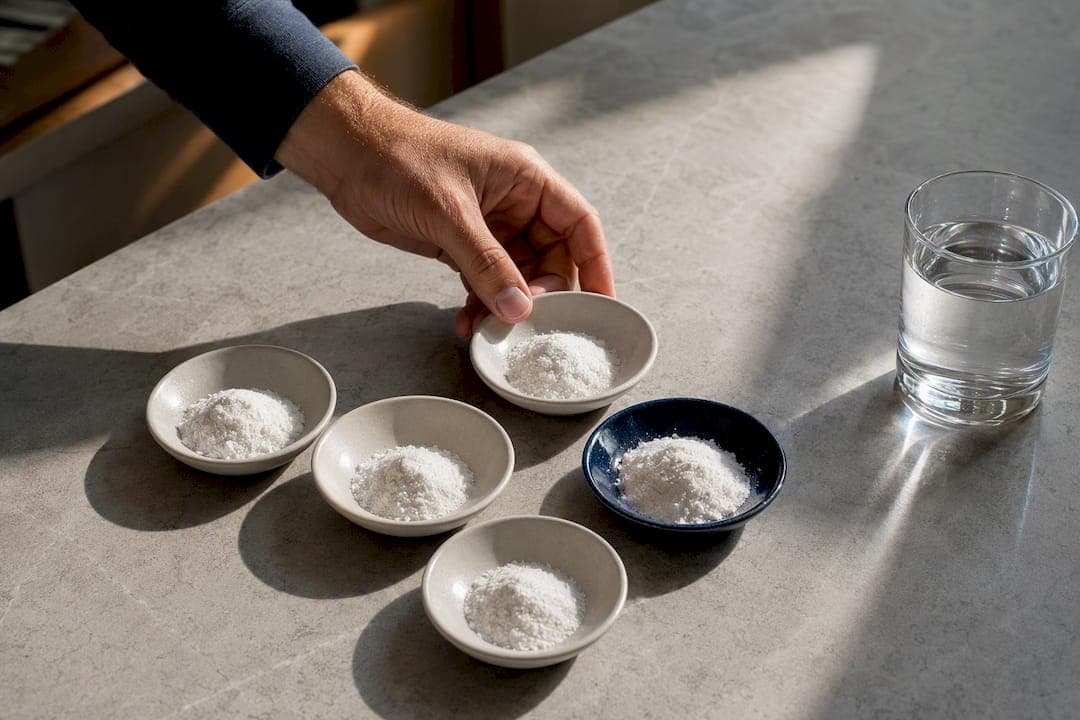
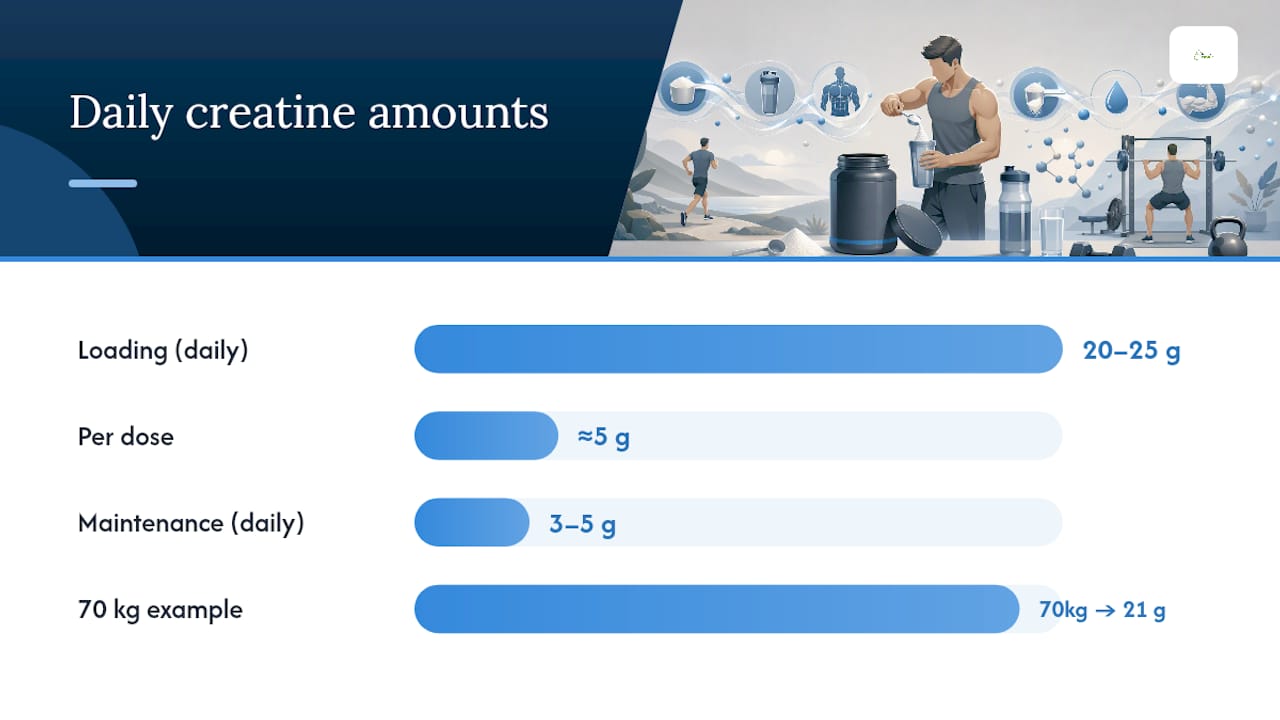
A creatine loading phase of about 20 to 25 grams a day for five to seven days saturates your muscle creatine stores faster than starting straight at a maintenance dose. It works, and the evidence behind it is solid. It's just not required: skipping straight to 3 to 5 grams a day gets you to the same saturation point in about a month. Healthy adults tolerate loading well; anyone with existing kidney disease should talk to a doctor first.
TL;DR:
- Loading with 20 to 25 grams of creatine daily for five to seven days saturates muscle stores faster than taking 3 to 5 grams per day, which takes about four weeks.
- High-dose loading may cause gastrointestinal discomfort, cramping, or water retention, but splitting doses reduces these side effects and improves tolerability.
- Creatine monohydrate is the most extensively studied and cost-effective form, and it remains the best choice for most users.
- Loading is most beneficial when there is a fixed, short-term deadline, such as a competition, while gradual dosing suits longer-term goals.
- People with existing kidney issues should consult a doctor before starting high-dose creatine, as loading increases renal processing demands.
Table of Contents
- What Is a Creatine Loading Phase and How Does It Affect Muscle Creatine Stores?
- How to Do a Creatine Loading Phase: Step-by-Step Protocols and Variations
- What the Research Shows About Loading Benefits and Timelines
- Safety and Side Effects of a Loading Phase
- Is Loading Necessary? Weighing the Trade-Offs
- Practical Tips and Troubleshooting During Loading
- Nutrasmarts' Take: What Actually Makes Sense for Most People
- Where to Go Next for Evidence-Backed Creatine Choices
- Sources
What Is a Creatine Loading Phase and How Does It Affect Muscle Creatine Stores?
The goal of a loading phase is simple: fill your muscle's creatine and phosphocreatine tank as fast as possible instead of letting it fill gradually. Muscle cells can only hold so much creatine, and most people start out at roughly 60 to 80% of that ceiling. A short burst of high-dose intake pushes stores toward full capacity within days rather than weeks.
Creatine absorption from an oral dose is nearly complete, and plasma levels typically peak within one to two hours of taking a standard serving. Muscle uptake is slower than blood absorption, which is exactly why the loading protocol relies on repeated daily doses instead of one big hit. The consensus review on creatine supplementation found that five to seven days of about 20 grams daily is enough to saturate stores, while a lower 3 gram daily dose reaches similar saturation over roughly 28 days.
A few things shape how fast that saturation happens:
- Total daily dose, since higher intake accelerates the filling process
- Body mass, because larger muscle mass has more total storage capacity to fill
- Baseline creatine levels, which tend to be lower in vegetarians and vegans
- Exercise, which appears to help shuttle creatine into working muscle
How to Do a Creatine Loading Phase: Step-by-Step Protocols and Variations
The standard creatine supplementation schedule looks like this:
- Days 1 through 5 to 7: Take 20 to 25 grams total per day, split into 4 to 5 doses of about 5 grams each.
- Spread doses across the day: Morning, midday, pre-workout, and evening works well for most schedules.
- Switch to maintenance: Drop to 3 to 5 grams once daily for as long as you continue supplementing.
- Mix with a carb or protein source: Some research suggests insulin release may help shuttle creatine into muscle, though this matters more in theory than in practice for most people.
- Measure with a scale, not a scoop guess: A kitchen scale keeps your grams-per-serving accurate, since scoop sizes vary by brand.
If you'd rather scale by body weight, use 0.3 grams per kilogram of body weight per day during loading, then drop to 0.03 grams per kilogram for maintenance. A 70 kilogram person would load at roughly 21 grams a day and maintain at about 2 grams. Splitting the loading day's total into four or five smaller servings is the standard advice for avoiding stomach discomfort, and it also keeps plasma creatine levels steadier throughout the day.
On form: creatine monohydrate has the deepest research base of any version on the market, including creatine monohydrate vs HCL comparisons that consistently favor monohydrate for cost and evidence depth, even though HCL is marketed on solubility claims.
Pro Tip: Take your last loading dose of the day with dinner rather than right before bed. A full glass of water with it cuts down on the bloated feeling some people get from a concentrated dose sitting on an empty stomach.
What the Research Shows About Loading Benefits and Timelines
The comparative numbers are the clearest part of the whole creatine conversation. Load at 20 grams a day and you hit full muscle saturation in about five to seven days. Skip loading and take 3 grams a day instead, and you land in roughly the same place, just around 28 days later. Same destination, different travel time.
Five to seven days at approximately 20 g/day saturates muscle creatine stores faster than a flat 3 g/day maintenance-only approach, which takes about four times longer.
Performance data backs up why saturation speed matters. A clinical trial on creatine loading and prolonged supplementation found that five days of 20 grams daily raised intramuscular creatine and phosphocreatine and improved repeated supramaximal sprint performance, with some participants also gaining fat-free mass. That combination, more phosphocreatine available for rapid ATP resynthesis, is the mechanism behind better output in short, high-intensity efforts like sprints, sets to failure, and repeated jumps.
Who benefits most:
- People starting with lower baseline creatine, notably vegetarians and vegans
- Anyone training hard enough that exercise potentiates the uptake process
- Athletes prepping for a competition or event on a fixed calendar
Exercise appears to help pull creatine into working muscle during the early supplementation window, though there's limited evidence that pre-workout versus post-workout timing changes anything once stores are already full.
Safety and Side Effects of a Loading Phase
The most common complaint during loading is gastrointestinal discomfort, cramping, bloating, or loose stools, usually tied to taking too much creatine in one sitting rather than splitting it across the day. Temporary weight gain of a few pounds is also normal and reflects water pulled into muscle cells, not fat gain.
Longer-term safety data in healthy populations is reassuring. Harvard Health's review notes that extended studies in healthy adults haven't turned up persistent kidney harm, even with sustained daily use. The exception that matters: anyone with pre-existing kidney disease should get medical clearance before starting, and especially before attempting a high-dose loading protocol, since concentrated doses put more of a processing burden on already compromised kidneys.
A short list worth keeping in mind before you start:
- GI symptoms usually resolve once you split doses or reduce the amount per serving
- Water-weight gain typically levels off once you move to maintenance dosing
- Kidney disease, or any condition affecting renal function, warrants a conversation with your doctor first
- Basic bloodwork monitoring is reasonable for anyone with existing kidney concerns who still wants to supplement
Nutrasmarts covers this in more depth in its breakdown of creatine and kidney safety, including what the monitoring data actually looks like for long-term users.
Is Loading Necessary? Weighing the Trade-Offs
Loading isn't required to get creatine's benefits. It's a shortcut, and shortcuts come with trade-offs.
What loading gets you:
- Faster onset, useful if you're prepping for a competition, a testing block, or any fixed deadline where you need saturated stores now rather than in a month.
- A defined, predictable ramp-up window rather than an open-ended gradual build.
What loading costs you:
- Higher odds of GI upset, simply because you're taking more grams per day.
- More complexity, since you're tracking doses multiple times daily instead of once.
- More noticeable early water retention, which can throw off the number on a scale if you're tracking body weight closely.
Run through this quick checklist before deciding:
- Timeline: Do you have a hard deadline (competition, photo shoot, testing date) inside the next two weeks?
- Medical status: Any kidney concerns or conditions that warrant a doctor's input first?
- Prior tolerance: Has your stomach handled concentrated supplement doses well in the past?
- Training schedule: Are you training hard enough right now that faster saturation would actually show up in your performance?
If you answered yes to the first and fourth questions and no red flags on the rest, loading makes sense. Otherwise, gradual dosing gets you to the same place with less hassle.
Practical Tips and Troubleshooting During Loading
Splitting your daily total into four or five smaller servings, roughly 5 grams each, is still the single best lever for reducing GI complaints. Taking the whole 20 to 25 grams in one shot is the most common mistake people make, and it's almost always what triggers the cramping and bloating that makes people quit early.
A few other adjustments help:
- Mix powder into more liquid than you think you need. A gritty, concentrated slurry sits worse than a fully dissolved 12 to 16 ounce serving.
- Pair a dose with a meal containing carbs or protein rather than taking it on an empty stomach.
- Stay ahead of your water intake generally. Creatine draws water into muscle cells, and adequate hydration supports that process.
- If GI issues persist even after splitting doses, drop to a lower daily amount and extend your ramp-up period instead of forcing the full loading protocol.
Pro Tip: If monohydrate consistently upsets your stomach even after splitting doses and slowing down, a different creatine form like creatine HCL may sit better, since it's formulated for higher solubility. The evidence base is thinner than monohydrate's, but it's a reasonable swap if tolerability is your main obstacle.
Nutrasmarts' Take: What Actually Makes Sense for Most People
Most people don't need to load. Start at 3 to 5 grams a day and let saturation happen over the month, avoiding the GI discomfort and water retention that come with the higher-dose approach. Load only when a real deadline, a competition, a testing date, a short training block, makes speed worth the tradeoff.
Whichever route you pick, check the evidence behind your specific product before buying. Nutrasmarts' creatine monohydrate ingredient profile breaks down dosing research in detail, and anyone managing kidney concerns should read the safety data first and loop in a clinician, particularly during pregnancy or with existing renal conditions.
— NutraSmarts
Where to Go Next for Evidence-Backed Creatine Choices
Nutrasmarts built its creatine monohydrate profile around the same clinical research cited throughout this piece: dosing ranges, saturation timelines, and safety data all in one place instead of scattered across a dozen product pages. If you're weighing monohydrate against other forms, the comparison tool puts them side by side so you can see where the evidence is strong and where it's thinner.
If you formulate or sell supplements yourself, the free Supplement Facts label creator generates FDA-compliant labels without wrestling a spreadsheet into submission, useful whether you're building a creatine product or anything else in your line. And if you're shopping rather than formulating, Nutrasmarts' athletic performance supplement picks are vetted against the same clinical evidence standard used across the ingredient database, not marketing copy. Start by pulling up the creatine monohydrate profile, check the dosing section against your own plan, and go from there.
Sources
The loading and maintenance numbers in this guide come primarily from a peer-reviewed consensus review on creatine supplementation and a controlled trial on creatine loading and performance. Safety and tolerability guidance draws on Harvard Health's clinical overview, while dosing protocol consensus is cross-checked against Medical News Today's clinical summary. Together, these sources anchor the dosing, timeline, and kidney safety statements made throughout.
This article is general information, not a substitute for advice from a qualified doctor. Consult a qualified healthcare professional about your own circumstances before acting on anything here.
- Effects of creatine loading and prolonged creatine supplementation (PubMed 12546637)
- What is creatine? Potential benefits and risks of this popular supplement - Harvard Health