

Science-backed brain supplements, known in clinical research as evidence-based nootropics, are compounds with peer-reviewed human trial data confirming measurable cognitive benefits. The most validated options include omega-3 fatty acids, creatine monohydrate, and B vitamins, each with documented effects on memory, processing speed, and brain structure. Finding the right one requires matching the compound to your specific biology, not just picking the most popular product on a shelf. This guide cuts through the marketing noise and shows you exactly which supplements have real evidence behind them, what doses produce results, and how to avoid the most common mistakes buyers make.
How to find science-backed brain supplements that deliver
The best brain supplements share one trait: their benefits are tied to specific biological conditions, not universal promises. Understanding which compounds work, and why, is the foundation of any smart supplementation strategy.
Omega-3 fatty acids (DHA and EPA)
Omega-3s are the most studied cognitive enhancement supplements available without a prescription. A meta-analysis of 58 RCTs found significant improvements in attention and memory at 2,000 mg per day. That means a standard fish oil capsule at 1,000 mg likely falls short of the threshold where cognitive effects become measurable.

DHA is the structural fatty acid your brain uses to maintain neuron membrane integrity. EPA reduces neuroinflammation. Both matter, and most quality supplements deliver a combined dose rather than one in isolation.
Creatine monohydrate
Creatine is not just a gym supplement. A single high dose of 0.35 g/kg improves processing speed and cognition by up to 12% in sleep-deprived adults. That finding overturns the older assumption that creatine only benefits athletes or requires weeks of loading to affect the brain.
The mechanism is direct: creatine replenishes ATP in neurons, which are energy-hungry cells that underperform when fuel is scarce. Sleep deprivation depletes neural energy reserves, and creatine partially compensates for that deficit. You can read more about creatine's cognitive dosing on Nutrasmarts.
B vitamins and homocysteine
B vitamins, specifically B6, B9 (folate), and B12, reduce homocysteine, an amino acid that damages blood vessels and accelerates brain atrophy when elevated. A PLoS ONE trial found that B-vitamin supplementation slows brain atrophy by 53% in individuals with homocysteine above 11 μmol/L. The critical detail: this benefit does not appear in people with normal homocysteine levels. B vitamins are not a universal brain booster. They are a targeted fix for a specific deficiency.
Lion's mane, bacopa, and citicoline
- Lion's Mane mushroom: A 2020 clinical trial found that 1g per day for 49 weeks improved cognitive scores in mild Alzheimer's patients versus placebo. It stimulates nerve growth factor (NGF), which supports neuron repair and growth.
- Bacopa monnieri: A natural memory supplement with strong evidence for recall and learning speed, but requires 8–12 weeks of consistent use before benefits appear. Discontinuing at week four because "nothing happened" is the most common mistake users make.
- Citicoline: Supports acetylcholine production and phospholipid synthesis. Typical doses range from 250–500 mg per day, with effects on attention and memory reported in older adults and those recovering from brain injury.
- Magnesium L-Threonate: The only form of magnesium shown to cross the blood-brain barrier in meaningful amounts. Early research suggests benefits for synaptic density and working memory, though large-scale human trials remain limited.
How do you identify which brain supplement fits your goals?
Choosing the right cognitive enhancement supplement starts with identifying what you actually need, not what a product label claims to deliver. Different nootropics have distinct roles: some support memory consolidation, others improve focus or processing speed. Buying a blend that does all three often means getting subtherapeutic doses of each.
Follow this process to match supplements to your goals:
- Get a blood test first. Check homocysteine, serum B12, and omega-3 index before spending money on supplements. If your B12 is normal and homocysteine is below 11 μmol/L, B-vitamin supplements will not improve your cognition. Testing costs less than a month's supply of most nootropics.
- Define your primary cognitive goal. Memory support, mental clarity, focus, processing speed, and mood each respond to different compounds. Bacopa and Lion's Mane target memory. Citicoline and omega-3s support focus and clarity. Creatine addresses acute cognitive fatigue.
- Assess your diet and lifestyle baseline. Supplements are most effective for individuals with deficiencies or extreme stress. If you eat fatty fish three times a week, your omega-3 index is likely adequate, and supplementing may produce minimal additional benefit.
- Plan for the long game with herbal nootropics. Bacopa monnieri and Lion's Mane require weeks to months of consistent use. Build a 12-week trial period into your plan before evaluating results.
- Consult a healthcare provider before starting. This is especially true if you take blood thinners, antidepressants, or medications that affect neurotransmitter levels. Several natural brain boosters interact with prescription drugs in ways that are not obvious from the label.
Pro Tip: Ask your doctor to test your omega-3 index specifically, not just a general lipid panel. Standard cholesterol tests do not measure DHA or EPA levels, and low omega-3 index is one of the most correctable cognitive risk factors in otherwise healthy adults.
What are the best dosing strategies for brain supplements?
Dosing is where most people go wrong. Taking less than the studied dose produces no measurable effect. Taking more than the studied dose adds risk without adding benefit.
| Supplement | Studied Dose Range | Time to Effect | Primary Benefit |
|---|---|---|---|
| Omega-3 (DHA/EPA) | 1,000–2,500 mg/day | 4–8 weeks | Attention, memory |
| Creatine Monohydrate | 0.35 g/kg (acute) or 3–5 g/day | Acute or 4 weeks | Processing speed, energy |
| B Vitamins (B6/B9/B12) | Varies by deficiency level | 3–6 months | Brain atrophy prevention |
| Lion's Mane | 1,000 mg/day | 8–12 weeks | Neuroprotection, memory |
| Bacopa Monnieri | 300–600 mg/day | 8–12 weeks | Memory, learning speed |
| Citicoline | 250–500 mg/day | 4–6 weeks | Focus, attention |
The optimal omega-3 dose for cognitive improvement sits between 1,000 and 2,500 mg per day, with the strongest evidence at 2,000 mg. Most standard fish oil capsules contain 300–500 mg of combined DHA and EPA, so you may need three to five capsules daily to reach the effective range.
Creatine offers two distinct use cases. An acute high dose (0.35 g/kg body weight) produces rapid cognitive benefits within hours, particularly for sleep-deprived individuals. Long-term daily loading at 3–5 g per day builds brain creatine stores over weeks and supports sustained cognitive resilience. Both strategies have evidence behind them, and they serve different needs.
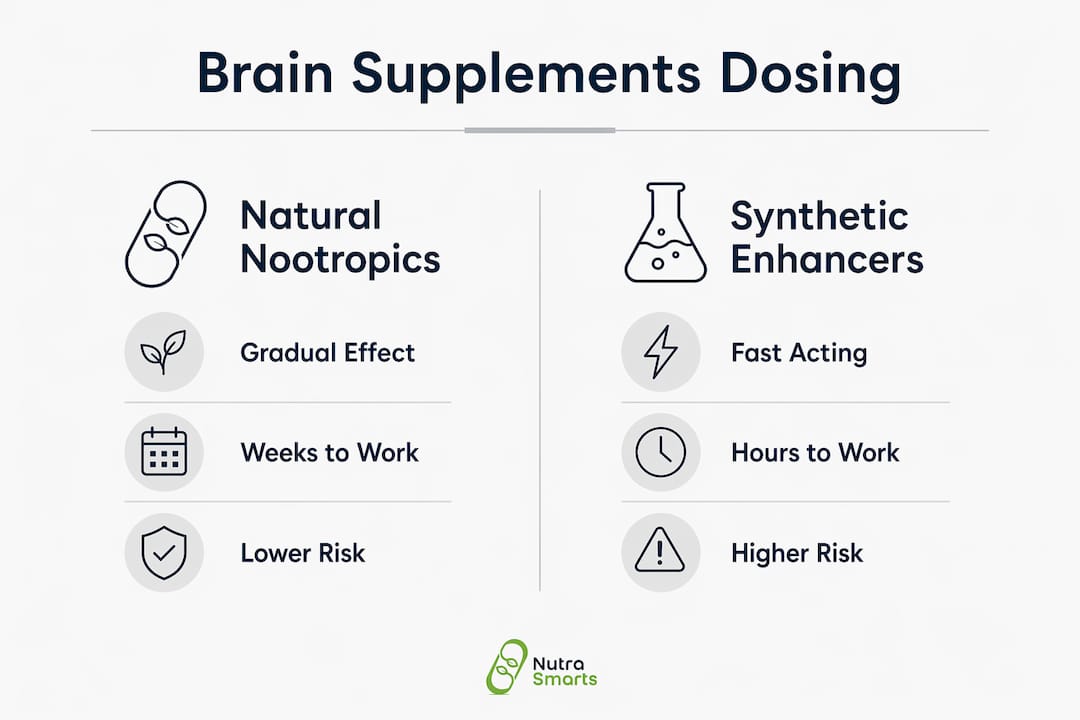
Natural nootropics work gradually over weeks, while synthetic cognitive enhancers act faster but carry greater risk and require medical supervision. For most people seeking safe, sustainable cognitive support, the gradual approach with herbal nootropics is the appropriate path.
Pro Tip: When stacking multiple supplements, introduce one at a time over two-week intervals. This lets you isolate which compound is producing a benefit or causing a side effect, rather than guessing across a five-ingredient stack.
What mistakes should you avoid when choosing brain supplements?
The brain supplement market is full of products that exploit the gap between what consumers hope for and what clinical evidence actually supports. Avoiding these mistakes protects both your health and your wallet.
- Expecting supplements to replace lifestyle. No supplement replaces the cognitive benefits of a Mediterranean-style diet, consistent sleep, and regular exercise. Supplements are tools for addressing specific deficiencies or stress-related gaps, not substitutes for foundational habits.
- Buying blends with undisclosed doses. Many "proprietary blend" products list ingredients without specifying amounts. If a product does not disclose the dose of each ingredient, you cannot verify whether it matches the studied therapeutic range.
- Ignoring third-party testing. Look for products certified by NSF International, USP, or Informed Sport. These organizations test for label accuracy, contaminants, and banned substances. Without third-party verification, you cannot confirm that what is on the label is in the capsule.
- Confusing natural with risk-free. Excessive Vitamin B6 causes nerve damage, and excessive Vitamin E increases bleeding risk. Natural origin does not eliminate toxicity at high doses. Every supplement has a safety ceiling.
- Skipping the safety check on peptides and synthetic nootropics. Prescription-grade cognitive enhancers and research peptides operate outside standard supplement regulation. If you are exploring that category, read a resource like this evidence-based peptide guide before making any decisions.
Treat every supplement as a targeted intervention with a specific indication, dose, and duration. If you cannot answer those three questions for a product you are considering, you are not ready to buy it.
For a deeper look at safety protocols before you start any new supplement regimen, the guidance at Mybestpharmacy.net on supplement safety covers overdose risks and interaction red flags in practical terms.
Key takeaways
Science-backed brain supplements produce measurable cognitive benefits only when matched to individual biology, dosed correctly, and used consistently over the required timeframe.
| Point | Details |
|---|---|
| Match supplements to biomarkers | Test homocysteine and omega-3 index before buying; deficiency determines benefit. |
| Dose to the studied range | Omega-3s require 1,000–2,500 mg/day; standard capsules often fall short. |
| Allow adequate time | Bacopa and Lion's Mane need 8–12 weeks of consistent use before effects appear. |
| Verify third-party testing | Only buy products certified by NSF International, USP, or Informed Sport. |
| Supplements support, not replace, lifestyle | Diet, sleep, and exercise remain the primary drivers of long-term brain health. |
What i have learned after reviewing hundreds of brain supplement studies
At Nutrasmarts, we have reviewed data on over 800 supplement ingredients, and the pattern is consistent: the people who benefit most from cognitive supplements are those who approach them like a clinician, not a consumer. They test first, target specifically, and commit to a timeline.
The biggest mistake I see is people abandoning a protocol at week three because they feel nothing. Bacopa monnieri and Lion's Mane are not caffeine. They do not produce a noticeable acute effect. Their benefits accumulate at the cellular level over months, and the 8–12 week commitment is not a suggestion. It is the minimum duration used in the clinical trials that produced the positive results.
I also want to be direct about something the supplement industry rarely admits: if your diet, sleep, and exercise are poor, no stack of nootropics will compensate. The evidence for lifestyle as a cognitive intervention is stronger than the evidence for any single supplement. The supplements work best as precision tools layered on top of a solid foundation, not as a shortcut around one.
The most underused tool in this space is blood testing. Knowing your homocysteine level before buying B vitamins takes 15 minutes and a lab order. It tells you whether you are in the 53% atrophy-reduction group or the group for whom B vitamins will do nothing. That is the difference between a targeted intervention and an expensive placebo.
— Nutrasmarts
Explore Nutrasmarts' research on cognitive supplements
Nutrasmarts has built a database of over 800 supplement ingredients, each linked to peer-reviewed studies and clinical trial citations. If you want to go deeper on any compound covered in this article, the cognitive supplement reviews section covers 144 products with detailed evidence summaries.
For those dealing specifically with brain fog, the brain fog supplement guide filters by symptom and links each recommendation to clinical data. If energy and mental clarity are your primary goals, the best energy supplements page reviews 80 products with the same evidence-first standard. Every recommendation on Nutrasmarts is tied to a specific mechanism, a studied dose, and a realistic outcome. You will not find miracle claims, only compounds that earned their place through clinical evidence.
FAQ
What are the most science-backed brain supplements?
Omega-3 fatty acids (DHA/EPA), creatine monohydrate, and B vitamins have the strongest clinical evidence for cognitive benefits. Lion's Mane mushroom and Bacopa monnieri also have solid trial data, particularly for memory and neuroprotection.
How long does it take for brain supplements to work?
Creatine can produce measurable cognitive effects within hours at an acute high dose. Herbal nootropics like Bacopa monnieri and Lion's Mane require 8–12 weeks of consistent daily use before cognitive benefits become apparent.
Do brain supplements work for everyone?
No. B vitamins only slow brain atrophy in individuals with elevated homocysteine above 11 μmol/L, and omega-3s provide the greatest benefit to those with low baseline intake. Blood testing before supplementing is the most reliable way to predict whether a specific compound will help you.
Are natural brain boosters safe to take daily?
Most are safe at studied doses, but natural does not mean risk-free. Excessive Vitamin B6 causes nerve damage, and high-dose Vitamin E increases bleeding risk. Always verify doses against clinical research and consult a healthcare provider if you take prescription medications.
What is the difference between nootropics and prescription cognitive enhancers?
Natural nootropics like Bacopa and citicoline work gradually and are available without a prescription. Synthetic cognitive enhancers such as modafinil or racetams act faster but carry greater risk and require medical supervision. For most people, natural science-based nootropics are the appropriate starting point.