

The supplement industry generates over $170 billion annually worldwide, and nearly every product claims to be "science-backed." But most of those claims point to observational studies, animal models, or studies with tiny sample sizes that would never survive rigorous scrutiny. If you are serious about finding supplements with peer-reviewed evidence supporting real clinical outcomes, you need a sharper filter than a product label. This guide breaks down how to evaluate scientific quality, which ingredients have the strongest research behind them, and how to avoid wasting money on overhyped products.
Table of Contents
- Key takeaways
- 1. How to evaluate supplements with peer-reviewed evidence
- 2. Collagen and whey protein: what the research actually shows
- 3. Multi-ingredient supplements and gut microbiome support
- 4. Resveratrol for cardiometabolic health
- 5. Third-party verification and supplement quality assurance
- My honest take on navigating supplement evidence
- Explore research-backed supplements at NutraSmarts
- FAQ
Key takeaways
| Point | Details |
|---|---|
| Research design matters | Prioritize RCTs and meta-analyses over single studies or animal research when assessing supplement evidence. |
| Collagen leads protein research | A 2026 network meta-analysis of 78 RCTs found collagen outperforms whey protein for strength and lean mass gains. |
| Context-specific evidence counts | Resveratrol shows high-certainty cardiometabolic benefits specifically in people with type 2 diabetes or overweight status. |
| Third-party verification is non-negotiable | USP, NSF, and ConsumerLab certifications confirm label accuracy in ways that marketing claims cannot. |
| Target deficiencies first | Supplements tend to work best when you have a confirmed deficiency or a condition the research specifically studied. |
1. How to evaluate supplements with peer-reviewed evidence
Before you spend money on any supplement, you need a framework for judging the science behind it. Not all peer-reviewed research carries equal weight, and understanding that difference is the single most important skill for a health-conscious consumer.
Understand the evidence hierarchy. Randomized controlled trials (RCTs) and meta-analyses sit at the top because they control for confounding variables and aggregate results across multiple studies. A single in vitro study showing a compound kills cancer cells in a petri dish is not evidence that it works in the human body. Look for human RCTs with a placebo group, blinding, and statistically significant outcomes.
Match the dose and form to the actual trial. This point gets overlooked constantly. Consuming the exact form and dose studied in clinical trials is what makes results replicable. If a study used 500 mg of a specific resveratrol extract and the product you are buying contains 100 mg of a different form, the evidence does not apply to your purchase.
Watch for misleading "science-backed" marketing. Scrutinizing the evidence basis rather than the label is the only way to separate legitimate claims from clever marketing. Look at whether the studies cited used the same product, the same population, and the same endpoints you care about.
Here is a practical checklist for assessing any supplement:
- Were studies conducted in humans, not just animals or cell cultures?
- Is the study population similar to you (age, sex, health status, activity level)?
- Does the supplement's dose match what was used in the trial?
- Has the finding been replicated across multiple independent studies?
- Does the product carry a third-party quality certification?
Pro Tip: Before starting any supplement, get baseline bloodwork. Many supplements are most effective for people with documented deficiencies or specific conditions, so knowing your numbers gives you a real target to measure against.
2. Collagen and whey protein: what the research actually shows
Protein supplements are the most studied category in sports nutrition, and a major piece of research published in 2026 changed how the field thinks about which protein source works best.
A network meta-analysis of 78 RCTs covering 4,755 participants found that collagen was the most effective protein-based supplement for improving strength and fat-free mass in healthy adults undergoing resistance training. Collagen showed a standardized mean difference of 0.41 to 0.94 over placebo, a result that outperformed whey protein and all other protein sources in the analysis.

Whey protein still showed meaningful benefit over placebo. It is not ineffective. But collagen's performance advantage in this analysis was statistically significant, which matters when you are making an informed purchase decision.
| Protein supplement | Effect on strength vs. placebo | Evidence quality |
|---|---|---|
| Collagen | SMD 0.41–0.94 (significant) | Network meta-analysis, 78 RCTs |
| Whey protein | Positive, smaller effect | Included in same meta-analysis |
| Other protein types | Limited or inconsistent evidence | Fewer high-quality RCTs |
A few practical notes from this research:
- Collagen supplementation combined with resistance training appears to be the most evidence-supported approach for lean mass and strength goals
- Whey protein remains a solid, well-studied option, particularly for post-workout protein synthesis
- Many other protein supplements lack the RCT base needed to make strong efficacy claims
You can explore collagen dosage and research in depth to understand which forms and doses align most closely with the clinical data.
3. Multi-ingredient supplements and gut microbiome support
Single-ingredient studies are valuable, but real-world supplement use often involves products combining multiple nutrients. The question is whether those combinations actually work together or simply add cost and complexity.
A randomized double-blind crossover study on AG1®, a multi-ingredient greens product, produced results worth examining. After just two weeks, participants met 2.8 more micronutrient EARs (Estimated Average Requirements) compared to placebo. The EAR is the intake level estimated to meet the needs of 50% of healthy individuals in a group. Meeting more EARs means fewer micronutrient gaps.
The gut microbiome findings were equally notable. The supplement selectively enriched Lactiplantibacillus plantarum, Lacticaseibacillus rhamnosus, and Bifidobacterium animalis, all strains associated with digestive and immune health, without disrupting overall microbial diversity. Disrupting diversity is a legitimate concern with some probiotic and fiber interventions, so this finding matters.
Key points from this study:
- Participants were resistance-trained adults, which limits direct application to sedentary populations
- No adverse digestive effects were reported, which speaks to tolerability
- Benefits appeared in just two weeks, suggesting relatively rapid nutritional impact for people with existing gaps
- Multi-nutrient products can address deficiency patterns that single supplements miss
This research supports the use of high-quality multi-ingredient supplements for physically active individuals with dietary gaps, particularly those eating restrictive or whole-food-limited diets.
4. Resveratrol for cardiometabolic health
Resveratrol has been studied intensively for years, and the evidence base has matured enough that we can now say with confidence who benefits most and who probably does not.
An umbrella review covering 45 systematic reviews and meta-analyses of RCTs found high-certainty evidence that resveratrol supplementation reduces waist circumference by approximately 0.80 cm and significantly improves both systolic and diastolic blood pressure in patients with type 2 diabetes. It also lowers total cholesterol in overweight adults.
The word "high-certainty" here is important. It means these effects survived rigorous analysis across multiple independent trials. That is not something you can say about most supplements. You can review the full resveratrol clinical evidence to see how different doses and populations affect outcomes.
What this evidence does not support is blanket use of resveratrol for everyone:
- The strongest benefits are concentrated in people with type 2 diabetes or those who are overweight
- Blood pressure improvements were most consistent in populations that started with elevated readings
- Moderate evidence exists for glucose metabolism and inflammation reduction, but certainty levels are lower
- Healthy individuals with normal cardiometabolic markers have less to gain
This is a recurring theme in supplement science. Targeted supplementation in people with confirmed conditions consistently shows stronger effects than giving the same supplement to a broad healthy population. Knowing which category you fall into before purchasing is not optional. It is the entire point.
5. Third-party verification and supplement quality assurance
Here is something that surprises most people: the FDA regulates supplements as foods, not drugs. That means safety, efficacy, and contents are not pre-approved before a product hits store shelves. Manufacturers are responsible for safety, and enforcement is largely reactive. A product can reach consumers with inaccurate ingredient amounts, undisclosed fillers, or even contamination before any regulatory action occurs.
Third-party certification programs exist precisely because of this gap. Here is what each major program evaluates:
- USP Verified: Tests products for ingredient identity, potency, purity, and manufacturing consistency. The USP Verified mark signals that what is on the label is actually in the bottle, at the right dose, and free from harmful contaminants.
- NSF International: Popular with professional athletes because it specifically screens for substances banned in sports. Strong manufacturing audits.
- ConsumerLab: Independent testing organization that publishes results of purchased supplements, often exposing significant discrepancies between labeled and actual content.
These certifications do not guarantee the supplement will produce the clinical effects you want. But without them, you cannot even confirm you are consuming the ingredient at the dose the research used. That makes evidence-based purchasing nearly impossible.
Pro Tip: When evaluating a product, look for USP Verified, NSF Certified for Sport, or ConsumerLab Approved on the label. These marks carry real analytical work behind them, not just manufacturer claims.
Learning to read labels critically is foundational. Nutrasmarts covers non-compliant label examples that show exactly what misleading label language looks like in practice.
My honest take on navigating supplement evidence
I have reviewed supplement research extensively, and the pattern I keep returning to is this: most supplements underperform in the general population because people skip the step of asking whether the research actually applies to them.
The studies are out there. Good studies, rigorous studies. But many supplements work best when targeting known deficiencies or confirmed health conditions, not as broad insurance policies. When someone buys resveratrol hoping for general wellness benefits without checking their blood glucose or cardiovascular markers, they are spending money on a mismatch between evidence and application.
What I have found most useful is treating supplements the same way you would treat any health decision: start with a clinical question, find the research that addresses that specific question, and then check whether the product you are considering matches the study's formulation and dose. That last step is where most people drop the ball.
The other persistent problem is quality. The research on collagen and resveratrol is genuinely exciting. But that research used specific ingredients in specific forms. If the product you buy contains a cheaper analog at half the dose with no third-party verification, the evidence is irrelevant to your purchase. Trust the certifications, not the marketing copy.
— NutraSmarts
Explore research-backed supplements at NutraSmarts
If this article gave you a clearer picture of what evidence-backed supplementation actually looks like, Nutrasmarts was built to take you further.
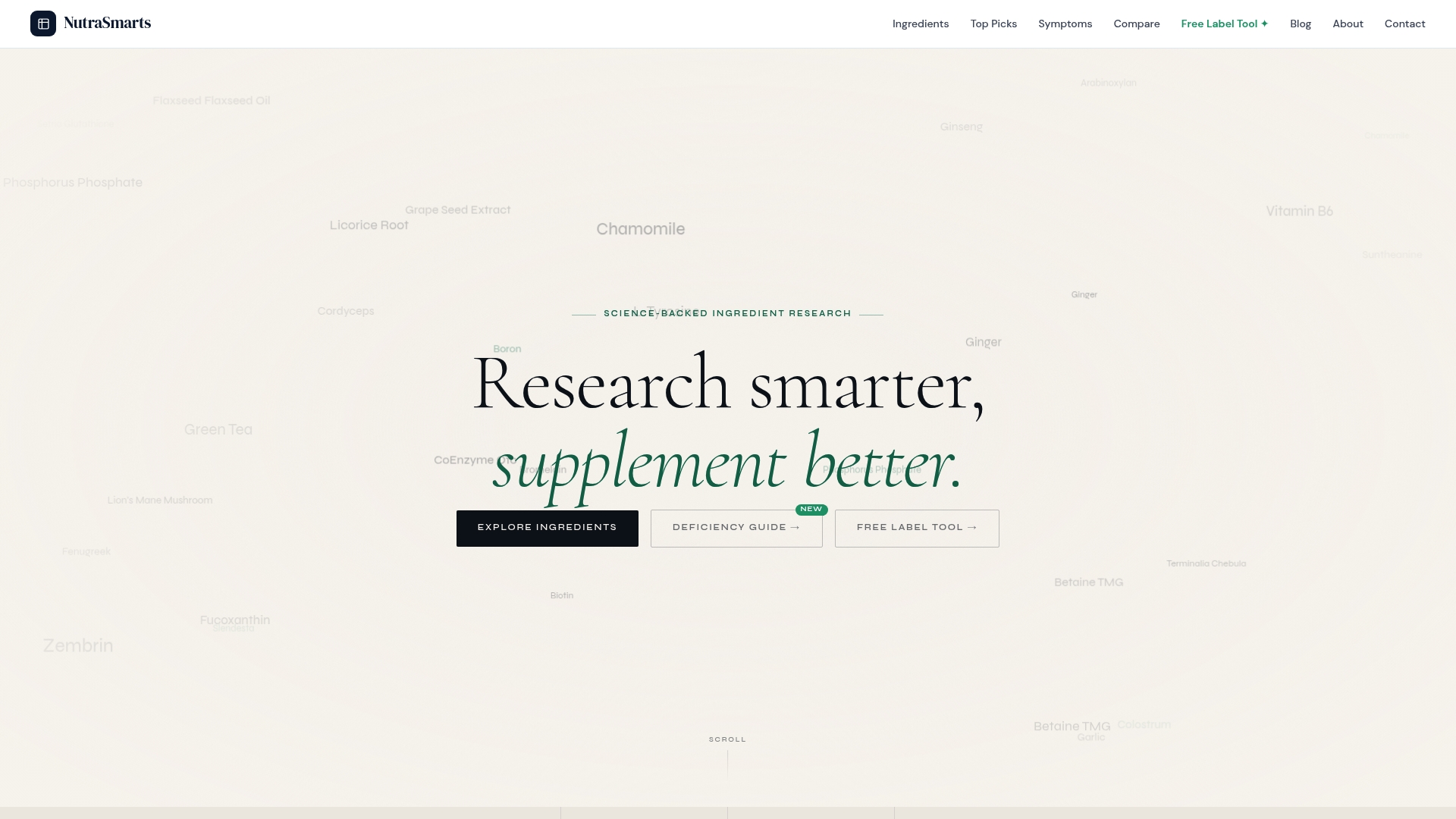
Nutrasmarts maintains a database of over 800 ingredients, each linked directly to peer-reviewed studies and clinical trial citations. You can search by health concern, from joint pain to metabolic health, and see exactly which ingredients have RCT support, at what doses, and for which populations. For anyone tracking cardiometabolic markers, the metabolic health supplements section reviews 130 products with vetted research. Athletes and active individuals can browse the athletic performance picks, where collagen and protein-based supplements are evaluated against the latest trial data. You can also search the full supplement ingredient database by ingredient name to pull citations, dosage guidance, and quality notes before you buy anything.
FAQ
Which supplements have the strongest peer-reviewed evidence?
Collagen (for strength and lean mass), resveratrol (for cardiometabolic health in specific populations), and select multi-ingredient products like AG1® have some of the strongest recent peer-reviewed evidence based on meta-analyses and RCTs published through 2026.
How do I know if a supplement's research applies to me?
Check whether the study population matches your health status, age, and goals. Supplements are most effective for people who share the characteristics of the trial participants, particularly those with confirmed deficiencies or relevant health conditions.
What does third-party verification actually confirm?
Third-party certifications like USP Verified confirm that the ingredient, dose, and purity match what is stated on the label. They do not confirm clinical efficacy but make it possible to purchase a supplement that at least matches the formulation studied in trials.
Is collagen better than whey protein for muscle building?
According to a 2026 network meta-analysis of 78 RCTs, collagen produced significantly greater improvements in strength and fat-free mass than whey protein in adults doing resistance training. Both outperformed placebo, but collagen's effect size was larger.
Can I trust "science-backed" claims on supplement labels?
Not without verification. Marketing claims can reference studies that used different doses, different populations, or different product formulations than what you are buying. Always check the actual study and confirm the product matches through third-party certification.