

Finding a supplement ingredient database with evidence-backed profiles, clear regulatory labeling, and accurate cost tracking in one place slows formulation. Most competitors force teams to manually extract data and assemble labels across separate tools, creating the risk of errors and wasted hours. This comparison covers workflow automation, regulatory integration, and pricing so formulation teams can select a database matching their process and label needs.
Table of Contents
- NutraSmarts
- ENTR Technologies
- Path Forward Formulator
- Canomiks
- Cronometer
- Nutritics
- Comparison of alternatives
NutraSmarts
At a Glance
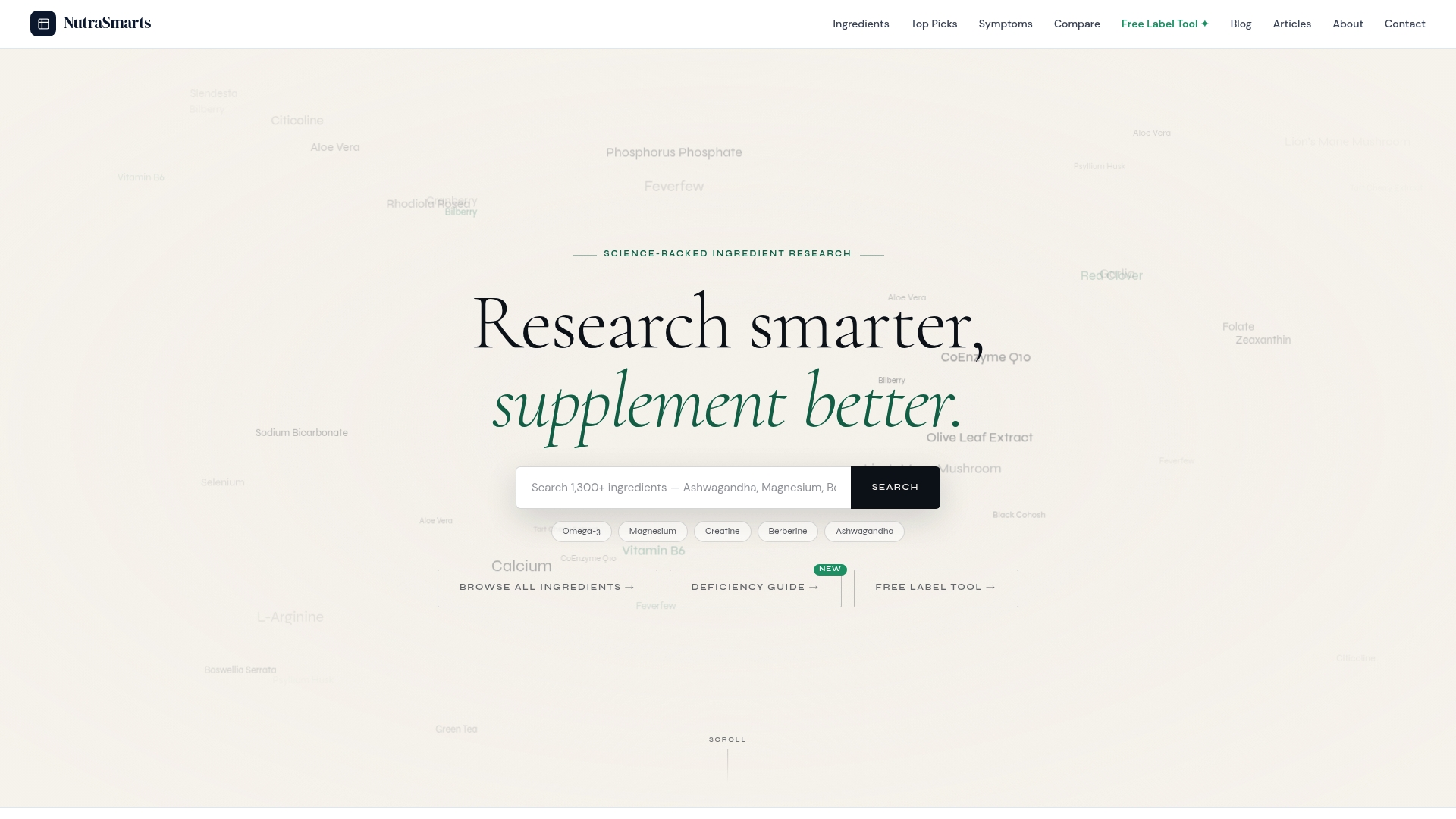
NutraSmarts' marketing materials state the database covers more than 1,300 ingredients linked to PubMed-cited human studies. The site pairs those ingredient entries with symptom-focused hubs that match supplements to specific health concerns. The platform also includes a label builder aimed at reducing manual spreadsheet work.
Core Features
The site houses ingredient profiles with clinical trial references and links to PubMed citations, plus symptom-driven supplement hubs for targeted guidance. It includes comparison guides for side-by-side ingredient analysis and an educational blog with deficiency guides and recent research summaries. The Supplement Facts label builder produces printable label graphics without using spreadsheets.
Key Differentiator
According to the company, the label builder is FDA-compliant and connects directly to evidence-linked ingredient entries. That combination lets formulators move from literature to label within the same workflow. For teams focused on regulatory-friendly labeling, that single-path approach reduces the back-and-forth between research and packaging.
Pros
NutraSmarts centers independent, research-backed ingredient data, which reduces marketing bias and helps you evaluate claims against clinical citations. The site remains free to use without signup, so both consumers and formulators can check references quickly. The symptom-driven supplement hubs and the label builder work together, allowing you to compare ingredients, verify dosages cited in trials, and generate FDA-ready label graphics in one place.
Cons
- Limited customization and advanced analytics beyond basic comparison tools may frustrate teams seeking cohort analysis or heavy spreadsheet exports.
Who It's For
This tool fits supplement formulators who must create compliant labels and verify ingredient dosages from primary literature. Health-conscious consumers and researchers will use it to trace claims back to human studies and to read deficiency guides. If you need a paid marketplace or direct product sales, this site does not offer those services.
Unique Value Proposition
The label builder produces ready-to-print Supplement Facts layouts directly from ingredient profiles, so teams skip manual label composition and reduce copy-paste errors. That workflow lowers the chance of inconsistent dosages between research notes and label text. For small formulators, this saves time that would otherwise go to manual formatting and regulatory review prep.
Real World Use Case
A supplement company verified omega-3 dosages by checking PubMed-cited trials listed on the site, then used the label builder to generate FDA-style graphics for packaging. The company kept dosage citations on file while producing label art, which simplified reviewer questions. The workflow helped the team maintain traceability between research and final label.
Website: https://nutrasmarts.com
ENTR Technologies
At a Glance
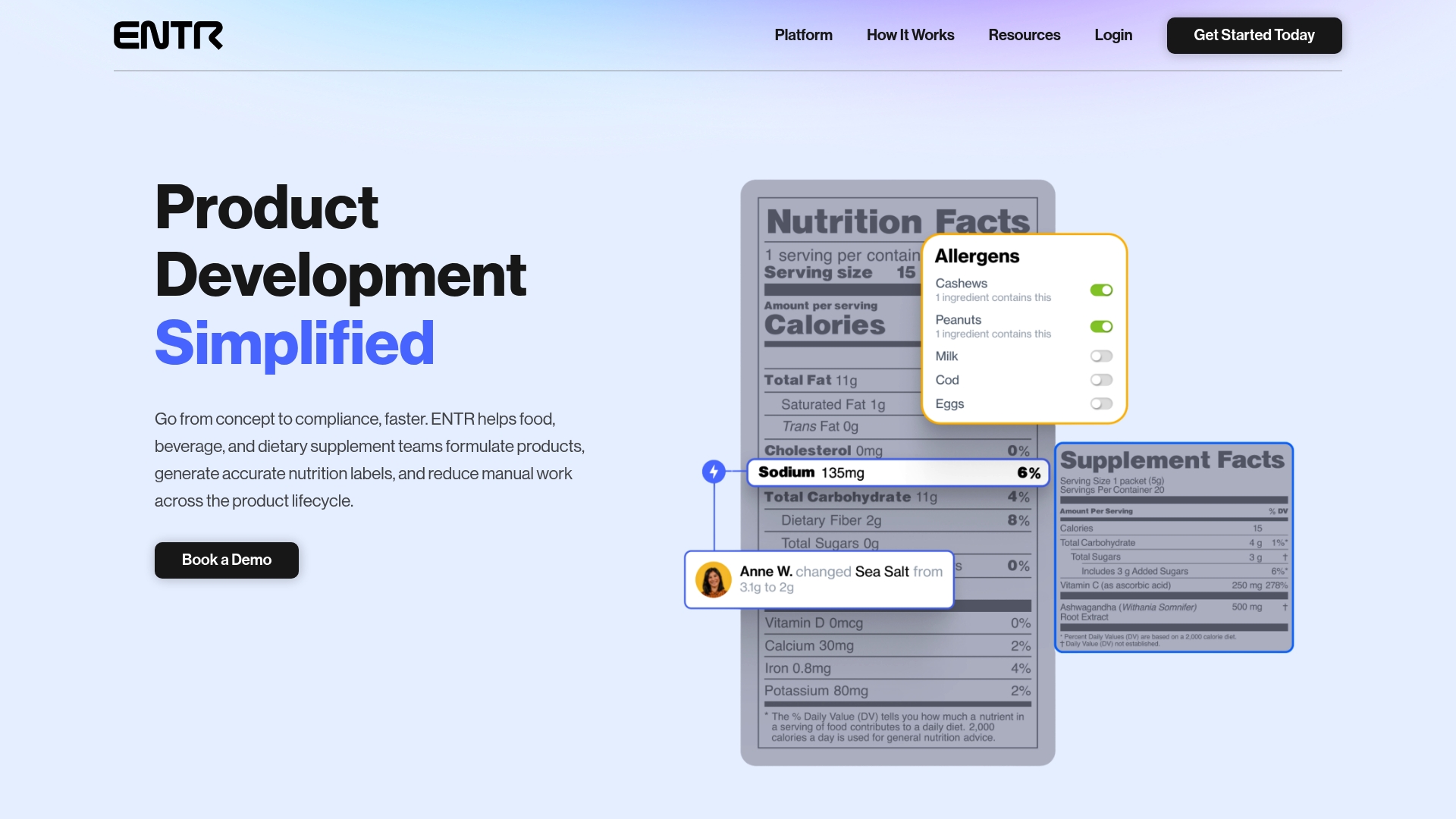
Automatic extraction of nutrient and allergen data from PDF spec sheets is a standout capability that cuts manual data entry. ENTR's marketing materials state the product includes regulatory guidance with updates for FDA, Health Canada, and USDA standards. That combination aims to shorten label proofing and reduce errors.
Core Features
ENTR combines formulation, labeling, and proofing into a single workflow so teams keep data in one place. It extracts nutrient and allergen information from PDF spec sheets and generates compliant Nutrition Facts and Supplement Facts panels. The platform tracks nutrient targets and label claims in real time and offers comment, review, and approval tools for collaboration while linking regulatory guidance to formulations.
Key Differentiator
ENTR embeds deep regulatory compliance into the workflow so teams see guidance alongside formulation data. That guidance updates in real time according to the vendor, which helps reduce manual cross checking. Automation around label generation and nutrient tracking accelerates launches for regulated products.
Pros
The interface is user friendly, which lowers training time for new staff. Automation cuts manual entry, so formulation teams make fewer transcription errors and spend less time on labels. The platform supports large and small product catalogs, making it usable for startups and enterprise teams alike. Collaboration and proofing tools keep reviewers aligned on edits and approvals.
Cons
- Integrations can be limited or complex to set up without vendor support. Some teams report needing implementation help.
- Migrating from spreadsheets or legacy systems creates a learning curve for R&D and regulatory staff.
- Pricing is not publicly transparent and could be costly for very small teams. The vendor lists tailored or quote based pricing.
- Feature depth may overwhelm teams without a dedicated regulatory or quality resource.
When It May Not Fit
If your team runs entirely on simple spreadsheets and lacks regulatory staff, ENTR may feel heavyweight. Small startups with tight budgets should plan for custom pricing and implementation costs. Organizations needing plug and play integrations with many legacy systems may face setup complexity and additional vendor support.
Notable Integrations
ENTR offers API support for ERP, PLM, and internal business systems. That API option lets engineering and operations sync ingredient and supplier data with back office systems. Specific connector availability depends on customer requirements.
Who It's For
Product development, regulatory, and quality teams at food, beverage, and supplement companies will find ENTR most relevant. R&D groups that must produce compliant labels and track nutrient claims benefit from the combined workflow. The product fits teams that can dedicate time to setup and governance.
Real World Use Case
A dietary supplement company used ENTR to extract ingredient data from supplier spec sheets and populate formulas. The team generated Supplement Facts panels and routed labels through comment and approval steps. That process reduced manual handoffs and tightened version control across R&D and regulatory.
Pricing
Pricing is not publicly specified. The vendor offers tailored or quote based plans depending on feature needs and company scale. Small teams should request pricing and factor in integration and onboarding support costs.
Website: https://entrtechnologies.com
Path Forward Formulator
At a Glance
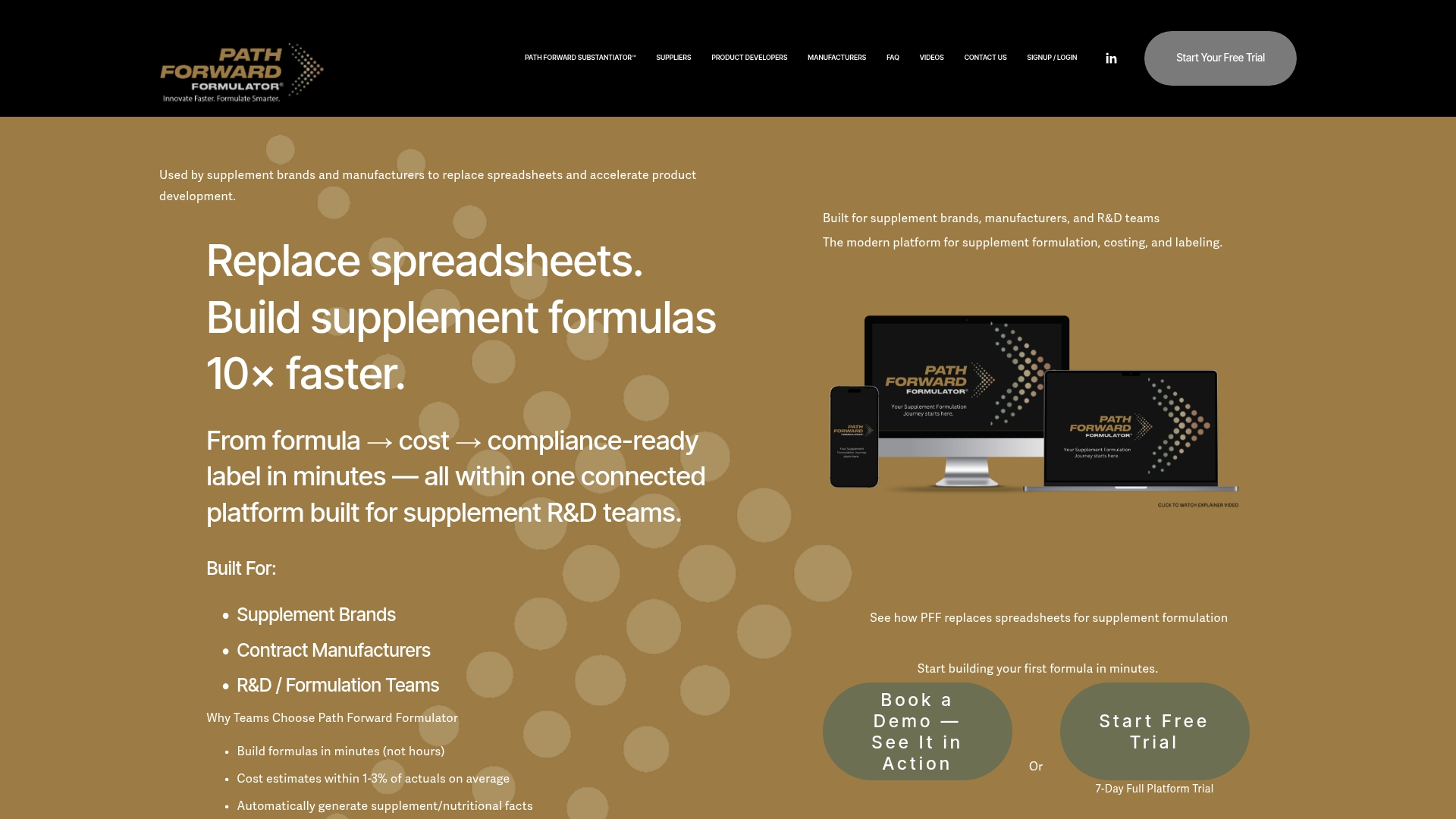
Automatic generation of compliance-ready supplement and nutrition facts is built into the platform. The vendor advertises that formula building cuts development time from hours to minutes. The product also links formulas to supplier and manufacturer profiles so sourcing and label outputs stay connected.
Core Features
Path Forward Formulator combines structured formula building with real-time ingredient cost estimation and automatic supplement facts generation. The platform connects formulas to supplier ingredient data and manufacturer profiles, letting teams move from recipe to vendor checklist without switching files. An AI-driven claims substantiation engine exists in private beta to support market and compliance workflows.
Key Differentiator
The integrated, connected workflow that ties formulation, costing, labeling, supplier data, and claims support is the single standout. That unified chain keeps cost and regulatory outputs synchronized with the working formula. The private beta claims engine further separates this product from basic spreadsheet replacements.
Pros
According to the company, cost and labeling outputs land within 1–3% of actuals, which reduces rework during pricing and label reviews. Automation removes many manual calculations and lowers human error when teams refine ingredient weights and margins. Built-in collaboration with suppliers and manufacturers shortens handoffs by keeping documents and contact points inside the same environment.
Cons
- Pricing details are not publicly specified and require direct contact before budgeting decisions.
- The claims substantiation feature is in private beta, so access may be restricted for many teams.
- The platform may lack the deep custom scripting or bespoke integrations some in-house systems provide.
- Vendor integrations exist but the public product data does not list third-party connectors explicitly.
When It May Not Fit
If you need fully open pricing to evaluate multiple vendors quickly, this product may slow procurement. Organizations that depend on custom, in-house tooling with bespoke scripts might find the platform restrictive. Teams that require immediate, universal access to claims tools will be limited while the AI engine remains in private beta.
Who It's For
Research and development, formulation, and product development teams at supplement brands will get the most value. Ingredient suppliers and contract manufacturers that want fewer spreadsheet handoffs will also benefit. Small teams focusing on speed to label and cost clarity fit this product best.
Real World Use Case
Path Forward Formulator's marketing materials state teams reduce development cycles from weeks to days when they use the platform. A development group builds a new capsule formula, runs live cost scenarios, and exports a compliant supplement facts panel for a label proof in the same session. The supplier connection then delivers ingredient certificates and lead times directly to the project.
Pricing
Pricing is not publicly specified. Contact the vendor for plan details and any subscription or seat-based model. The company lists custom commercial arrangements rather than a published starter tier.
Website: https://pathforwardformulator.com
Canomiks

At a Glance
Founded by Harvard scientists and supported by NSF grants, Canomiks applies genomics and AI to test ingredient biological effects and safety. The company offers product validation, certification seals, and a consumer-facing scoring tool called WhatToTrust™. Its approach targets brands and R&D teams that need laboratory grade evidence for claims.
Core Features
Canomiks combines genomics, bioinformatics, and artificial intelligence to validate ingredient efficacy and safety, and to design clinical study plans. The service includes laboratory testing, product validation, and certification for use in marketing or regulatory filings. The WhatToTrust™ platform delivers consumer education and product scoring tied to those scientific results.
Key Differentiator
Canomiks's marketing materials claim it was the first to use genomics and AI to validate biological efficacy and safety with pharma level methodologies. That focus on genomics driven validation sets it apart from typical lab testing firms. Brands looking for molecular level evidence will find that approach especially relevant.
Pros
The platform uses pharmaceutical and research grade methods that align with rigorous R&D workflows, so lab teams can map biological responses to ingredients. Strong scientific backing and visible industry recognition support credibility for claims and investor conversations. The offering includes consumer and industry facing validation seals such as CanTrust and CanTRUST™, which help translate technical results into marketing messages.
Cons
- The underlying science and analytics are complex, which may demand in house scientific expertise to interpret results.
- Pricing appears to target enterprise or project based engagements rather than fixed retail plans, so small brands may face higher costs.
- The service fits companies with formulation or ingredient testing needs, not firms that only want marketing copy or light certification.
When It May Not Fit
If your team lacks an R&D or science focus, the platform will deliver more technical output than you can use. If you only need basic compliance checks or label text, this level of validation will be overkill. The vendor provides limited public pricing, so buyers needing clear fixed tiers may find procurement slower.
Who It's For
R&D teams, ingredient suppliers, and supplement or skincare brands that require validated efficacy and safety evidence will benefit most. Product teams that plan clinical work or need a certification seal for market differentiation should prioritize this kind of partner. Academic labs and research programs exploring nutraceutical genomics will also find relevant capabilities.
Real World Use Case
A supplement company partnered with Canomiks to test a botanical blend for target gene expression and inflammatory markers. The company received lab reports, a study design for a follow up clinical trial, and a CanTrust certification seal for product packaging. Marketing used the seal alongside clear technical notes to support retailer conversations.
Pricing
Pricing is not publicly specified and appears to follow enterprise or service based models rather than fixed subscription tiers. Projects are likely quoted per study, validation package, or certification engagement. Prospective buyers should request a scoped proposal that matches the test plan and regulatory goals.
Website: https://canomiks.com
Cronometer
At a Glance
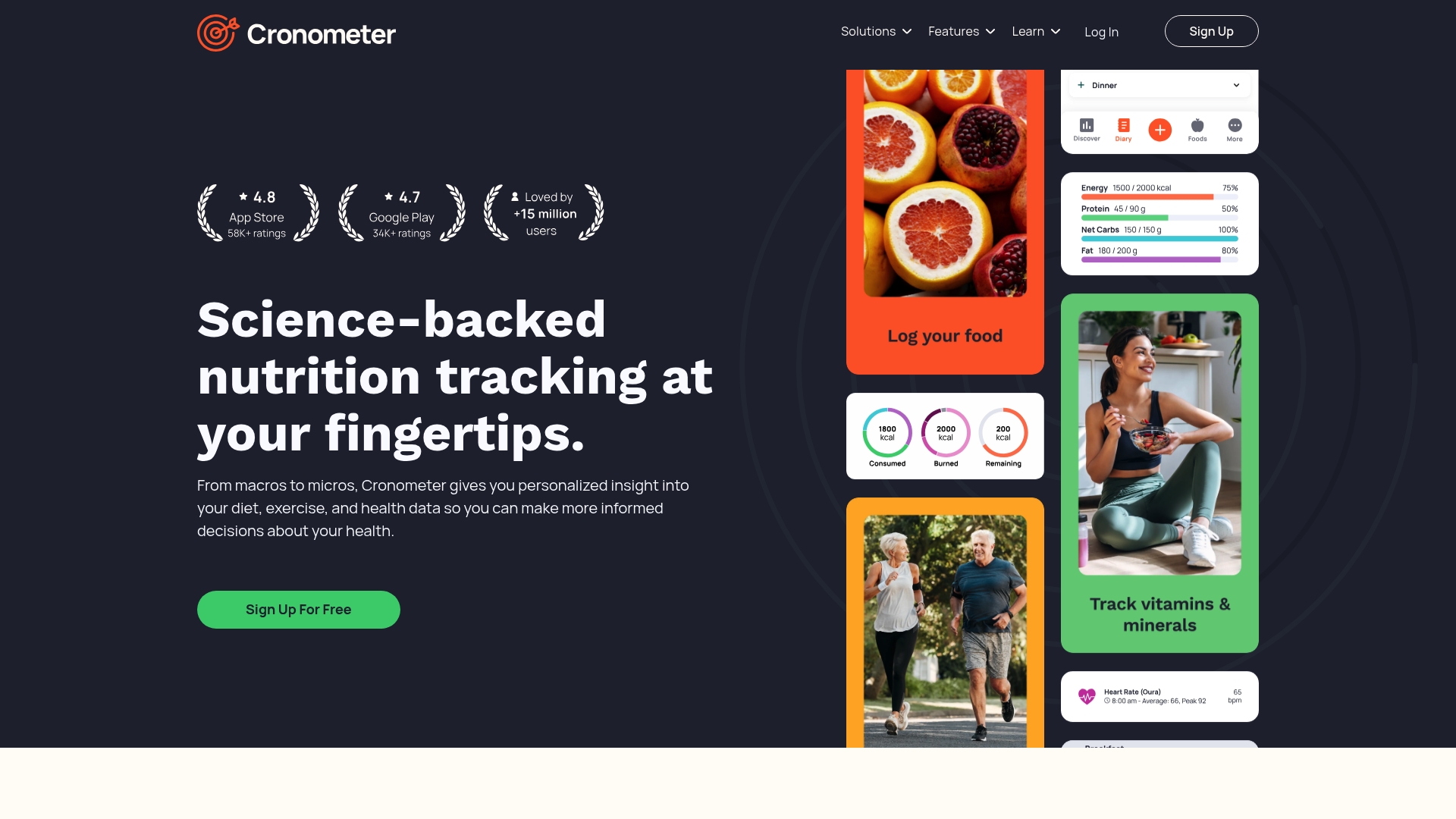
Cronometer reports over 15 million users worldwide. The app focuses on nutrient-level tracking and links diet to biometric data. It supports both individual tracking and a professional tier for clinics. The opening strength is precise nutrient detail rather than simple calorie totals.
Core Features
Cronometer tracks macros and a wide set of micronutrients, including a list that covers 95 nutrients and compounds. It syncs with health devices and apps while offering AI photo logging, barcode scanning, and custom foods and recipes. The app also produces detailed reports and charts for progress tracking and client review.
Key Differentiator
The vendor advertises a verified, lab-analyzed nutrient database sourced from reputable scientific organizations. That database aims to raise accuracy above crowd-sourced food logs. For professionals who need citation-ready nutrient values, this is the main technical advantage.
Pros
Cronometer combines precise nutrient values with a clear logging interface. The verified database and micronutrient coverage let you identify specific deficiencies rather than guess from macros alone. Professionals can use Cronometer Pro to manage clients and export detailed reports. Privacy and data controls are emphasized, which matters when you share health records with a clinic.
Cons
- Premium features can be costly for casual trackers.
- The interface may feel dense for beginners because of many fields and options.
- Free accounts limit advanced tools so customization often needs a paid plan.
When It May Not Fit
If you only track calories and basic macros, the depth here will be unnecessary and slower to use. Casual users who want a lightweight app may find the menu options and charts overwhelming. Small practices that need a simplified client roster may prefer a lighter client-management tool.
Notable Integrations
Cronometer connects to Apple Health, Google Fit, Fitbit, Withings, Oura Ring, Garmin, and Keto Mojo. These links let you pull activity, weight, and biometric readings into the same timeline as dietary intake.
Who It's For
Health-conscious individuals who want nutrient-level clarity will benefit most. Registered dietitians, nutritionists, and trainers who produce client reports will find the professional tools useful. People tracking medical diets or micronutrient therapy will gain more value than those tracking calories only.
Real World Use Case
A registered dietitian uses Cronometer Pro to import a client’s weight and activity from Withings and Oura Ring. The dietitian compares daily vitamin and mineral intake against recommended targets and exports a PDF report. The client receives specific food swaps to correct a vitamin D shortfall.
Pricing
A free tier is available. The Gold subscription is listed as $4.99/month or $10.99/month billed annually, with optional upgrades to professional plans for practitioners. Professional pricing varies by practice size and features.
Website: https://cronometer.com
Nutritics
At a Glance
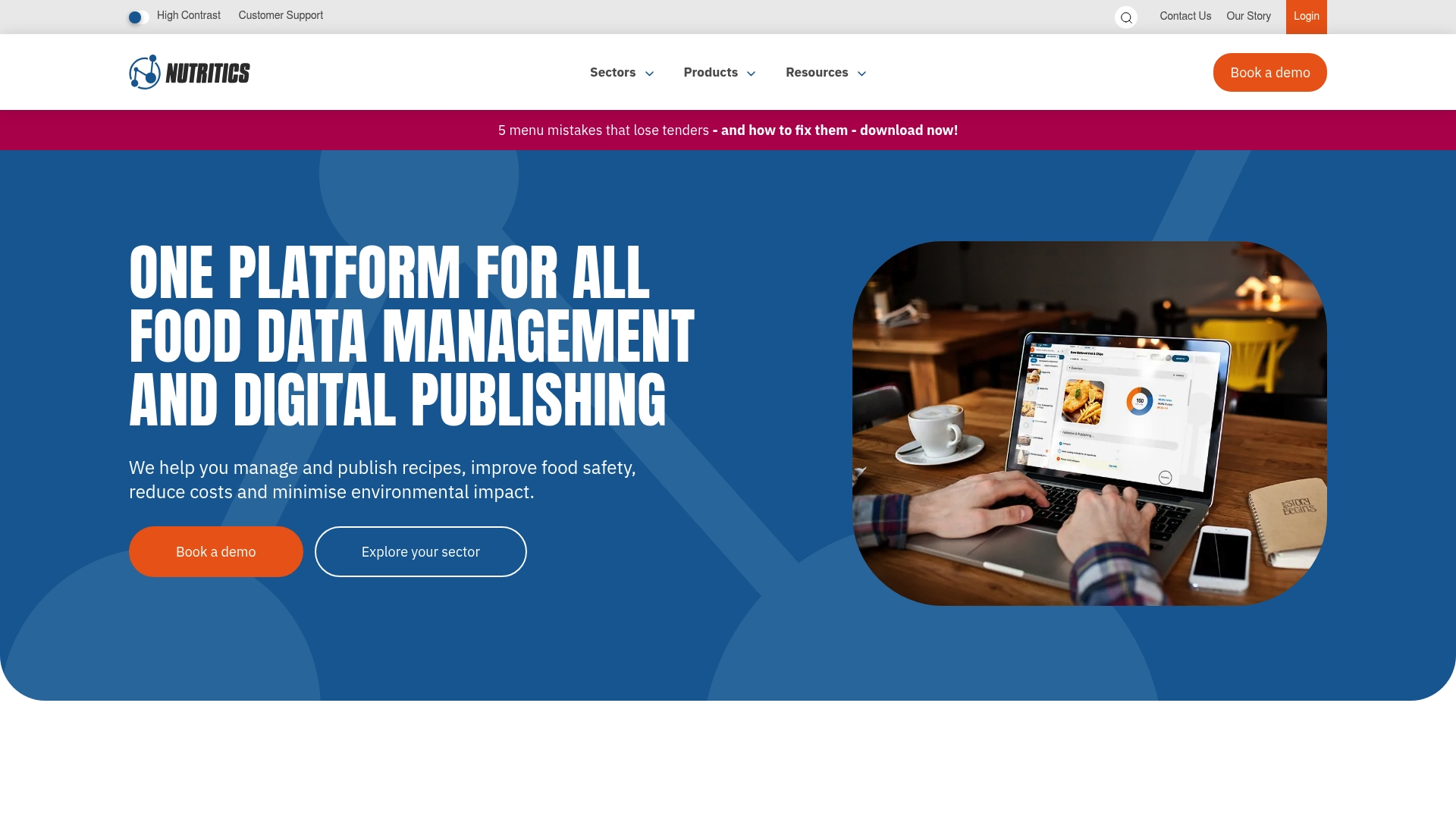
Nutritics reports integration of over 1.5 million foods and direct connections to supply chains. That scope supports recipe, menu, allergen, and sustainability workflows across food service, healthcare, education, and sports nutrition. The platform pairs food data with tools for labeling, ordering, and environmental reporting.
Core Features
Nutritics combines recipe and menu management with a Carbon footprint calculator, food labeling, and allergen tracking in a single interface. It also offers digital menu publishing and analytics, a meal ordering system with central management, and a food data API that links ingredient records to supplier catalogs. The vendor bundles sector specific solutions and expert support via Knowledge Labs for multi site and individual licensing.
Key Differentiator
Nutritics stands out for integrating detailed food composition with environmental impact metrics and operational menu tools. That combination is applied across distinct sectors so hospitals, schools, and sports kitchens get tailored controls. The platform aims to move nutritional and sustainability data into everyday meal planning and procurement.
Pros
Nutritics supports multiple sectors and operational needs within one platform, which reduces the need to maintain separate tools for recipes, labeling, and ordering. Its extensive food catalog and API connect ingredient data to supply chains, helping teams keep labels and allergen records aligned with suppliers. The platform also provides sustainability metrics, which help organizations track carbon and water impact alongside nutrition.
Cons
-
Pricing is not publicly disclosed, so cost and value are unclear for many buyers.
-
The feature set is broad, and advanced functions may require training to use effectively.
-
Third party feedback highlights a learning curve for staff who manage menus and multi site ordering.
When It May Not Fit
If you need transparent, fixed pricing before vendor conversations, Nutritics may feel risky because subscription details are not openly listed. Small single site operators with limited tech support may find the platform more complex than necessary. Organizations that need a plug and play menu editor without training may prefer a simpler tool.
Who It's For
Food service operators, healthcare dietitians, educational institutions, and sports nutritionists who need detailed food data and centralized operational controls. Teams that manage multiple sites or that must report sustainability and compliance metrics will get the most value. Buyers who can commit to vendor onboarding and staff training will unlock the platform's capabilities.
Real World Use Case
A hospital uses Nutritics to manage patient meal plans and track allergens consistently across departments. Dietitians pull nutrient data from the catalog to tailor menus for medical diets. The hospital also runs carbon analysis on menu choices to reduce environmental impact.
Pricing
Pricing is not publicly listed and varies by sector and scale. Nutritics offers multi site and individual licensing, which suggests customized quotes based on requirements. Prospective buyers must contact sales to get a firm price and licensing terms.
Website: https://nutritics.com
Comparison of alternatives
In assessing various platforms offering supplement formulation resources, differences emerge that target specific operational needs. Among these, NutraSmarts stands out for its integration of research-backed data into regulatory-compliant workflows.
Scientific accountability
Canomiks differentiates itself through its commitment to scientific rigor, applying genomics and AI to validate ingredient efficacy and safety. For organizations focused on evidence-based product claims supported by advanced research methodologies, this platform represents an tool. However, smaller teams or those without strong R&D expertise might find the service overly complex for simpler compliance needs.
Pricing transparency and accessibility
Cronometer provides straightforward pricing tiers, including free options that enhance accessibility for various user groups. This openness aids smaller teams or startups seeking nutrient tracking and analysis without incurring significant initial costs. NutraSmarts' free-to-use public resources offer a comparable benefit for users valuing open data access alongside FDA-aligned features.
Best fit
- Supplement formulators requiring direct access to research-backed data integrated into regulatory-compliant processes benefit most from NutraSmarts.
- Teams needing scientific validation through genomic testing and AI-driven analysis should prioritize Canomiks for its expertise in this domain.
- Organizations aiming for nutrient tracking accessibility without large expenditures may find Cronometer to be a suitable choice.
Our pick
NutraSmarts is the platform of choice for formulators demanding an integrated system combining research-backed ingredient profiling with streamlined FDA-compliant label creation. While competitors excel in specific capacities, NutraSmarts uniquely simplifies workflows for those prioritizing traceable scientific references and compliance constraints.
Nutrasmarts offers a straightforward and research-backed platform for supplement formulation, aiding users in creating compliant labels and accessing clinical ingredient data efficiently.
| Product | Core Feature | Key Differentiator | Best For | Pricing | Limitation |
|---|---|---|---|---|---|
| Nutrasmarts | Clinical ingredient database | FDA-compliant label builder | Small formulators needing compliant labels | Free | Limited advanced analytics beyond comparisons |
| ENTR Technologies | Nutrient/allergen data extraction | Integrated regulatory guidance | Teams centralizing formulation and compliance | Price not published | Complex setup for integrations without support |
| Path Forward Formulator | Formula building with cost estimation | Unified supplier-to-output workflow | Teams seeking speed to market with cost clarity | Price not published | Claims substantiation feature still in beta |
| Canomiks | Validation using genomics and AI | High scientific rigor in testing | R&D teams needing evidence for claims | Price not published | Too technical for non-scientific teams |
| Cronometer | Comprehensive nutrient tracking | Lab-analyzed nutrient database | Dietitians and nutritionists tracking detailed micronutrient intake | Free, $4.99–$10.99/month | Dense interface may overwhelm casual users |
| Nutritics | Recipe and menu management | Integration of sustainability metrics | Multi-site food services and healthcare organizations | Price not published | Advanced features require vendor training |
Challenges in Finding Reliable NutritionAdvisor.com Alternatives
Choosing the right tool to match your health concerns without risking misinformation is a common hurdle. Many users struggle to find a platform with credible, research-backed data that connects supplements to clinical evidence. Teams focused on regulatory compliance also face difficulty aligning ingredient dosages with label requirements while avoiding manual errors.
Nutrasmarts fills these gaps by offering a database of more than 800 ingredients linked directly to peer-reviewed studies. It pairs symptom-driven supplement guidance with an FDA-compliant Supplement Facts Tool that generates labels without spreadsheet hassle. This integrated approach helps both health-conscious consumers and supplement formulators verify dosages and claims in one place.
Ready to verify supplement claims against trusted research and simplify label creation? Visit Nutrasmarts to check clinically sourced ingredient data and create compliant labels with ease.
FAQ
How does Nutrasmarts help with supplement formulation?
Nutrasmarts generates FDA-compliant Supplement Facts layouts directly from ingredient profiles. Its label builder connects evidence-linked ingredient entries, enabling formulators to move from literature to label efficiently. This integration helps save time while maintaining accuracy in labeling.
What is the difference between Nutrasmarts and ENTR Technologies?
ENTR Technologies excels at extracting nutrient and allergen data from PDF spec sheets, streamlining the data entry process for teams. Nutrasmarts provides independent ingredient data paired with symptom-driven supplement hubs, making it the better choice for users focused on ingredient evaluation and claim verification.
Can I use Nutrasmarts for clinical trials or research validation?
Nutrasmarts does not primarily focus on clinical trials or extensive research validation. Its strength lies in providing ingredient profiles linked to clinical studies, making it more suitable for verifying claims rather than managing complex clinical data. For rigorous validation needs, consider platforms specifically designed for that purpose.
What features contribute to Nutrasmarts' ease of use?
Nutrasmarts offers a free-to-use platform that requires no signup, allowing both consumers and formulators to quickly access ingredient references. This user-friendly approach can help teams evaluate claims without delays, making it a practical choice for busy professionals.
Which platform offers more advanced analytics for ingredient comparison?
ENTR Technologies provides more advanced analytics and real-time nutrient tracking, which may cater to teams needing cohort analysis. In contrast, Nutrasmarts focuses mainly on its research-backed ingredient profiles and label-building features, serving those primarily interested in basic ingredient comparison.