
Plant sterols/stanols, psyllium fiber, and berberine have the strongest trial evidence for lowering LDL among over-the-counter supplements for cholesterol. Omega-3 fatty acids reliably cut triglycerides. Red yeast rice can work, but it carries serious legal and safety baggage in the U.S. that most labels won't tell you about.
Before going further, three things worth knowing upfront:
- Expected LDL reductions are modest. Plant sterols at roughly 2 g/day lower LDL by about 6–12% in controlled trials. Psyllium fiber shows smaller but consistent drops in short-term studies. No supplement comes close to what a statin does.
- Red yeast rice is a legal gray zone in the U.S. Products with meaningful monacolin K content are treated by the FDA as unapproved drugs, not dietary supplements. Some are also contaminated with citrinin, a nephrotoxin.
- Supplements are adjuncts, not replacements. Diet and exercise remain the proven foundation; if your LDL is high enough to warrant a statin, a supplement is not a substitute. Talk to your clinician before adding any cholesterol-directed supplement, especially if you're already on prescription therapy.
Key Takeaways
Plant sterols, psyllium fiber, and berberine have the strongest trial evidence for LDL reduction among over-the-counter cholesterol supplements, but none produce effects close to prescription statins.
| Point | Details |
|---|---|
| Top evidence-backed options | Plant sterols (6–12% LDL reduction at 2 g/day), psyllium fiber, berberine, and omega-3s for triglycerides. |
| Red yeast rice legal flag | Products with monacolin K are treated as unapproved drugs by the FDA; citrinin contamination adds kidney risk. |
| Supplements are adjuncts | They do not replace statins when guidelines indicate pharmacotherapy; consult your clinician before starting. |
| Verify product quality | Look for USP, NSF International, or ConsumerLab certification; match label doses to trial doses. |
| Recheck labs at 6–12 weeks | Get a baseline lipid panel before starting and retest after 6–12 weeks to confirm any effect. |
| Use Nutrasmarts to research | The ingredient database links each supplement to trial citations and safety flags before you buy. |
Table of Contents
- Which supplements for cholesterol have the best evidence?
- How large are the effects, and how long before your labs change?
- Safety, drug interactions, and legal issues you need to know
- How to pick a quality supplement and match trial dosing
- When do supplements make sense versus prescription therapy?
- How Nutrasmarts reviewed the evidence for this list
- The editorial perspective on cholesterol supplements
- Nutrasmarts gives you the research before you buy
- Sources
Which supplements for cholesterol have the best evidence?
The table below covers every ingredient with meaningful trial data. Effect sizes come from randomized trials and meta-analyses; doses reflect what researchers actually used, not what a typical label lists.
A few ingredients deserve more than a table row.
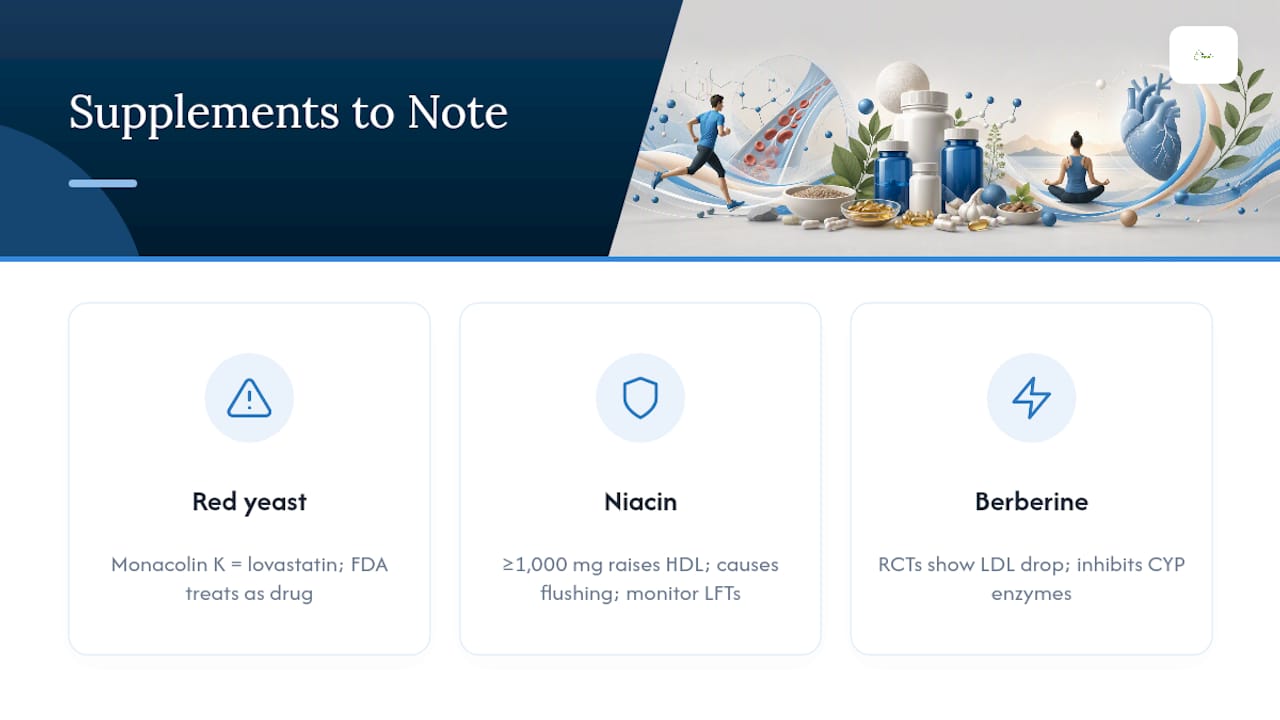
Red yeast rice is the one that trips people up most. The LDL-lowering effect is real, because monacolin K is chemically identical to lovastatin. But the FDA treats products with significant monacolin K as unapproved drugs, and you have no way to know how much is in a given bottle. Some products also carry citrinin contamination, which can damage kidneys. The NCCIH flags red yeast rice as carrying the same side-effect profile as lovastatin, including muscle and liver injury.
Niacin at pharmacologic doses (1,000 mg and above) raises HDL and lowers triglycerides, but the flushing side effect is significant, and prescription-strength niacin requires liver function monitoring. Over-the-counter "flush-free" niacin (inositol hexanicotinate) has not shown the same lipid effects in trials.
Berberine has attracted real clinical attention. Several RCTs show LDL reductions that look impressive on paper, but berberine inhibits multiple CYP enzymes, meaning it can alter blood levels of other drugs. Anyone on prescription medications should check interactions before trying it.
How large are the effects, and how long before your labs change?
The honest answer: modest, and slower than most people expect.
Plant sterols are the benchmark. A meta-analysis published in PMC found a consistent dose-response relationship, with LDL falling roughly 6–12% at intakes near 2 g/day. That is a real effect, but a statin typically produces 30–50% LDL reductions. Psyllium fiber shows consistent but smaller LDL drops in short-term trials, making it one of the better-supported options for modest reductions without major side-effect risk.
Key figure: Plant sterols at 2 g/day lower LDL by approximately 6–12% in controlled trials, according to a PMC meta-analysis. Omega-3s at 2–4 g EPA+DHA/day can reduce triglycerides by 20–30%, though their effect on LDL is mixed and sometimes unfavorable at high doses.
For timing, most supplements that affect LDL show measurable changes within 4–8 weeks of consistent use. Omega-3s can shift triglycerides within 4 weeks at therapeutic doses. That said, trial durations for most of these ingredients run 8–12 weeks, so long-term cardiovascular outcome data are largely absent. Lowering a lab number is not the same as reducing a heart attack, and the PMC review on plant sterols is explicit that long-term CV outcome and safety data remain limited even for the best-studied options.
Recheck your lipid panel 6–12 weeks after starting a supplement. If you see no meaningful change by then, the product is unlikely to be working for you.
Safety, drug interactions, and legal issues you need to know
This is where most supplement articles go soft. They list the benefits and bury the risks in a footnote. Here is the version that does not do that.
Top interaction and safety warnings:
- Statin-like effects: Red yeast rice with monacolin K carries the same muscle and liver injury risk as lovastatin. Combining it with a statin multiplies that risk.
- Bleeding risk: Garlic supplements, omega-3s at high doses, and flaxseed can all have mild blood-thinning effects. If you take warfarin, aspirin, or other anticoagulants, discuss with your prescriber.
- CYP enzyme interactions: Berberine inhibits CYP3A4 and CYP2D6, which affects metabolism of many common drugs including some statins, blood pressure medications, and antidepressants.
- Liver toxicity: Green tea extract at high doses (above roughly 800 mg EGCG/day) has been linked to liver injury in case reports. Niacin at pharmacologic doses requires periodic liver function tests.
- Pregnancy and breastfeeding: Berberine, red yeast rice, and niacin at pharmacologic doses should be avoided. Flaxseed's phytoestrogens are a theoretical concern. Default to clinician guidance for any supplement during pregnancy.
- Citrinin contamination: Some red yeast rice products contain citrinin, a mycotoxin that can harm kidneys. Third-party testing is the only way to screen for it.
Risk-reduction checklist:
- Tell your prescriber about every supplement you take, including dose and brand.
- Stop garlic, omega-3s, and flaxseed at least one week before any surgery, or per your surgeon's specific advice.
- Avoid red yeast rice, berberine, and niacin at pharmacologic doses during pregnancy or breastfeeding unless a clinician has specifically approved them.
- Buy only from brands with third-party testing (USP, NSF International, or ConsumerLab verification).
- Recheck liver enzymes and a full lipid panel after 6–12 weeks on any new cholesterol-directed supplement.
Pro Tip: If a supplement label prominently advertises "monacolin K" content or claims statin-equivalent LDL reductions, that is a regulatory red flag in the U.S. The FDA has issued warning letters to companies making exactly those claims. Walk away from that product.
How to pick a quality supplement and match trial dosing
Third-party testing is non-negotiable. The supplement industry in the U.S. is not pre-market approved by the FDA, which means a label can say "2 g plant sterols per serving" and contain something quite different. USP, NSF International, and ConsumerLab each run independent verification programs that confirm label accuracy, contaminant screening, and manufacturing standards.
What to look for on a label:
- A USP Verified, NSF Certified, or ConsumerLab Approved seal on the bottle.
- The specific form of the ingredient (e.g., "plant stanol ester" rather than just "plant extract").
- Milligrams per serving that match the trial doses in the table above.
- No mention of lovastatin, monacolin K, or "statin-equivalent" effects on a product sold as a dietary supplement.
- A clear serving size and number of servings per container so you can calculate daily dose.
Dosing notes that actually matter:
Plant sterols work best taken with a main meal. The mechanism is competition with dietary cholesterol for intestinal absorption, so timing with food is not optional. Ground flaxseed (not flaxseed oil) is what the NCCIH-reviewed trials used; the oil form lacks the fiber and lignans that drive the cholesterol effect. For phytosterols, the clinically relevant dose starts at 2 g/day, split across meals.
Stacking multiple cholesterol-directed supplements without medical guidance is a common mistake. Combining berberine with red yeast rice, for example, stacks two agents with overlapping liver and muscle risk profiles. More ingredients is not more benefit; it is more risk.
When do supplements make sense versus prescription therapy?
Supplements are reasonable for two groups: people with low-to-moderate cardiovascular risk who want a lifestyle-first approach before considering medication, and people who are statin-intolerant and looking for adjunct options under clinician supervision. They are not a substitute for statins when guidelines indicate pharmacotherapy, and they are not appropriate as the sole strategy for anyone with established cardiovascular disease or very high LDL.
A practical decision framework:
- Low-to-moderate risk, LDL mildly elevated: Diet, exercise, and evidence-backed supplements (plant sterols, psyllium, omega-3s for triglycerides) are a reasonable first step for 3–6 months before reassessing.
- Statin-intolerant: Berberine, plant sterols, and psyllium may offer partial LDL reduction as adjuncts. Discuss with your clinician, who can also evaluate whether a different statin or lower dose is tolerable.
- High cardiovascular risk or established ASCVD: Do not replace prescribed therapy with supplements. Mayo Clinic and NCCIH are both explicit that self-prescribing can delay effective treatment in this group.
- On prescription cholesterol drugs: Any supplement addition requires prescriber review, particularly berberine (CYP interactions), red yeast rice (additive statin-like effects), and high-dose omega-3s (bleeding risk with anticoagulants).
Special populations:
- Pregnancy and breastfeeding: Most cholesterol supplements lack safety data for pregnancy. Berberine and red yeast rice are contraindicated. Consult your OB before taking anything beyond standard prenatal vitamins.
- Children: Cholesterol management in pediatric patients requires specialist oversight. Do not use adult-dose supplements in children.
- Older adults: Polypharmacy risk is higher. CYP interactions from berberine and bleeding risk from garlic and omega-3s deserve extra attention.
- Kidney or liver disease: Red yeast rice, niacin at pharmacologic doses, and high-dose green tea extract all carry organ-specific risks that make clinician oversight mandatory.
Monitoring plan: get a baseline lipid panel before starting, recheck at 6–12 weeks, and include liver enzymes if using berberine, niacin, or red yeast rice. If combining a supplement with a prescription drug, recheck sooner.
How Nutrasmarts reviewed the evidence for this list
The shortlist above prioritizes randomized controlled trials and meta-analyses, with additional weight given to guidance from the Mayo Clinic, NCCIH, and major cardiovascular guideline bodies. Single small trials without replication did not qualify an ingredient for a strong evidence rating.
Nutrasmarts's review process draws on its database of 1,300+ ingredient profiles, each linked to peer-reviewed studies and clinical trial citations. For this article, the scoring criteria were:
- Trial quality: RCTs and meta-analyses ranked above observational data and mechanistic studies.
- Effect size: Ingredients with quantified LDL or triglyceride changes in multiple independent trials ranked higher than those with only directional signals.
- Safety signals: Known drug interactions, contamination risks, and regulatory status were weighted as heavily as efficacy data.
- Third-party testing availability: Ingredients where verified, tested products exist were noted separately from those where product quality is difficult to confirm.
Readers who want product-level research can explore the Nutrasmarts cholesterol supplement category or the full ingredient database for citations tied to specific products and doses.
The editorial perspective on cholesterol supplements
The evidence for most natural cholesterol-lowering supplements is real but narrow. Plant sterols work. Psyllium works. Berberine has promising data. But "works" here means a 6–15% LDL reduction under controlled conditions, not a replacement for the 40–50% reductions that statins reliably produce in high-risk patients.
The part most supplement marketing skips: lowering a lab number is not the same as reducing cardiovascular events. For plant sterols, the best-studied option, long-term cardiovascular outcome data are still limited. That gap matters. A supplement that moves your LDL from 145 to 130 mg/dL is not the same as one that has been shown to reduce heart attacks in a 10-year trial.
Red yeast rice deserves a harder line than most articles give it. The legal situation in the U.S. is not a technicality. Products with meaningful monacolin K are unapproved drugs by FDA definition, and the citrinin contamination risk is not theoretical. If someone is considering red yeast rice because they want a "natural statin," the honest conversation is: you may be getting an unregulated statin with unknown dosing and potential kidney toxicity. That is a worse deal than a monitored prescription.
The most defensible approach: use supplements as one layer of a broader strategy that includes diet, exercise, and regular lipid monitoring. Check specific products against third-party testing databases before buying. And if your LDL is high enough that your clinician has mentioned medication, have that conversation fully before deciding supplements are sufficient.
Nutrasmarts gives you the research before you buy
Most people buying cholesterol supplements are working from a label and a Google search. Nutrasmarts is built for something more useful: a database of 1,300+ evidence-rated ingredient profiles, each linked to the actual trials, so you can check whether the dose on a product label matches what researchers used, and whether that brand has third-party testing on record.
For cholesterol specifically, the ingredient profiles for red yeast rice, phytosterols, berberine, and omega-3s include trial citations, typical effect sizes, and safety flags in one place. The free FDA-compliant Supplement Facts label tool lets formulators and informed buyers verify serving sizes and ingredient forms against clinical standards. Start with the metabolic health supplement reviews to see which products have the evidence behind them.
Sources
Mayo Clinic — Cholesterol-lowering supplements: A clinician-oriented summary covering the most common supplements, their evidence levels, and safety notes. Useful for a quick authoritative overview and for the adjunct-not-replacement framing. Read it here.
NCCIH — High Cholesterol and Dietary Supplements: The National Center for Complementary and Integrative Health's consumer-facing tip sheet covers plant sterols, flaxseed, red yeast rice, and green tea with safety flags and interaction notes. Read it here.
PMC — Plant Sterols and Stanols in Cholesterol Management: The meta-analysis behind the 6–12% LDL reduction figure at 2 g/day, with dose-response data and a frank discussion of what long-term outcome evidence is still missing. Read it here.
Harvard Health — Can you reduce cholesterol without a drug?: A practical evidence summary that highlights psyllium as one of the few supplements with consistent trial support and gives realistic expectations for magnitude of benefit. Read it here.
British Heart Foundation — Natural alternatives to statins: A balanced review of omega-3s, plant sterols, and other natural options, with an honest account of where the evidence stops and where statin comparisons break down. Read it here.
NCCIH Provider Digest — High Cholesterol and Natural Products: The practitioner-level version of the NCCIH guidance, with deeper detail on red yeast rice's FDA regulatory status and citrinin contamination risk. Read it here.
- Cholesterol-lowering supplements may be helpful
- Plant Sterols and Plant Stanols in Cholesterol Management and Cardiovascular Prevention - PMC
- Can you reduce your cholesterol without taking a drug? - Harvard Health
- 7 natural alternatives to statins that claim to lower cholesterol - British Heart Foundation