

CoQ10 deficiency is a direct threat to cardiac function because the heart depends on this molecule to generate the energy it needs to beat continuously. Coenzyme Q10, also called ubiquinone in its oxidized form, sits at the center of mitochondrial energy production in every heart muscle cell. When CoQ10 levels fall, the heart's ability to produce ATP collapses, oxidative damage accelerates, and the risk of heart failure rises. Understanding why low CoQ10 affects heart health starts with understanding what the molecule actually does inside cardiac cells.
Why low CoQ10 affects heart health at the cellular level
The heart is the most energy-demanding organ in the body. It never rests, which means its cells require a constant, uninterrupted supply of ATP. CoQ10 makes that supply possible by shuttling electrons between mitochondrial respiratory complexes I, II, and III in the electron transport chain.
When CoQ10 is depleted, oxidative phosphorylation breaks down, and ATP output drops. Heart muscle cells, called cardiomyocytes, cannot compensate for this energy shortfall the way other tissues can. The result is cellular dysfunction, structural remodeling, and, over time, cardiomyopathy.

Low CoQ10 also removes a key antioxidant shield. CoQ10 neutralizes free radicals produced during normal mitochondrial activity. Without adequate CoQ10, those free radicals attack mitochondrial membranes directly, compounding the energy deficit with physical membrane damage. Think of it as a power plant losing both its fuel and its fire suppression system at the same time.
Pro Tip: If you want to understand how CoQ10 functions at the cellular level before discussing it with your doctor, the Nutrasmarts breakdown of CoQ10's mitochondrial role is a solid starting point.
The table below shows how CoQ10 interacts with each mitochondrial complex and what happens when it is deficient.
| Mitochondrial complex | CoQ10 function | Effect of CoQ10 deficiency |
|---|---|---|
| Complex I (NADH dehydrogenase) | Accepts electrons from NADH | Electron backup, reduced ATP output |
| Complex II (succinate dehydrogenase) | Accepts electrons from FADH2 | Impaired succinate oxidation |
| Complex III (cytochrome bc1) | Transfers electrons to cytochrome c | Halted electron flow, oxidative stress |
| Membrane antioxidant role | Neutralizes lipid peroxyl radicals | Increased membrane oxidative damage |
The bioenergetic impact of low CoQ10 is primarily an energy shortfall problem, not just an antioxidant problem. That distinction matters because it explains why the heart suffers more than other organs when CoQ10 falls.
What clinical evidence links low CoQ10 to heart failure?
The strongest evidence for the CoQ10 and cardiovascular health connection comes from patients with genetic CoQ10 deficiency and from heart failure clinical trials. Both lines of evidence point to the same conclusion: low CoQ10 causes measurable cardiac harm.
Primary genetic CoQ10 deficiency, caused by mutations in genes including COQ2, COQ4, and COQ9, produces hypertrophic cardiomyopathy and severe mitochondrial dysfunction in heart cells. These cases establish a direct causal link. When CoQ10 synthesis is genetically blocked, the heart fails. Early diagnosis is critical because cardiac tissue damage in primary deficiency can become irreversible.
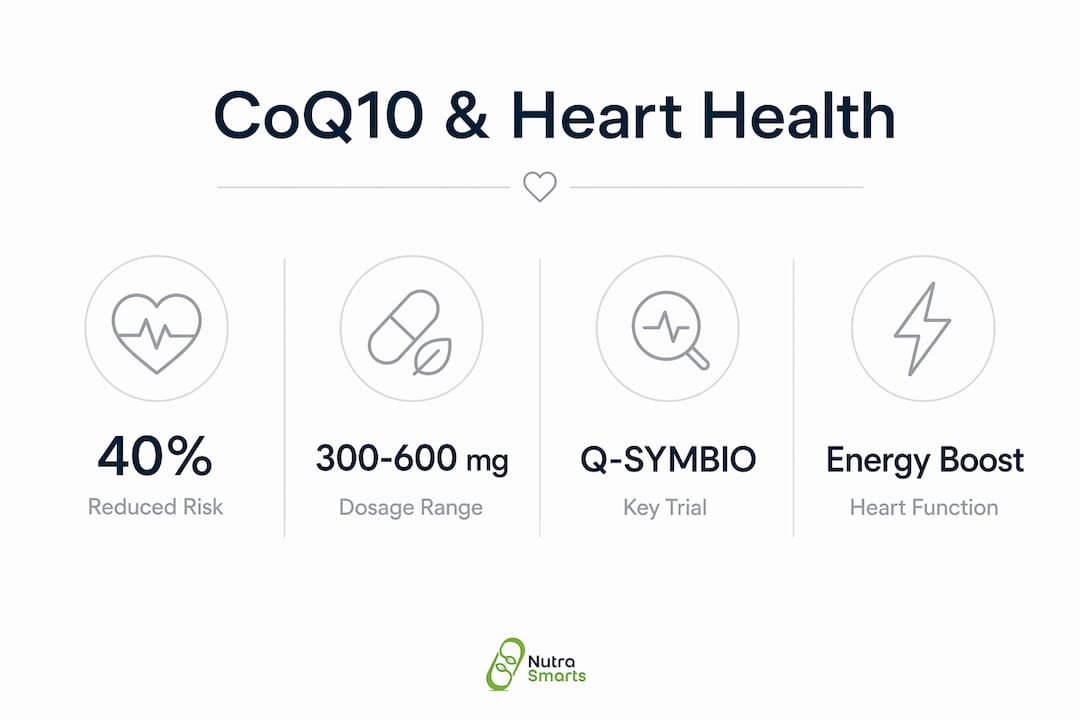
The Q-SYMBIO trial and related research provide the most cited clinical data on supplementation. In patients with heart failure with reduced ejection fraction, 300–600 mg per day of CoQ10 improved left ventricular ejection fraction, reduced NT-proBNP levels, and cut major cardiovascular events over periods ranging from one month to two years. NT-proBNP is a biomarker that rises when the heart is under stress, so its reduction signals real cardiac improvement, not just subjective symptom relief.
Key findings from major CoQ10 cardiovascular trials:
- Q-SYMBIO trial: 300 mg per day over two years reduced major cardiovascular events in advanced heart failure patients.
- LVEF improvement: Multiple trials showed measurable gains in ejection fraction, the percentage of blood the heart pumps per beat.
- NT-proBNP reduction: Biomarker decreases confirmed reduced cardiac wall stress with supplementation.
- Exercise tolerance: Functional capacity improved in heart failure patients receiving CoQ10 versus placebo.
| Trial or study | Population | CoQ10 dose | Key cardiovascular outcome |
|---|---|---|---|
| Q-SYMBIO | Advanced heart failure | 300 mg per day | Reduced major cardiovascular events at 2 years |
| Multiple RCTs (meta-analysis) | Heart failure with reduced EF | 300–600 mg per day | Improved LVEF and NT-proBNP |
| Primary deficiency case series | Genetic COQ2/COQ4/COQ9 mutations | Variable | Cardiomyopathy reversal with early treatment |
Heart failure is fundamentally an energy metabolism disorder. CoQ10 supplementation works in this context because it targets the mitochondrial dysfunction driving the disease, not just surface-level symptoms.
How do aging and statin use lower CoQ10 and raise cardiac risk?
Primary genetic deficiency is rare. The far more common scenario is secondary CoQ10 depletion caused by aging, statin medications, or chronic disease. These secondary causes are directly relevant to the millions of Americans managing cardiovascular risk every day.
CoQ10 levels decline naturally with age, and the heart bears the consequences. Older adults already face reduced mitochondrial efficiency, so a simultaneous drop in CoQ10 compounds the energy deficit in cardiac cells. This is one reason heart failure prevalence rises sharply after age 65.
Statins present a specific and well-documented problem. These cholesterol-lowering drugs block the mevalonate pathway, which the body uses to synthesize both cholesterol and CoQ10. The result is that statin users often experience secondary CoQ10 depletion alongside the cardiovascular protection the drug provides. The clinical significance of this depletion is still debated, but the biochemical mechanism is not.
Secondary CoQ10 deficiency differs from primary genetic forms in several important ways:
- Onset: Secondary deficiency develops gradually; primary deficiency is present from birth or early life.
- Severity: Primary deficiency causes more severe and rapid cardiac damage.
- Reversibility: Secondary deficiency is often addressable through supplementation or treating the underlying cause.
- Symptoms: Both forms share fatigue, muscle weakness, and cardiac symptoms, but primary deficiency also involves neurological and renal complications.
Chronic diseases including diabetes, cancer, and chronic kidney disease also lower CoQ10 by increasing oxidative demand and impairing mitochondrial function. Tissues with high energy needs, particularly the heart, are the most vulnerable in all of these scenarios.
Pro Tip: Serum CoQ10 testing is available but imperfect. Functional depletion in cardiac tissue can outpace what a blood test shows, so discuss symptoms and risk factors with your cardiologist rather than relying on a single lab value.
What are the current recommendations for CoQ10 supplementation?
CoQ10 supplementation is generally safe and well tolerated across a wide range of doses. Clinical trials report minimal side effects, with mild gastrointestinal discomfort being the most common complaint at higher doses. This favorable safety profile makes it a practical option for targeted use in high-risk populations.
The strongest evidence supports CoQ10 as an adjunct therapy in heart failure, not as a standalone treatment or a universal supplement for everyone. Nutrasmarts' cardiovascular supplement reviews reflect this distinction clearly: the benefit is most pronounced in patients with documented mitochondrial dysfunction or advanced heart failure.
Current practical guidance for CoQ10 supplementation in cardiovascular contexts:
- Confirm the clinical context. CoQ10 supplementation shows the clearest benefit in heart failure with reduced ejection fraction. Healthy individuals with no cardiac diagnosis show less pronounced effects.
- Use evidence-based doses. Clinical trials used 300–600 mg per day for heart failure outcomes. Lower doses used in general wellness products may not replicate these results.
- Choose the right form. Ubiquinol is the reduced, active form of CoQ10 and may absorb more efficiently in older adults. The Nutrasmarts ubiquinol vs. CoQ10 comparison explains the practical differences.
- Treat it as adjunct therapy. CoQ10 does not replace statins, ACE inhibitors, beta-blockers, or other evidence-based heart failure treatments. It works alongside them.
- Discuss it with your cardiologist. Statin users, adults over 60, and anyone with a heart failure diagnosis have the strongest rationale for a targeted conversation about CoQ10 status and supplementation.
Routine supplementation for all statin users or healthy adults is not universally endorsed in cardiovascular medicine guidelines. The evidence for targeted use in mitochondrial dysfunction phenotypes is far stronger than the evidence for broad preventive use.
Key Takeaways
Low CoQ10 impairs cardiac ATP production through mitochondrial dysfunction, and the strongest clinical evidence supports targeted supplementation in heart failure patients rather than universal use.
| Point | Details |
|---|---|
| CoQ10 and ATP production | CoQ10 shuttles electrons in the mitochondrial chain; its loss directly cuts heart cell energy output. |
| Primary vs. secondary deficiency | Genetic deficiency causes severe cardiomyopathy; secondary deficiency from aging or statins is more common and often reversible. |
| Clinical trial evidence | Q-SYMBIO and related trials show 300–600 mg per day improves ejection fraction and reduces cardiovascular events in heart failure. |
| Serum testing limitations | Blood CoQ10 levels may not reflect cardiac tissue depletion; clinical decisions require symptom and genetic context. |
| Supplementation target | CoQ10 works best as adjunct therapy in documented heart failure or mitochondrial dysfunction, not as a general preventive supplement. |
The nuance most CoQ10 articles miss
At Nutrasmarts, we review hundreds of supplement ingredients each year, and CoQ10 is one where the gap between public perception and clinical reality is genuinely wide. Most people encounter CoQ10 as a general energy supplement or a statin side-effect fix. The actual evidence tells a more specific story.
The cardiovascular benefit of CoQ10 is a mitochondrial story, not a wellness story. When we look at the trial data, the patients who benefit most are those whose hearts are already struggling with energy metabolism failure. For them, CoQ10 is not a nice-to-have. It is addressing a real biochemical deficit that their standard medications do not cover.
What concerns me about the broader conversation is the serum testing problem. A normal blood CoQ10 level does not mean your cardiac tissue has adequate CoQ10. Functional depletion in the heart can run ahead of what any blood draw shows. That gap means clinicians need to weigh symptoms, risk factors, and genetic history alongside lab values, not instead of them.
My honest view: if you are over 60, on a statin, or managing heart failure, the conversation about CoQ10 with your cardiologist is worth having. If you are a healthy adult with no cardiac history, the evidence for supplementation is thin. Spend your energy on the fundamentals first. CoQ10 is a targeted tool, and targeted tools work best when you know exactly what you are targeting.
— Nutrasmarts
How Nutrasmarts helps you find the right CoQ10 supplement
Choosing a CoQ10 supplement without a clear framework is guesswork. Nutrasmarts cuts through the noise with evidence-based ratings tied directly to peer-reviewed research and clinical trial data.
The Nutrasmarts metabolic health supplement reviews cover CoQ10 products with dosage transparency, form comparisons, and links to the clinical studies behind each recommendation. Every rating connects to real trial data, not marketing claims. If you are managing cardiovascular risk and want to know which CoQ10 products actually match the doses used in Q-SYMBIO and similar trials, that resource gives you a direct answer. Use it alongside your cardiologist's guidance to make a decision grounded in evidence, not label copy.
FAQ
What are the main low CoQ10 symptoms affecting the heart?
Low CoQ10 symptoms in cardiac contexts include fatigue, reduced exercise tolerance, and shortness of breath. In advanced cases, impaired mitochondrial energy production leads to measurable declines in ejection fraction and increased heart failure biomarkers like NT-proBNP.
Does CoQ10 supplementation actually improve heart function?
Yes, in heart failure patients. Clinical trials including Q-SYMBIO show that 300–600 mg per day improves left ventricular ejection fraction and reduces major cardiovascular events. The benefit is clearest in patients with documented heart failure, not in healthy adults.
Why do statins lower CoQ10 levels?
Statins block the mevalonate pathway, which the body uses to produce both cholesterol and CoQ10. This secondary CoQ10 depletion is a direct biochemical consequence of how statins work, and it is most relevant for older adults already experiencing age-related CoQ10 decline.
Is a blood test enough to diagnose CoQ10 deficiency?
Not always. Serum CoQ10 levels can appear normal while cardiac tissue is functionally depleted. Clinical management of suspected deficiency typically requires genetic testing and symptom evaluation alongside any lab results.
What is the difference between primary and secondary CoQ10 deficiency?
Primary deficiency is genetic, caused by mutations in genes like COQ2 and COQ4, and directly causes cardiomyopathy. Secondary deficiency results from aging, statin use, or chronic disease and is generally less severe but still clinically significant for heart health.