

Vitamin C, known in clinical literature as ascorbic acid, is defined as a water-soluble micronutrient that the human body cannot synthesize on its own, making dietary intake non-negotiable for immune competence. Understanding why vitamin C's immune role matters goes beyond the cold-season marketing you see every winter. Ascorbic acid supports immune cell activity including neutrophils, T cells, and macrophages, while simultaneously protecting tissues from oxidative damage. The real story is not about megadosing. It is about what happens to your immune system when your vitamin C status drops below adequate levels, and what the science actually says about supplementation.
Why vitamin C's immune role matters at the cellular level
Vitamin C operates as both an antioxidant and a biochemical cofactor inside the immune system, and those two functions are inseparable. As an antioxidant, it neutralizes free radicals generated during immune responses, preventing collateral damage to healthy tissue. As a cofactor, it participates in enzymatic reactions that build collagen, the structural protein forming your skin and mucosal barriers. Those barriers are your immune system's first line of defense, and vitamin C supports them directly.
The cellular mechanisms go deeper than barrier support. Vitamin C accumulates at high concentrations inside immune cells, which signals that the body treats it as a priority nutrient for immune activity. Neutrophils, the white blood cells that rush to infection sites first, depend on ascorbic acid for migration, phagocytosis, and the chemical killing of pathogens. Macrophages use it to clear dead cells after an infection resolves, a process called efferocytosis that prevents chronic inflammation.

The adaptive immune system also depends on adequate vitamin C status. T-cell differentiation, the process by which naive immune cells become specialized fighters, is influenced by ascorbic acid at the epigenetic level. Antibody production, which is the B-cell response that creates lasting immunity, also benefits from sufficient vitamin C. The European Union has approved a health claim for normal immune function specifically tied to vitamin C, which reflects the strength of the mechanistic evidence.
Key mechanisms at a glance:
- Neutrophil function: Vitamin C enhances migration to infection sites, phagocytosis of pathogens, and oxidative killing.
- Macrophage clearance: Supports apoptosis of spent neutrophils, limiting tissue damage after infection.
- T-cell differentiation: Ascorbic acid influences gene expression in T cells, shaping the adaptive immune response.
- Skin and mucosal barriers: Collagen synthesis depends on vitamin C, keeping physical defenses intact.
- Antibody production: Adequate status supports B-cell activity and immunoglobulin synthesis.
Pro Tip: If you eat a diet low in fresh fruits and vegetables for even a few weeks, your plasma vitamin C levels can fall enough to impair neutrophil function before any visible symptoms appear.
What does the research say about vitamin C and colds?
The popular belief that vitamin C prevents colds is not supported by the evidence. Regular supplementation at 200 mg per day or more does not reduce how often healthy adults catch colds. That finding comes from multiple meta-analyses and Cochrane reviews covering tens of thousands of participants. The distinction between biological support and clinical prevention is the most important concept in this entire discussion.
What the evidence does support is a modest reduction in how long colds last. Consistent supplementation reduces cold duration by roughly 8%, which translates to about half a day shorter for a typical week-long cold. That is a real but limited benefit. Doses above 1,000 mg per day may reduce symptom severity in some individuals, though the effect size remains modest for the general population.
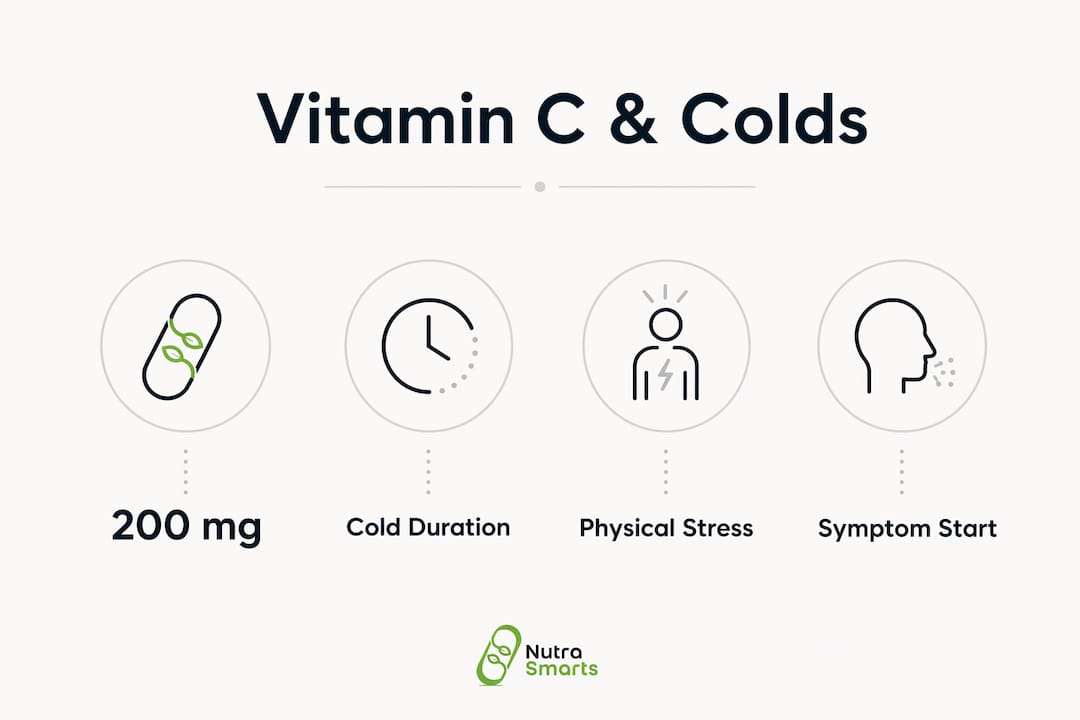
The picture changes significantly under physical stress. Athletes and individuals exposed to intense cold environments show greater benefits from vitamin C supplementation. One subgroup analysis found that taking vitamin C before cold training reduced cold risk by approximately half in this group. The implication is clear: vitamin C's immune benefits are context-dependent, not universal.
Starting vitamin C at the first sign of symptoms provides little to no benefit. The research consistently shows that therapeutic dosing after symptom onset does not shorten illness duration meaningfully. This matters because most people reach for a supplement only when they feel sick, which is precisely when the evidence says it is least effective.
| Scenario | Evidence Summary |
|---|---|
| Healthy adults, daily supplementation | No reduction in cold incidence |
| Duration reduction, consistent use | Approximately 8% shorter cold duration |
| Doses above 1,000 mg/day | Possible modest severity reduction |
| Athletes under physical stress | Up to 50% reduction in cold risk |
| Starting at symptom onset | Minimal to no measurable benefit |
Does correcting deficiency matter more than megadosing?
The most clinically meaningful benefit of vitamin C for immunity comes from correcting low status, not from flooding the body with excess. Deficiency causes scurvy, a condition characterized by impaired wound healing, bleeding gums, and pronounced immune dysfunction. Even subclinical deficiency, which falls short of scurvy but still reflects inadequate intake, compromises the immune cell functions described above.
The body does not store vitamin C the way it stores fat-soluble vitamins like A, D, E, and K. Excess ascorbic acid is excreted in urine within hours. This means that taking 2,000 mg when your body needs 90 mg does not create a reserve. It creates expensive urine. High-dose vitamin C is also poorly absorbed at the intestinal level, with absorption efficiency dropping sharply above 200 mg per dose.
Very high doses carry real risks that supplement marketing rarely mentions. Gastrointestinal distress, kidney stone formation in susceptible individuals, and interference with certain medical tests are all documented side effects of chronic megadosing. A 2026 PubMed review concluded that immune benefits from supplementation are greatest when correcting deficiencies, with excessive intake showing limited benefit and potential harm.
Key points on deficiency versus excess:
- Deficiency threshold: Plasma levels below 11 micromoles per liter define deficiency; immune dysfunction begins before visible symptoms.
- Scurvy risk groups: Smokers, older adults, individuals with limited fruit and vegetable intake, and those with malabsorption conditions face the highest deficiency risk.
- Absorption ceiling: Intestinal absorption saturates around 200 mg per dose, making single large doses inefficient.
- Excretion speed: Excess vitamin C clears the body within hours, so consistent daily intake matters more than occasional large doses.
Pro Tip: Before purchasing a high-dose vitamin C supplement, check the Nutrasmarts deficiency risk guide to assess whether your intake pattern actually puts you at risk. Most healthy adults eating varied diets are not deficient.
How to approach vitamin C intake for immune support
The Recommended Dietary Allowance for vitamin C is 90 mg per day for adult men and 75 mg per day for adult women, with smokers requiring an additional 35 mg due to increased oxidative stress. These amounts are achievable through diet alone for most people. A single medium orange provides about 70 mg, a cup of raw red bell pepper delivers over 190 mg, and a cup of broccoli contributes roughly 80 mg.
Practical steps for evidence-based vitamin C intake:
- Prioritize dietary sources first. Bell peppers, citrus fruits, kiwi, strawberries, and broccoli are among the richest sources. Cooking reduces vitamin C content, so raw or lightly steamed vegetables preserve more of the nutrient.
- Supplement when diet falls short. If your diet regularly lacks fresh produce, a supplement providing 200 to 500 mg per day covers the gap without excess. This range aligns with what the research identifies as the threshold for immune benefits.
- Time supplementation before known stressors. If you are an athlete preparing for intense training in cold conditions, starting supplementation two to three weeks before the exposure period reflects the evidence on timing. Waiting until you are already sick is too late.
- Avoid single large doses. Split your daily supplement intake into two doses if you take more than 200 mg, since absorption efficiency drops sharply with larger single doses. Two doses of 250 mg deliver more usable ascorbic acid than one dose of 500 mg.
- Consider your individual context. Smokers, older adults, pregnant women, and individuals recovering from surgery or illness have higher requirements. Vitamin C also aids iron absorption from plant sources, making it relevant for anyone following a plant-based diet.
- Integrate with overall nutrition. Vitamin C works alongside vitamin D, zinc, and other micronutrients in immune defense. Isolated supplementation without attention to overall nutrient status produces limited results. Pairing vitamin C awareness with knowledge of vitamin D's immune function gives you a more complete picture.
Key takeaways
Vitamin C supports immune function by enabling immune cell activity and protecting tissue barriers, but its greatest clinical value lies in correcting deficiency rather than in megadosing.
| Point | Details |
|---|---|
| Cellular immune support | Vitamin C enables neutrophil, macrophage, and T-cell function at adequate intake levels. |
| Cold prevention myth | Daily supplementation does not reduce cold incidence in healthy adults. |
| Duration benefit is real but modest | Consistent use reduces cold duration by approximately 8%, with greater effects under physical stress. |
| Deficiency correction is the priority | Subclinical deficiency impairs immunity; correcting it matters more than exceeding the RDA. |
| Megadosing has diminishing returns | Absorption saturates above 200 mg per dose, and excess is excreted within hours. |
The gap between biological truth and supplement marketing
At Nutrasmarts, we review hundreds of supplement claims each year, and vitamin C is one of the most consistently misrepresented nutrients in the category. The biological evidence for its immune role is genuinely strong. The leap from "supports immune cell function" to "prevents you from getting sick" is where the science stops and the marketing begins.
What frustrates me most is that the truth is actually compelling on its own. Correcting a vitamin C deficiency can meaningfully restore immune competence. Athletes who time their supplementation strategically see real reductions in illness risk. These are specific, evidence-grounded benefits. They do not need to be inflated into claims about cold prevention for the general population.
The supplement industry has a habit of treating biological mechanisms as clinical outcomes. A nutrient that supports neutrophil function in a petri dish becomes "immune-boosting" on a label. That translation is not just imprecise. It sets consumers up for disappointment and erodes trust in legitimate nutritional science. The research on ascorbic acid is robust enough to stand without embellishment.
My practical advice: treat vitamin C as a status nutrient. Your goal is to maintain adequate plasma levels consistently, not to periodically flood your system with gram-level doses. Eat varied produce, supplement modestly if your diet is inconsistent, and pay more attention to your overall micronutrient picture than to any single ingredient. That approach reflects what the evidence actually supports.
— Nutrasmarts
Find evidence-backed immune support supplements
Nutrasmarts has reviewed over 800 supplement ingredients, each linked to peer-reviewed studies, so you can make decisions based on clinical evidence rather than label claims.
If you are looking for supplements that address immune health, metabolic function, or physical performance, the metabolic health supplements review covers 130 options with side-by-side evidence summaries. Athletes looking to time vitamin C supplementation around training can find context-specific options in the athletic performance supplements guide. For a broader search by symptom or health concern, the supplements by symptom tool lets you filter by immune support, energy, joint health, and more. Every recommendation on Nutrasmarts links directly to the clinical studies behind it.
FAQ
What does vitamin C actually do for the immune system?
Vitamin C supports immune function by enabling neutrophil migration and pathogen killing, promoting macrophage clearance of dead cells, and supporting T-cell differentiation. It also maintains the skin and mucosal barriers that prevent pathogens from entering the body.
Does vitamin C prevent colds?
Regular vitamin C supplementation does not reduce cold incidence in the general population, according to multiple Cochrane reviews. It can reduce cold duration by approximately 8% with consistent daily use, and shows stronger preventive effects in athletes under physical stress.
How much vitamin C do you need for immune support?
The Recommended Dietary Allowance is 90 mg per day for adult men and 75 mg per day for adult women. Supplementing between 200 and 500 mg per day covers most dietary gaps without exceeding the absorption threshold where efficiency drops sharply.
Is megadosing vitamin C safe or effective?
High doses above 1,000 mg per day are poorly absorbed, with excess excreted in urine. Chronic megadosing can cause gastrointestinal distress, increase kidney stone risk in susceptible individuals, and interfere with certain medical tests, according to Mayo Clinic guidance.
Who benefits most from vitamin C supplementation?
Individuals with low dietary intake of fresh produce, smokers, older adults, and athletes training in cold conditions benefit most from supplementation. For healthy adults eating a varied diet, routine supplementation shows limited additional immune benefit beyond meeting the RDA.