

Most adults tolerate ashwagandha reasonably well for short periods, but it can cause gastrointestinal upset, drowsiness, and headaches, and in rare cases has been linked to thyroid disruption and liver injury. Knowing who should avoid it and what to watch for makes the difference between a safe trial and an avoidable problem.
- Common mild effects: nausea, loose stools, stomach irritation, drowsiness, headache
- Rare but serious signals: liver injury (hepatotoxicity), thyroid hormone changes, severe allergic reactions
- Groups who should avoid it: pregnant or breastfeeding people, those with thyroid disorders, people with hormone-sensitive cancers, and anyone on immunosuppressants
The NIH Office of Dietary Supplements notes that ashwagandha appears well tolerated in trials lasting up to roughly three months, with most reported effects being mild and transient. Evidence on safety beyond that window is sparse.
Key Takeaways
Ashwagandha is generally well tolerated for short-term use in healthy adults, but liver injury, thyroid effects, and several drug interactions make informed, monitored use the only responsible approach.
| Point | Details |
|---|---|
| Short-term tolerability | Most trials up to roughly three months report only mild, transient GI and drowsiness effects. |
| Most common side effects | Nausea, loose stools, stomach irritation, drowsiness, and headache are the effects reported most often. |
| Rare but serious risks | Liver injury and thyroid hormone changes have been documented in case reports; stop use and seek care if jaundice or palpitations appear. |
| Who should avoid it | Pregnant people, those with thyroid disorders or hormone-sensitive cancers, and transplant recipients face elevated risk. |
| Nutrasmarts | The Nutrasmarts ashwagandha profile and label tool help you verify product quality and dosage against clinical trial data. |
Table of Contents
- 1. What are the most common ashwagandha side effects?
- 2. Serious and rare side effects you should know about
- 3. Who should avoid ashwagandha or talk to a clinician first?
- 4. Drug and supplement interactions to watch for
- 5. Dosing, forms, and product quality risks
- 6. How to start ashwagandha safely and monitor your response
- 7. What the research does — and doesn't — tell us
- 8. What is ashwagandha and why do people take it?
- The case for evidence-first decisions on ashwagandha
- Nutrasmarts helps you verify before you buy
- Sources
1. What are the most common ashwagandha side effects?
The side effects that show up most reliably in randomized trials are gastrointestinal. Nausea, loose stools, stomach irritation, and diarrhea are the most frequently reported, and they tend to appear within the first few days of starting. Drowsiness and headache come up regularly too, though less often than GI complaints.
- Gastrointestinal upset: nausea, diarrhea, loose stools, stomach cramping
- Drowsiness or sedation: particularly at higher doses or when combined with other calming supplements
- Headache: reported in several short-term trials, typically mild
- Dry mouth or nasal congestion: noted occasionally in observational reports
The Cleveland Clinic specifically flags GI upset and drowsiness as the most common adverse effects, and Memorial Sloan Kettering lists nausea, headache, drowsiness, stomach irritation, and diarrhea as the typical presentation.
Most of these effects are transient. In short-term trials, participants who stuck with the supplement generally saw GI symptoms ease within one to two weeks. Higher doses tend to produce more GI complaints, which is one practical reason to start low and work up slowly rather than jumping straight to the upper end of a product's suggested range.
Pro Tip: Take ashwagandha with food, not on an empty stomach. A small meal buffers the GI lining and cuts nausea risk noticeably in most people.
2. Serious and rare side effects you should know about
Rare does not mean impossible, and a few signals in the clinical literature deserve real attention.
Liver injury
The most clinically significant rare risk is hepatotoxicity. Multiple case reports have linked ashwagandha-containing products to acute liver injury, with presentations including jaundice, elevated liver enzymes, fatigue, and abdominal pain. In most documented cases, symptoms resolved after stopping the supplement and receiving supportive care. A critical 2026 PubMed review documents these signals and calls for better pharmacovigilance, noting that the mechanism may involve cytochrome P450 metabolism and reactive intermediates from withanolides.

One important caveat: many of the liver injury case reports involved products that were not independently verified, and some were multi-ingredient formulations. Product adulteration or unlabeled compounds are plausible confounders in several of these cases, per the NIH/ODS review. That does not eliminate the signal, but it does mean the risk may be lower with a verified, single-ingredient product from a reputable manufacturer.
Thyroid and endocrine effects
Ashwagandha appears to stimulate thyroid hormone production in some individuals. Case reports describe thyrotoxicosis (excess thyroid hormone) in people who were not previously diagnosed with thyroid disease. Small trials have shown measurable increases in TSH and free T4 levels. For someone with normal thyroid function, this may be inconsequential. For someone with hyperthyroidism or on thyroid medication, it can tip the balance in a dangerous direction.
Other rare signals
Additional rare events reported in case series include severe allergic reactions (urticaria, anaphylaxis in sensitive individuals), neurological symptoms, and one documented case of transplant rejection. These are uncommon, and causality in individual case reports is difficult to establish definitively. Still, anyone with an organ transplant or a compromised immune system should treat this as a hard contraindication.
3. Who should avoid ashwagandha or talk to a clinician first?
Some groups face elevated risk that goes beyond the typical mild GI complaints.
- Pregnant people: Ashwagandha has uterotonic properties, meaning it may stimulate uterine contractions. This is a well-documented concern, and the Cleveland Clinic explicitly advises avoidance during pregnancy.
- Breastfeeding people: Safety data during lactation are essentially absent. Until there is evidence, avoidance is the prudent call.
- People with hyperthyroidism or uncontrolled thyroid disease: The herb's thyroid-stimulating effects make it potentially dangerous for this group. Even people on stable thyroid medication should consult their prescriber, since ashwagandha can alter TSH and free T4 levels.
- People with hormone-sensitive cancers: Ashwagandha has been shown to increase testosterone in some trials. For someone with hormone-sensitive prostate cancer or certain breast cancers, that is a meaningful concern.
- People with existing liver disease: Given the hepatotoxicity signals in case reports, anyone with elevated liver enzymes, hepatitis, or cirrhosis should avoid it or use it only under direct medical supervision.
- Organ transplant recipients: The immune-stimulating properties of ashwagandha can work directly against immunosuppressive drugs, raising the risk of rejection.
- People with autoimmune conditions: Immune stimulation can exacerbate conditions like lupus, rheumatoid arthritis, or multiple sclerosis.
People managing chronic conditions with prescription medications for diabetes, high blood pressure, seizures, or anxiety should also check with their prescriber before starting. The interaction risks in those categories are real and covered in the next section.
4. Drug and supplement interactions to watch for
Ashwagandha's interaction potential comes from two main mechanisms: its effects on cytochrome P450 liver enzymes (which metabolize many drugs) and its endocrine-modulating actions on thyroid hormones, cortisol, and testosterone.
| Drug/Supplement Class | Likely Interaction | Practical Action |
|---|---|---|
| Sedatives and sleep aids (benzodiazepines, zolpidem, antihistamines) | Additive drowsiness and CNS depression | Avoid combining; if unavoidable, lower doses and monitor alertness |
| Thyroid medications (levothyroxine, methimazole) | Ashwagandha may raise TSH/T4, altering medication effect | Consult prescriber; monitor thyroid labs if used together |
| Immunosuppressants (tacrolimus, cyclosporine) | Immune stimulation may counteract drug effect | Contraindicated for transplant patients; discuss with specialist |
| Antihypertensives | Possible additive blood pressure lowering | Monitor blood pressure; adjust medication if needed |
| Antidiabetes drugs (metformin, insulin) | Possible additive blood glucose lowering | Monitor blood glucose; watch for hypoglycemia |
| CYP3A4/CYP2D6-metabolized drugs | Altered drug metabolism via liver enzymes | Flag to prescriber; may require dose adjustment or monitoring |
A few practical steps if you are on any of these medications:
- Tell your prescriber or pharmacist you are considering ashwagandha before you start. Bring the product label.
- Ask specifically about monitoring: thyroid labs, liver function tests, blood glucose, or blood pressure checks depending on your situation.
- If you are scheduled for surgery, stop ashwagandha at least two weeks beforehand. Its sedative and blood-pressure effects can complicate anesthesia.
- Combination supplements or products with unlabeled ingredients introduce unpredictable interactions. Single-ingredient, third-party tested products reduce that risk considerably.
For readers comparing ashwagandha with other calming supplements, the L-Theanine vs Ashwagandha comparison on Nutrasmarts covers sedation risk differences worth reviewing.
5. Dosing, forms, and product quality risks
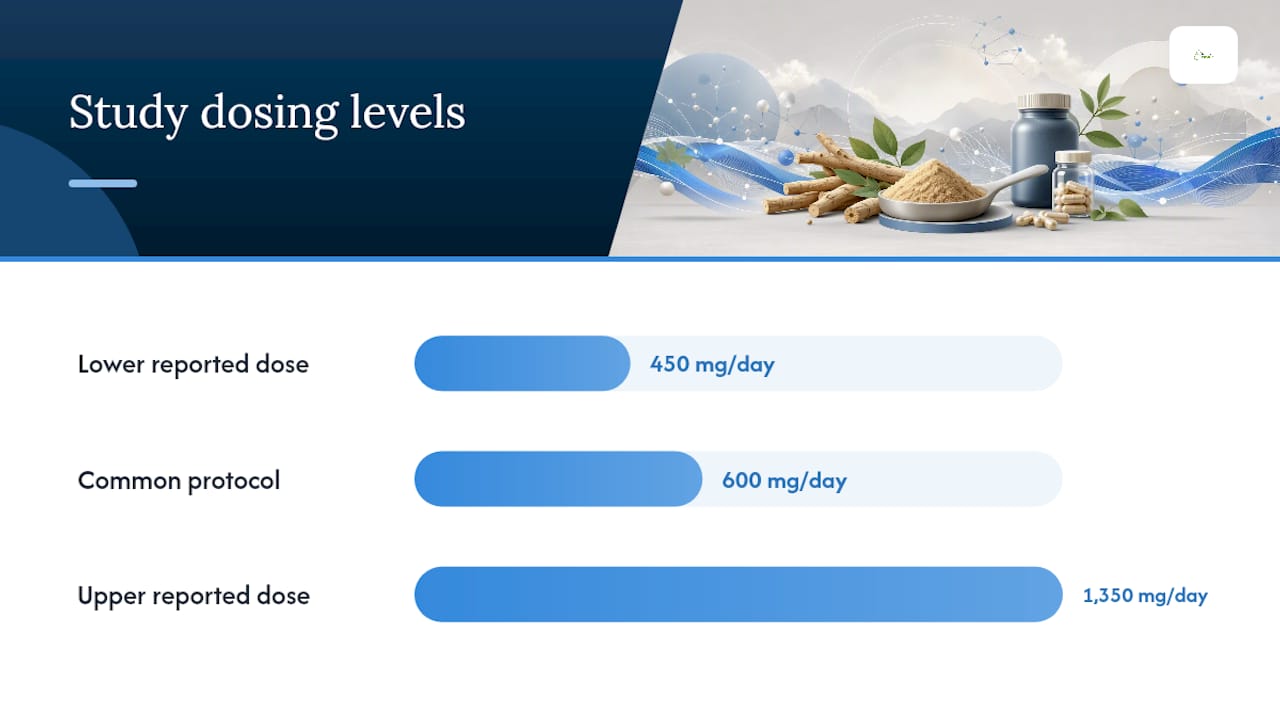
Clinical trials have used a fairly wide range of doses. Common study protocols include 300 mg twice daily (600 mg/day total) and ranges from 450 mg to 1,350 mg per day, typically using standardized root extracts with defined withanolide content. A systematic review and dose-response meta-analysis of randomized controlled trials found stress and anxiety benefits at commonly studied doses, though evidence certainty was rated low and safety windows in the trials were short.
The formulation matters more than most product labels suggest. Whole root powder, leaf extract, and standardized extracts (such as those specifying a withanolide glycoside percentage) are not interchangeable. Standardized extracts like Shoden® (35% withanolide glycosides) are what researchers actually used in controlled trials. A retail product labeled simply "ashwagandha root" with no withanolide specification may deliver a very different dose of active compounds, even at the same milligram weight.
The NIH/ODS review makes this point directly: trial results using standardized extracts may not generalize to retail supplements because of the lack of product standardization across the market.
Product quality checklist:
- Look for third-party testing certification from USP, NSF International, or ConsumerLab
- Confirm the withanolide percentage is listed on the label
- Check for a GMP (Good Manufacturing Practices) statement from the manufacturer
- Avoid products with proprietary blends that obscure individual ingredient amounts
- Verify the manufacturer is traceable and has a physical address
Pro Tip: To verify a third-party certification quickly, go directly to the certifier's website. USP has a verified products database at usp.org/verification-services, NSF lists certified products at nsf.org, and ConsumerLab publishes its tested products at consumerlab.com. A seal on a bottle means nothing if the product does not appear in the certifier's own database.
For a deeper look at how to interpret study doses and apply them to label reading, the Nutrasmarts guide on assessing supplement dosage in clinical research walks through the methodology clearly.
6. How to start ashwagandha safely and monitor your response
Starting at a lower dose and building up is the single most effective way to reduce early side effects. Here is a practical sequence:
- Check your situation first. If you take any prescription medication, have a thyroid condition, liver disease, or are pregnant or breastfeeding, talk to your clinician before starting.
- Choose a verified product. Select a single-ingredient supplement with third-party certification and a stated withanolide percentage.
- Start low. Begin at the lower end of the studied range (around 300 mg/day) rather than the maximum on the label.
- Take it with food. This reduces GI irritation for most people.
- Avoid driving or operating machinery until you know how it affects your alertness, particularly if you are also taking any sedating medication or supplement.
- Give it two to four weeks before evaluating whether it is working and whether any side effects are emerging.
- Do not use it during pregnancy or breastfeeding under any circumstances without explicit medical guidance.
What to watch for during use:
- Jaundice (yellowing of the skin or eyes), dark urine, or pale stools — these suggest liver involvement and need immediate medical evaluation
- Severe abdominal pain or unexplained fatigue
- Heart palpitations or new anxiety or agitation (possible thyroid stimulation)
- Skin rash, hives, or swelling (allergic reaction)
If you experience any of the above, stop taking ashwagandha and contact your healthcare provider. For serious reactions, go to an emergency room.
You can also report adverse events to the FDA MedWatch program or through Safetyreporting. These reports feed the post-market surveillance system that helps regulators identify safety signals across the supplement market.
When you see your clinician, bring the product bottle or a photo of the full label, including the Supplement Facts panel and the manufacturer's lot number. If you have been using it for more than a few weeks, your clinician may want to check liver function tests, a thyroid panel (TSH and free T4), and blood glucose or blood pressure depending on your health history.
7. What the research does — and doesn't — tell us
Harvard Health puts it plainly: ashwagandha appears safe for short-term use in otherwise healthy adults, but long-term safety data beyond roughly three months are sparse. That is not a minor caveat. Most of what we know about tolerability comes from trials that ran eight to twelve weeks, with limited follow-up.
Key gaps in the current evidence:
- No large, long-term RCTs. The absence of trials running six months or longer means chronic use is essentially unstudied at scale.
- Heterogeneous products. Trials use different extracts, doses, and withanolide concentrations, making cross-study comparisons unreliable.
- Case report limitations. Rare harms like liver injury are documented mainly through case reports, which cannot establish causality and often involve unverified products.
- Underrepresented populations. Most trials enrolled healthy adults; data on older adults, people with chronic conditions, and children are thin.
- Short safety windows. Even trials that show efficacy often report safety only as a secondary outcome with limited follow-up.
In the United States, dietary supplements are regulated under the Dietary Supplement Health and Education Act (DSHEA). The FDA's oversight is primarily post-market, meaning a supplement does not need to prove safety before it goes on sale. Consumers and clinicians can report adverse events through FDA's dietary supplement reporting channels. Ongoing trials, including NCT05430685, may eventually provide longer-duration safety data.
8. What is ashwagandha and why do people take it?
Ashwagandha (Withania somnifera) is an adaptogenic herb from Ayurvedic medicine, used for centuries to support stress resilience, energy, and sleep. Its primary bioactive compounds are withanolides, a group of steroidal lactones concentrated mainly in the root. The general rationale for use centers on stress modulation: ashwagandha is thought to influence the hypothalamic-pituitary-adrenal (HPA) axis, and some trials suggest it can reduce cortisol levels in chronically stressed adults. For a full breakdown of the mechanisms, study citations, and dosage ranges used in trials, the Nutrasmarts ashwagandha ingredient profile is the most thorough starting point.
The case for evidence-first decisions on ashwagandha
The supplement market's enthusiasm for ashwagandha has run well ahead of its long-term safety record. That gap is worth naming directly.
Ashwagandha has a reasonable short-term safety profile in healthy adults, and the stress and sleep data are more consistent than for many adaptogens. But the liver injury case reports are real, the thyroid effects are real, and the absence of long-term trial data is a genuine limitation, not a technicality. Treating it as a low-stakes wellness add-on because it is "natural" is the kind of reasoning that leads people to ignore early warning signs.
The smarter approach is to treat ashwagandha the way you would treat any pharmacologically active compound: verify the product, start at a studied dose, monitor your response, and loop in your clinician if you are on medications or have a pre-existing condition. The evidence supports cautious, informed use. It does not support casual, indefinite use without oversight.
Readers considering other adaptogenic herbs with different safety profiles might find the Ashwagandha vs Rhodiola comparison useful for context.
Nutrasmarts helps you verify before you buy
Choosing a supplement is easier when you have the actual clinical data in front of you, not just a marketing claim on a label.
The Nutrasmarts ashwagandha ingredient profile consolidates peer-reviewed study citations, dosage ranges from clinical trials, and safety notes in one place, so you can cross-check what a product claims against what the research actually tested. If you are formulating a product or want to verify a label's accuracy, the free Supplement Facts Label Creator generates FDA-compliant panels without spreadsheet headaches. For readers evaluating supplements by symptom, the supplements by symptom tool lets you filter by health concern and see evidence ratings side by side. Start with the ingredient profile, check the label, and make a decision grounded in data rather than packaging.
Sources
- Ashwagandha: Is it helpful for stress, anxiety, or sleep? - Health Professional Fact Sheet
- Ashwagandha: Uses and Side Effects
- Ashwagandha: Benefits, side effects, and safety concerns - Harvard Health
- Potential Adverse Effects of Ashwagandha: A Critical Review of Preclinical and Clinical Evidence
This article is general information, not a substitute for advice from a qualified doctor. Consult a qualified healthcare professional about your own circumstances before acting on anything here.