

Berberine most commonly causes mild, dose-related digestive upset, especially nausea and diarrhea, that tends to fade once you lower the dose or split it up. Rarer but more serious concerns include drug interactions, liver enzyme changes, and a specific danger to infants tied to bilirubin buildup. If you're pregnant, breastfeeding, or taking prescription medication for diabetes, blood pressure, or organ transplant management, talk to a clinician before you start.
TL;DR:
- Gastrointestinal side effects like nausea and diarrhea are common but typically improve by splitting doses and taking berberine with meals.
- Serious reactions, such as allergic responses or liver enzyme changes, are rare but require immediate medical attention, especially in infants and pregnant women.
- Berberine can interfere with drugs processed by cytochrome P450 enzymes, including diabetes medications, blood thinners, and immunosuppressants, necessitating medical oversight.
- Pregnant, breastfeeding, and infant populations should avoid berberine due to risks of bilirubin buildup and potential brain damage.
- Most research doses around 1,500 mg daily, but starting low and cycling dosing with careful monitoring can reduce gastrointestinal discomfort.
Table of Contents
- Common Berberine Side Effects and How to Manage Them
- Serious Side Effects and Allergic Reactions You Shouldn't Ignore
- Berberine Drug Interactions: What to Check Before You Combine
- Who Should Avoid Berberine Entirely
- Berberine Dosage and Timing: Protocols That Cut Side-Effect Risk
- How to Verify Berberine Research Before You Trust It
- Choosing a High-Quality, Third-Party Tested Berberine Supplement
- When to Stop Berberine and How to Report a Problem
- Nutrasmarts' Perspective: Evidence First, Always
- Check Berberine Against Your Own Health Profile
- Sources
Common Berberine Side Effects and How to Manage Them
Gastrointestinal symptoms are, by far, the most frequent complaint. Mayo Clinic notes that people commonly report nausea, constipation, diarrhea, gas, and vomiting, particularly in the first week or two of use or right after a dose increase. These reactions are usually dose-dependent, meaning the higher you go, the more your gut protests.
Common side effects include:
- Nausea, often within an hour of dosing
- Diarrhea or loose stools
- Constipation (less common, but reported)
- Bloating and gas
- Abdominal cramping
The fix is rarely to quit altogether. Cleveland Clinic recommends splitting doses throughout the day rather than taking one large amount, since berberine has a short half-life and doesn't stay active in your system very long anyway.
Pro Tip: Take berberine with meals instead of on an empty stomach. Food slows absorption and blunts the sharp spike that tends to trigger nausea.
One thing worth knowing: if your appetite drops after starting berberine, that's more likely GI intolerance than a metabolic effect working in your favor.
Serious Side Effects and Allergic Reactions You Shouldn't Ignore
Beyond stomach upset, a smaller set of reactions deserves real attention. True allergic reactions to berberine, while uncommon, can include hives, facial swelling, or difficulty breathing, and anaphylaxis is a medical emergency requiring immediate care.
There are also isolated reports connecting berberine to liver enzyme elevations and irregular heart rhythms, though the evidence here is limited and far from settled. That uncertainty is itself a reason for caution rather than dismissal.
The most serious documented risk involves infants. Berberine can contribute to bilirubin buildup, a condition that in newborns can progress to kernicterus, a rare but potentially permanent form of brain damage. This is why infants should never be given berberine, and why pregnant or breastfeeding people are advised to avoid it entirely.
Watch for:
- Hives, swelling, or trouble breathing (stop and seek emergency care immediately)
- Yellowing of skin or eyes (possible liver or bilirubin issue)
- Unusual heart palpitations or dizziness
- Severe, persistent abdominal pain
Statistic Callout: The NCCIH specifically flags GI symptoms as the primary documented adverse effects in berberine research, alongside noted interactions with drugs like cyclosporine, underscoring why label reading and medication review matter as much as dosage.
Berberine Drug Interactions: What to Check Before You Combine
Berberine doesn't just sit quietly in your system. It inhibits certain cytochrome P450 (CYP) enzymes and P-glycoprotein (P-gp), the machinery your liver and gut use to process a wide range of prescription drugs. Blocking that machinery can cause other medications to build up in your bloodstream at higher-than-intended levels, or it can add to a drug's effect in ways that become risky.
The berberine metformin interaction is the one most people ask about, since both lower blood glucose and stacking them can push levels too low. But metformin isn't the only concern. Groups worth flagging to your prescriber include:
- Diabetes medications (metformin and other glucose-lowering drugs)
- Immunosuppressants, notably cyclosporine, which the NCCIH specifically calls out
- Blood thinners and antiplatelet drugs
- Certain blood pressure medications and sedatives
Cleveland Clinic frames berberine as an adjunct that behaves like a drug, not a passive supplement, which is exactly why medical oversight matters if you're on anything else.
Pro Tip: Bring your full medication list, supplements included, to a pharmacist for a quick interaction check. It takes five minutes and catches problems a search engine won't.
Never stop a prescribed medication on your own because you started berberine. If a conflict exists, your clinician adjusts the plan, not you.
Who Should Avoid Berberine Entirely
Some groups face risks that outweigh any potential benefit, and the guidance here is direct rather than conditional.
Pregnant and breastfeeding people should not take berberine. It's likely unsafe because it can cross into fetal circulation or transfer through breast milk, raising the same bilirubin concerns tied to kernicterus risk in infants. Infants and young children should never be given berberine directly, for the same reason.
Beyond that, a few groups need specialist input before considering it:
- People with existing liver disease
- Organ transplant recipients, especially those on cyclosporine
- Anyone managing a complex medication regimen for chronic disease
If you fall into a higher-risk category and still want to explore it, ask your doctor about baseline liver and glucose labs first, so you have something to compare against if symptoms show up.
Berberine Dosage and Timing: Protocols That Cut Side-Effect Risk
Most clinical research on berberine uses doses around 1,500 mg per day, typically for up to six months, which is also the point where long-term safety data starts to thin out. A few practical patterns can lower your odds of GI trouble:
- Start low. Begin with a smaller dose, such as 500 mg once daily, before working up to a full berberine dosage protocol.
- Split it up. Because berberine clears the body quickly, Cleveland Clinic recommends dividing doses, commonly 500 mg two to three times daily, rather than one large hit.
- Consider cycling. Some practitioners use an on-off schedule, like eight weeks on and four weeks off, to limit cumulative exposure, though the direct evidence for this approach is limited.
- Monitor. If you're on interacting medications, periodic blood glucose checks and liver enzyme testing give you an early warning system.
Pro Tip: Separate berberine from other medications by at least two hours. It reduces the chance berberine interferes with how your body absorbs them.
How to Verify Berberine Research Before You Trust It
Not every claim about berberine holds up under scrutiny, which is why Nutrasmarts built its ingredient database around direct links to peer-reviewed studies and clinical trial citations rather than marketing summaries. A quick checklist helps you separate a strong study from a weak one:
- Is it indexed on PubMed, or does it link to a named clinical trial?
- What was the sample size, and how long did the trial run?
- Did it measure a real clinical endpoint (blood glucose, LDL) or just a surrogate marker?
- Is the dose used in the study the same as what's on the label you're holding?
Nutrasmarts also surfaces third-party testing information where it's publicly available, so you're not left guessing whether a product's label matches what's actually in the capsule. For deeper reading on verifying doses yourself, this step-by-step guide walks through the process.
Choosing a High-Quality, Third-Party Tested Berberine Supplement
Dietary supplements, including berberine, aren't FDA-approved for efficacy the way prescription drugs are. That regulatory gap means two bottles labeled "500 mg berberine" can contain meaningfully different actual amounts. Third-party certification closes some of that gap.
Look for:
- USP, NSF, or ConsumerLab marks, which verify that a product contains what the label claims and screens for contaminants. NSF certification specifically checks manufacturing quality and label accuracy.
- The specific form, since berberine HCl, berberine phytosome, and dihydroberberine (like GlucoVantage) differ in absorption and potency, not just name.
- Lot and batch numbers you can cross-reference against a certificate of analysis, if the brand publishes one.
When to Stop Berberine and How to Report a Problem
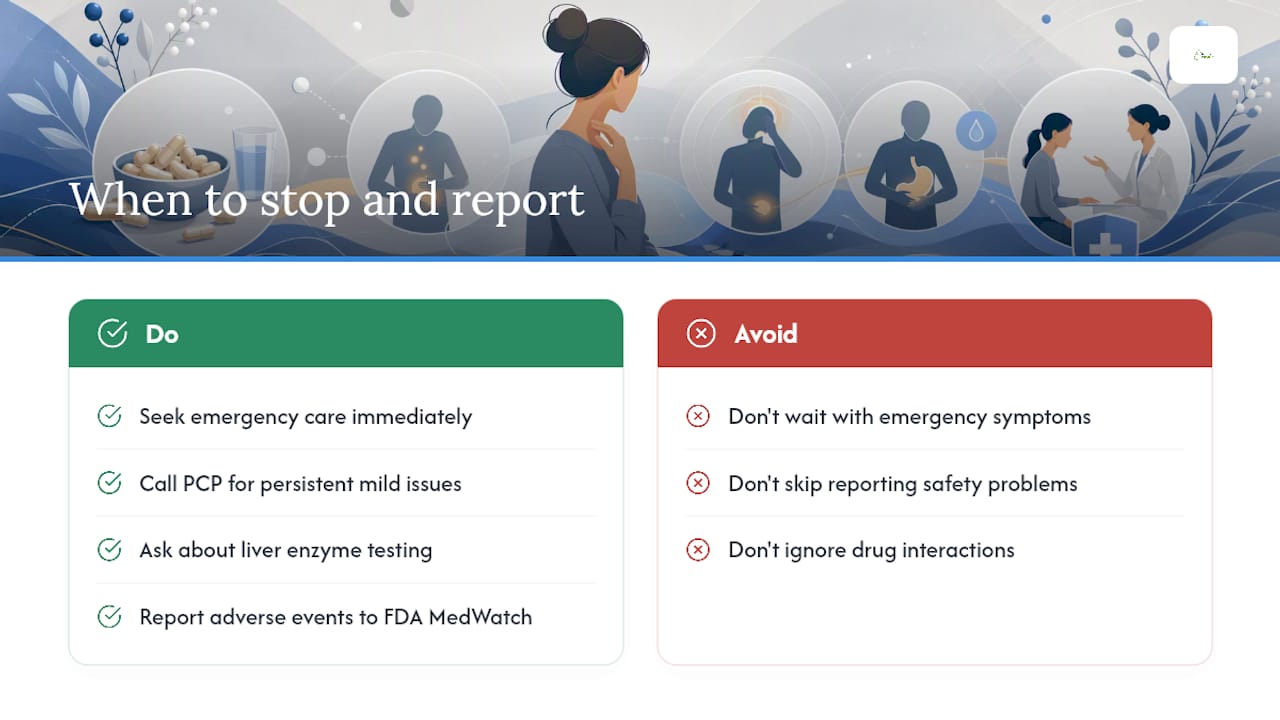
Stop immediately and seek emergency care for anaphylaxis symptoms, difficulty breathing, jaundice, fainting, or severe abdominal pain. These aren't wait-and-see situations.
For milder but persistent issues, a call to your primary care provider is the right move rather than the emergency room. If you're on interacting medications, ask about periodic liver enzyme testing and glucose monitoring while you're using berberine.
To report a suspected adverse event in the United States, the FDA's MedWatch system at safetyreporting.hhs.gov exists for exactly this purpose. It's how patterns in supplement safety actually get identified over time, and reporting takes just a few minutes.
Nutrasmarts' Perspective: Evidence First, Always
We built Nutrasmarts around clinical citations because supplement safety claims deserve the same scrutiny as any health decision. This article is educational, not medical advice. If you're weighing berberine against your own health history or medications, that conversation belongs with a clinician who knows your full picture.
— NutraSmarts
Check Berberine Against Your Own Health Profile
Reading about side effects is one thing. Knowing whether a specific product's dose, form, and interactions apply to your situation is another. Nutrasmarts built its Supplements By Symptom database so you can look up berberine alongside alternatives, backed by the same clinical citations referenced throughout this article, instead of relying on a product page's marketing copy.

If you formulate or sell supplements and need to generate a compliant label, the Free Supplement Facts Label Creator builds one directly in your browser, no spreadsheet wrangling required. And if berberine's bilirubin and pregnancy warnings raised questions about other ingredients you're taking, the deficiency risk guide by group is a solid next stop. Start by searching berberine on Nutrasmarts to see the full trial citations behind every dosing claim in this piece.
This article is general information, not a substitute for advice from a qualified doctor. Consult a qualified healthcare professional about your own circumstances before acting on anything here.
Sources
- Berberine and weight loss: What you need to know | NCCIH
- Berberine is a promising supplement — but it’s not a magical weight-loss solution | Mayo Clinic
- Berberine: What it is, benefits & side effects | Cleveland Clinic
- Can berberine help me lose weight? | Harvard Health
- Dietary supplements | FDA