
Clinical evidence supports berberine for modest metabolic improvements, not meaningful fat loss. The largest recent trial, a 337-person randomized clinical trial published in JAMA Network Open, found no significant reduction in visceral fat or liver fat after six months at 1 gram daily. Meta-analyses show small average drops in weight and BMI, but quality varies widely, and anyone on diabetes medication should talk to a clinician before starting.
TL;DR:
- The largest and best-designed trial found no significant reduction in visceral or liver fat after six months of berberine use at 1 gram daily, with modest improvements in cholesterol and inflammation.
- Smaller studies show only slight weight and BMI reductions, averaging around 0.9 to 2.1 kilograms, which are not sufficient for meaningful fat loss.
- Berberine's activation of AMPK and effects on gut microbiota are promising mechanisms, but poor bioavailability limits real-world fat loss evidence in humans.
- Most effective doses for metabolic effects are at or above 1 gram per day for at least eight weeks, but formulation differences and high bias risk complicate interpretation.
- Safety profiles are generally good, though gastrointestinal upset and interactions with diabetes medications pose cautious use considerations.
Table of Contents
- What Does the Berberine Weight Loss Evidence Actually Show?
- How Might Berberine Affect Weight and Metabolism?
- What Dose and Duration Did Studies Actually Use?
- Is Berberine Safe, and What Interacts With It?
- What Should You Realistically Expect From Berberine?
- Where NutraSmarts Gets Its Berberine Research
- Our Take: Cautious Optimism, Not a Verdict
- Check Your Berberine Product Before You Buy It
- Sources
- FAQ
What Does the Berberine Weight Loss Evidence Actually Show?
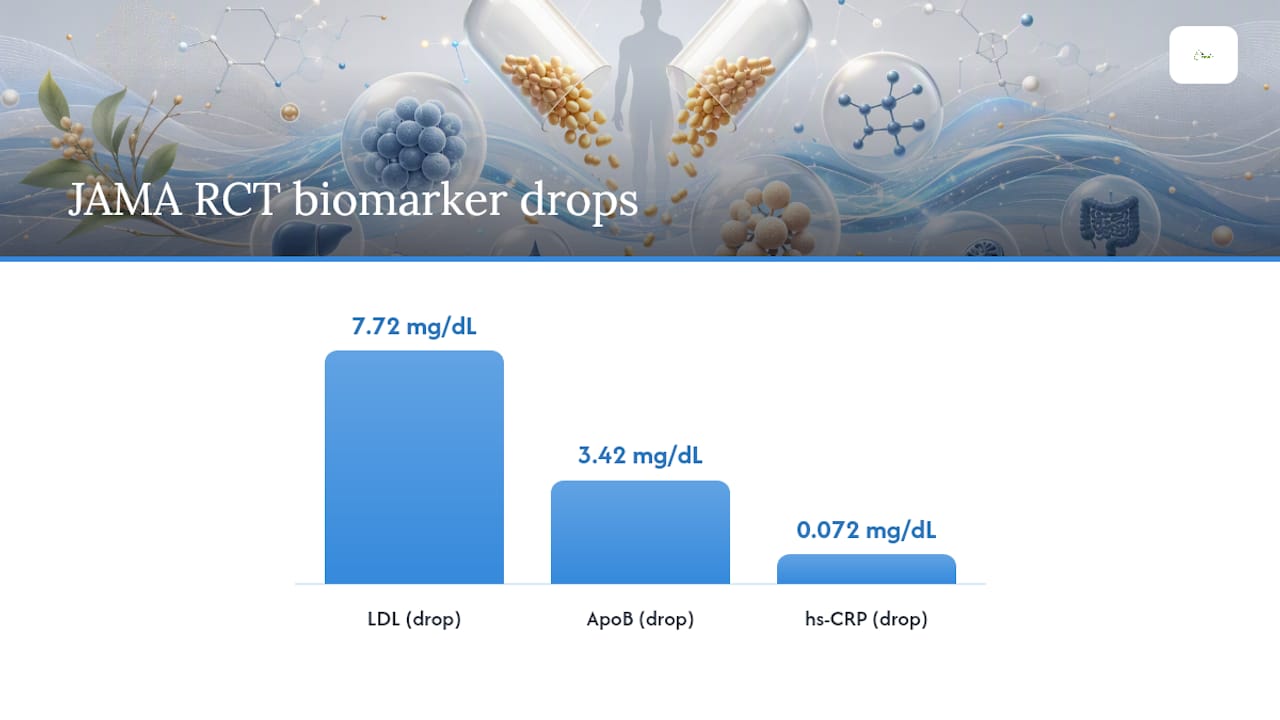
The strongest piece of berberine weight loss evidence to date is also the most humbling one. In the JAMA Network Open trial, participants with obesity and metabolic dysfunction-associated steatotic liver disease took 1 gram of berberine daily for six months. Visceral adipose tissue and liver fat content didn't budge more than placebo. LDL cholesterol dropped by about 7.72 mg/dL, apolipoprotein B fell 3.42 mg/dL, and hs-CRP, a marker of inflammation, dropped 0.072 mg/dL. Adverse events looked similar to placebo across both groups.
That result matters because it's the best-designed human trial on the topic so far, and it complicates the simpler story told by earlier research.
Smaller trials and pooled analyses paint a rosier, if messier, picture. A systematic review in Biomedicine & Pharmacotherapy found modest reductions in weight, BMI, and waist circumference across the studies it pooled, though the authors flagged real heterogeneity in dosing, duration, and population. A broader review found weighted mean differences in weight loss ranging from roughly 0.9 to 2.1 kilograms, with BMI dropping by about 0.47 to 0.48 kg/m², depending on which trials were included, according to the comprehensive review on berberine's obesity mechanisms. Those are real numbers, but they're not the kind of results that replace a scale-tipping intervention.
The NCCIH's overview of berberine research reviewed 18 weight studies and 23 BMI studies and concluded that effects show up mostly at doses above 1 gram per day sustained for more than eight weeks. Many of those studies carried a high risk of bias.
| Evidence source | Population | Dose/duration | Reported outcome |
|---|---|---|---|
| JAMA Network Open RCT | Obesity, diabetes free, with MASLD | 1 g/day | No significant VAT or liver fat change; LDL, apoB, hs-CRP improved |
| Biomed Pharmacother systematic review | Mixed, mostly Asian trial populations | Varied, 8 weeks to several months | Modest reductions in weight, BMI, waist circumference |
| NCCIH review (18 weight, 23 BMI studies) | Mixed, often diabetes/prediabetes/MASLD | Mostly ≥1 g/day, >8 weeks | Some reduction in weight and BMI; high risk of bias in many |
A few limitations run through nearly all of this research:
- Most randomized trials were conducted in Asian populations, which limits how confidently the results generalize elsewhere.
- Many participants already had diabetes, prediabetes, or MASLD, so results may not translate to metabolically healthy adults.
- Formulations, extraction methods, and standardization varied a lot between trials, making direct comparisons shaky.
- Small sample sizes and inconsistent blinding raise real risk-of-bias concerns in several of the older studies.
How Might Berberine Affect Weight and Metabolism?
Berberine's reputation rests on a genuinely interesting mechanism: it activates AMPK, an enzyme that acts like a metabolic switch, pushing cells toward burning fatty acids instead of storing them. Animal studies also show it shifting gut microbiota composition, which may lower metabolic endotoxemia, a low-grade inflammatory state linked to insulin resistance.

There's also preclinical evidence of adipose "browning," where white fat cells start expressing UCP1, a protein associated with heat-generating brown fat. That's a compelling pathway in mice.
The catch is bioavailability. Parent berberine absorbs poorly, under 1% by some estimates, according to the PMC review on berberine's anti-obesity mechanisms. Its metabolites may still be biologically active, but the gap between what happens in a rodent's bloodstream and what happens in yours is exactly why mouse-level fat loss hasn't shown up reliably in human trials.
What Dose and Duration Did Studies Actually Use?
Trial protocols cluster around a few consistent numbers, which is useful if you're trying to compare research to anything sold on a supplement shelf.
- 500 mg taken three times daily, totaling 1.5 grams per day
- 1 gram per day, the dose used in the JAMA Network Open trial
- 1.5 grams per day in some shorter studies
Effects on weight and BMI tend to show up more consistently at 1 gram per day or higher, sustained for at least 8 to 12 weeks, per the systematic review and corroborating NCCIH data. Most trials ran 8 to 12 weeks, though the JAMA trial extended to six months, which is part of why its null fat-loss finding carries so much weight.
Formulation matters too. Standard berberine hydrochloride is what most trials used, but derivatives like dihydroberberine are marketed for better absorption, though head-to-head weight-loss trials on that formulation remain thin.
Pro Tip: If you're new to berberine, starting at 500 mg rather than jumping to a full trial dose gives your gut time to adjust and makes it easier to spot side effects early.
Is Berberine Safe, and What Interacts With It?
Berberine's safety record in trials is reassuring on the surface, but the interaction risks are specific enough to take seriously.
- Gastrointestinal upset is the most common complaint. Constipation, cramping, and diarrhea show up across trials, though overall tolerability in larger RCTs closely matched placebo.
- Diabetes medications are the biggest interaction concern. Berberine lowers blood glucose on its own, so combining it with metformin, sulfonylureas, or insulin raises the risk of hypoglycemia. Anyone on glucose-lowering drugs should loop in a clinician before adding it.
- CYP450 and P-glycoprotein interactions are plausible given berberine's metabolic pathway, which means it could alter blood levels of other medications processed through those systems. This is a reason to disclose berberine use to a pharmacist, not just a doctor.
- Pregnancy, breastfeeding, and pediatric use are generally discouraged due to insufficient safety data, not because of confirmed harm.
- Stop and seek medical attention if you notice unusual bruising, jaundice, severe abdominal pain, or symptoms of low blood sugar like shakiness or confusion.
Monitoring matters more than most people assume. If you and your clinician decide to try it, tracking fasting glucose, A1C, and a lipid panel at 8 to 12 weeks gives you real data instead of guesswork about whether it's doing anything.
What Should You Realistically Expect From Berberine?
Set your expectations against the right benchmark. Berberine isn't competing with prescription weight-loss drugs. Prescription GLP-1 receptor agonists produce fat loss in a different league entirely, and the modest weight and BMI shifts in berberine trials are closer to what you'd get from a solid dietary tweak.
People with insulin resistance, prediabetes, MASLD, or elevated LDL and hs-CRP appear most likely to see metabolic benefit, even without dramatic weight change. Give it 8 to 12 weeks, track glucose, lipids, and how your gut tolerates it, and if nothing moves, that's useful information. It means it's time to talk to a clinician about other supplement options or established therapies like metformin or GLP-1 receptor agonists rather than extending the trial indefinitely.
Where NutraSmarts Gets Its Berberine Research
NutraSmarts' berberine ingredient profile links every claim back to the peer-reviewed trials cited here, and the dosage and timing guide breaks down how trial protocols translate into real-world use. Every ingredient entry in the database ties back to clinical citations, cross-checked against tools like the FDA-compliant Supplement Facts label creator so dosing claims match what's actually on a bottle.
Our Take: Cautious Optimism, Not a Verdict
The metabolic marker improvements in the JAMA trial are real and worth taking seriously. The weight-loss story is thinner than supplement marketing suggests, and the null result on visceral fat should temper expectations. What this field needs is standardized trials across more diverse populations, not another small study repeating the same dose in the same demographic. Talk to a clinician before starting, especially if you take glucose-lowering medication.
— NutraSmarts
Check Your Berberine Product Before You Buy It
Most berberine supplements on store shelves don't disclose the formulation, standardization, or dose match to what actually got tested in trials, which makes it hard to know if you're buying something close to the JAMA protocol or a diluted guess.
NutraSmarts built its ingredient database specifically to close that gap: every entry links dosing claims back to the actual clinical trial that tested them, so you can compare a label against real research instead of marketing copy. If you're evaluating a berberine product, or comparing it against other options for metabolic health, start there. And if you're a formulator trying to get dosing and labeling right, the free Supplement Facts label creator builds an FDA-compliant panel without spreadsheet errors. Pull up the berberine profile now and check the dose against what the trials actually used before your next purchase.
This article is general information, not a substitute for advice from a qualified doctor. Consult a qualified healthcare professional about your own circumstances before acting on anything here.
Sources
- Berberine and Adiposity in Diabetes-Free Individuals With Obesity and MASLD: A Randomized Clinical Trial | JAMA Network Open
- Berberine and Weight Loss: What You Need To Know | NCCIH
- Berberine as a multi-target therapeutic agent for obesity: from pharmacological mechanisms to clinical evidence - PMC
- The effect of Berberine on weight loss in order to prevent obesity: a systematic review. Biomed Pharmacother. 2020
- Berberine for Weight Loss | Ohio State Health & Discovery
FAQ
Has anybody lost weight taking berberine?
Some people in clinical trials lost modest amounts of weight, with pooled analyses showing average reductions of roughly 0.9 to 2.1 kilograms, but the largest recent RCT found no significant fat loss over six months.
Why are some doctors skeptical of berberine?
Many clinicians point to inconsistent trial quality, small sample sizes, and the null result on visceral and liver fat in the JAMA Network Open trial, along with real interaction risks with diabetes medications.
What does research say about berberine's safety profile?
Berberine showed adverse event rates similar to placebo in the largest trial, with gastrointestinal upset as the most common side effect, though it can interact with glucose-lowering medications.
What's the biggest downside of taking berberine?
The main downsides are gastrointestinal side effects, potential hypoglycemia when combined with diabetes medications, and inconsistent evidence that it produces meaningful fat loss on its own.
How much berberine do clinical trials typically use?
Most trials used 1 to 1.5 grams per day, often split into doses of 500 mg taken up to three times daily, for periods of 8 to 12 weeks or longer.