

Magnesium for anxiety has modest but real support in clinical research, particularly for people who run low on the mineral to begin with. It is not a proven cure for diagnosed anxiety disorders, and it is not a replacement for therapy or prescribed medication.
Who's likely to benefit: adults with mild, situational anxiety or documented low magnesium intake, especially those dealing with poor sleep alongside stress. Who probably won't see much: people with severe, persistent anxiety disorders or untreated psychiatric conditions, where magnesium alone is unlikely to move the needle.
- Trials often used daily doses of elemental magnesium that fall within a moderate range typically recommended in studies.
- Some studies paired magnesium with vitamin B6, which may have amplified results beyond what magnesium alone would do.
- Anyone with reduced kidney function, or taking regular medication, should check with a clinician before starting. Magnesium is cleared by the kidneys, and impaired clearance raises the risk of toxicity.
The rest of this guide breaks down the mechanisms, the actual trial data, which forms make sense for anxiety specifically, and how to dose safely if you decide to try it.
Key Takeaways
Magnesium shows modest, evidence-backed potential for easing mild anxiety, especially in people with low magnesium status, but it isn't proven as a standalone treatment for diagnosed anxiety disorders.
| Point | Details |
|---|---|
| Trial evidence is promising but mixed | Five of seven anxiety trials in a 2024 systematic review showed improvement, with notable heterogeneity across doses and forms. |
| Form choice affects tolerability | Glycinate and taurate absorb well with fewer GI issues than oxide or citrate, which are more likely to cause loose stools. |
| Dose within trial ranges | Most studies used roughly 150 to 400 mg of elemental magnesium daily, started low and adjusted gradually. |
| Check kidney function and medications first | Impaired kidney function and certain drug interactions raise the risk of magnesium buildup and side effects. |
| Use Nutrasmarts to compare forms | Nutrasmarts' ingredient database and comparison tool let you weigh magnesium forms and check interactions before buying. |
Table of Contents
- How Might Magnesium Reduce Anxiety?
- What Does the Clinical Research Say?
- Which Magnesium Form Works Best for Anxiety?
- How Much Magnesium Should You Take for Anxiety?
- What Are the Risks and Side Effects of Magnesium?
- Can You Get Enough Magnesium From Food Instead?
- When Should You See a Clinician Instead of Self-Treating?
- How This Evidence Was Weighted
- Our Take: Magnesium Deserves Cautious Optimism, Not Blind Faith
- Compare Magnesium Forms Before You Buy
- Frequently Asked Questions
- Sources
How Might Magnesium Reduce Anxiety?
Magnesium's plausibility as an anxiety aid comes down to three overlapping jobs it does in the nervous system: calming excitatory signaling, boosting inhibitory tone, and keeping the body's stress-hormone response in check.
- NMDA receptor blockade. Magnesium sits inside NMDA receptor channels and dampens glutamate, the brain's primary excitatory neurotransmitter. Less runaway glutamate activity generally means less neural overexcitation, which is one theoretical route to feeling calmer.
- GABA support. Magnesium appears to support GABA receptor activity, the same inhibitory system that benzodiazepines target, though far more gently and without the dependency risk.
- Cortisol and HPA-axis regulation. Clinical summaries from academic health systems describe magnesium's role in tempering hypothalamic pituitary adrenal axis overactivation, the stress-response loop that keeps cortisol elevated during chronic anxiety.
Not every form gets these jobs done equally well. Getting magnesium into the bloodstream is one thing; getting it across the blood brain barrier is another. Preclinical work on magnesium L-threonate shows it raises brain magnesium concentrations more effectively than other compounds in animal models. Human trials on anxiety outcomes specifically are still thin, so that mechanistic edge hasn't yet translated into a clear clinical advantage over better-studied forms like glycinate.
Pro Tip: Absorption and brain access are two different hurdles. A form can be well absorbed into your blood and still do little for central nervous system symptoms if it doesn't cross into brain tissue efficiently. That's why form selection matters more for anxiety than it does for, say, muscle cramps.
What Does the Clinical Research Say?
The clearest picture comes from a 2024 systematic review that pooled trials examining magnesium's effect on self-reported anxiety and sleep quality. Fifteen trials met the inclusion criteria overall, and seven of those specifically measured anxiety outcomes. Five of the seven anxiety trials reported improvement on at least one anxiety measure.
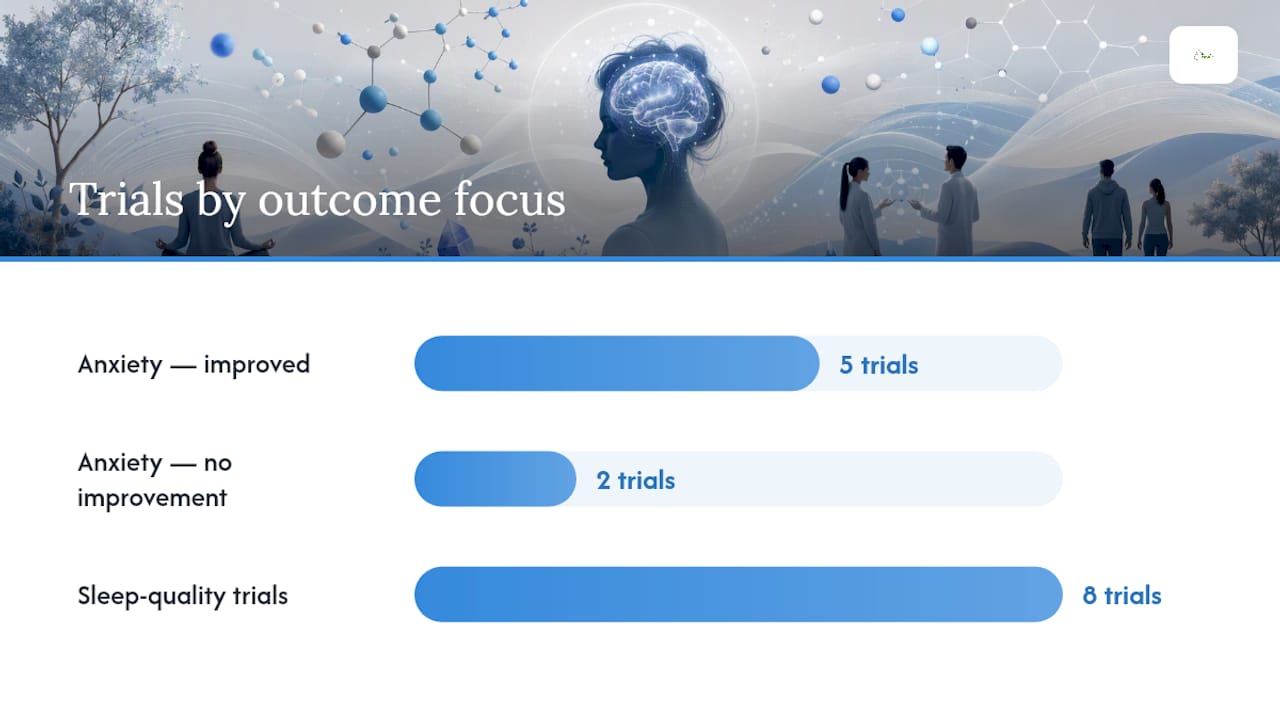
That's a genuinely encouraging ratio on paper. It also comes with a long list of caveats that keep researchers from calling the case closed.
What the trials had in common, and where they diverged:
- Doses varied widely across studies, with many falling in the 150 to 400 mg elemental magnesium range, though some went higher.
- Formulations differed substantially. Some trials used magnesium alone; others combined it with vitamin B6, which plays its own role in neurotransmitter synthesis and complicates any claim that magnesium alone drove the effect.
- Sample sizes tended to be small, and study durations were often short, sometimes just a few weeks.
- Anxiety was measured with different scales across studies, making direct comparison difficult and inflating the appearance of heterogeneity.
That mixed picture matters for how you interpret the "five out of seven" figure. It's not five separate confirmations of the same intervention. It's five different trials using different doses, different forms, and in some cases different co-supplements, all loosely grouped under "magnesium for anxiety." A pooled result like that tells you the concept holds up better than chance, not that any single product or protocol is proven effective.
Cleveland Clinic's clinical summary echoes this same tension: magnesium has biologically plausible anxiolytic effects through its action on glutamate, GABA, and cortisol regulation, but the trial base isn't yet standardized enough to support strong clinical guidelines. That's a fair characterization. The mechanism is solid. The clinical proof is promising but incomplete.
Where does that leave a health-conscious adult trying to decide if this is worth trying? The honest interpretation is this: magnesium supplementation looks reasonably likely to help people with mild anxiety symptoms, especially those who are also low in magnesium or dealing with poor sleep. It is not validated as a standalone treatment for generalized anxiety disorder, panic disorder, or other diagnosed conditions. Anyone managing a clinical anxiety diagnosis should treat magnesium as a possible adjunct to discuss with their provider, not a substitute for established treatment. For a broader look at how magnesium stacks up against other options people use for anxiety, the range of supplements reviewed for anxiety gives useful context on where it fits relative to other adjuncts.
Which Magnesium Form Works Best for Anxiety?
Not all magnesium supplements are created equal, and the form you pick affects both how much reaches your system and how your gut tolerates it.
- Magnesium glycinate. Bound to the amino acid glycine, this form is well absorbed and tends to be gentle on the digestive tract, which makes it a common first choice for anxiety-focused use. Glycine itself has calming properties, giving this form a plausible double benefit.
- Magnesium taurate. Paired with taurine, an amino acid with its own research tied to cardiovascular and nervous system function, this form is also well tolerated and frequently recommended alongside glycinate for anxiety-related goals. You can compare the research and dosing behind magnesium taurate if you're weighing it against glycinate directly.
- Magnesium L-threonate. This form has the strongest preclinical case for actually raising brain magnesium levels, per mechanistic research on magnesium and cognitive function. It also tends to cost more per dose, and human trials on anxiety specifically haven't caught up to the mechanistic promise yet. If brain-targeted formulations interest you, the breakdown of L-threonate versus glycinate walks through the trade-offs in more depth.
Two forms show up constantly in budget supplements and deserve a caution flag. Magnesium oxide is cheap and widely available, but it's poorly absorbed, meaning most of what you swallow stays in the gut rather than entering your bloodstream. That unabsorbed mineral pulls water into the intestine, which is exactly why oxide is the base ingredient in many over-the-counter laxatives. Magnesium citrate absorbs somewhat better than oxide but still carries a stronger laxative tendency than glycinate or taurate, making it a better fit for constipation relief than for a daily anxiety routine. A side-by-side look at glycinate versus citrate breaks down exactly where that tolerability gap comes from.
Pro Tip: *Check the label carefully. A bottle listing "1,000 mg magnesium glycinate" usually means 1,000 mg of the whole compound, not 1,000 mg of elemental magnesium, which is the part your body actually uses.
How Much Magnesium Should You Take for Anxiety?
Trial doses used for anxiety and sleep outcomes commonly fell between 150 and 400 mg of elemental magnesium per day, with some higher-dose protocols appearing in trials that combined magnesium with other nutrients like vitamin B6. There isn't a single "proven" dose, which is part of why a stepwise approach makes more sense than jumping straight to the top of the range.
- Start low. Begin around 150 to 200 mg of elemental magnesium daily, ideally with food to reduce the chance of stomach upset.
- Give it two to four weeks. Magnesium isn't fast-acting for mood or anxiety symptoms. Judge it over weeks, not days.
- Titrate only if needed. If you're tolerating it well and not seeing a shift, you can increase toward 300 to 400 mg, watching for GI symptoms as your ceiling signal.
- Check your medications and kidney function first. This step comes before step one if you take prescription drugs regularly or have any history of kidney issues.
- Reassess at the four to eight week mark. If nothing has changed, magnesium likely isn't your lever, and it's worth revisiting with a clinician.
Timing and formulation notes:
- Taking magnesium with a meal generally improves tolerability and may modestly aid absorption.
- Many people take their dose in the evening, since a calming effect (if present) tends to overlap conveniently with wind-down time and sleep support.
- If you notice loose stools, that's usually a dose or form issue, not a sign to push through. Dropping the dose or switching from citrate/oxide to glycinate often resolves it.
The full ingredient profile for magnesium has more detail on dosing ranges across different use cases if anxiety isn't your only reason for supplementing.
What Are the Risks and Side Effects of Magnesium?
The most common issue with magnesium supplementation is gastrointestinal, and it's almost always dose- or form-dependent. Poorly absorbed compounds like magnesium oxide leave more unabsorbed mineral sitting in the gut, and that unabsorbed magnesium draws water in, producing loose stools or outright diarrhea. Chelated forms like glycinate and taurate cause this far less often because more of the dose actually gets absorbed before it reaches the colon.
Some groups face real risk, not just discomfort, and need medical guidance before supplementing:
- Impaired kidney function. The kidneys are what clear excess magnesium, so reduced function raises the risk of magnesium building up to toxic levels. The NIH Office of Dietary Supplements specifically flags this population for caution.
- Severe cardiac disease. Magnesium affects heart rhythm, so people with significant cardiac conditions should only supplement under medical supervision.
- Drug interactions. Certain antibiotics (particularly tetracyclines and fluoroquinolones), some diuretics, bisphosphonates used for bone density, and certain diabetes medications can all interact with magnesium, either through reduced drug absorption or altered magnesium clearance.
Magnesium toxicity is rare in people with normal kidney function taking oral supplements, but it does happen, and the warning signs are worth knowing: nausea, significant drop in blood pressure, muscle weakness, irregular heartbeat, and in severe cases, difficulty breathing. Anyone experiencing these symptoms after starting a magnesium supplement should seek medical attention promptly rather than waiting it out.
Before starting, run through a short checklist with a pharmacist or clinician: current prescriptions, kidney function history, any cardiac diagnosis, and whether you're already getting magnesium from a multivitamin or antacid without realizing it. Overlapping sources are a common, avoidable way people accidentally overshoot a safe dose.
Can You Get Enough Magnesium From Food Instead?
Food is the first place to look, and for many people it closes most of the gap on its own. Reliable sources include leafy greens like spinach and Swiss chard, nuts and seeds (especially pumpkin seeds and almonds), legumes, and whole grains. Population-level intake data suggests a meaningful share of adults fall short of recommended magnesium intake from diet alone, which is part of why deficiency symptoms show up more often than people expect.

Common signs of low magnesium include muscle cramps, persistent fatigue, poor sleep quality, and in some cases mood changes, including heightened anxiety or irritability. Older adults, people with gastrointestinal conditions that impair absorption, and anyone on long-term diuretics face higher deficiency risk.
That means a "normal" lab result doesn't rule out functional deficiency. If deficiency symptoms persist despite normal bloodwork, a more thorough discussion with a clinician, possibly including a red blood cell magnesium test, is reasonable.
Pro Tip: If your diet already includes a couple of servings of leafy greens or nuts most days, you may be closer to adequate than you think. Supplementation makes the most sense as a targeted fix, not a blanket default. The deficiency symptom guide can help you map specific symptoms back to likely nutrient gaps.
When Should You See a Clinician Instead of Self-Treating?
Magnesium is reasonable for mild symptoms, but certain signs call for professional evaluation rather than a supplement experiment.
- Severe or worsening anxiety, panic attacks, or any thoughts of self-harm need immediate professional attention, not a wait-and-see supplement trial.
- Signs suggesting magnesium toxicity (nausea, muscle weakness, irregular heartbeat) warrant stopping the supplement and seeking care right away.
- Kidney disease, significant cardiac conditions, or a medication list with multiple potential interactions all justify a conversation before you start, not after.
- If you've supplemented consistently for four to eight weeks with no improvement, that's your natural checkpoint to reassess with a clinician rather than keep escalating the dose on your own.
Magnesium works best as one piece of a broader anxiety management plan, alongside therapy, lifestyle changes, or medication where appropriate, not as a replacement for any of them.
How This Evidence Was Weighted
This summary prioritized systematic review evidence and randomized controlled trials over anecdotal or single-study claims, since pooled trial data gives a more reliable signal than any one study alone. Where mechanisms were described, findings from academic health system clinical summaries and peer-reviewed mechanistic research were used rather than marketing claims.
- Systematic reviews and RCTs were weighted above blog-style roundups or single small trials.
- Government and academic sources, including the NIH Office of Dietary Supplements, anchored safety and dosing guidance.
- Trial heterogeneity, including mixed formulations and combination products, was flagged explicitly rather than smoothed over, because it directly affects how confidently any single claim can be made.
Readers who want to dig into primary sources rather than take a summary at face value can follow the links throughout this article directly to the original review and fact sheets.
Our Take: Magnesium Deserves Cautious Optimism, Not Blind Faith
The evidence on magnesium for anxiety sits in an unusually honest middle ground. It's not a myth, and it's not a miracle. Five of seven trials showing improvement is a real signal worth paying attention to, but the mixed doses, mixed forms, and small sample sizes mean nobody should treat it as settled science.
Where we land: magnesium is a reasonable, low-risk adjunct for people with mild anxiety or a plausible magnesium shortfall, especially when paired with attention to sleep and diet. It is not a substitute for therapy or psychiatric treatment for anyone dealing with a diagnosed anxiety disorder. If you're trying to figure out which form fits your situation or want to see how magnesium compares against other researched options, Nutrasmarts built its ingredient database specifically so you're not guessing based on a supplement label alone.
Compare Magnesium Forms Before You Buy
Choosing between glycinate, taurate, and L-threonate shouldn't come down to whichever bottle is on sale at the pharmacy. Nutrasmarts gives you a side-by-side way to weigh absorption, tolerability, and research strength across magnesium forms, along with 1,300+ evidence-rated ingredient profiles you can cross-reference against anything else you're already taking.
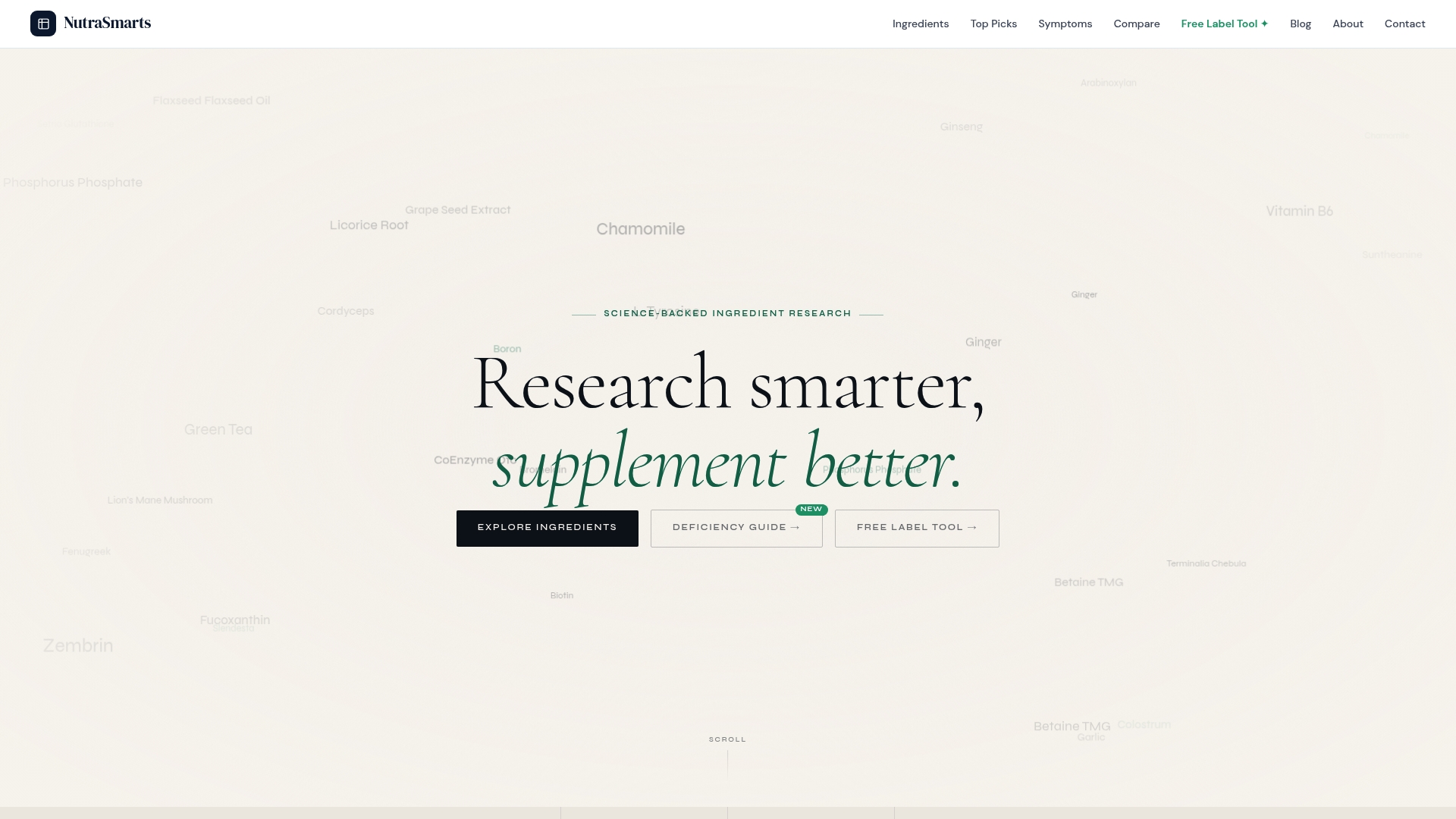
If you're currently on medication or managing a kidney or heart condition, the ingredient comparison tool lets you check potential overlaps before you add anything new to your routine. And if anxiety is just one symptom on a longer list, the symptom-based supplement search can help you see where magnesium fits alongside other options worth researching. Start by pulling up the magnesium comparison and checking it against your current supplement list.
Frequently Asked Questions
Does magnesium actually help with anxiety, or is it mostly placebo? The evidence suggests a real, modest effect for some people, particularly those with mild anxiety or low magnesium status, based on a systematic review where five of seven anxiety trials showed improvement. It's not strong enough evidence to call it proven for clinical anxiety disorders.
Which magnesium form is best for anxiety? Magnesium glycinate and magnesium taurate are generally preferred for anxiety-related use because they absorb well and cause fewer digestive side effects than magnesium oxide or citrate. Magnesium L-threonate has promising preclinical brain-penetration data but limited human trial evidence specific to anxiety.
How long does magnesium take to work for anxiety? Most trials assessed outcomes over several weeks, not days. A reasonable timeline is to give it four to eight weeks at a consistent dose before deciding whether it's helping.
Can I take magnesium with my anxiety medication? Possibly, but you should check first. Magnesium can interact with certain antibiotics, diuretics, bisphosphonates, and some diabetes medications, so review your full medication list with a clinician or pharmacist before starting.
What are the signs I might be magnesium deficient? Common signs include muscle cramps, fatigue, poor sleep, and in some cases mood changes. Standard blood tests often miss deficiency since most magnesium is stored outside the bloodstream, so persistent symptoms despite normal labs are worth discussing with a clinician.
Sources
- Examining the Effects of Supplemental Magnesium on Self-Reported Anxiety and Sleep Quality: A Systematic Review
- Magnesium - Health Professional Fact Sheet
- Magnesium for Anxiety: Does It Help?
- Magnesium | The Nutrition Source
- Magnesium and human health review (PMC5452159)