

Potassium deficiency, called hypokalemia in medicine, means the potassium level in your blood has dropped below normal. The most dangerous signs include severe muscle weakness, fainting, and heart palpitations, because low potassium can trigger irregular heart rhythms. If you notice any of those severe symptoms, get urgent medical care. Mild symptoms still warrant a blood test from a clinician.
TL;DR:
- Severe symptoms like muscle paralysis or irregular heart rhythms require urgent IV potassium replacement with continuous cardiac monitoring.
- Hypokalemia affects up to 21% of hospitalized patients, mainly due to diuretic use and medication-related potassium losses.
- Causes of low potassium include gastrointestinal losses from vomiting or diarrhea, renal losses from diuretics, and redistribution from insulin therapy or fasting.
- Most cases are diagnosed by blood tests, with levels below 3.0 mmol/L considered severe, and urinary testing helps determine the loss source.
- Prevention relies on dietary potassium intake and monitoring medication effects, but significant deficiencies demand medical treatment over supplements alone.
Table of Contents
- What Are the Signs of Potassium Deficiency?
- What Causes Low Potassium, and Who's Most at Risk?
- How Do Doctors Diagnose Potassium Deficiency?
- How Is Potassium Deficiency Treated?
- What Happens if Low Potassium Goes Untreated?
- How Can You Prevent Potassium Deficiency?
- Where NutraSmarts Fits Into Your Research
- Why Evidence-First Guidance Matters Here
- Keep Researching the Evidence Safely
- Sources
- FAQ
What Are the Signs of Potassium Deficiency?
Potassium deficiency symptoms follow a rough progression, and where you land on that scale tells you how quickly to act. Mild drops often produce almost nothing noticeable. Bigger drops start hitting muscles, nerves, and eventually the heart.
At the mild end, watch for:
- Fatigue that doesn't match your activity level
- Constipation
- Muscle cramps, especially in the legs
- Tingling or numbness in the hands or feet
As potassium falls further, symptoms escalate to pronounced muscle weakness, muscle paralysis in severe cases, excessive urination (polyuria), and breathing difficulty when respiratory muscles are affected. The Merck Manual notes that paralysis, dangerous arrhythmias, and respiratory distress become risks in more severe potassium deficiency.
Cardiac symptoms deserve their own category because they're the reason doctors treat hypokalemia aggressively. Palpitations, a sense of skipped beats, dizziness, and fainting (syncope) can all signal that low potassium is disturbing your heart's electrical rhythm. Even a slight drop can cause abnormal rhythms in people who already have heart disease, which is why cardiac symptoms always get urgent attention rather than a "wait and see" approach.
Statistic callout: Hypokalemia isn't rare in clinical settings. It affects up to 21% of hospitalized patients, largely tied to diuretic use and other medications that push potassium out through the kidneys.
What Causes Low Potassium, and Who's Most at Risk?
Potassium leaves your body or shifts around inside it through three main routes: gastrointestinal loss, renal loss, and transcellular shifts. Vomiting, diarrhea, and chronic laxative use drain potassium through the gut. Diuretics, particularly thiazide and loop diuretics, pull potassium out through the kidneys. Insulin therapy and refeeding after prolonged fasting can shove potassium from the blood into cells, dropping serum levels without actually depleting total body stores.
Diet alone almost never causes clinically significant hypokalemia. Severe cases nearly always trace back to excess losses or redistribution, not simply eating too few potassium-rich foods.
A few causes are more unusual. Certain antibiotics affect potassium handling, dialysis patients face ongoing losses, and there are documented cases where pica, the compulsive eating of clay, triggered hypokalemia. Correcting the behavior mattered as much as replacing the potassium.
Who should watch closest:
- Anyone hospitalized, especially on IV fluids or diuretics
- People with vomiting or diarrhea lasting more than a day or two
- Patients with magnesium depletion, which can make hypokalemia resistant to correction
- People with heart disease or those taking digoxin, since even modest drops raise arrhythmia risk
How Do Doctors Diagnose Potassium Deficiency?
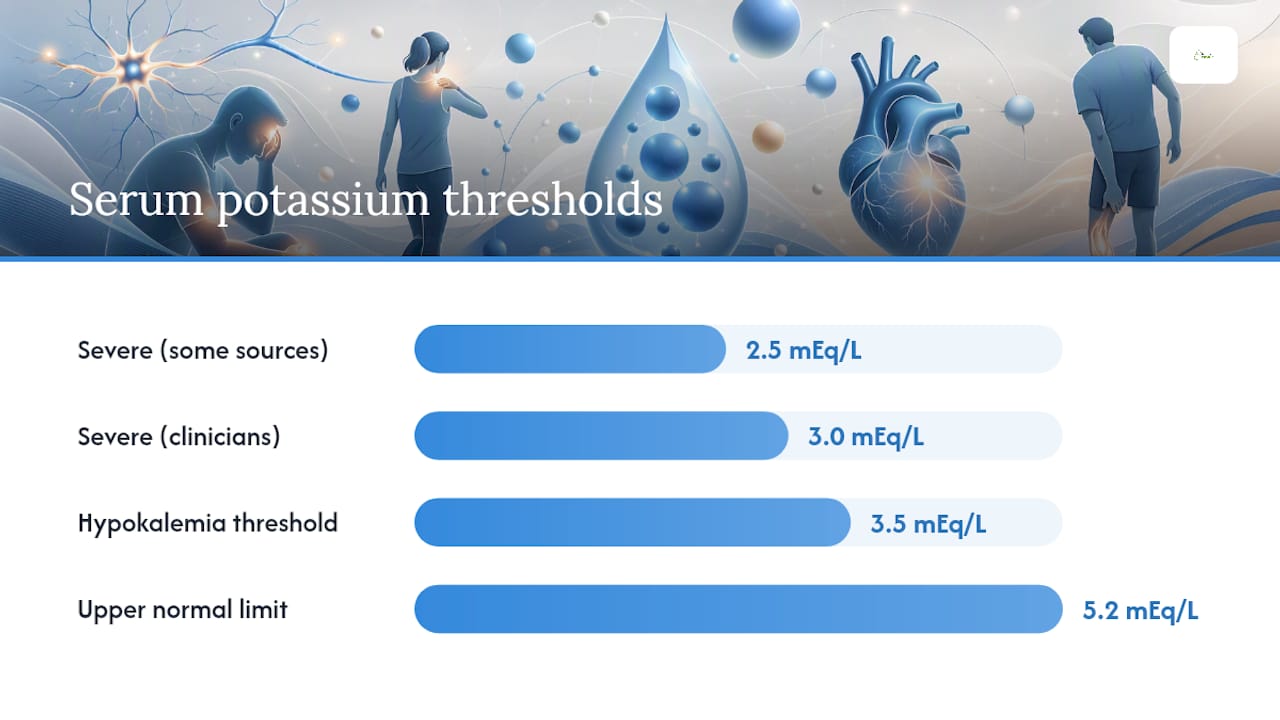
A blood test confirming your serum potassium level is the starting point. Normal adult range runs from 3.5 to 5.2 mEq/L, and hypokalemia is anything below that floor. Clinicians generally consider levels under 3.0 mmol/L severe, though some sources put that threshold at 2.5 mmol/L, and this variation matters because it shapes whether you're treated as an outpatient or admitted.
Testing doesn't stop at one blood draw. Clinicians often order:
- An electrocardiogram (ECG) when symptoms suggest cardiac involvement or levels are notably low, watching for changes tied to abnormal heart rhythms
- Urinary potassium testing, which helps distinguish renal losses from GI losses and points toward the actual cause
- Magnesium levels, since coexisting magnesium depletion can make potassium replacement ineffective until it's corrected too
One practical wrinkle: pseudohypokalemia, a lab artifact from improper sample handling, can produce a falsely low reading. If your lab result doesn't match how you feel, a repeat test is reasonable before assuming the worst.
Pro Tip: If you're on a diuretic and start feeling unusually weak or notice heart flutters, ask specifically for a potassium panel rather than waiting for your next routine checkup.
How Is Potassium Deficiency Treated?
Treatment depends heavily on severity and how your heart is responding, not just the number on the lab report.
- Mild, asymptomatic cases often get oral potassium, either through supplements like potassium chloride prescribed at a specific dose or through dietary adjustment, with a repeat blood test to confirm the level is rising.
- Moderate cases with symptoms typically need prescribed oral potassium at higher, clinician-directed doses, plus a look at what's causing the loss in the first place.
- Severe cases, meaning very low serum levels, ECG changes, or muscle paralysis, require IV potassium replacement in a monitored setting, since infusing potassium too fast can itself cause dangerous heart rhythms. Cardiac monitoring during the infusion is standard practice, per the Merck Manual's treatment guidance.
Magnesium deficiency gets corrected alongside potassium whenever it's present, because low magnesium can make hypokalemia refractory to potassium replacement alone. Anyone on digoxin needs closer monitoring during treatment, since low potassium increases digoxin toxicity risk. Doctors also address the root cause directly, whether that means adjusting a diuretic dose, stopping a laxative habit, or controlling vomiting and diarrhea.
Most people see lab values normalize within days once the underlying cause is addressed and replacement is underway, though symptom resolution, especially fatigue and muscle weakness, can lag a bit behind the numbers.
What Happens if Low Potassium Goes Untreated?
Cardiac arrhythmia is the headline risk. Potassium helps regulate the heart's electrical signaling, and even a modest drop can destabilize that rhythm in someone with existing heart disease or on digoxin.
At the severe end, muscle paralysis and respiratory compromise are possible when levels fall low enough to impair the muscles that control breathing. Chronic or repeated hypokalemia, over months or years, can also strain kidney function and disrupt how your body handles glucose.
The encouraging part: outcomes are generally good once the underlying cause gets identified and corrected. Hypokalemia responds predictably to replacement therapy, and recurrence is preventable when the trigger, whether a medication or a GI issue, gets addressed rather than just papered over.
How Can You Prevent Potassium Deficiency?
Potassium-rich foods help with maintenance, though they rarely reverse clinically significant deficiency caused by real losses. Good options include bananas, potatoes, spinach, and beans, all listed among the primary food sources of potassium recommended for general intake.

If you take a diuretic, a laxative, or insulin, ask your prescriber periodically whether your dose or regimen needs adjusting, particularly if you've noticed new fatigue or cramping. This is a conversation worth having proactively rather than after symptoms appear.
Seek emergency care immediately for any of these red flags:
- Severe muscle weakness or inability to move a limb
- Fainting or near fainting
- Vomiting or diarrhea that won't stop
- Chest pain or a racing, irregular heartbeat
Where NutraSmarts Fits Into Your Research
Clinically significant hypokalemia usually needs medical replacement and monitoring, not a supplement bottle. Supplements can play an adjunctive role once a clinician has confirmed your levels and addressed the cause, but they're not a substitute for treatment in moderate to severe cases.
For readers who want to understand the evidence behind specific ingredients, Nutrasmarts maintains a research-backed potassium ingredient page, a breakdown of potassium citrate uses and dosing, and a broader deficiency guide covering risk groups across multiple nutrients.
- Always discuss any supplement with your clinician first, especially with heart disease or digoxin use.
- Use these pages as research support, not as a replacement for lab testing or urgent care.
Why Evidence-First Guidance Matters Here
Nutrasmarts exists to organize the clinical evidence on nutrients, not to replace the clinicians who order your labs and interpret your ECG. Bring the ingredient pages to your next appointment as a conversation starter, not a diagnosis.
— NutraSmarts
Keep Researching the Evidence Safely
Once you've talked to a clinician and gotten your potassium levels checked, there's real value in understanding the ingredients you might discuss adding to your routine. There are databases of supplement ingredients tied to clinical citations available for follow up research, rather than marketing claims dressed up as science.

Start with the symptom-to-supplement search tool to see which nutrients have real evidence behind them for your specific concerns, whether that's energy, muscle function, or general electrolyte balance. If you're a formulator or practitioner, the free Supplement Facts label creator generates FDA-compliant labels without spreadsheet headaches. These tools are informational resources, not a substitute for urgent medical evaluation. If you're dealing with symptoms right now, see a clinician first, then come back and search the database with your results in hand.
Sources
- Clinical review: Hypokalemia (PMC5881435)
- Merck Manual — Hypokalemia
- MedlinePlus — Low blood potassium
- Dietary Guidelines — Food sources of potassium
FAQ
What are the side effects of low potassium?
Low potassium can cause muscle weakness, cramps, fatigue, constipation, tingling, and in severe cases, paralysis, dangerous heart rhythms, and breathing trouble.
Who is most at risk for potassium deficiency?
People taking diuretics, hospitalized patients, anyone with prolonged vomiting or diarrhea, and people with heart disease or magnesium depletion face the highest risk.
What is the fastest way to treat low potassium?
Severe cases with ECG changes or paralysis require IV potassium replacement under cardiac monitoring in a medical setting; milder cases respond to prescribed oral potassium over several days.
How do I raise my potassium levels quickly?
Don't self-treat with high-dose supplements. See a clinician for testing and a prescribed replacement plan, since dosing errors with potassium can themselves cause dangerous heart rhythms.
Can diet alone fix a potassium deficiency?
Diet helps with maintenance and mild cases, but clinically significant hypokalemia usually stems from losses or shifts that food alone can't reverse quickly enough.