
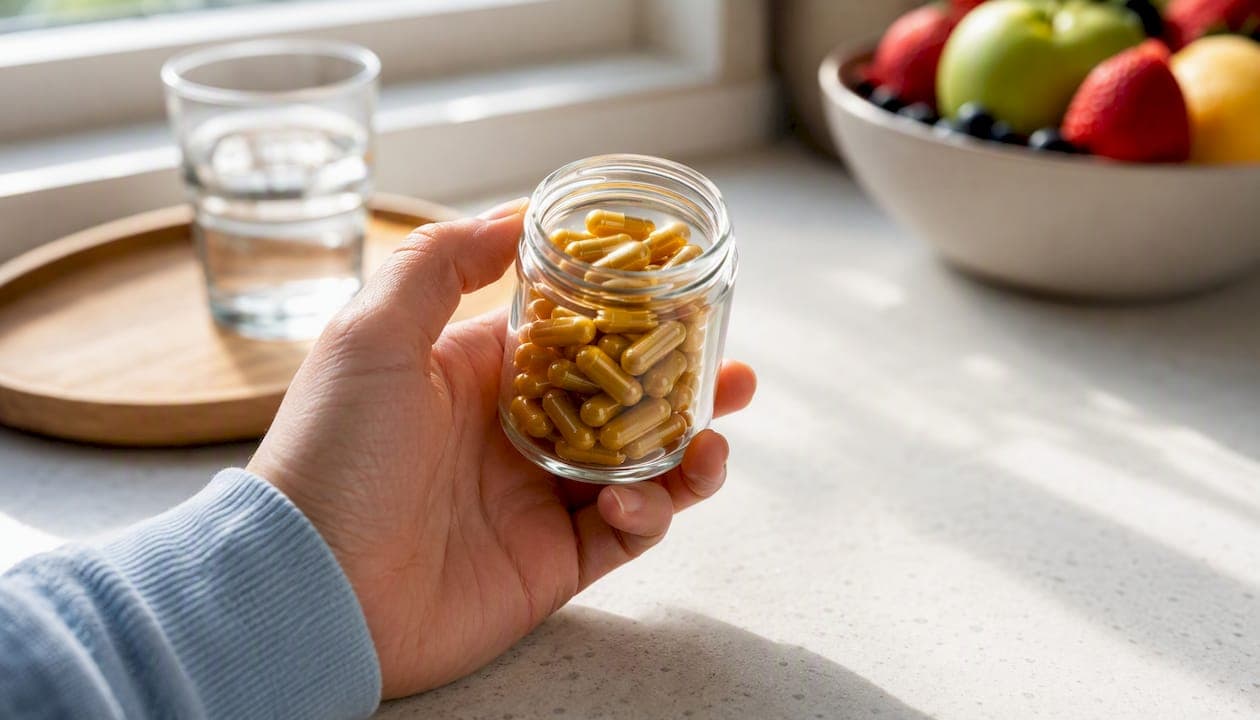
Quercetin has real, measurable benefit for mild-to-moderate seasonal allergies, but it works slowly and modestly, not like an antihistamine you pop and forget. The best human evidence comes from a randomized, double-blind trial in which 200 mg of Quercetin Phytosome (an enhanced-absorption formulation) taken daily for 4 weeks significantly improved pollinosis symptoms, including eye itching, sneezing, nasal discharge, and sleep quality, compared with placebo.
That single trial is the strongest card quercetin has to play. It's not a cure, and it's nowhere near a replacement for epinephrine in anyone with a history of severe reactions. But for someone with garden-variety hay fever who wants an evidence-backed adjunct, it's a reasonable one.
- Who might try it: Adults with mild-to-moderate seasonal allergic rhinitis looking to supplement, not replace, their current regimen.
- What to expect: Gradual symptom improvement over weeks, not hours.
- What it isn't: An emergency treatment, a proven cure for food allergies, or a guaranteed fix for anyone.
Key Takeaways
Quercetin, specifically as Quercetin Phytosome at 200 mg daily for at least four weeks, has trial-backed support as an adjunct for mild-to-moderate seasonal allergy symptoms, not as a replacement for standard treatment.
| Point | Details |
|---|---|
| Evidence-backed verdict | One randomized trial showed 200 mg Quercetin Phytosome daily for 4 weeks improved symptom and quality-of-life scores versus placebo. |
| Formulation matters | Enhanced-absorption formats like Quercetin Phytosome outperform standard quercetin at comparable doses. |
| Onset is slow | Expect gradual improvement over several weeks, not same-day relief like an antihistamine. |
| Safety comes with caveats | Higher doses can interact with blood thinners and other medications; pregnant people, children, and those with kidney issues should consult a clinician first. |
| Adjunct, not replacement | Quercetin does not substitute for epinephrine or prescription treatment in moderate-to-severe allergic disease. |
| Compare before you buy | NutraSmarts' ingredient profile and comparison tool link dosage claims to actual trial data. |
Table of Contents
- Does Quercetin Help Allergies by Blocking Histamine?
- What Do Clinical Trials Say About Quercetin and Allergies?
- What Is the Right Quercetin Dosage for Allergies?
- Is Quercetin Safe, and Does It Interact With Medications?
- How Fast Does Quercetin Work for Allergy Symptoms?
- How Do You Choose a High-Quality Quercetin Supplement?
- How Strong Is the Overall Evidence for Quercetin and Allergies?
- How Should You Actually Use Quercetin for Allergy Relief?
- Where to Compare Evidence-Backed Quercetin Supplements
- Sources
Does Quercetin Help Allergies by Blocking Histamine?
Quercetin doesn't block histamine receptors the way a pharmaceutical antihistamine does. It works upstream, stopping some of the histamine from being released in the first place, which is a meaningfully different mechanism and one reason Northwell Health researchers push back on calling it a "natural antihistamine."
The mechanism runs through several overlapping pathways. A widely cited review in PMC/NIH describes quercetin stabilizing mast cell membranes, which reduces the chance those cells rupture and dump histamine into surrounding tissue when they encounter an allergen. The same review ties quercetin to lower production of pro-inflammatory cytokines, including IL-4, a signaling molecule that drives the Th2 immune response responsible for much of the sneezing, itching, and congestion in allergic rhinitis.

A 2025 preclinical meta-analysis adds more detail: across in vitro and animal models, quercetin consistently reduced histamine release and antigen-specific IgE, reinforcing its role as a mast-cell stabilizer and anti-inflammatory compound rather than a receptor blocker.
Here's the catch that matters most for real-world use: those effects come almost entirely from cell cultures and animal studies using concentrations that are hard to replicate through oral supplementation. Quercetin has notoriously poor natural bioavailability. Standard quercetin taken by mouth is absorbed inconsistently, which is exactly why formulation matters so much when translating lab results into a supplement that actually does something in a human body.
- Mast-cell stabilization reduces histamine and inflammatory mediator release.
- Cytokine modulation (especially IL-4) may shift the Th1/Th2 immune balance toward a less allergic response.
- Antioxidant activity in preclinical models appears to compound the anti-inflammatory effect.
- Poor natural bioavailability limits how much of these lab effects show up after an oral dose.
Pro Tip: If a mechanism study impresses you, check whether it used isolated cells or a live human subject before assuming the same effect will show up after swallowing a capsule.
What Do Clinical Trials Say About Quercetin and Allergies?
The clinical evidence for quercetin allergy symptom relief is limited in volume but genuinely promising for one specific formulation and use case: seasonal allergic rhinitis treated with an enhanced-absorption quercetin product over several weeks.
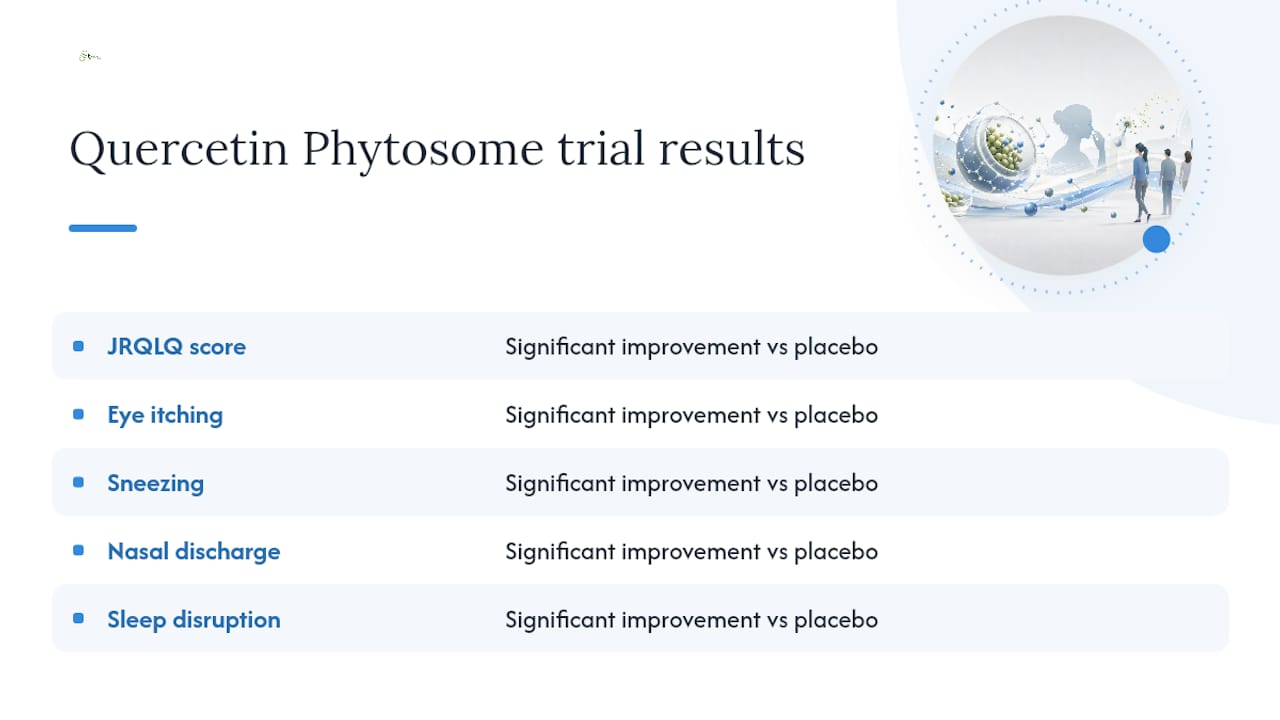
The centerpiece trial randomized subjects with pollinosis to either 200 mg of Quercetin Phytosome daily or placebo for four weeks. The quercetin group showed significant improvement on the Japanese Rhinoconjunctivitis Quality of Life Questionnaire (JRQLQ) along with individual symptom scores for eye itching, sneezing, nasal discharge, and sleep disruption. That's a meaningful cluster of outcomes for anyone who's spent a spring blowing through a box of tissues.
Older, smaller studies tell a messier story. Differences in dose, formulation, and endpoints across the broader quercetin literature help explain why results have been inconsistent for decades. Some trials used raw quercetin with minimal absorption; others measured different outcomes entirely, from lung function to skin reaction size. That heterogeneity is the main reason quercetin hasn't earned a slot in mainstream allergy treatment guidelines.
The clearest measurable clinical result available today: 200 mg of Quercetin Phytosome taken daily for 4 weeks produced statistically significant improvement in allergy symptom and quality-of-life scores compared with placebo, in a randomized, double-blind design.
Allergy symptom trials are notoriously placebo-sensitive. Nasal symptoms fluctuate with weather, pollen counts, and even how attentively someone fills out a symptom diary. A single positive RCT is a solid signal, not proof the effect will replicate the same way in everyone. Treat it as encouraging evidence for a specific formulation and dose, not a blanket endorsement of every quercetin product on a shelf.
What Is the Right Quercetin Dosage for Allergies?
The dose with the clearest trial support is daily Quercetin Phytosome taken consistently for several weeks before judging whether it's helping. That's the exact protocol used in the randomized trial that produced measurable symptom relief, and it's a reasonable starting point for anyone considering quercetin supplements for allergies.
Beyond that specific trial, quercetin shows up in a few common forms, and they are not interchangeable:
- Standard quercetin (aglycone form): Cheap and widely available, but poorly absorbed. Typical over-the-counter doses run 500 mg to 1,000 mg daily, often split into two doses, to compensate for weak absorption.
- Quercetin Phytosome: Bound to a phospholipid carrier that measurably improves absorption, which is why the 200 mg trial dose worked without needing gram-level quantities.
- Quercetin plus bromelain: Bromelain is a pineapple-derived enzyme sometimes included for its own anti-inflammatory properties and a suspected (though not firmly established) boost to quercetin absorption.
- Quercetin plus vitamin C: Vitamin C is a common pairing because it may help regenerate quercetin's antioxidant activity and supports overall immune function during allergy season.
Timing matters more with quercetin than with a fast-acting antihistamine. Because the clinical benefit builds over weeks, starting two to four weeks before your typical allergy season begins gives the compound time to accumulate an effect before pollen counts peak. Waiting until symptoms are already severe and expecting quick relief is setting yourself up for disappointment.
Take it with a meal that includes some fat if you're using a standard (non-phytosome) form. Quercetin is fat-soluble, and food can modestly improve uptake compared with taking it on an empty stomach.
Pro Tip: Check the Supplement Facts panel for the actual elemental quercetin dose, not just the total extract weight. Some labels list a proprietary blend weight that includes bromelain or vitamin C, which can obscure how much quercetin you're actually getting.
Is Quercetin Safe, and Does It Interact With Medications?
Quercetin is generally well tolerated at typical dietary and supplemental doses, but higher supplemental amounts carry real interaction risks and are not automatically safe for everyone. It's a compound found naturally in onions, apples, and capers, which is part of why its safety profile at food-level intake is reassuring. Supplement-level doses are a different question.
Consumer health resources note that while quercetin blocks histamine release in lab settings, human evidence remains mixed and high doses can cause harm or interact with medications, particularly blood thinners and certain drugs metabolized through liver enzyme pathways. Anyone on anticoagulants, or with existing kidney concerns, should talk to a clinician before starting a supplemental quercetin regimen.
- People taking blood thinners (anticoagulants) or antiplatelet medications.
- Anyone with existing kidney disease or reduced kidney function.
- People on medications metabolized through certain liver enzyme pathways (CYP interactions have been reported in preclinical data).
- Pregnant or breastfeeding individuals, given limited safety data at supplemental doses.
- Children, for the same reason: limited pediatric safety data.
- Anyone with a history of severe or anaphylactic allergic reactions.
Mild side effects reported in trials and case reports include headache and tingling sensations at common supplemental doses; such effects are more plausible at very high multi-gram doses sometimes used in some protocols.
Quercetin is not a substitute for emergency allergy treatment. If you have a history of anaphylaxis or severe allergic reactions, keep your prescribed epinephrine and emergency plan unchanged. No supplement, including quercetin, replaces that treatment.
If you experience new or worsening symptoms after starting quercetin, particularly unusual bruising, digestive upset, or headaches that don't resolve, stop and check in with a clinician. And if you're already managing allergies with prescription medication, loop your doctor in before adding quercetin, especially if you take other supplements or medications regularly. Resources like MedlinePlus's hay fever guidance are a useful baseline for understanding where standard care ends and where an adjunct like quercetin might fit in.
How Fast Does Quercetin Work for Allergy Symptoms?
Quercetin works on a timeline measured in weeks, not the 30 to 60 minutes you'd expect from an oral antihistamine. The trial that showed the clearest benefit ran for four full weeks of daily 200 mg dosing before researchers saw significant improvement, and that timeline lines up with how the mechanism actually functions: gradual mast-cell stabilization and cytokine modulation, not acute receptor blockade.
That slow build has direct implications for who benefits and who doesn't.
- Likely to benefit: People with mild-to-moderate seasonal allergic rhinitis who start quercetin proactively, ideally a few weeks before their typical allergy season, and who are looking for an adjunct rather than a standalone fix.
- Likely to see limited benefit: People expecting same-day symptom relief, or anyone using quercetin as their sole strategy during an active, severe flare.
- Unlikely to benefit meaningfully: Individuals with severe allergic disease, anaphylaxis history, or complex multi-trigger allergies where prescription-strength intervention is medically necessary.
Give it a genuine four-to-eight week trial before deciding it isn't working. Stopping after a week because symptoms haven't budged is judging the compound on a timeline the research never supported in the first place.
How Do You Choose a High-Quality Quercetin Supplement?
Three filters separate a supplement worth buying from one that's likely to underdeliver: the formulation's bioavailability, whether the product has been third-party tested, and how transparent the label actually is about dosage.
Formulation is the single biggest lever. A product labeled simply "quercetin" with no absorption-enhancing technology is working against the same bioavailability problem that plagued older clinical trials. Look specifically for Quercetin Phytosome or another named enhanced-absorption format on the label, since that's the formulation tied to the clearest human trial results.
- Elemental dose per serving: Confirm the milligram amount is quercetin itself, not a blended total.
- Formulation type: Phytosome or other bioavailability-enhancing technology versus plain quercetin.
- Companion ingredients: Bromelain and vitamin C are common, evidence-plausible additions, not filler.
- Inactive ingredients: Check for allergens, fillers, or artificial colors if you're sensitive to them.
- Allergen statements: Important if you have food allergies, since capsule shells and fillers occasionally derive from allergenic sources.
- Third-party certification: Look for USP, NSF, or an equivalent independent testing mark confirming the label matches what's in the bottle.
To decide between two similar-looking products, work through it in order:
- Confirm both list an elemental quercetin dose, not just a blend weight.
- Compare formulation type, prioritizing phytosome or similarly documented absorption technology.
- Check for third-party testing certification on the label or the brand's website.
- Review the full ingredient list for allergens or unnecessary fillers.
- Cross-check the brand's specific product against independent research summaries rather than relying on marketing copy alone.
That last step is where a lot of shoppers get stuck, since most product pages summarize research selectively. NutraSmarts maintains a detailed quercetin ingredient profile that ties dosage claims back to the actual trial data, which is a faster way to sanity-check a label than digging through PubMed yourself.
How Strong Is the Overall Evidence for Quercetin and Allergies?
The honest evidence grade for quercetin and allergies is limited to moderate for seasonal allergic rhinitis, and specifically tied to bioavailable formulations like Quercetin Phytosome. That's a meaningfully different statement than "quercetin is proven to treat allergies," and the gap between those two claims is where a lot of supplement marketing goes wrong.
| Evidence Type | What It Shows | Main Limitation |
|---|---|---|
| Randomized controlled trial (human) | Significant symptom and QOL improvement with 200 mg Quercetin Phytosome over 4 weeks | Single trial, one population, moderate sample size |
| Preclinical (in vitro/animal) | Consistent reduction in histamine release, IgE, and inflammatory cytokines | Effects observed at concentrations not directly comparable to oral human dosing |
| Older human studies | Mixed, inconsistent results across formulations and endpoints | Varying dose, formulation, and outcome measures make comparison difficult |
| Broader condition reviews | Support for anti-inflammatory action across allergic rhinitis, asthma, and atopic dermatitis | Mostly mechanistic and preclinical, not condition-specific RCTs |
A 2024 comprehensive review reinforces that quercetin's anti-inflammatory and immune-modulating effects plausibly extend beyond seasonal rhinitis to asthma and atopic dermatitis, but that broader applicability rests mostly on mechanistic and preclinical data rather than dedicated human trials for each condition. If you're specifically dealing with pet dander sensitivity or food allergies rather than pollen, the evidence thins out considerably, since almost all the meaningful human trial data centers on seasonal allergic rhinitis.
- The strongest human evidence supports one formulation, one dose, and one condition: 200 mg Quercetin Phytosome daily for seasonal allergic rhinitis.
- Preclinical data is broader and more encouraging but hasn't yet been matched by equivalent human trials across other allergy types.
- Small sample sizes and formulation variability remain the biggest barriers to a stronger evidence grade.
For readers who want to see how quercetin stacks up against other anti-inflammatory options, NutraSmarts' comparison of natural anti-inflammatory supplements walks through several alternatives side by side, and the ingredient database links every major claim back to its source trial.
How Should You Actually Use Quercetin for Allergy Relief?
If you have mild-to-moderate seasonal allergies and want to try something beyond an over-the-counter antihistamine, quercetin is a reasonable, evidence-informed option worth a real trial. Start with a bioavailable formulation, specifically Quercetin Phytosome at 200 mg daily, and commit to at least four weeks before deciding whether it's doing anything. Starting two to four weeks ahead of your typical allergy season gives it a running start.
What quercetin should not do is replace anything you already rely on for moderate-to-severe symptoms. If you use a prescription antihistamine, an intranasal steroid, or carry epinephrine for a known severe allergy, none of that changes. Quercetin sits alongside standard care as a possible adjunct, not underneath it as a substitute. That framing matters because most of the disappointment people report with quercetin comes from expecting it to perform like a pharmaceutical when the trial data never supported that comparison in the first place. Judge it on its own terms: a modest, gradual, adjunctive tool for people whose allergies are manageable but annoying, not a fix for anyone whose reactions are severe enough to require emergency preparedness.
Where to Compare Evidence-Backed Quercetin Supplements
Reading trial data is one thing. Finding a specific product that actually matches what the research supports is another problem entirely, and it's the exact gap NutraSmarts was built to close.
The NutraSmarts quercetin ingredient profile breaks down dosage ranges, formulation differences, and safety notes with every claim linked back to its source study, so you're not stuck guessing whether a bottle's marketing matches its evidence. If you want to weigh quercetin against other mast-cell stabilizers and anti-inflammatory options before buying, the side-by-side comparison tool lets you check formulations, doses, and third-party testing status without opening a dozen browser tabs. Start with the supplements by symptom page to see where quercetin fits alongside other allergy-relief options and pick a product that actually matches the dose used in clinical trials.
Sources
These are the core studies and reviews behind the dosage, mechanism, and safety claims in this article.
- Effects of repeated oral intake of a quercetin-containing supplement on allergic reaction: a randomized, placebo-controlled, double-blind parallel-group study
- Frontiers in Pharmacology article (2025) – quercetin mechanistic meta-analysis
- Quercetin and Its Anti-Allergic Immune Response - PMC - NIH
If you want to keep researching before you buy anything, NutraSmarts' ingredient database and deficiency symptom guide are both built to link claims directly to their sources, the same way this article does.