
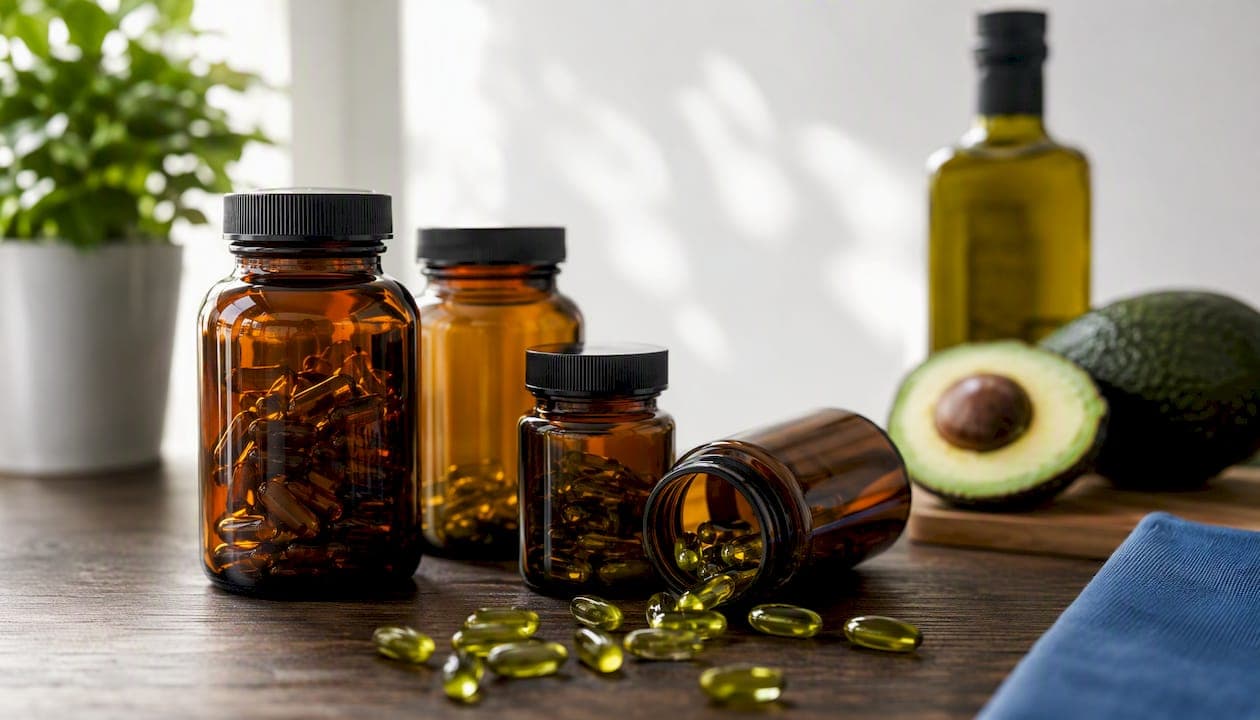
Ubiquinone is the oxidized form of CoQ10 you'll find in most supplements; ubiquinol is the reduced, antioxidant-active form your body actually uses at the cellular level. For most healthy adults under 40, standard CoQ10 (ubiquinone) works well and costs less. Ubiquinol tends to make more sense for people over 40, those on statins, or anyone with absorption concerns because the body's ability to convert ubiquinone to ubiquinol slows with age. That said, the strongest long-term clinical trial data for heart-failure outcomes sits with ubiquinone, not ubiquinol. Before starting either form, especially if you take warfarin, blood pressure medications, or insulin, discuss it with your clinician.
- Ubiquinone (CoQ10): the oxidized supplement form; converted to ubiquinol after absorption
- Ubiquinol: the reduced, ready-to-use form; better absorbed in older adults and those with conversion issues
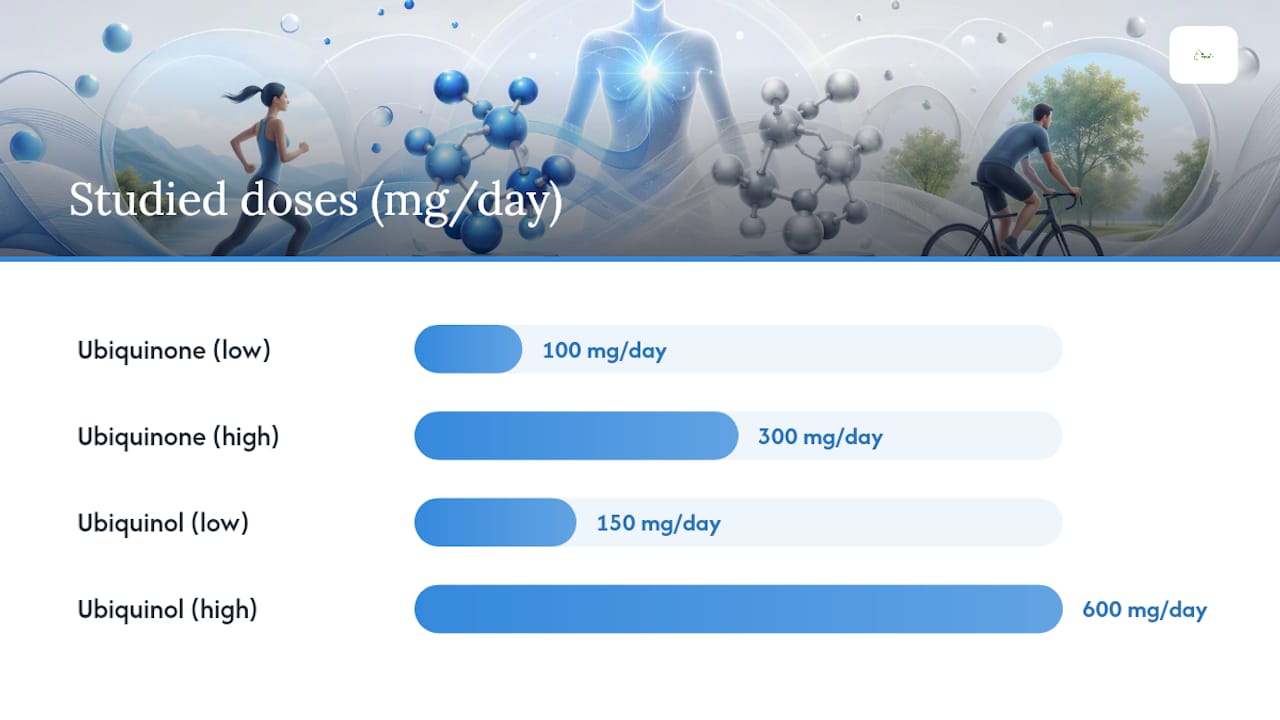
- Heart failure evidence: major trials (Q-SYMBIO, KISEL-10) used ubiquinone at doses typically between 100 and 300 mg per day
- Key caveat: CoQ10 can alter INR in people on warfarin and may affect blood sugar; always disclose to your provider
Key Takeaways
Ubiquinone (CoQ10) has the stronger long-term clinical trial record for heart-failure outcomes, while ubiquinol offers an absorption advantage for older adults and those with conversion issues.
| Point | Details |
|---|---|
| Form differences matter by age | Ubiquinol is better absorbed in adults over 40; ubiquinone works well for most younger, healthy adults. |
| Heart failure evidence favors ubiquinone | Q-SYMBIO and KISEL-10 used ubiquinone at 100–300 mg/day and reported reduced cardiovascular mortality. |
| Drug interactions require monitoring | CoQ10 can alter INR on warfarin and may affect blood sugar; always disclose to your clinician before starting. |
| Effects take weeks to months | Most symptomatic outcomes appear after 8–12 weeks; cardiovascular benefits in trials emerged over 1–2 years. |
| Nutrasmarts comparison tool | Use the side-by-side ingredient comparison at Nutrasmarts to evaluate form, dose, and evidence before buying. |
Table of Contents
- How does CoQ10 ubiquinol work inside your cells?
- How absorption and supplement formulations affect bioavailability
- What does the clinical evidence actually show?
- What doses are used in studies, and how long until you notice anything?
- Side effects, safety, and drug interactions to know before you start
- How to choose a CoQ10 or ubiquinol supplement
- What head-to-head research says, and where the evidence still falls short
- NutraSmarts' take: evidence first, marketing second
- Nutrasmarts helps you compare CoQ10 products with real evidence
- Sources
How does CoQ10 ubiquinol work inside your cells?
CoQ10, formally coenzyme Q10 or ubiquinone, is a fat-soluble, vitamin-like molecule found in every cell membrane in the body. Its primary job is shuttling electrons along the mitochondrial respiratory chain, the process that generates ATP, the energy currency cells run on. Without adequate CoQ10, that chain slows, and cells, especially in the heart and skeletal muscle, feel it first.
The molecule exists in two states: ubiquinone (oxidized) and ubiquinol (reduced). The body cycles between them constantly. When ubiquinone accepts electrons in the respiratory chain, it becomes ubiquinol. Ubiquinol then donates those electrons, neutralizing free radicals, and reverts to ubiquinone. This loop runs continuously, which is why calling one form "active" and the other "inactive" oversimplifies things.
Circulating CoQ10 in healthy humans is predominantly in the ubiquinol form, reflecting the body's ongoing reduction of absorbed ubiquinone. (StatPearls, NCBI)
As Mayo Clinic notes, CoQ10 converts to ubiquinol in the body, and that ubiquinol form carries the antioxidant activity. So when you swallow a ubiquinone capsule, your body handles the conversion. When you swallow ubiquinol, you skip that step. Whether skipping it matters clinically depends on your age, health status, and the formulation you're using.
For a deeper look at the molecular mechanisms, the Nutrasmarts blog covers what CoQ10 does in your cells in accessible detail.
How absorption and supplement formulations affect bioavailability
CoQ10 is highly lipophilic, meaning it dissolves in fat, not water. That single property shapes everything about how you should take it and which product you should buy.
Common formulation types and what they mean
- Oil-based ubiquinone softgels: the most common and least expensive form; absorption is decent when taken with a fatty meal but limited from a dry powder capsule
- Ubiquinol softgels: pre-reduced form in an oil base; generally shows higher peak plasma concentrations than equivalent ubiquinone doses, particularly in older adults
- Solubilized or nanoemulsion forms: use emulsification technology to improve water dispersibility; these tend to produce the highest and most consistent plasma levels across formulations
- Dry powder capsules: lowest bioavailability; avoid unless cost is the only consideration
Absorption follows a slow, multi-peak curve because CoQ10 travels through lymphatic channels before reaching systemic circulation. Peak plasma concentrations can take 6–8 hours after a dose and vary considerably by formulation. PubChem's compound record for CoQ10 confirms the lipophilic chemistry that drives these formulation requirements.
Taking CoQ10 with a meal containing fat, think avocado, olive oil, or a handful of nuts, meaningfully improves absorption regardless of which form you choose. StatPearls confirms that solubilized formulations improve bioavailability and that fatty meals raise peak plasma concentrations. For more on how formulation choices affect what your body actually absorbs, the Nutrasmarts guide on supplement bioavailability is worth reading.
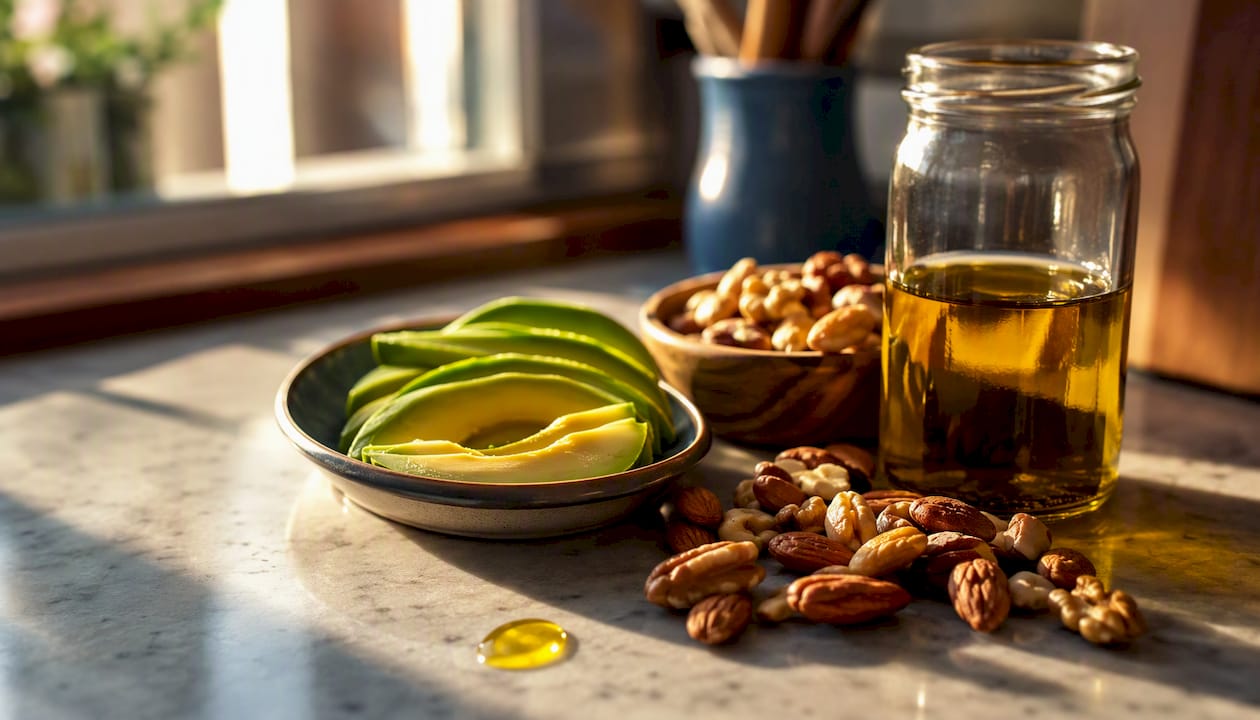
Store CoQ10 away from direct light and heat; the molecule degrades with prolonged exposure to both.
Pro Tip: If you're comparing two products and one is a solubilized softgel while the other is a dry powder capsule, the solubilized form will typically deliver more CoQ10 to your bloodstream even at the same milligram dose. Factor that into your cost-per-mg math.
What does the clinical evidence actually show?
The evidence base for CoQ10 is uneven across conditions. Heart failure has the most rigorous trial data. Other uses, such as migraine prevention and fertility, have plausible mechanisms but smaller or more mixed trial results.
The Q-SYMBIO trial and KISEL-10 are the headline studies for heart failure. Both used ubiquinone, not ubiquinol, and both reported clinically meaningful reductions in cardiovascular events over follow-up periods of two years or longer. A 2024 comparative review published in PMC found that ubiquinone carries the stronger long-term randomized-trial footprint for heart-failure outcomes, while ubiquinol trials are fewer and typically used higher doses without producing the same mortality signal.
The comparative review concluded that CoQ10 (ubiquinone) has more robust long-term cardiovascular outcome data than ubiquinol, which has been studied in fewer trials and at higher doses without equivalent mortality findings. (PMC, 2024)
For statin-associated muscle symptoms, the rationale is sound: statins reduce endogenous CoQ10 synthesis, and supplementation may partly restore levels. But trial results are mixed enough that no major cardiology guideline currently recommends CoQ10 as a standard co-prescription with statins. For migraine and fertility, the evidence is promising but based on small, short trials. Treat those uses as "plausible, worth discussing with your doctor" rather than established.
The NCCIH fact sheet on CoQ10 provides a balanced consumer-facing summary of where evidence is solid and where it remains limited.
What doses are used in studies, and how long until you notice anything?
Doses by condition
- Heart failure: 100–300 mg/day (ubiquinone); Q-SYMBIO used 3×100 mg; KISEL-10 used 200 mg
- Statin-associated myopathy: 100–300 mg/day
- Migraine prevention: 100–300 mg/day
- Fertility (male): 200–300 mg/day
- General antioxidant / energy support: 100–200 mg/day
Ubiquinol studies often used higher milligram amounts, sometimes 300–600 mg/day, partly to achieve plasma levels comparable to lower ubiquinone doses. That matters for cost: if you need 300 mg of ubiquinol to match 100 mg of a well-formulated ubiquinone product, the price premium compounds quickly.
Realistic timeline for effects
- Weeks 1–2: Plasma CoQ10 levels begin rising; no symptomatic changes expected yet
- Weeks 4–6: Measurable increases in circulating CoQ10; some people notice modest energy or exercise-recovery changes
- Weeks 8–12: When most trials begin reporting symptomatic outcomes (migraine frequency, muscle pain scores)
- Months 3–6: When cardiovascular markers and more durable outcomes are typically assessed
- Years 1–2: The timeframe of Q-SYMBIO and KISEL-10; long-term mortality and hospitalization data emerge here
If you've been taking CoQ10 for 12 weeks with no perceptible change and your goal was energy or exercise recovery, that's a reasonable point to reassess with your clinician. For cardiovascular support in heart failure, the evidence suggests you need to think in years, not weeks.
Side effects, safety, and drug interactions to know before you start
CoQ10 has a good overall safety profile in clinical trials, but a few interactions deserve real attention.
Common side effects
WebMD's clinical summary lists gastrointestinal upset as the most frequently reported side effect, including nausea, stomach discomfort, and loose stools. These are generally mild and often resolve when the dose is split across two or three smaller amounts taken with meals.
CoQ10 is a dietary supplement, not an FDA-approved treatment for any disease. Consumers should report unexpected adverse effects through FDA MedWatch. (WebMD)
Drug interactions that require monitoring
Warfarin (and other anticoagulants): This is the most clinically significant interaction. CoQ10 has structural similarities to vitamin K and may reduce warfarin's anticoagulant effect, raising the risk of clotting. If you're on warfarin, get your INR checked within two to four weeks of starting CoQ10 and after any dose change. Mayo Clinic explicitly advises disclosing all medications to your provider before starting CoQ10.
Blood sugar medications: CoQ10 may improve insulin sensitivity in some people, which could lower blood glucose more than expected when combined with insulin or oral hypoglycemics. If you have diabetes, monitor glucose more closely when starting supplementation.
Statins: Statins reduce endogenous CoQ10 synthesis. Supplementing may help with statin-associated muscle symptoms in some patients, but this should be a clinician-guided decision, not a self-managed one.
Antihypertensives: CoQ10 may have a modest blood-pressure-lowering effect. Combined with antihypertensive drugs, this could cause additive lowering.
If you experience any unexpected symptoms after starting CoQ10, report them through FDA MedWatch.
How to choose a CoQ10 or ubiquinol supplement
The supplement aisle is full of CoQ10 products with wildly different quality levels. Here's what to actually check.
Buying checklist
- Active form clearly labeled: the label should state "ubiquinone" or "ubiquinol," not just "CoQ10" without specification
- Dose per serving: look for at least 100 mg per serving for most studied uses; confirm the serving size (one softgel vs. two)
- Oil-based or solubilized carrier: avoid dry powder capsules; look for "in sunflower oil," "in MCT oil," or a solubilized/nanoemulsion designation
- Third-party testing seal: USP, NSF International, or ConsumerLab verification confirms the product contains what the label claims
- Expiration date and storage instructions: CoQ10 degrades; a product without a clear expiration date is a red flag
- Excipients: minimal fillers; avoid products with unnecessary binders or synthetic dyes
Cost-per-mg and when ubiquinol is worth the premium
Calculate cost-per-mg by dividing the product price by total milligrams in the bottle. A 60-count bottle of 200 mg ubiquinone softgels at $30 gives you 12,000 mg for $0.0025/mg. Ubiquinol typically runs 2–3 times higher per milligram.
University of Miami Health clinicians note that CoQ10 supplements can cost around $40 per month and should be treated as targeted additions to a healthy diet, not replacements for one. That framing matters: if your diet is poor, no CoQ10 supplement compensates for it.
Ubiquinol is worth the price premium when you're over 40, have documented absorption issues, or have a condition where higher plasma levels are the clinical goal. For a younger, healthy adult using CoQ10 for general antioxidant support, a well-formulated ubiquinone softgel taken with a fatty meal is a reasonable and more economical choice.
Multi-ingredient products
Watch for products that combine CoQ10 with 10 other ingredients at low doses each. A product listing 50 mg CoQ10 alongside 15 other compounds is unlikely to deliver a clinically meaningful CoQ10 dose. Single-ingredient or focused-formula products are easier to evaluate and dose accurately.
The Nutrasmarts side-by-side comparison tool lets you stack ubiquinol and ubiquinone attributes directly, which is useful when you're deciding between two specific products.
What head-to-head research says, and where the evidence still falls short
The honest summary of the ubiquinone vs. ubiquinol research comparison: ubiquinone has a larger, longer, and more consistent clinical trial record. Ubiquinol has better absorption data in certain populations, but that absorption advantage has not yet translated into equivalent or superior long-term outcome data.
| Metric | Ubiquinone (CoQ10) | Ubiquinol |
|---|---|---|
| Number of major RCTs | Many (including Q-SYMBIO, KISEL-10, Morisco et al.) | Fewer |
| Typical studied dose | 100–300 mg/day | 150–600 mg/day |
| Longest follow-up | Up to 2 years (Q-SYMBIO) | Generally shorter |
| Cardiovascular mortality data | Present (Q-SYMBIO, KISEL-10) | Not established |
| Absorption advantage | Moderate (formulation-dependent) | Higher in older adults and those with conversion issues |
The PMC comparative review identifies the core problem: ubiquinol trials often used higher milligram doses but didn't control for equivalent plasma exposure. That makes direct comparisons unreliable. You can't conclude ubiquinol is "better" or "worse" when the studies weren't designed to test equal plasma levels.
What would actually change clinical practice is a large, long-term RCT that randomizes patients to doses calibrated for equivalent plasma CoQ10 exposure, not equivalent milligrams, and tracks hard cardiovascular endpoints over two or more years. That trial hasn't been done yet.
Other evidence gaps worth knowing: most trials enrolled adults with existing cardiovascular disease or deficiency states. Evidence in healthy adults is thinner. Fertility and migraine data come largely from small, short trials with heterogeneous populations. And formulation differences across studies make cross-trial comparisons difficult even within the ubiquinone literature.
NutraSmarts' take: evidence first, marketing second
The supplement industry has done a thorough job marketing ubiquinol as the superior, "active" form. The biochemistry supports the marketing pitch at a surface level: ubiquinol is the reduced form, it has antioxidant activity, and older adults do convert ubiquinone less efficiently. All of that is true.
What the marketing glosses over is that the clinical trial record, the part that actually tells you whether taking a supplement changes health outcomes, belongs almost entirely to ubiquinone. Q-SYMBIO and KISEL-10 are the trials that moved the needle on CoQ10 for heart failure. Both used ubiquinone. Neither was designed to test ubiquinol. Calling ubiquinol the "better" form because of absorption data, without equivalent outcome data, is a category error.
That doesn't mean ubiquinol is useless. For people over 40 or those with documented conversion issues, the absorption advantage is real and may matter clinically. But the honest framing is: ubiquinol has a plausible mechanism advantage in certain populations, while ubiquinone has the stronger long-term evidence base. Choose based on your situation, not the label copy.
The practical next step is straightforward: identify your goal (cardiovascular support, statin-associated symptoms, migraine, or general antioxidant support), match it to the evidence tier in the table above, pick the form and dose that fits, and run it by your clinician before starting, especially if you're on anticoagulants or blood sugar medications.
Nutrasmarts helps you compare CoQ10 products with real evidence
Sorting through CoQ10 and ubiquinol products is genuinely difficult when labels vary in what they disclose and marketing language obscures the actual form and dose. Nutrasmarts was built specifically for this problem.
The ingredient database covers both ubiquinone and ubiquinol with clinical trial citations, dose ranges, and interaction flags drawn from peer-reviewed sources. The side-by-side comparison tool lets you stack two products or ingredients directly, so you can see form, dose, and evidence level in one view rather than toggling between tabs. For readers focused on energy and mitochondrial support, the best energy supplements list curates reviewed options with evidence ratings.
Nutrasmarts may include affiliate links to supplement products; those links help support the free tools and database. Start with the comparison tool to evaluate your current or prospective CoQ10 product against the clinical evidence before you buy.
Sources
- Coenzyme Q10 - StatPearls - NCBI Bookshelf
- Comparison of Coenzyme Q10 (Ubiquinone) and Reduced Coenzyme Q10 (Ubiquinol) as Supplement to Prevent Cardiovascular Disease and Reduce Cardiovascular Mortality - PMC
- Coenzyme Q10 (CoQ10, Ubiquinol) - Uses, Side Effects ... - Mayo Clinic
- Is CoQ10 worth the money? — UMiami Health News
This article is general information, not a substitute for advice from a qualified doctor. Consult a qualified healthcare professional about your own circumstances before acting on anything here.