
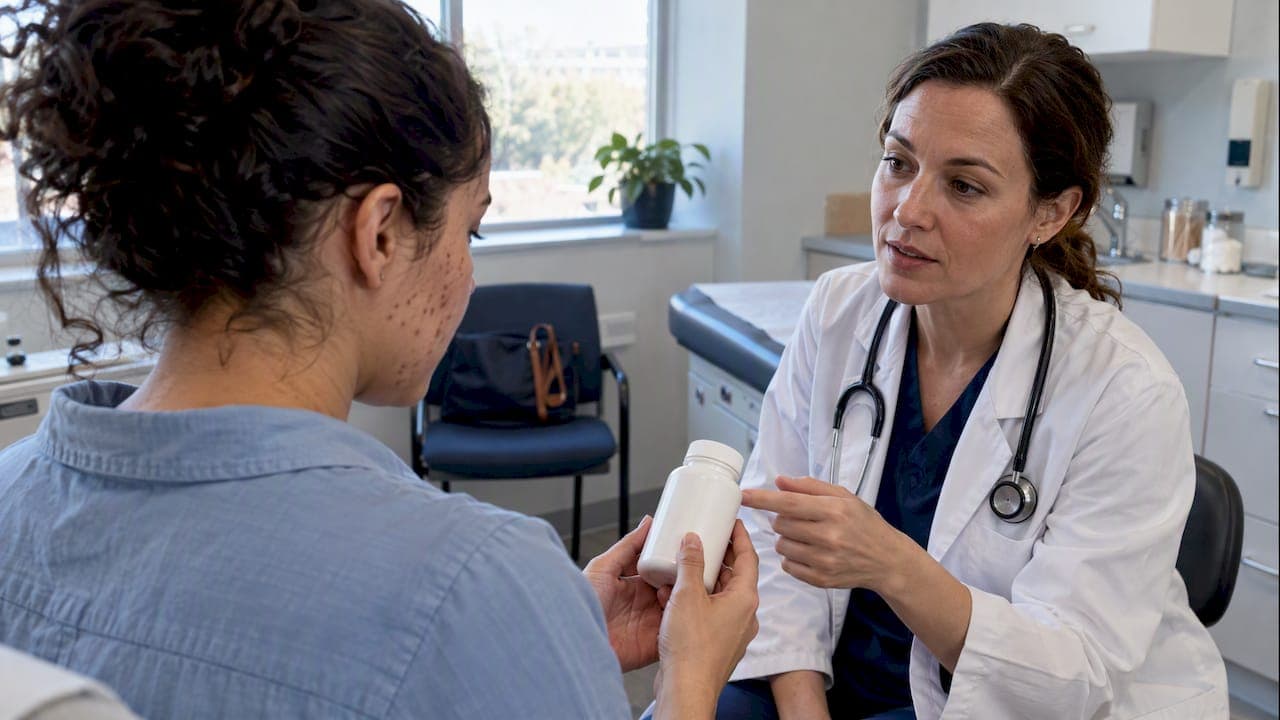
Some supplements show modest promise for acne, but none is proven to treat it. Vitamin D, omega-3 fatty acids, probiotics and zinc have the most research behind them, and all of it is small, mixed or both. The American Academy of Dermatology (AAD) still builds acne care around topical and prescription treatments. If you want to try a supplement, treat it as a possible add-on. Pick one ingredient at a time, keep doses sensible, and keep your skin treatment going.
TL;DR
- The 2024 AAD acne guidelines list 18 evidence-based recommendations, and dietary supplements are not a core strategy in any of them.
- A 2023 systematic review of 42 studies found potential for vitamin D, probiotics and omega-3s, but the studies were small and varied.
- Zinc is the most studied option and also the most contested. Doses used in trials can exceed the recommended intake and cause problems over time.
- Vitamin A megadoses are the riskiest idea on the internet. Exceeding the upper limit can damage the liver and cause birth defects.
- Look for third-party testing, and see a dermatologist if acne is cystic, scarring or hormonal.
Table of Contents
- What dermatologists say about supplements and acne
- The best-studied supplements, ranked by evidence
- What about hormonal acne?
- Food first: glycemic load and dairy
- How to choose a supplement without getting burned
- Our perspective
- Compare options on NutraSmarts
- When to see a dermatologist
- FAQ
- Sources
What dermatologists say about supplements and acne
The AAD's updated acne guideline contains 18 evidence-based recommendations and 5 good practice statements. The strong recommendations favor topical agents such as benzoyl peroxide and retinoids. For hormonal causes they favor oral options such as combined oral contraceptives or spironolactone. Supplements are not among the core strategies, because the evidence is currently insufficient to recommend vitamins or plant-based supplements for acne.
That does not mean supplements do nothing. It means nobody has shown, with trials large and consistent enough, that they work well enough to replace standard care. The AAD's consumer advice says otherwise healthy adults should aim to meet nutrient needs through food first.
When a page promises that a capsule "cures acne," be skeptical. U.S. law bars supplement makers from disease claims such as that unless the product is an approved drug. Wording like "supports clear skin" is allowed as a structure/function claim, and it must carry the FDA disclaimer that the product is not intended to treat any disease. That disclaimer is a useful signal. A claim that is legal is not a claim that is proven.

The best-studied supplements, ranked by evidence
The largest recent look at this question is a systematic review in JAMA Dermatology, also available in full on PubMed Central. It covered 42 studies and 3,346 participants. Its message: some nutraceuticals show potential, but the evidence comes from small, heterogeneous studies, and many products are not clinical-grade treatments. Adverse effects were rare for most interventions. The exception was gastrointestinal trouble with high-dose zinc.
Here is how the main candidates stack up on what we can support.
| Ingredient | What the research suggests | Main caveat |
|---|---|---|
| Vitamin D | One double-blind trial of 1,000 IU/day cut inflammatory lesions by 34.6%, versus 5.8% on placebo | No significant drop in total lesion count in that trial |
| Probiotics | Some strains showed benefit in tiny trials | No consensus on strain, dose or duration |
| Omega-3 fatty acids | Flagged as showing potential in the same review | Evidence is small and mixed |
| Zinc | Most-studied nutraceutical for acne | Half of studies reviewed failed to show efficacy |
| Vitamin A | Often touted | Real toxicity risk at high doses |
Vitamin D
Vitamin D is the supplement with the cleanest-looking headline number. In the trial cited by the 2023 review, 1,000 IU a day reduced inflammatory lesions by 34.6%, compared with 5.8% for placebo. Total lesion counts, however, did not drop significantly. In plain terms, red, swollen pimples may have improved while the overall count did not budge.

One trial is not a pattern. If you already know you run low on vitamin D, correcting that is reasonable for general health, and acne may be a side benefit. Ask your clinician to check your level rather than guessing. Our vitamin D3 ingredient profile covers a vegan D3 form and typical dosage ranges.
Probiotics and the gut-skin connection
The idea is that the gut microbiome influences inflammation that shows up on skin. It is plausible, and the research is thin. The review notes that strains such as Lactobacillus rhamnosus SP1 and Lactobacillus plantarum CJLP55 have done well in small trials. It also notes that nobody can say which strain, dose or length of use is best. The authors warn about publication bias, since there is commercial pressure to market proprietary blends.
The practical lesson: a generic "probiotic for skin" is a guess. If you try one, choose a product that names the strain and the colony-forming units on the label, and give it a defined trial period. Our guide to probiotic evidence by strain and condition explains which strains have clinical backing for which conditions.
Omega-3 fatty acids
Omega-3s fit the inflammation story, and the same review lists them alongside vitamin D and probiotics as showing potential. Beyond that, we would not oversell them. The studies are small and varied, so there is no reliable dose to recommend for acne specifically. Eating fatty fish is a low-risk way to get omega-3s while you wait for better data.
Zinc
Zinc is where hype and caution collide. Clinicians describe it as the most-studied nutraceutical for acne and also one of the most controversial for evidence quality. Half the studies in major reviews failed to show efficacy. The doses used in trials often far exceed the Recommended Dietary Allowance. Over time, that can lead to copper deficiency and weakened immune function, which is a poor risk-benefit trade for many people with acne. High-dose zinc also caused the stomach upset noted in the review.
If you still want to try zinc, the form matters less than the dose and your total daily intake. We list each form in our database: zinc overview, zinc gluconate, zinc sulfate, zinc acetate, zinc citrate and a branded zinc mono-L-methionine. Check any multivitamin you take too, so zinc is not stacking from several products.
Vitamin A: skip the megadose
Vitamin A is often listed among acne supplements because prescription retinoids are vitamin A relatives. The supplement is not the same thing. Practitioners point out that exceeding the Tolerable Upper Intake Level of 3,000 mcg a day for adults carries serious risks, including liver damage and birth defects, far worse than acne. The NIH vitamin A fact sheet notes that many multivitamins already contain it, often as retinyl acetate, retinyl palmitate or beta-carotene. If you are pregnant or could become pregnant, talk to your doctor before taking any vitamin A supplement.
What about hormonal acne?
Many forum posts swear by combinations like vitamin D with K2, milk thistle, chasteberry or saw palmetto for hormonal breakouts. These are mostly personal accounts, not trial evidence, and none of them appears among the AAD's recommended treatments. For hormonal acne, the guideline points to oral therapies such as combined oral contraceptives or spironolactone, which require a prescriber.
If your acne flares around your cycle, comes with irregular periods, or shows up along the jawline in adulthood, see a dermatologist or your primary care clinician. Those patterns can point to conditions that a supplement will not fix, and delay can mean scarring.
Food first: glycemic load and dairy
Diet has better support than most capsules. A 2022 systematic review of 34 articles found that 77% of observational studies supported a link between high glycemic load and acne severity. The proposed route is higher insulin and IGF-1, which can stimulate oil production. These are observational findings, so they show association rather than proof, but they are consistent.
Dairy is more mixed. The same research suggests the association is stronger in Western populations, such as the U.S. and Australia, than in non-Western groups. So diet effects look population-dependent, and your own pattern may differ.
A sensible experiment is to swap refined carbohydrates and sugary drinks for whole grains, legumes, vegetables and fruit for 8 to 12 weeks, and note your skin. It costs nothing, and it is safer than adding high doses of anything.
How to choose a supplement without getting burned
If you decide to try one anyway, these steps lower the risk.
- Talk to a clinician first if you take medication, are pregnant or nursing, or have a liver or kidney condition.
- Change one thing at a time. Adding three supplements at once means you cannot tell what helped or hurt.
- Check the dose against the upper limit. Add up everything you take, including a multivitamin and fortified foods.
- Look for third-party verification. The AAD says to look for seals such as USP, NSF or ConsumerLab, because the FDA does not approve supplements for safety or efficacy before they reach the market. Labels may not match what is in the bottle.
- Set a review date. Acne treatments typically need weeks to judge. Take photos in the same light at the start and every four weeks, and stop if nothing changes by about three months.
- Be wary of disease claims. "Cures acne" or "treats cystic acne" on a label is a red flag, since such claims make a supplement misbranded unless it is an approved drug.
Stop any supplement and call your doctor if you get persistent stomach pain, nausea or other new symptoms.
Our perspective
We built NutraSmarts because acne is a good example of how supplement information goes wrong. Search results mix real trials, forum anecdotes and product pages written to sell. We try to separate them. Every ingredient profile in our database links to the underlying studies, and we rate the strength of the evidence rather than only listing benefits.
For acne, our honest rating is modest. Vitamin D, probiotics and omega-3s are worth watching. Zinc deserves caution because the dose that might help is close to the dose that causes trouble. Vitamin A should not be taken in large amounts. And none of them replaces benzoyl peroxide, a retinoid or a prescription plan from a dermatologist.
We would rather tell you that a supplement has weak evidence than send you away with false confidence. A reader who knows the limits makes better choices, and that is the point of the site.
— NutraSmarts
Compare options on NutraSmarts
We cover acne in more depth on our best supplements for acne page, which reviews 17 options with their evidence ratings and clinical dosage benchmarks. If your skin issue is dry, itchy or inflamed rather than breakout-prone, our eczema supplement page may fit better. You can also browse supplements by symptom, or check our deficiency guide to see whether your symptoms point to a low nutrient level worth testing. No sign-up is needed for any of it.
When to see a dermatologist
Book an appointment sooner rather than later if you have any of the following:
- Deep, painful nodules or cysts that leave marks
- Acne that has not improved after about two to three months of over-the-counter treatment
- Breakouts that seem tied to your cycle, new medication or other hormonal changes
- Dark marks or scars that are forming
- Significant distress about your skin
Effective prescription options exist, and a clinician can also tell you whether any supplement is safe alongside them.
FAQ
What supplements can help with hormonal acne?
No supplement has strong evidence for hormonal acne. Chasteberry, saw palmetto and milk thistle are popular, but the support is mostly anecdotal. The AAD guideline points to prescription options such as combined oral contraceptives or spironolactone, so a clinician visit is the best next step.
What is the link between gut health and acne?
Researchers propose a gut-skin axis in which gut bacteria influence inflammation. Some probiotic strains helped in small trials, but there is no consensus on strain, dose or duration. Diet also matters: high-glycemic diets are consistently associated with worse acne.
Is zinc good for acne?
It is the most studied supplement for acne, but results are inconsistent, and half the studies in major reviews showed no benefit. Doses used in trials can exceed the RDA and, over time, may cause copper deficiency. Discuss it with a clinician before taking more than a standard multivitamin dose.
What clears up acne naturally?
The best-supported lifestyle step is lowering your dietary glycemic load. Beyond that, dermatologists favor proven topical treatments such as benzoyl peroxide and retinoids over supplements or home remedies. Gentle skin care and patience help, since treatments take weeks to show results.
Sources
- AAD: updated guidelines for the management of acne
- Safety and Effectiveness of Oral Nutraceuticals for Treating Acne: A Systematic Review (PMC)
- Safety and Effectiveness of Oral Nutraceuticals for Treating Acne (JAMA Dermatology)
- Diet, glycemic load and acne: 2022 systematic review (PMC)
- AAD: skin and supplements
- AAD: should I take vitamins or supplements for my skin?
- NIH Office of Dietary Supplements: Vitamin A and carotenoids
- FDA: Small entity compliance guide on structure/function claims