

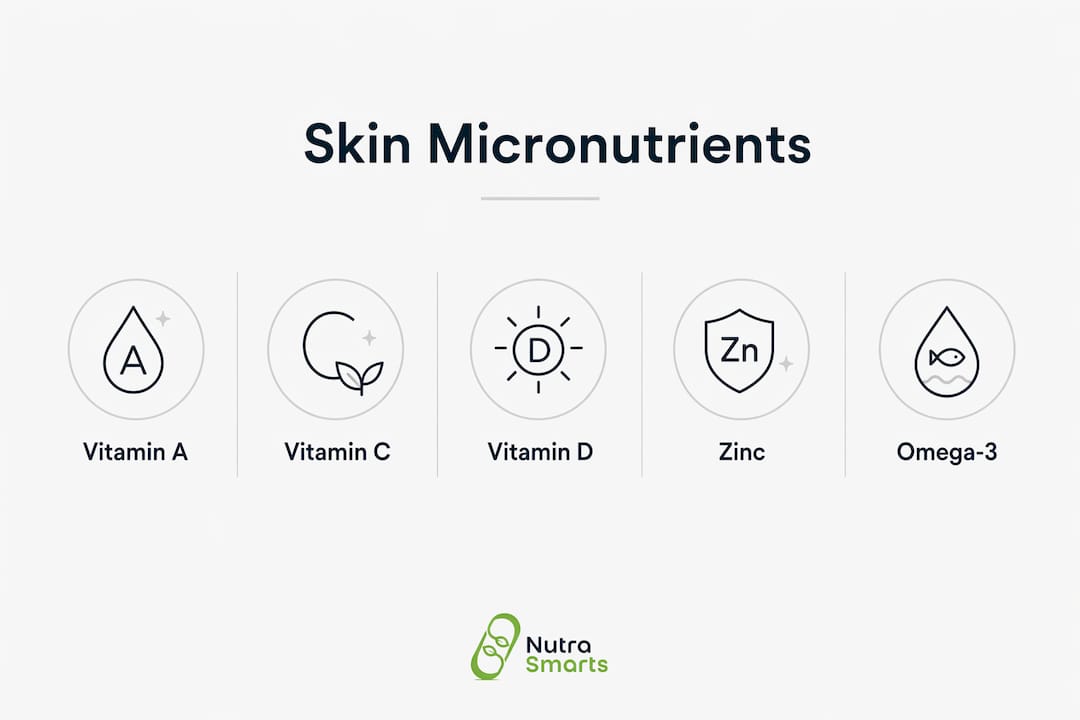
The micronutrients that most directly affect your skin are Vitamin C, Vitamin A, Vitamin D, Vitamin E, the B vitamins (biotin, niacin, riboflavin), zinc, selenium, copper, iron, omega-3 fatty acids (EPA/DHA), carotenoids (beta-carotene, lutein, lycopene), and silicon. The single best starting action is to build a diet rich in these nutrients before reaching for supplements. Over 2 billion people globally experience deficiencies in essential vitamins and minerals, yet in the U.S., outright clinical deficiency is rare. What's far more common is insufficiency — intake that falls below optimal — and that gap can impact skin appearance, wound healing, and aging. Authoritative intake standards from the NIH Office of Dietary Supplements (NIH ODS) and the Institute of Medicine set Recommended Dietary Allowances (RDAs), Adequate Intakes (AIs), and Tolerable Upper Intake Levels (ULs) for most of these nutrients, giving you a concrete benchmark to work from.
Three things to do right now:
- Prioritize food first. Colorful vegetables, oily fish, nuts, seeds, and lean proteins cover most of the nutrients your skin needs.
- Test before you supplement. Serum 25(OH)D and ferritin are the most clinically useful starting labs for skin-relevant deficiencies in U.S. adults; zinc testing may be considered if dietary patterns or symptoms suggest a gap.
- Consult a clinician if you have a diagnosed skin condition, are pregnant, or are considering high-dose fat-soluble vitamins (A, D, E).
Table of Contents
- Why your skin depends on micronutrients at every layer
- How micronutrients change skin biology: the core mechanisms
- Nutrient-by-nutrient review: roles, evidence, and intake guidance
- What clinical trials actually show about oral supplements
- Topical vs. oral: which route is right for your goal?
- Toxicity, upper limits, and interactions you need to know
- How to recognize and test for deficiencies affecting your skin
- Practical steps to improve your skin's nutrient status safely
- The bottom line on skin nutrition
- Key Takeaways
- The case for evidence-first skepticism in skin supplementation
- Research your skin supplement choices with Nutrasmarts
- Useful sources for further reading
Why your skin depends on micronutrients at every layer
Skin is not a single sheet of tissue. It is a three-layer system, and each layer has distinct nutritional dependencies.
The epidermis is the outermost layer. Its primary cell, the keratinocyte, requires Vitamin A to differentiate properly and Vitamin C to regulate ceramide production and maintain moisture. The stratum corneum — the dead-cell surface that acts as a physical barrier — depends on essential fatty acids and B vitamins to keep its lipid matrix intact. When those lipids are compromised, water escapes and irritants enter.
The dermis sits beneath and is where most structural work happens. Collagen and elastin fibers are manufactured here by fibroblasts, and that process is cofactor-dependent: Vitamin C activates the enzymes (prolyl and lysyl hydroxylases) that stabilize collagen's triple-helix structure; copper drives the enzyme lysyl oxidase, which cross-links collagen and elastin into tensile fibers; iron is a required cofactor in the same hydroxylase reactions. Without adequate levels of any of these, collagen output drops and existing fibers degrade faster.

The hypodermis (subcutaneous layer) and the skin's vascular and immune compartments add another dimension. Vitamin D, synthesized in the skin itself when UVB hits keratinocytes, modulates local immune responses and stimulates production of cathelicidin, an antimicrobial peptide. Selenium-dependent enzymes (glutathione peroxidase, thioredoxin reductase) sit in the plasma membranes of epidermal keratinocytes and neutralize UV-generated reactive oxygen species before they can damage DNA.
One structural feature worth understanding: the stratum corneum is selectively permeable. Lipid-soluble molecules (retinol, Vitamin E, some carotenoids) can penetrate it topically; water-soluble ones (Vitamin C, B vitamins) do so poorly unless formulated with penetration enhancers. That permeability difference is exactly why the route of delivery — topical versus oral — matters so much for specific nutrients.
How micronutrients change skin biology: the core mechanisms
Micronutrients act on skin through four overlapping roles: cofactors in enzymatic reactions, antioxidants that neutralize free radicals, structural precursors for proteins and lipids, and immunomodulators that tune local inflammation and antimicrobial defense.
Here is how each mechanism maps to specific nutrients:
- Collagen synthesis and cross-linking. Vitamin C is a non-negotiable cofactor for prolyl and lysyl hydroxylases; without it, collagen cannot form a stable triple helix, producing the fragile skin and poor wound healing of scurvy. Copper activates lysyl oxidase to cross-link collagen and elastin. Iron participates in the same hydroxylase reactions as Vitamin C.
- Antioxidant defense and lipid peroxidation prevention. UV radiation generates reactive oxygen species that oxidize membrane lipids and damage DNA. Vitamin E (alpha-tocopherol) is the primary lipid-soluble membrane antioxidant; it is regenerated by Vitamin C, creating a synergistic pair. Selenium drives glutathione peroxidase activity. Carotenoids (beta-carotene, lycopene, lutein) quench singlet oxygen in the epidermis.
- Keratinocyte differentiation and barrier lipids. Vitamin A (retinoids) regulates gene expression in keratinocytes, controlling how they mature and how the barrier is assembled. Essential fatty acids (omega-3 EPA/DHA, linoleic acid) are structural components of the lipid bilayers between corneocytes. B vitamins, particularly riboflavin and niacin, support the energy metabolism that drives rapid epidermal cell turnover.
- Immune modulation and antimicrobial peptides. Vitamins A, B3, C, D, and E modulate skin immunity, the skin microbiome, and inflammatory disease processes. Vitamin D's role is especially concrete: it stimulates cathelicidin production in keratinocytes, a peptide that kills bacteria and viruses on the skin surface. Niacinamide (Vitamin B3) suppresses inflammatory cytokines and has documented effects on acne and hyperpigmentation.
- Photoprotection and DNA repair support. Carotenoids accumulate in the epidermis and absorb UV photons before they reach DNA. Selenium and Vitamin E limit the downstream lipid peroxidation cascade. Zinc oxide, the topical mineral form, physically absorbs UV radiation and also supports wound healing through its role as a cofactor in over 300 metalloenzymes.
A note on evidence strength: Most mechanistic data above comes from cell culture and animal studies. Human RCT evidence is strongest for Vitamin C (collagen synthesis, wound healing), zinc (acne), and Vitamin D (immune modulation). For carotenoids and silicon, evidence is primarily observational or from small trials.
Nutrient-by-nutrient review: roles, evidence, and intake guidance
The table below covers every nutrient the clinical literature consistently links to skin outcomes. Evidence strength is rated as: RCT (randomized controlled trial data in humans), Obs (observational/epidemiological), or Mech (mechanistic/cell/animal data).
| Nutrient | Primary skin role | Evidence strength | Key food sources | RDA/AI (adults) or typical supplemental range | Deficiency signs on skin |
|---|---|---|---|---|---|
| Vitamin C | Collagen synthesis, antioxidant, UV protection, wound healing | RCT, Obs | Citrus, bell peppers, kiwi, broccoli | RDA: 75 mg/day; UL: 2,000 mg/day | Scurvy: fragile skin, perifollicular hemorrhage, poor wound healing |
| Vitamin A | Keratinocyte differentiation, anti-acne, anti-psoriasis | RCT (topical retinoids), Mech (oral) | Liver, dairy, eggs; beta-carotene in sweet potato, carrots | RDA: 700 mcg RAE/day; UL: 3,000 mcg RAE/day (preformed) | Hyperkeratosis, dry/rough skin, follicular plugging |
| Vitamin D | Innate immunity, cathelicidin, wound healing | RCT (AD, psoriasis), Obs | Fatty fish, fortified milk, egg yolk; sunlight synthesis | RDA: 600 IU/day; UL: 4,000 IU/day | Increased infection susceptibility, impaired wound healing |
| Vitamin E | Lipid antioxidant, anti-inflammatory, photoprotection | RCT (topical), Obs | Sunflower seeds, almonds, wheat germ oil | AI: 15 mg/day; UL: 1,000 mg/day | Skin ulcerations (animal data); rare in humans |
| Biotin (B7) | Fatty acid synthesis, barrier lipids | Mech, Obs | Eggs, liver, nuts, sweet potato | AI: 30 mcg/day; no UL established | Seborrheic dermatitis-like rash, hair loss |
| Niacin/Niacinamide (B3) | Anti-inflammatory, ceramide synthesis, acne, hyperpigmentation | RCT (topical), Obs | Chicken, tuna, peanuts, fortified grains | RDA: 14 mg NE/day; UL: — | Pellagra: photosensitive dermatitis, "necklace" rash |
| Riboflavin (B2) | Energy metabolism for cell turnover, antioxidant | Mech | Dairy, lean meats, leafy greens | RDA: 1.1 mg/day; no UL established | Seborrheic dermatitis, angular cheilitis |
| Zinc | Metalloenzyme cofactor, wound healing, anti-acne, UV protection | RCT (acne), Obs | Oysters, red meat, pumpkin seeds, legumes | RDA: 8 mg/day; UL: 40 mg/day | Acrodermatitis enteropathica, dermatitis, poor wound healing |
| Selenium | Glutathione peroxidase, UV protection, psoriasis | RCT (psoriasis), Obs | Brazil nuts, seafood, whole grains | RDA: —; UL: 400 mcg/day | Increased skin cancer risk, epidermolysis bullosa marker |
| Copper | Lysyl oxidase (collagen cross-linking), melanin synthesis, antioxidant | Mech, Obs | Liver, shellfish, nuts, seeds | RDA: 900 mcg/day; UL: — | Steely-hair syndrome, depigmentation, impaired wound healing |
| Iron | Collagen hydroxylase cofactor, oxygen delivery to skin | Obs, Mech | Red meat, lentils, spinach, fortified cereals | RDA: 8 mg/day; UL: — | Pallor, hair loss, brittle nails, slow wound healing |
| Omega-3 EPA/DHA | Barrier lipids, anti-inflammatory, skin dryness | RCT (AD), Obs | Salmon, mackerel, sardines, flaxseed (ALA) | AI: 1.1 g/day ALA; no RDA for EPA/DHA; typical supplement range: varies | Dry, scaly skin; increased inflammatory skin conditions |
| Carotenoids (beta-carotene, lutein, lycopene) | UV photoprotection, antioxidant, skin tone | Obs, Mech | Tomatoes (lycopene), kale/spinach (lutein), carrots/sweet potato (beta-carotene) | No RDA; dietary intake from varied vegetables; beta-carotene UL: 20 mg/day (smokers: avoid high-dose supplements) | Pallor, increased photodamage susceptibility |
| Silicon | Collagen secretion by fibroblasts, glycosaminoglycan production | Small RCTs, Obs | Whole grains, green beans, bananas, mineral water | No established RDA; studies show effects at 10 mg/day orthosilicic acid | Reduced skin elasticity, brittle hair and nails |
A few nuances the table cannot capture:
Vitamin A exists in two forms with different risk profiles. Preformed retinol (from animal foods and supplements) accumulates in the liver and carries a real toxicity risk above the UL. Provitamin A carotenoids (beta-carotene from plants) are converted to retinol only as needed, making them far safer at high dietary intakes. Topical retinoids are a separate category entirely — they work at the receptor level in keratinocytes and fibroblasts and are among the most evidence-backed topical interventions in dermatology.
Vitamin C in skin relies on sodium-dependent Vitamin C transporters (SVCT1 and SVCT2) to concentrate ascorbate in keratinocytes and fibroblasts. Skin Vitamin C levels are depleted by UV exposure and smoking, two of the most common reasons people in the U.S. run low even on an otherwise adequate diet. For a deeper look at why chronic low Vitamin C is more common than most people expect, the causes of chronic low Vitamin C are worth reviewing.
Vitamin D is unique: the skin synthesizes it when UVB hits 7-dehydrocholesterol in keratinocytes, converting it to previtamin D3. But this synthesis is blocked by sunscreen, limited by skin pigmentation, and nearly absent at northern latitudes in winter — which is why serum 25(OH)D testing is the most commonly flagged micronutrient lab in U.S. clinical practice.
Pro Tip: If you are unsure where to start, prioritize testing serum 25(OH)D and ferritin first — Vitamin D insufficiency and iron-deficiency anemia are the two most prevalent micronutrient gaps in U.S. adults and both have clear, measurable skin effects. Add a zinc or Vitamin C assessment if your diet is low in animal protein or fresh produce.
What clinical trials actually show about oral supplements
The honest one-line verdict: targeted oral supplements can produce measurable skin improvements in people who are deficient or at elevated risk, but the evidence for cosmetic benefits in well-nourished adults is weak for most nutrients.
Here is how the evidence breaks down by level:
- RCT-level evidence (strongest): Zinc supplementation reduces acne severity, though effect sizes are modest compared to topical or antibiotic treatments. Vitamin D supplementation in people with atopic dermatitis (AD) who are deficient shows reduced disease severity in several trials. Oral Vitamin C accelerates wound healing in surgical and burn patients with low baseline levels. Omega-3 supplementation (EPA/DHA) reduces inflammatory markers in AD and improves skin hydration in dry-skin studies.
- Observational evidence (moderate): Higher dietary carotenoid intake correlates with better skin tone and reduced photodamage. Higher linoleic acid intake associates with lower skin dryness. Selenium adequacy correlates inversely with basal cell and squamous cell carcinoma risk.
- Mechanistic evidence only (weakest for clinical claims): Silicon's collagen-stimulating effects in fibroblast cultures are well-documented; human trial data is limited to small studies. Copper peptides show tissue-regeneration effects in wound-healing models, with limited large-scale RCT data for oral supplementation.
Practical interpretation: Most positive RCTs enrolled people with documented deficiency or a specific skin condition. Effect sizes in healthy, well-nourished adults are typically small. Trial durations are often short (8–16 weeks), which may not capture the full timeline for collagen remodeling (months to years). Many trials also fail to control for topical product use, making it hard to isolate the oral supplement's contribution. The NIH ODS micronutrient guidance consistently emphasizes that supplementation is most justified when deficiency is demonstrated or risk is high — not as a routine cosmetic intervention.
For readers researching specific conditions, Nutrasmarts has reviewed skin health supplements and eczema supplements with evidence ratings for each ingredient.
Topical vs. oral: which route is right for your goal?
The short answer: topical for targeted epidermal effects and higher local concentrations; oral for systemic deficiencies, photoprotection from within, and complex cofactor needs.

Topical application of Vitamin C, Vitamin E, and retinol can achieve skin concentrations comparable to oral ingestion for epidermal targets, and it bypasses the digestive and transport limitations that reduce bioavailability of some nutrients. A 15% topical Vitamin C combined with 1% Vitamin E shows a synergistic protective effect against UV-induced erythema that neither achieves alone. Topical retinoids (tretinoin, retinaldehyde) are the gold standard for photoaging because they act directly on retinoid receptors in keratinocytes and fibroblasts at concentrations that oral Vitamin A cannot safely replicate systemically.
Oral delivery, however, is the only route that addresses a true systemic deficiency. If your serum ferritin is low, no topical iron product will restore the oxygen delivery your skin cells need for collagen synthesis. If your 25(OH)D is below 20 ng/mL, topical Vitamin D creams will not normalize immune modulation across the whole body. Oral omega-3s work through incorporation into cell membrane phospholipids throughout the body, an effect that cannot be replicated topically.
The most effective approach for most people is a combination. Oral nutrition (diet-first, supplements when indicated) addresses systemic status and provides the cofactors that work throughout the dermis and beyond. Topical products deliver higher local concentrations to the epidermis, where penetration of oral nutrients is limited by the stratum corneum. Think of it as inside-out plus outside-in: the two routes are complementary, not competing.
Toxicity, upper limits, and interactions you need to know
More is not better with micronutrients. The Goldilocks principle applies directly: too little causes deficiency pathology; too much causes toxicity or competitive absorption problems that can harm the very outcomes you are trying to improve.
Key toxicities by nutrient:
- Vitamin A (preformed retinol): Hypervitaminosis A causes hair loss, brittle nails, skin desquamation, headache, and liver damage. The UL is 3,000 mcg RAE/day for adults. Pregnant women face teratogenicity risk above the RDA.
- Vitamin E (high-dose alpha-tocopherol): Above 1,000 mg/day, Vitamin E acts as an anticoagulant and increases bleeding risk, particularly in people on warfarin or aspirin.
- Zinc: Chronic intake above 40 mg/day impairs copper absorption by inducing metallothionein in intestinal cells, which preferentially binds copper and prevents its uptake. The result can be copper deficiency with its own skin consequences (impaired collagen cross-linking, depigmentation).
- Iron: Iron overload (hemochromatosis or excess supplementation) generates hydroxyl radicals via the Fenton reaction, increasing oxidative stress — the opposite of what you want for skin.
- Selenium: Above 400 mcg/day, selenium causes selenosis: hair loss, nail brittleness, garlic breath, and neurological symptoms. Brazil nuts are so selenium-dense that eating several daily can push intake toward this threshold.
- Beta-carotene (high-dose supplements): In smokers, high-dose beta-carotene supplements (20–30 mg/day) increased lung cancer risk in two major trials (ATBC and CARET). Dietary carotenoids from food carry no such risk.
Critical interactions:
Zinc and copper compete for intestinal absorption via the same transporter. Supplementing zinc at doses above 25–30 mg/day without added copper can deplete copper status over weeks to months. Vitamin C significantly increases non-heme iron absorption — useful for people with iron deficiency, but a concern for those with hemochromatosis. High-dose Vitamin E and Vitamin K interact with anticoagulant medications; stop fat-soluble vitamin supplements at least one week before surgery and discuss with your prescriber. Always check ULs from the NIH ODS before starting long-term high-dose supplementation of any fat-soluble vitamin or mineral.
How to recognize and test for deficiencies affecting your skin
Most micronutrient deficiencies that affect skin do not announce themselves with a single dramatic symptom. They tend to present as a cluster: dull complexion, slow wound healing, increased dryness, or hair thinning. Recognizing the pattern matters more than chasing a single marker.
Useful lab tests and what they tell you:
- Serum 25(OH)D: The standard biomarker for Vitamin D status. Values below 20 ng/mL indicate deficiency; 20–29 ng/mL is insufficiency. This is the most commonly ordered micronutrient test in U.S. primary care.
- Ferritin and iron indices (serum iron, TIBC, transferrin saturation): Ferritin is the most sensitive early marker of iron depletion, before anemia develops. Low ferritin with normal hemoglobin is common in premenopausal women and explains hair shedding and pallor without a full anemia picture.
- Serum/plasma zinc: Useful but imperfect — serum zinc is a late marker that drops only after significant depletion. Symptoms (acne flares, poor wound healing, white spots on nails) often precede lab changes.
- Serum Vitamin B12: Relevant for vegans, older adults, and people on metformin or proton pump inhibitors. B12 deficiency can cause hyperpigmentation and glossitis.
- Serum/plasma Vitamin C: Not routinely ordered but available; useful if diet history suggests very low fruit and vegetable intake or if wound healing is impaired.
- Selenium and copper: Ordered when clinically indicated — for example, in people with malabsorption syndromes, those on long-term parenteral nutrition, or when specific deficiency signs (steely hair, psoriasis unresponsive to treatment) are present.
Limitations to keep in mind: Serum levels reflect circulating concentrations, not tissue stores or functional status. A serum zinc in the low-normal range may still represent functional insufficiency in skin tissue. Retesting after supplementation typically requires 8–12 weeks to see meaningful change in most markers; collagen-related outcomes take longer. The deficiency symptom guide at Nutrasmarts can help you map specific skin symptoms to likely nutrient causes before you order labs.
Red flags requiring urgent evaluation: Rapidly worsening wound healing, a spreading rash with fever or systemic symptoms, signs of anemia (extreme pallor, shortness of breath, palpitations), or sudden severe hair loss warrant prompt medical evaluation — these are not situations to self-manage with supplements.
Practical steps to improve your skin's nutrient status safely
1. Build a skin-supportive dietary base first. A varied whole-food diet — colorful vegetables, oily fish (salmon, mackerel, sardines), nuts and seeds, lean proteins, and legumes — covers the majority of skin-relevant micronutrients without the toxicity risks of supplements. Supplements generally do not outperform a nutrient-dense diet for long-term skin health.
2. Assess your personal risk factors. Age (older adults absorb B12, zinc, and Vitamin D less efficiently), diet pattern (vegan/vegetarian diets risk B12, iron, zinc, and omega-3 gaps), skin condition (acne, AD, psoriasis increase certain nutrient demands), and sun exposure habits all shift your micronutrient priorities. Pregnancy dramatically increases requirements for iron, folate, and Vitamin D. The deficiency risk by group resource at Nutrasmarts breaks this down by population.
3. Test before you supplement. Order serum 25(OH)D and ferritin as a baseline. Add zinc, B12, or Vitamin C testing if your diet or symptoms suggest a gap. Retest 8–12 weeks after starting supplementation.
4. Supplement conditionally and at evidence-based doses. For short-term correction of documented deficiency, doses above the RDA are often appropriate (e.g., 2,000–4,000 IU Vitamin D3 for insufficiency, under clinician guidance). For maintenance, stay at or near the RDA unless a clinician advises otherwise. Avoid open-ended high-dose supplementation of fat-soluble vitamins.
5. Involve a clinician or registered dietitian for any diagnosed skin condition, pregnancy, malabsorption syndrome (celiac, Crohn's, bariatric surgery), or if you are on medications that interact with micronutrients.
Pro Tip: When choosing a supplement, look for products that have been verified by third-party testing organizations: USP (U.S. Pharmacopeia), NSF International, or ConsumerLab. These seals confirm that the product contains what the label states and is free of harmful contaminants. Avoid proprietary blends that list a "matrix" without individual ingredient doses — you cannot assess safety or efficacy without knowing the exact amount of each nutrient.
The bottom line on skin nutrition
A diet-first approach, combined with targeted testing for people at risk, is the safest and most evidence-aligned strategy for skin health. The nutrients with the strongest human evidence — Vitamin C, Vitamin D, zinc, and omega-3 fatty acids — are also the ones most likely to be insufficient in common U.S. dietary patterns. Supplements fill genuine gaps; they do not replace the complex matrix of cofactors and phytonutrients that whole foods provide. If you are considering adding a skin-targeted supplement, check the ingredient evidence first. Nutrasmarts's ingredient database covers over 1,300 evidence-rated profiles so you can verify what the research actually supports before you buy.
Key Takeaways
A diet rich in Vitamin C, Vitamin D, zinc, and omega-3 fatty acids addresses the most common micronutrient gaps affecting skin health in U.S. adults, with targeted testing and conditional supplementation for at-risk groups.
| Point | Details |
|---|---|
| Diet comes first | Whole foods provide cofactors and phytonutrients that supplements cannot fully replicate for long-term skin health. |
| Test before supplementing | Serum 25(OH)D and ferritin are the most clinically useful starting labs for skin-relevant deficiencies in U.S. adults; zinc may be added based on risk factors. |
| Toxicity is real | Excess zinc impairs copper absorption; high-dose preformed Vitamin A causes skin desquamation and liver damage above 3,000 mcg RAE/day. |
| Topical and oral routes are complementary | Topical Vitamin C and retinoids achieve higher epidermal concentrations; oral nutrients address systemic deficiency and dermal cofactor needs. |
| Nutrasmarts for ingredient research | Nutrasmarts's ingredient database provides evidence-rated profiles for 1,300+ skin-relevant nutrients, with dose and safety data for informed decisions. |
The case for evidence-first skepticism in skin supplementation
The supplement industry's marketing around skin health tends to run well ahead of the clinical evidence. You will see products claiming to "rebuild collagen" or "reverse photoaging" based on a single small mechanistic study, or a carotenoid blend marketed as sunscreen-in-a-capsule when the actual photoprotective effect in human trials is modest at best.
What the evidence actually supports is more nuanced and, frankly, more useful. Micronutrients matter enormously for skin — but primarily when they are genuinely insufficient. The reader who is mildly iron-deficient, rarely eats fish, and lives at a northern latitude in winter is a very different case from someone eating a varied Mediterranean-style diet with regular sun exposure. The first person may see real skin changes from targeted supplementation. The second person probably will not.
The more interesting question is not "which supplement improves skin?" but "which nutrient am I actually short on, and what is the most efficient way to correct it?" That reframe shifts the conversation from passive consumption to active, testable intervention. It also explains why the interaction effects matter so much: supplementing zinc without copper, or taking high-dose beta-carotene as a smoker, can actively worsen outcomes. The biochemistry is not forgiving of blunt-force approaches.
At Nutrasmarts, the editorial position is that the most valuable thing a health-conscious reader can do is understand the mechanism before choosing the supplement — not because the science is inaccessible, but because it makes the decision genuinely personal rather than generic.
Research your skin supplement choices with Nutrasmarts
Understanding the science is step one. Knowing which specific products actually deliver the doses and forms the research supports is step two — and that is where most readers hit a wall.

Nutrasmarts gives you a direct path from ingredient curiosity to confident decision. The supplement ingredient database covers 1,300+ evidence-rated profiles, each linked to peer-reviewed citations, so you can check whether a product's Vitamin C dose matches what clinical trials used, or whether its zinc form has absorption data behind it. The side-by-side comparison tool lets you stack two or more products against each other on dose, form, and evidence strength. And if you are formulating your own supplement or evaluating a label, the free FDA-compliant Supplement Facts label creator generates accurate labels without spreadsheet errors. Start with the ingredient database, search by the nutrient you are researching, and let the evidence guide the decision.
Useful sources for further reading
-
Role of Micronutrients in Skin Health and Function (PMC) — A comprehensive peer-reviewed review covering mechanisms of Vitamins A, C, D, E, zinc, copper, and selenium in skin barrier function, with data tables on deficiency signs and therapeutic applications.
-
Role of Nutritional Elements in Skin Homeostasis (PMC) — A 2024 review focused on skin aging and the anti-aging potential of dietary nutrients, including silicon, carotenoids, and omega fatty acids, with discussion of the diet-skin homeostasis relationship.
-
Nutritional Dermatology: Optimizing Dietary Choices for Skin Health (PMC) — Proposes a skin-healthy dietary pattern using USDA FoodData Central; covers food sources for all key skin nutrients and reviews evidence for each compound including silicon and copper peptides.
-
Role of Vitamins in Skin Health: A Systematic Review (PubMed) — A systematic review of 65 studies examining vitamins as prophylactic and therapeutic agents for skin disorders; useful for understanding the clinical evidence base for vitamin supplementation.
-
Pharmacological Reports (2023): Vitamins A, B3, C, D, E and Skin Health — Covers immune modulation, microbiome effects, and disease-specific evidence (acne, psoriasis, atopic dermatitis) for the five key vitamins with the most clinical data.
-
StatPearls: Micronutrient Intake, Imbalances, and Interventions (NCBI) — NIH-hosted clinical reference covering intake recommendations, deficiency assessment, and the evidence basis for supplementation; authoritative for RDA/AI/UL values.
-
PMC Review: Risks of Excess and Nutrient Interactions — Covers toxicity thresholds, competitive absorption (zinc/copper), and clinical guidance on upper limits; essential reading before starting high-dose supplementation.
-
Topical Micronutrient Delivery (PubMed) — Reviews the pharmacokinetics of topical Vitamin C, E, and retinol delivery, explaining why topical routes can achieve epidermal concentrations comparable to oral ingestion for localized targets.
-
Harvard Health: Micronutrients Have Major Impact on Health — Consumer-facing summary from Harvard Medical School emphasizing food-first strategies and the limits of supplements for long-term disease prevention.
-
Linus Pauling Institute: Skin Health — Oregon State University's micronutrient information center; covers topical and oral routes for key vitamins with clinical evidence summaries and intake guidance.
-
CDC: Micronutrient Facts — U.S. government overview of six essential micronutrients, their roles, and public health context for deficiency prevalence.
This article is general educational information, not medical advice. Confirm current intake recommendations and any supplementation plan with the NIH ODS, a registered dietitian, or your healthcare provider for your specific situation.