

Chronic low vitamin C is defined as a prolonged state in which the body's ascorbic acid levels fall below the threshold needed to support normal cellular function. The condition develops when dietary intake is consistently too low, when the body's demand rises sharply, or when absorption is impaired. Symptoms of low vitamin C such as fatigue, bleeding gums, and joint pain appear gradually, which makes the deficiency easy to miss for weeks or months. Smoking, restrictive diets, chronic illness, and certain medications are the most common drivers of this condition in adults.
What causes chronic low vitamin C?
Chronic vitamin C deficiency, clinically known as hypovitaminosis C, develops when the body's stores of ascorbic acid are consistently depleted faster than they are replenished. The body cannot synthesize vitamin C on its own. Every milligram must come from food, primarily fresh fruits and vegetables like citrus, bell peppers, broccoli, and strawberries.
Body stores drop from approximately 1,500 mg to 350 mg before symptoms appear, a process that takes 4–12 weeks of inadequate intake. That window explains why people often do not connect their fatigue or sore joints to a nutritional gap. By the time symptoms become visible, the deficiency has been building for months.
The nutritional causes of low vitamin C are straightforward: not enough fresh produce in the diet. But the reasons behind that gap vary widely. Some people follow elimination diets. Others live in food deserts, rely on processed foods, or have medical conditions that increase their daily requirement well beyond what a standard diet provides.

What medical and lifestyle factors increase vitamin C deficiency risk?
Several conditions and behaviors accelerate vitamin C depletion or block its absorption. Understanding which ones apply to you is the first step toward addressing the root cause.
High-risk factors include:
- Smoking. Oxidative stress from cigarette smoke accelerates vitamin C degradation, raising daily requirements well above the standard recommended dietary allowance. Smokers need significantly more ascorbic acid than nonsmokers to maintain the same plasma levels.
- Alcoholism and malnutrition. Both conditions reduce dietary intake and impair intestinal absorption. People with alcohol use disorder frequently present with multiple simultaneous nutrient deficiencies.
- Chronic hemodialysis. Dialysis removes water-soluble nutrients, including vitamin C, directly from the bloodstream. Dialysis patients require supplementation to compensate for this ongoing loss.
- Restrictive diets. Ketogenic and carnivore diets without supplementation are a growing cause of ascorbic acid deficiency. So-called "tea and toast" diets, common in older adults with limited mobility or appetite, carry the same risk.
- Chronic illnesses. Crohn's disease, hyperthyroidism, and other conditions that increase metabolic rate or impair gut absorption raise the body's daily vitamin C requirement beyond what most diets deliver.
Pro Tip: Medications are an overlooked contributor. Proton pump inhibitors and warfarin can reduce vitamin C absorption or restrict the dietary variety needed to maintain adequate intake. If you take either medication regularly, ask your doctor about monitoring your ascorbic acid levels.
Obesity also increases vitamin C turnover. Adipose tissue sequesters ascorbic acid, and the chronic low-grade inflammation common in obesity accelerates its oxidation. This means a person with obesity may show low plasma vitamin C even when their dietary intake appears adequate on paper.
How does vitamin C deficiency develop and what are its symptoms?
Vitamin C is a cofactor for collagen synthesis. Without adequate ascorbic acid, the body cannot produce stable collagen, which is the structural protein that holds connective tissue, blood vessels, and skin together. This is the mechanism behind scurvy, the severe form of chronic vitamin C deficiency.
Deficiency symptoms include perifollicular hemorrhaging, swollen and bleeding gums, joint pain, petechiae (small red or purple skin spots), and delayed wound healing. These signs reflect collagen breakdown across multiple tissue types simultaneously. The skin becomes fragile, wounds reopen, and joints swell because the connective tissue holding them together is deteriorating.
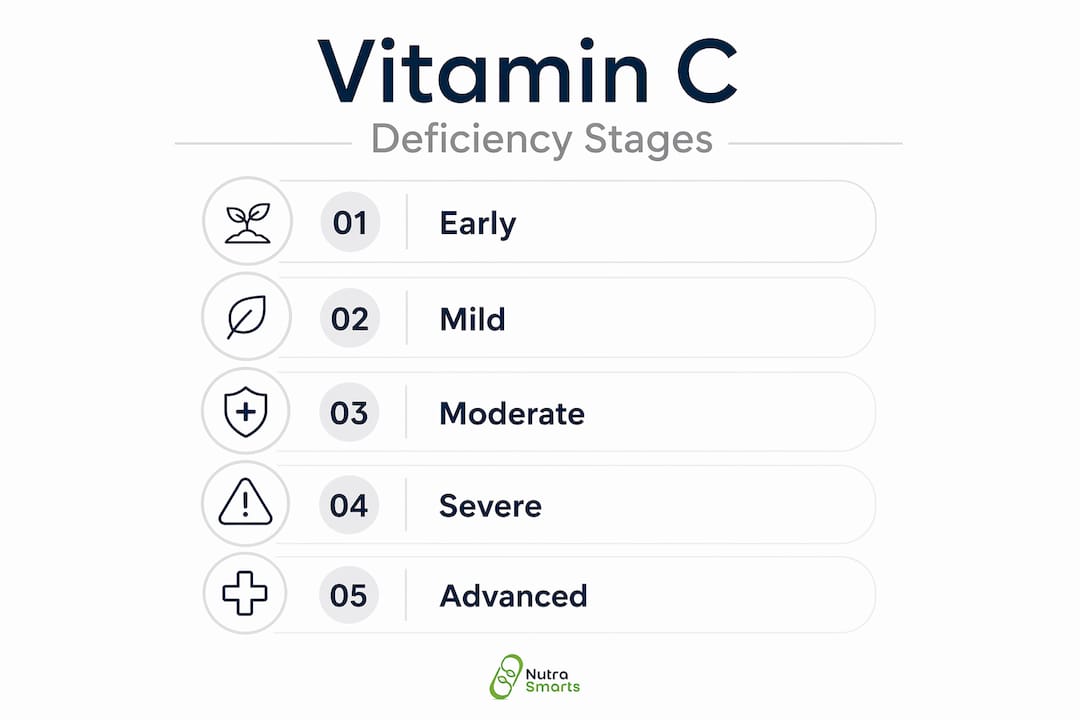
The table below shows how symptoms progress from early to advanced deficiency.
| Stage | Symptoms |
|---|---|
| Early (weeks 4–8) | Fatigue, irritability, mild joint aching, dry skin |
| Moderate (weeks 8–12) | Swollen gums, easy bruising, small skin hemorrhages, poor wound healing |
| Advanced (beyond 12 weeks) | Bleeding gums, tooth loss, severe joint pain, petechiae, scurvy diagnosis |
The timeline matters. Fatigue and irritability appear first, long before the dramatic signs of scurvy. Many people attribute early symptoms to stress or poor sleep, which delays diagnosis by weeks or months. Recognizing the early pattern, especially in the presence of a known risk factor, is what separates a quick recovery from a prolonged one.
Why can standard blood tests be misleading for this deficiency?
A single plasma vitamin C test is not a reliable standalone diagnostic tool. Plasma vitamin C levels are highly sensitive to laboratory handling, recent dietary intake, and the patient's inflammatory state. A sample that sits too long before processing, or that comes from a patient with active inflammation, will show falsely low results.
Chronic inflammation independently lowers plasma vitamin C without indicating true systemic deficiency. Patients recovering from surgery or managing autoimmune conditions frequently show low plasma readings that normalize once inflammation subsides. Treating those results as definitive leads to unnecessary supplementation or, worse, missed diagnoses when the test is falsely normal.
A more reliable diagnostic approach combines:
- A detailed dietary history covering the past 4–12 weeks
- Assessment of known risk factors (smoking, dialysis, restrictive diet, medications)
- Physical examination for clinical signs like gum changes, skin hemorrhages, or joint swelling
- Plasma vitamin C testing with strict sample handling protocols
Pro Tip: When a single plasma test is inconclusive, leukocyte vitamin C levels provide a more accurate picture of tissue stores. Leukocyte testing reflects longer-term status rather than a snapshot of recent intake.
Clinicians also use a pragmatic therapeutic trial as a practical diagnostic tool. This means giving a short course of vitamin C supplementation and watching for rapid symptom improvement. If fatigue and gum tenderness resolve within days, the diagnosis is confirmed without waiting for repeat lab work.
What are evidence-based treatments and prevention strategies?
Treating chronic vitamin C deficiency follows a clear clinical protocol. The goal is to replenish stores quickly, then maintain adequate levels through diet and lower-dose supplementation.
Clinical treatment protocol
- Initial repletion: Take 500–1,000 mg of ascorbic acid per day for 1–2 weeks. Symptoms improve within days of starting treatment, with full recovery typically occurring within weeks.
- Maintenance dosing: After repletion, reduce to 100–200 mg per day to maintain adequate plasma levels without exceeding the body's saturation point.
- Address the underlying cause: Supplementation alone does not fix the problem if the root cause remains. Smoking cessation, dietary changes, or medication review must accompany supplementation.
Dietary and lifestyle prevention
Fresh produce is the most reliable source of vitamin C. Bell peppers, kiwi, citrus fruits, broccoli, and strawberries all deliver high concentrations per serving. The challenge is preserving that content through preparation. Cooking and storage can destroy a significant portion of vitamin C in vegetables, particularly when food is minced, boiled for long periods, or stored in copper pots.
Practical prevention tips:
- Eat at least one raw fruit or vegetable high in vitamin C daily
- Steam or microwave vegetables rather than boiling them to preserve nutrient content
- Store cut produce in airtight containers and consume within 24 hours
- Avoid prolonged storage of cooked vegetables, as vitamin C degrades rapidly after cooking
- If following a ketogenic or low-carb diet, use a targeted vitamin C supplement to compensate for reduced fruit intake
Vitamin C deficiency commonly coexists with iron, vitamin D, and B12 deficiencies. A full nutritional panel at the time of diagnosis helps identify coexisting gaps that may slow recovery if left unaddressed. Treating only the ascorbic acid deficiency while missing a concurrent iron deficiency, for example, will leave fatigue and weakness unresolved.
Key Takeaways
Chronic low vitamin C develops from prolonged inadequate intake, increased bodily demand, or impaired absorption, and requires both dietary correction and treatment of the underlying cause to resolve fully.
| Point | Details |
|---|---|
| Deficiency builds slowly | Stores fall from 1,500 mg to 350 mg over 4–12 weeks before symptoms appear. |
| Multiple risk factors exist | Smoking, dialysis, restrictive diets, and certain medications all accelerate depletion. |
| Blood tests have limits | Plasma vitamin C is unreliable alone; combine it with dietary history and physical exam. |
| Treatment is fast and effective | 500–1,000 mg per day for 1–2 weeks resolves most cases; symptoms improve within days. |
| Coexisting deficiencies are common | Test for iron, vitamin D, and B12 alongside vitamin C to avoid incomplete recovery. |
Nutrasmarts' perspective on diagnosing vitamin C deficiency
The most common mistake in managing chronic low vitamin C is over-reliance on a single plasma test. At Nutrasmarts, we see this pattern repeatedly in the research: a person presents with fatigue and joint pain, gets a plasma vitamin C result that looks borderline, and the clinician either dismisses the concern or supplements without investigating why the deficiency developed in the first place.
Dietary history is the most underused diagnostic tool in this space. A 10-minute conversation about what someone has eaten over the past two months tells you more than a plasma result that was drawn after a hospital stay or during an inflammatory flare. The test has its place, but it needs context.
What also gets missed is the fragility of vitamin C in food. People believe they are eating enough because they consume vegetables daily. But boiled, stored, or heavily processed vegetables deliver a fraction of their labeled vitamin C content. The gap between perceived intake and actual intake is real and clinically significant.
Recovery also takes longer when coexisting deficiencies go undetected. Vitamin C deficiency rarely travels alone. If you are addressing ascorbic acid but ignoring a concurrent iron or B12 deficiency, fatigue and weakness will persist, and the patient loses confidence in the treatment. A full nutritional panel at diagnosis is not optional. It is the standard that produces complete recovery.
— Nutrasmarts
Nutrasmarts resources for vitamin C deficiency support
Nutrasmarts provides science-backed supplement research built on a database of over 800 ingredients, each linked to peer-reviewed studies and clinical trial citations. For people managing vitamin C deficiency risks or recovering from low ascorbic acid levels, the ingredient database covers clinical dosing, absorption factors, and evidence quality in plain language.

The supplements by symptom category lets you search by specific symptoms like joint pain, fatigue, or poor wound healing and find products with clinical evidence behind them. Whether you are rebuilding after a confirmed deficiency or trying to prevent recurrence, Nutrasmarts connects you to research that goes beyond the label.
FAQ
What is the most common cause of chronic vitamin C deficiency?
A diet consistently low in fresh fruits and vegetables is the leading cause. Smoking, chronic illness, and restrictive diets like ketogenic or carnivore protocols significantly increase the risk.
How long does it take for vitamin C deficiency symptoms to appear?
Symptoms typically appear after 4–12 weeks of inadequate intake, once body stores drop from approximately 1,500 mg to 350 mg.
Can a blood test confirm vitamin C deficiency?
Plasma vitamin C testing is useful but unreliable on its own. Inflammation and poor sample handling can produce false results, so dietary history and physical examination should accompany any blood test.
How do you fix vitamin C deficiency quickly?
Clinical treatment uses 500–1,000 mg of ascorbic acid daily for 1–2 weeks. Most people see symptom improvement within days and full recovery within a few weeks.
Does cooking destroy vitamin C in food?
Yes. Boiling, mincing, and storing vegetables in metal containers can destroy a significant portion of their vitamin C content. Steaming or eating produce raw preserves far more of the nutrient.