

What does an evidence-based supplement stack actually mean?
An evidence-based supplement stack is a deliberately chosen set of dietary supplements, each selected because clinical research supports its use for your specific health goals and nutrient gaps. The word "stack" simply means you're combining multiple supplements in a coordinated way rather than grabbing whatever looks appealing at the pharmacy. What separates a science-backed stack from a random pile of capsules is the method behind the choices.
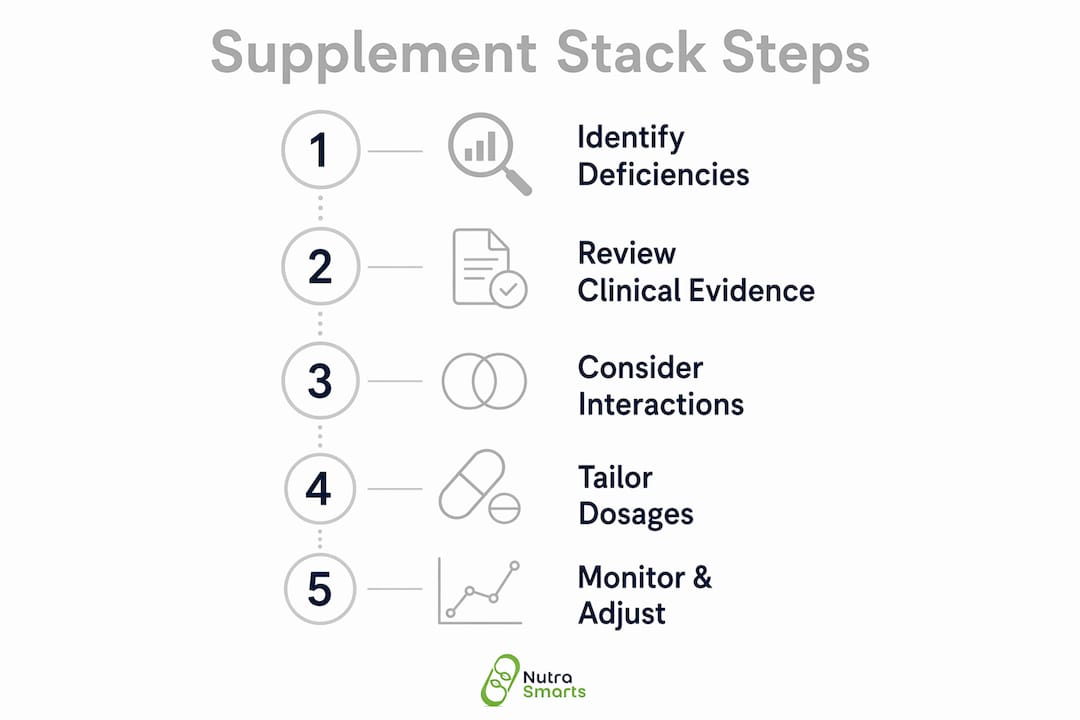
The framework works in sequence:
- Identify nutrient gaps first. Start with deficiencies confirmed by bloodwork or a known risk factor, including gaps caused by medications (metformin depletes B12; proton pump inhibitors reduce magnesium and calcium absorption).
- Layer goal-specific supplements. Once baseline deficiencies are addressed, add supplements with peer-reviewed evidence tied to your actual health objectives, whether that's metabolic support, immune function, or athletic recovery.
- Account for demographics. Age, sex, pregnancy status, and diet pattern all shift what you need. Older adults typically require more vitamin D and B12; menstruating women often need more iron.
- Optimize timing and form. Fat-soluble vitamins (A, D, E, K) absorb best with a fat-containing meal. Magnesium citrate taken at night tends to support sleep quality better than morning dosing.
- Vet every product. Third-party certification seals from organizations like USP, NSF International, or Informed Sport confirm that what's on the label is actually in the bottle.
The goal is a stack that works together, not against itself, and that you can adjust as your health status changes.
Why does the science behind supplement stacking matter?
Most people who take supplements do so without checking whether the evidence behind a product is strong enough to justify the cost or the risk. That gap between marketing and clinical reality is where problems start.
Clinical research varies wildly by ingredient. Calcium and vitamin D have decades of randomized controlled trial data supporting their role in bone health. Many herbal blends, by contrast, have little more than in vitro studies or small pilot trials behind them. Knowing how to read that difference is the core skill in building a stack that actually performs.

Medication-induced nutrient depletion is one of the most overlooked reasons people develop deficiencies. Statins can reduce CoQ10 levels; oral contraceptives are associated with lower B6, B12, folate, and zinc status. If you're on any long-term medication, that interaction belongs at the top of your assessment, not as an afterthought.
Pharmacokinetics, meaning how a supplement is absorbed, metabolized, and used by the body, directly affects whether a dose does anything at all. Magnesium oxide, for example, has poor bioavailability compared to magnesium citrate or glycinate. Vitamin D3 raises serum levels more effectively and maintains them longer than vitamin D2. Choosing the wrong form of an ingredient can make an otherwise well-designed stack ineffective.
Third-party certification addresses a different problem entirely. Label accuracy varies considerably across the supplement industry, and products marketed for weight loss, bodybuilding, or sexual enhancement have been found to contain prescription drugs not listed on the label. Certification from USP or NSF International confirms purity and potency, but it does not tell you whether the ingredient works clinically.
Pro Tip: Treat quality verification and clinical efficacy as two separate questions. A certified product can still be clinically useless. A well-studied ingredient can still come in a poorly manufactured product. You need both boxes checked.
- Third-party seals confirm: label accuracy, absence of contaminants, correct dosage
- Clinical trials confirm: whether the ingredient produces the intended health effect
- Neither replaces the other
How to build your personalized supplement stack step by step
Building a stack that holds up to scrutiny takes more than reading a top-ten list. Here's a method that mirrors how registered dietitians and clinicians approach the process.
-
Identify your highest-priority nutrient gaps. Get bloodwork done. At minimum, check 25(OH)D (vitamin D), ferritin, B12, magnesium, and a complete metabolic panel. If you take any prescription medication long-term, research whether it depletes specific nutrients and treat those gaps as your starting point.
-
Map your health goals to the evidence. Pick one or two primary goals, such as supporting immune function or improving sleep quality, and search for ingredients with randomized controlled trial support for those outcomes. PubMed is the most reliable free database for this. Nutrasmarts' ingredient database links over 800 ingredients directly to clinical trial citations, which cuts research time considerably.
-
Factor in your demographics and lifestyle. A 65-year-old woman with low sun exposure has different vitamin D and calcium needs than a 30-year-old male endurance athlete. Pregnancy changes folate and iron requirements dramatically. The deficiency risk by group resource from Nutrasmarts breaks this down by life stage.
-
Audit every product label. Confirm active ingredients and doses match those used in the clinical trials you found. A product containing 50 mg of ashwagandha is not equivalent to a trial that used 600 mg of a standardized KSM-66 extract. Check for proprietary blends, which hide individual ingredient doses behind a combined weight.
-
Run the OPSS Scorecard. The Operation Supplement Safety Scorecard asks seven label-based questions covering third-party certification, ingredient count, proprietary blends, caffeine content, and label claims. Products scoring fewer than 4 out of 7 are considered too risky to use. This takes about two minutes per product and catches most red flags before you spend money.
-
Schedule a consultation. Discuss your planned stack with a physician, pharmacist, or registered dietitian before starting. Bring a written list of every supplement and medication you currently take. Vitamin K, for instance, can reduce the effectiveness of warfarin, and that interaction requires active management rather than a generic warning label.
-
Establish a dosing and timing schedule. Fat-soluble vitamins go with your largest meal. Magnesium and certain adaptogens often work better in the evening. Separate calcium and iron by at least two hours, since they compete for absorption. Write the schedule down and stick to it for at least four weeks before evaluating results.
-
Introduce one supplement at a time. Running your stack like a controlled experiment means you can actually attribute effects or side effects to a specific ingredient. Adding three new supplements simultaneously makes it impossible to know what's working or what's causing a problem.
-
Monitor and adjust. Retest relevant biomarkers after 8–12 weeks. If a supplement isn't moving the needle on the marker it was supposed to address, reconsider the dose, the form, or whether the evidence was strong enough to justify it in the first place.
Pro Tip: Keep a running document with every supplement you take, the dose, the form, the brand, the start date, and any effects you notice. The NIH Office of Dietary Supplements offers a free "My Dietary Supplement and Medicine Record" form you can print and fill out. Bring it to every clinical appointment.
Real evidence-based supplement stacks for common wellness goals
The stacks below are built from ingredients with meaningful clinical trial support. Doses reflect ranges used in published research, not marketing copy. Timing notes follow absorption science.
A note on cost: clinically effective doses often cost more than the low-dose versions filling store shelves. A magnesium supplement providing 50 mg of oxide is cheaper than one providing 300 mg of glycinate, but only the latter reaches a therapeutically relevant dose in a bioavailable form.
For guidance on stacking herbal supplements alongside these foundations, the layering sequence and timing matter as much as ingredient selection.
| Goal | Core Ingredients | Clinically Studied Dose Range | Timing Notes |
|---|---|---|---|
| Metabolic health | Magnesium glycinate, berberine, vitamin D3 | Magnesium: 300 mg/day; berberine: in doses supported by clinical research; vitamin D3: in doses supported by clinical research | Magnesium at night; berberine with meals; D3 with fat |
| Immune support | Vitamin D3, vitamin C, zinc, elderberry extract | D3, vitamin C, and zinc in doses supported by clinical research | D3 with fat; zinc with food to reduce nausea |
| Athletic performance | Creatine monohydrate, beta-alanine, magnesium | creatine, beta-alanine, and magnesium in doses supported by clinical research | Creatine any time; beta-alanine split across meals |
| Energy and cognition | Vitamin B12, iron (if deficient), rhodiola rosea | vitamin B12, iron as guided by clinician, and rhodiola in doses supported by clinical research | B12 in the morning; iron away from coffee and calcium |
| Bone health | Vitamin D3, calcium (if dietary intake is low), vitamin K2 | vitamin D3, calcium (if dietary intake is low), and vitamin K2 in doses supported by clinical research | D3 and K2 with fat; calcium split across two doses |
Key selection criteria for each ingredient above:
- Peer-reviewed randomized controlled trials, not just observational data
- Dose in the product matches the dose range studied clinically
- Third-party certification from USP, NSF International, or Informed Sport
- No proprietary blends that obscure individual ingredient amounts
Synergy matters in stack design. Vitamin D3 and K2 work together on calcium metabolism: D3 increases calcium absorption while K2 directs it toward bone rather than arterial tissue. Magnesium is required for vitamin D activation in the body, so a D3 supplement taken without adequate magnesium may underperform. For a deeper look at synergistic supplement combinations, the interaction patterns between these nutrients are worth understanding before you finalize any stack.

Safety precautions and limitations you need to know
The supplement industry operates under a regulatory framework that places most of the safety burden on the consumer. The FDA does not approve dietary supplements for safety or effectiveness before they reach store shelves. Once a product is marketed, the FDA must prove it is unsafe before restricting it, which is the opposite of the drug approval process.
Label accuracy is not guaranteed. The NCCIH has documented cases where products contained prescription drugs, controlled substances, or ingredients not listed on the label. Botanical supplements carry particular risk because preparations can vary in concentration and consistency even within the same brand across production batches.
Drug-supplement interactions are real and sometimes serious. Vitamin K reduces warfarin effectiveness, a clinically significant interaction that requires physician management. St. John's Wort affects the metabolism of numerous medications including antidepressants, birth control pills, and antiretrovirals through CYP450 enzyme pathways. Treating botanical supplements like medications, including recording start and stop dates and reporting them to your pharmacist, is the safest approach.
Overconsumption is a genuine risk when stacking. People who take multiple supplements alongside fortified foods can exceed the Tolerable Upper Intake Level (UL) for nutrients like vitamin A, selenium, or zinc without realizing it. Selenium is a clear example: both deficiency and excess are associated with hair loss, yet many "hair vitamin" products contain selenium above the RDA.
Common safety concerns addressed directly:
- "Natural" does not mean safe. Herbal products can cause hepatotoxicity; the Drug-Induced Liver Injury Network reports that herbal and dietary supplements account for roughly 20% of liver injury cases in adults.
- More is not better. Exceeding 100% of the RDA consistently for fat-soluble vitamins or certain minerals creates accumulation risk.
- Certifications have limits. A USP or NSF seal confirms what's in the bottle, not whether the ingredient is clinically effective or appropriate for your situation.
- Evidence gaps are common. Many supplements have not been tested in pregnant women, nursing mothers, or children. Absence of evidence is not evidence of safety.
The OPSS Scorecard validation research confirms that the scorecard, combined with basic consumer education, reliably classifies supplements as higher or lower risk based on label criteria alone. Running every new product through this seven-question screen before purchasing takes minimal time and catches the most obvious red flags.
How Nutrasmarts helps you build a science-backed stack with confidence
Nutrasmarts was built specifically for the problem this article addresses: the gap between marketing claims and clinical reality in the supplement space.
The core of the platform is a database covering over 800 supplement ingredients, each linked to peer-reviewed studies and clinical trial citations. When you're trying to determine whether an ingredient has genuine evidence behind it, or whether the dose in a product matches what was actually studied, that database does the heavy lifting. You can search by health concern, from joint pain to cognitive function, and see which ingredients have the strongest clinical backing for that specific outcome.
The Supplement Facts Label Tool is FDA-compliant and generates accurate labels without the spreadsheet errors that plague manual formulation work. For anyone building a custom stack or evaluating a product's label against clinical standards, this tool removes the guesswork.
Nutrasmarts also provides detailed deficiency guides organized by symptom and by demographic group. If you're trying to figure out whether your fatigue might reflect a B12 gap or an iron issue, the deficiency symptoms guide maps symptoms to likely nutrient causes and flags which populations carry the highest risk.
Pro Tip: Use Nutrasmarts' ingredient research to build your evidence case first, then bring that research to your clinician. Arriving with specific ingredient names, studied doses, and trial citations makes the consultation far more productive than asking a general question about supplements.
- Metabolic health supplements: 130 reviewed options with evidence ratings
- Athletic performance supplements: 131 reviewed, organized by goal
- Energy supplements: 80 reviewed options for fatigue and cognitive support
Start with what the evidence actually supports. Nutrasmarts gives you the research, the tools, and the ingredient-level detail to build a stack you can trust.
Key Takeaways
Building an evidence-based supplement stack requires confirming nutrient gaps with bloodwork, matching ingredients to clinical trial data, vetting product quality through third-party certification, and introducing supplements one at a time to track effects accurately.
| Point | Details |
|---|---|
| Start with bloodwork | Confirm deficiencies before choosing supplements; medication-induced gaps are a common and overlooked starting point. |
| Match doses to trial data | The dose in your product must match the range used in clinical research, not just contain the ingredient. |
| Use the OPSS Scorecard | Products scoring fewer than 4 out of 7 on the seven-question label screen are considered too risky to use. |
| Separate quality from efficacy | Third-party certification confirms label accuracy; only clinical trials confirm whether an ingredient works. |
| Introduce one at a time | Adding supplements sequentially lets you attribute effects or side effects to a specific ingredient with confidence. |