
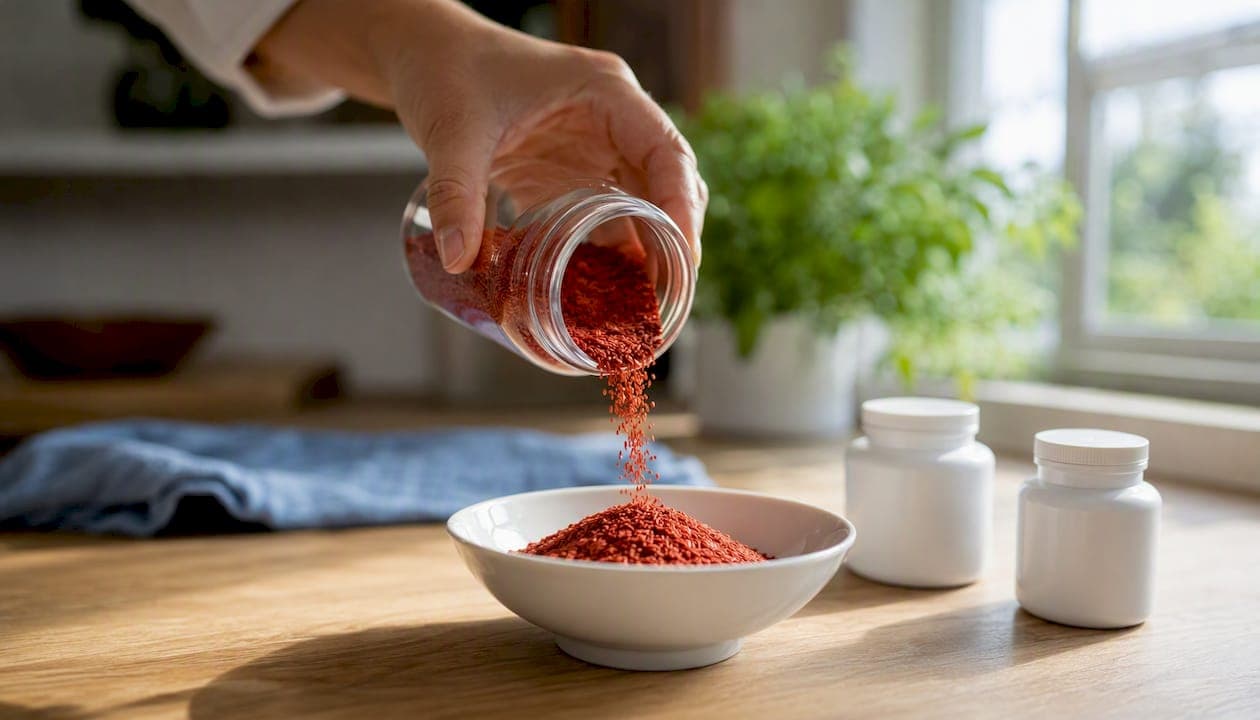
Red yeast rice can lower LDL cholesterol, but it works like a low-dose statin. That's not a metaphor. Its active compound, monacolin K, is chemically identical to lovastatin, the prescription drug, which means the benefits and the risks travel together. A 2014 meta-analysis of 13 randomized controlled trials covering 804 participants confirmed significant reductions in total cholesterol and LDL-C versus placebo. The International Lipid Expert Panel (ILEP) acknowledges those reductions but recommends conventional lipid-lowering drugs for most patients because the cardiovascular outcomes evidence is stronger for prescription statins.
Before going further, here are the non-negotiables:
- Red yeast rice requires clinician oversight, not just a trip to the supplement aisle.
- It is contraindicated during pregnancy, breastfeeding, and in anyone with active or chronic liver disease.
- Product potency varies wildly. A label that says "1,200 mg" tells you almost nothing about actual monacolin K content.
- Ask for a Certificate of Analysis (COA) that confirms monacolin K content and absence of citrinin, a potentially toxic mold byproduct.
- If you're already on a prescription statin, do not add red yeast rice without explicit clinician guidance.
Key Takeaways
Red yeast rice can meaningfully lower LDL cholesterol, but only in products with verified monacolin K content, and only with the same clinical oversight you would apply to a prescription statin.
| Point | Details |
|---|---|
| Proven LDL-lowering effect | A meta-analysis of 13 RCTs (804 participants) confirmed significant LDL-C and total cholesterol reductions versus placebo. |
| Monacolin K equals lovastatin | The active compound is chemically identical to lovastatin, meaning statin-class side effects and drug interactions apply. |
| Product potency is unreliable | Monacolin K content varies dramatically across U.S. products; always request a COA confirming standardized content and citrinin testing. |
| Clinician oversight is required | Baseline LFTs, a lipid panel, and medication review are necessary before starting, mirroring prescription statin protocols. |
| Nutrasmarts tools support your research | The free Supplement Facts Tool and ingredient database help you verify product claims against clinical trial evidence before your clinician visit. |
Table of Contents
- How does red yeast rice lower cholesterol?
- What clinical trials and meta-analyses show about LDL reduction
- What dose was used in trials and how long until you see results
- Safety profile: what side effects to watch for
- Drug interactions and precautions to discuss with your clinician
- Product quality, contaminants, and U.S. regulatory status
- How red yeast rice compares with prescription statins
- Should you try red yeast rice? Questions to bring to your clinician
- How to evaluate a specific red yeast rice product before you buy
- The case for treating red yeast rice like the drug it effectively is
- Research tools that help you evaluate what's in your supplement
- Sources
How does red yeast rice lower cholesterol?
Red yeast rice is rice fermented with the mold Monascus purpureus, used for centuries in East Asian cuisine and traditional medicine. Its cholesterol-lowering effect comes primarily from monacolin K, a compound that inhibits HMG-CoA reductase, the same enzyme targeted by prescription statins. Blocking that enzyme slows the liver's cholesterol synthesis, which drives down circulating LDL-C.
Monacolin K is not statin-like. It IS lovastatin. The Mayo Clinic and NCCIH both confirm the two are structurally identical, which is why the FDA treats high-monacolin RYR products as unapproved new drugs rather than dietary supplements.
Beyond monacolin K, red yeast rice also contains plant sterols, unsaturated fatty acids, and B vitamins that may contribute modestly to its lipid effects, though monacolin K is the primary driver. The practical implication of that statin mechanism: the adverse-effect profile you need to watch for is the same as with prescription statins, including liver enzyme elevations and muscle-related problems.
What clinical trials and meta-analyses show about LDL reduction
The evidence base is real but imperfect. The 2014 meta-analysis of 13 placebo-controlled RCTs found statistically significant reductions in both total cholesterol and LDL-C, with most trials running 4–12 weeks. A separate PLOS meta-analysis pooling RCTs reported significant weighted mean differences for total cholesterol, LDL-C, and triglycerides, while noting heterogeneity across studies and calling for longer, higher-quality trials. An early landmark RCT by Heber et al. (1999) also demonstrated significant reductions in total cholesterol, LDL, and triglycerides versus placebo for a proprietary RYR product.
| Lipid Marker | Direction of Effect | Notes |
|---|---|---|
| LDL-C | Significant reduction | Consistent across multiple meta-analyses |
| Total cholesterol | Significant reduction | Primary outcome in most trials |
| Triglycerides | Modest reduction | Less consistent across trials |
| HDL-C | Minimal or no change | Not a reliable benefit in pooled data |
The ILEP position paper adds important context: while RYR reduces LDL-C and some studies show cardiovascular event reduction, the evidence for hard outcomes (heart attacks, strokes) is far thinner than for prescription statins. That gap matters clinically.
Evidence limitations worth knowing:
- Most trials ran only 4–12 weeks, too short to assess cardiovascular event reduction.
- Product composition varied across studies, making direct comparisons difficult.
- A large share of RCTs were conducted in China, where RYR preparations may differ from U.S. products.
- Heterogeneity across trials limits confidence in pooled effect sizes.
What dose was used in trials and how long until you see results
Trial doses typically ranged from 1,200 mg to 3,600 mg per day, and measurable LDL reductions generally appeared within 4–12 weeks. That timeline aligns with how prescription statins behave, which makes sense given the shared mechanism.
The catch: milligrams of red yeast rice product and milligrams of monacolin K are not the same thing. A 1,200 mg capsule might contain anywhere from a negligible amount of monacolin K to a dose approaching a low-strength prescription statin. The NCCIH notes that some products contain little monacolin K while others approach prescription-level concentrations. That variability means the "dose" printed on a label is nearly meaningless without knowing the standardized monacolin K content.
For monitoring purposes, if you and your clinician decide to try RYR, plan a lipid panel at baseline and again at 8–12 weeks to assess response. Liver function tests (LFTs) at baseline are also standard practice, mirroring what clinicians do when starting a prescription statin.
Pro Tip: When comparing products, look specifically for "standardized to X mg monacolin K" on the label or COA. A product that lists only total rice weight with no monacolin K figure gives you no reliable way to estimate your actual statin-equivalent exposure.
Safety profile: what side effects to watch for
Because monacolin K is lovastatin, the side effect profile is not theoretical. It is the statin side effect profile, applied to an unregulated supplement with variable dosing.
Possible adverse effects include:
- Myalgia and myopathy: Muscle pain or weakness, the most commonly reported statin-class side effect. Rare but serious: rhabdomyolysis (severe muscle breakdown) has been reported with RYR.
- Liver enzyme elevations: Hepatotoxicity cases have been documented. Baseline and follow-up LFTs are warranted.
- Kidney effects: Rhabdomyolysis, if it occurs, can lead to acute kidney injury.
- Gastrointestinal symptoms: Nausea, bloating, and abdominal discomfort are reported in some users.
A clinical review published on PMC found few serious adverse events in short-term trials, but the authors explicitly flagged the absence of long-term safety data as a significant gap. Short trials showing a clean safety signal do not mean long-term use is safe at higher monacolin K exposures.
Contraindications: Pregnancy and breastfeeding (absolute); active or chronic liver disease; concurrent use of drugs that increase statin toxicity (see the interactions section below); known hypersensitivity to statins.
Symptoms that warrant stopping immediately and contacting a clinician: unexplained muscle pain or weakness, dark or cola-colored urine, yellowing of the skin or eyes (jaundice), or unusual fatigue.
Drug interactions and precautions to discuss with your clinician
Red yeast rice interacts with the same drug classes as prescription statins, which is a long list. The most clinically significant:
- Concurrent prescription statins: Adding RYR on top of a statin is effectively doubling up on the same mechanism. The additive risk for myopathy and liver injury is real. Never combine without explicit clinician guidance.
- CYP3A4 inhibitors: Certain macrolide antibiotics (clarithromycin, erythromycin) and azole antifungals (fluconazole, itraconazole) inhibit the enzyme that metabolizes lovastatin-class compounds. That raises circulating drug levels and amplifies toxicity risk. Red yeast rice carries the same CYP3A4 interaction risk as prescription lovastatin.
- Anticoagulants (warfarin): Statins can affect warfarin metabolism. If you're on anticoagulation therapy, RYR use needs clinician review and possibly more frequent INR monitoring.
- Niacin and fibrates: Combining these with statin-class compounds raises myopathy risk.
- Grapefruit juice: Inhibits CYP3A4 and can raise monacolin K levels unpredictably.
The practical rule: disclose RYR use to every prescriber and pharmacist who manages your medications. It is not a benign herbal supplement. Your clinician may recommend baseline CK (creatine kinase) levels if you have risk factors for myopathy, and periodic LFTs during use.
Product quality, contaminants, and U.S. regulatory status
The FDA's position is clear: RYR products that contain substantial amounts of monacolin K are considered unapproved new drugs, not dietary supplements. That regulatory stance creates a peculiar market dynamic. Because listing monacolin K content on a label would effectively classify the product as an unapproved drug, many manufacturers deliberately omit that figure, leaving consumers with no reliable dosing information.
The result is extreme variability. Analyses of U.S. products have found monacolin K content ranging from negligible to levels approaching a low-dose prescription statin, with no reliable way to tell from the label alone. That variability creates real-world dosing uncertainty that neither labels nor many manufacturers resolve. Understanding why supplement quality varies across brands helps explain why two products with identical label claims can behave very differently.
Citrinin is a separate concern. This mycotoxin, a byproduct of the fermentation process, has shown nephrotoxic (kidney-damaging) effects in animal studies. Not all RYR products are tested for it, and not all that are tested pass.
What a credible product or COA should show:
- Standardized monacolin K content per serving (in mg, not just total rice weight)
- Citrinin testing results (ideally below detection limits)
- Third-party verification from USP, NSF International, or an independent lab
- Manufacturer contact information and lot-specific COA availability
- No vague "proprietary blend" language that obscures individual ingredient amounts
A supplement label reading checklist can help you work through these criteria systematically before purchasing.
How red yeast rice compares with prescription statins
The honest comparison is not flattering to RYR as a standalone strategy for most patients.
| Factor | Red yeast rice | Prescription statins |
|---|---|---|
| LDL-C reduction | Moderate, variable by product | Consistent, dose-dependent |
| Cardiovascular outcomes evidence | Limited, short trials | Extensive, decades of RCT data |
| Guideline endorsement | Not first-line; limited regional mentions | First-line for most high-risk patients |
| Dosing precision | Unreliable without COA | Standardized, regulated |
| Monitoring requirements | Same as statins (LFTs, CK) | Same (LFTs, CK) |
| Cost | Variable; often lower | Generic statins are inexpensive |
| Regulatory oversight | Unregulated supplement market | FDA-approved, post-market surveillance |
The ILEP position paper summarizes the clinical consensus: RYR may have utility in specific patient groups, particularly those with statin intolerance and mild-to-moderate hypercholesterolemia, but conventional lipid-lowering drugs with stronger cardiovascular outcomes evidence are preferred for most patients. The Mayo Clinic echoes that framing, noting that RYR's efficacy depends entirely on monacolin K content, which varies unpredictably.
Where RYR may fit, according to Drugs.com's clinical summary and ILEP guidance:
- Patients with documented statin intolerance who still need lipid management
- Those with mild-to-moderate hypercholesterolemia and low-to-moderate cardiovascular risk
- As a bridge or adjunct under clinician supervision, not as a replacement for evidence-based therapy
Should you try red yeast rice? Questions to bring to your clinician
This decision belongs in a clinical conversation, not a supplement store. Before that conversation, run through this checklist:
Personal factors to assess:
- What is your baseline LDL-C and 10-year ASCVD risk score?
- Have you tried and failed to tolerate a prescription statin? Which one, and what symptoms occurred?
- Are you pregnant, planning pregnancy, or breastfeeding?
- Do you have any history of liver disease, elevated liver enzymes, or kidney problems?
- What other medications are you currently taking (especially antibiotics, antifungals, anticoagulants)?
Questions to ask your clinician:
- Given my LDL and ASCVD risk, is RYR a reasonable option or should I prioritize a prescription statin?
- If I try RYR, what monacolin K dose would you want me to target?
- What baseline labs do you want before I start?
- How often should we recheck my lipid panel and liver enzymes?
- Are any of my current medications likely to interact?
- What symptoms should make me stop immediately?
- How will we know if it's working well enough?
Red flags that should stop use immediately:
- New, unexplained muscle pain, tenderness, or weakness
- Dark or cola-colored urine (possible rhabdomyolysis signal)
- Jaundice or unusual fatigue with right-sided abdominal discomfort
- Starting a new antibiotic or antifungal while using RYR (call your pharmacist first)
For clinicians or wellness coaches explaining this to patients, this guide on translating supplement evidence into client conversations offers a practical framework.
How to evaluate a specific red yeast rice product before you buy
Most people skip this step. That's a mistake when the product's actual potency is unknown and the regulatory guardrails are minimal.
- Read the Supplement Facts panel. Look for monacolin K listed as a separate line item with a specific mg amount per serving. If it's absent, that's a red flag.
- Check for standardized monacolin K content. A label that says "standardized to X mg monacolin K" is more informative than one listing only total rice weight.
- Request or download the COA. A reputable manufacturer provides lot-specific COAs. If the company won't share one, move on.
- Verify citrinin testing on the COA. The result should show citrinin below detectable limits or at a level the manufacturer can justify against safety thresholds.
- Compare the advertised mg/day to trial doses. Trial doses ranged from 1,200–3,600 mg/day of RYR product, but what matters is the monacolin K equivalent. A 600 mg capsule standardized to 5 mg monacolin K twice daily gives you 10 mg monacolin K, comparable to a low-dose prescription statin.
- Look for third-party certification. USP Verified or NSF Certified for Sport seals indicate independent potency and contaminant testing.
- Contact the manufacturer directly if the COA is not publicly available. A company that cannot produce one on request is not a company you should trust with your lipid management.
The Nutrasmarts ingredient database for red yeast rice summarizes the clinical evidence, typical dosage ranges, and adverse effect signals in one place, so you can cross-reference what a product claims against what trials actually studied. The free Supplement Facts Tool lets you input ingredient amounts and verify whether a product's label structure is FDA-compliant, which is a useful first filter.
Pro Tip: On a COA, look for the specific column labeled "monacolin K" or "total monacolins" with a quantified result in mg/g or mg/serving. A COA that only confirms the product is "red yeast rice" without quantifying active constituents tells you almost nothing useful.
Understanding how to reduce formulation risks gives additional context on what manufacturing controls separate reliable products from inconsistent ones.
The case for treating red yeast rice like the drug it effectively is
The most common mistake people make with red yeast rice is treating it as a gentle, natural alternative to statins when it is, in the products that actually work, a statin. That framing matters because it changes how you approach everything: the clinician conversation, the product selection, the monitoring schedule, and the decision about whether to use it at all.
The evidence shows real LDL-lowering effects. The ILEP, Mayo Clinic, and NCCIH all confirm that. But those same authorities are consistent on the limits: the cardiovascular outcomes data is thin, the product market is poorly regulated, and the adverse-effect profile is identical to a prescription drug. Treating RYR as a casual supplement is not a conservative choice. It is an uninformed one.
Where RYR has a legitimate place is in the narrow clinical context where a patient cannot tolerate conventional statins, has mild-to-moderate LDL elevation, and is working with a clinician who can verify product quality and monitor for adverse effects. That is a real population. It is not most people who pick up a bottle at a health food store.
Nutrasmarts's ingredient database exists precisely for this kind of decision: to give you the clinical evidence, the dosage context, and the safety signals in one place, so the conversation with your clinician starts from facts rather than marketing copy.
Research tools that help you evaluate what's in your supplement
Knowing what the evidence says is one thing. Knowing whether a specific product delivers what the evidence studied is another problem entirely.
Nutrasmarts offers a free, research-backed ingredient database covering 1,300+ evidence-rated profiles, including a detailed red yeast rice entry with clinical trial citations, dosage ranges, and adverse effect summaries. The free Supplement Facts Label Creator lets you input a product's ingredient amounts and generate or verify an FDA-compliant label structure, which is a practical way to check whether a product's declared amounts align with what trials actually studied. For readers comparing multiple options, the supplements by symptom search lets you filter by health concern, including cholesterol support, to see what the evidence says across ingredients. These tools are informational resources, not medical advice, and they work best as preparation for a clinician conversation, not a substitute for one.
Sources
- A Meta-Analysis of Red Yeast Rice: An Effective and
- Red yeast rice for dyslipidaemias and cardiovascular risk reduction: A position paper of the International Lipid Expert Panel
- Red yeast rice - Mayo Clinic
- Red Yeast Rice | NCCIH
This article is for general informational purposes only and is not a substitute for professional medical advice. Consult your clinician or a licensed healthcare provider before starting any supplement, particularly one with a statin-equivalent mechanism.