

Supplement bioequivalence is defined as the degree to which two supplement formulations deliver the same active ingredient into the bloodstream at comparable rates and amounts. The term originates from the pharmaceutical standard codified in 21 CFR 314.3(b), which requires no significant difference in the rate and extent of absorption of an active ingredient under similar conditions. Key pharmacokinetic metrics, specifically Cmax (peak plasma concentration), Tmax (time to reach peak), and AUC (area under the concentration curve), determine whether two products perform equivalently in the body. For supplement buyers, understanding bioequivalence cuts through marketing noise and reveals whether a cheaper or differently formulated product will actually work as well as a more expensive one.
What is supplement bioequivalence and how is it measured?
Bioequivalence in supplements is assessed using the same pharmacokinetic metrics applied to generic pharmaceuticals, though the regulatory requirements differ sharply. Cmax measures the highest concentration of an ingredient in the blood after a dose. Tmax captures how quickly that peak is reached. AUC represents total absorption over a set time period, making it the most reliable indicator of overall bioavailability.
These three metrics work together to build a complete picture of how a supplement behaves in the body:
- Cmax tells you how much of the ingredient reaches the bloodstream at its highest point. A lower Cmax may mean slower release, not necessarily worse absorption.
- Tmax shows how fast the ingredient peaks. A gummy may peak later than a caplet, which matters for time-sensitive nutrients.
- AUC is the gold standard for bioequivalence decisions. Two products with similar AUC values deliver comparable total absorption, even if their Cmax values differ.
A 2025 randomized controlled trial illustrates this clearly. Vitamin C gummy and caplet forms showed equivalent overall plasma absorption (AUC0-24h) in 30 healthy adults taking a 1,000 mg dose, though the caplet produced a higher Cmax. That result means both forms deliver the same total amount of Vitamin C to the body, even though the caplet hits a higher peak concentration faster. For most people, the AUC equivalence is what matters most for daily supplementation.
Pro Tip: When reading a supplement study, check whether it reports AUC or only Cmax. AUC is the more meaningful number for comparing two formulations over a full dosing period.
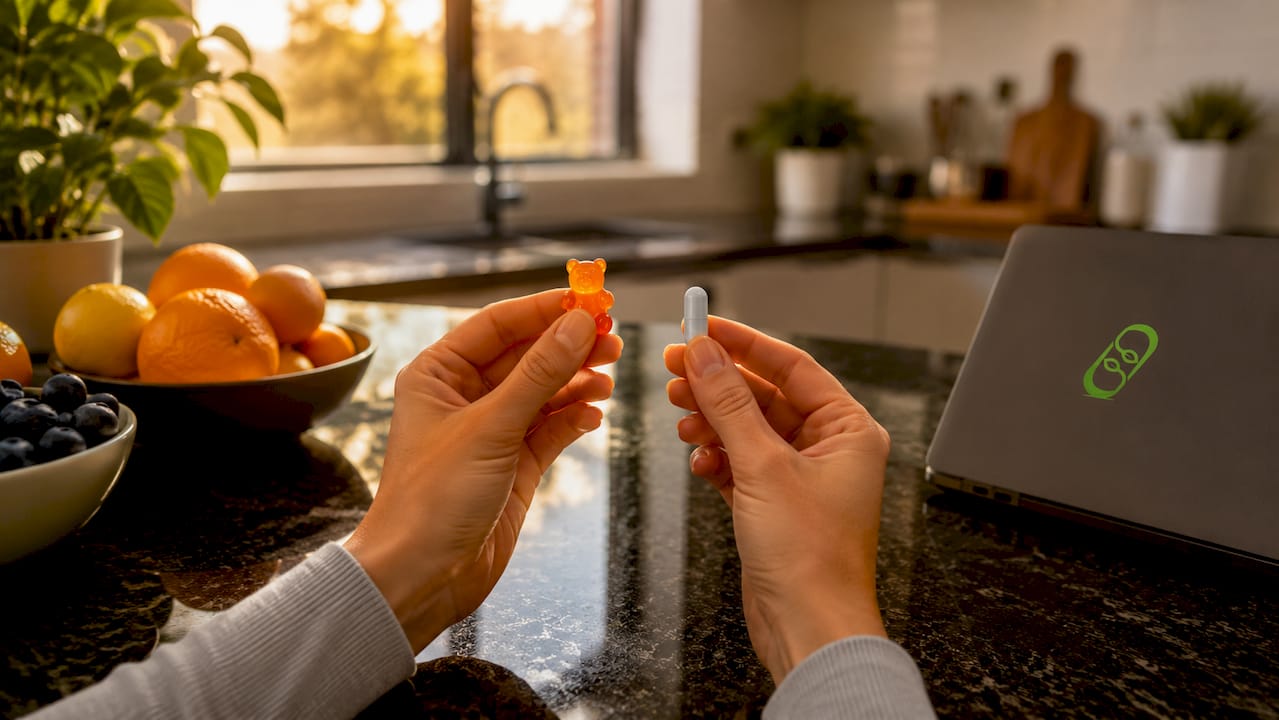
Pharmacokinetic bioequivalence studies use crossover designs with healthy volunteers, collecting blood samples at multiple time points to track how ingredient levels rise and fall. This design controls for individual variation by having each participant take both products at different times.
How do formulation differences affect supplement absorption?
The physical form of a supplement directly changes how much of the active ingredient reaches the bloodstream. This is not a minor detail. Two products with identical label doses can produce meaningfully different plasma concentrations depending on their delivery format.
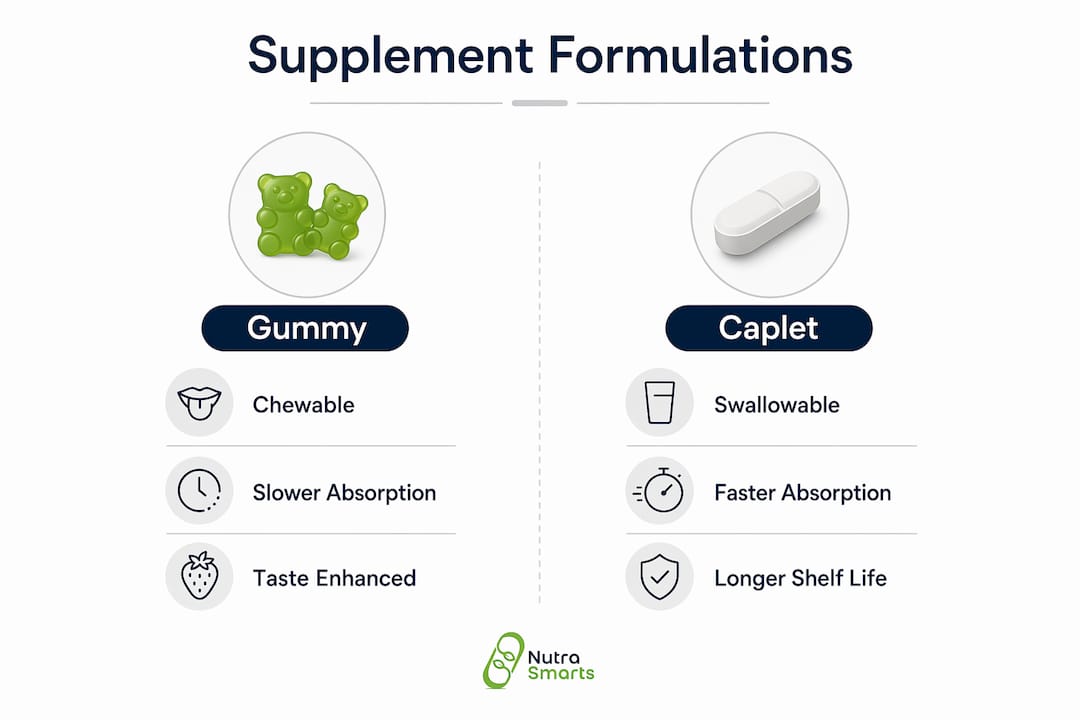
Gummy vs. caplet: what the research shows
The Vitamin C bioequivalence trial mentioned above is one of the clearest examples available. Caplets produced a higher Cmax, meaning the ingredient peaked faster and at a higher concentration. Gummies reached a lower peak but delivered the same total absorption over 24 hours. The practical takeaway: if you need a rapid spike (say, for acute immune support), a caplet may have an edge. For general daily use, both forms perform comparably.
Advanced delivery technologies
Microencapsulation is one of the most studied delivery technologies in the supplement industry. In clinical research on Coenzyme Q10, microencapsulation significantly improved bioavailability compared to unencapsulated forms, with higher plasma concentrations sustained over three weeks and a p-value for efficacy below 0.001. That result is statistically strong. It confirms that the same CoQ10 dose in two different delivery formats is not bioequivalent.
In vitro vs. in vivo testing
| Testing method | What it measures | Limitations |
|---|---|---|
| In vitro dissolution | How fast a tablet or capsule releases its ingredient in a lab solution | Does not replicate stomach acid, gut flora, or food interactions |
| In vivo clinical trial | Actual blood concentration in humans over time | Expensive, requires 24–36 volunteers, takes months |
| In vitro permeation | How well an ingredient crosses a simulated gut membrane | More predictive than dissolution alone, still not definitive |
In vitro dissolution and permeation testing can predict bioequivalence but cannot fully replicate the complexity of human digestion. These tests are more affordable and faster, which is why most supplement brands rely on them. The tradeoff is reduced certainty about real-world absorption.
- Check the delivery format. Softgels, liposomes, and microencapsulated powders typically outperform standard tablets for fat-soluble nutrients like CoQ10 and Vitamin D.
- Look for in vivo data. A clinical trial with blood-level measurements is more reliable than a lab dissolution test alone.
- Compare AUC values across studies. If two products show similar AUC in separate trials using the same dose and population, that is reasonable evidence of equivalence.
- Factor in food interactions. Fat-soluble supplements absorb better with meals. The same product can show different bioequivalence results depending on whether it was taken fasted or fed.
What are the regulatory limits of bioequivalence claims in supplements?
The FDA requires pharmaceutical manufacturers to prove bioequivalence before a generic drug reaches the market. Dietary supplements face no such requirement. A supplement brand can use the word "bioequivalent" in marketing without submitting any clinical data to the FDA for review.
This gap creates real risk for buyers. A brand can claim its magnesium glycinate is "bioequivalent" to a leading product without running a single blood-level study. Legal expert Rebecca Tushnet has noted that supplement bioequivalence claims often lack legal and regulatory rigor and may mislead consumers. Court cases have shown that marketing claims can be legally actionable if they are demonstrably false, but enforcement is inconsistent and reactive rather than preventive.
"Bioequivalence in supplement marketing is frequently a positioning claim, not a regulatory certification. Consumers who treat it as the latter are making decisions on incomplete information."
The practical implication is that you cannot assume a supplement labeled "bioequivalent" has been tested the way a generic drug has been tested. The burden of proof falls on the buyer to ask for the underlying data.
- Ask for the study. A credible brand will link to or provide the actual clinical trial, not just a summary.
- Check the study design. Look for crossover design, human subjects, and blood-level measurements. Lab dissolution tests alone do not establish bioequivalence.
- Verify the source. Peer-reviewed journals carry more weight than white papers funded entirely by the manufacturer.
- Watch for vague language. Phrases like "clinically studied absorption" or "enhanced bioavailability" are not the same as demonstrated bioequivalence.
Pro Tip: Search the PubMed database for the specific ingredient and delivery form before buying. If no peer-reviewed study exists comparing the two forms in humans, the bioequivalence claim is unverified.
How can you test and compare supplement bioequivalence effectively?
Bioequivalence studies for generics typically involve 24–36 healthy volunteers and measure pharmacokinetics across multiple blood draws. That scale and cost make rigorous bioequivalence testing rare in the supplement industry. Most supplement brands rely on in vitro methods or cite studies on the ingredient in isolation rather than their specific product formulation.
For buyers and formulators who want to evaluate bioequivalence evidence, the table below compares the two primary study approaches:
| Study type | Reliability | Cost | Best used for |
|---|---|---|---|
| Randomized crossover clinical trial | High. Measures actual blood levels in humans | High. Requires lab infrastructure and participant recruitment | Confirming bioequivalence between two finished products |
| In vitro dissolution or permeation test | Moderate. Predicts but does not confirm human absorption | Low to moderate. Can be done in a lab without human subjects | Screening formulations before committing to a clinical trial |
Demand for scientific transparency is growing. Some supplement brands now pursue bioequivalence studies for nutraceuticals to differentiate their products in a crowded market. That trend benefits buyers because it creates a higher evidence standard to compare against.
When interpreting any bioequivalence study, check three things. First, confirm the study used a crossover design so each participant served as their own control. Second, verify the dose matches what is on the product label. Third, look at whether the study population matches your own profile. A study conducted in young healthy adults may not predict absorption in older adults or people with digestive conditions.
Supplement efficacy measurement tools like pharmacokinetic modeling software can help formulators predict how formulation changes will affect AUC and Cmax before running a full clinical trial. This approach reduces cost and narrows the variables that need human testing.
Key Takeaways
Supplement bioequivalence is only meaningful when backed by clinical pharmacokinetic data, not marketing language, because two products with the same label dose can absorb very differently depending on their formulation and delivery technology.
| Point | Details |
|---|---|
| Core definition | Bioequivalence means two formulations deliver the same AUC and comparable Cmax in the body. |
| Formulation matters | Delivery format (gummy, caplet, microencapsulated) directly changes absorption rates and peak concentrations. |
| No FDA requirement for supplements | Supplement brands can claim bioequivalence without submitting clinical data to the FDA for review. |
| AUC is the key metric | AUC measures total absorption and is more reliable than Cmax alone for comparing two supplement forms. |
| Verify the study design | Credible bioequivalence evidence comes from crossover clinical trials with blood-level measurements, not lab dissolution tests alone. |
The uncomfortable truth about supplement bioequivalence claims
At Nutrasmarts, we review ingredient research daily, and the pattern is consistent. The word "bioequivalent" appears far more often in supplement marketing copy than in the peer-reviewed studies those brands cite. That gap is not accidental.
Most supplement brands do not have the budget or the incentive to run a full crossover clinical trial on their finished product. The Vitamin C gummy versus caplet study is genuinely rare. It took a contract research organization, 30 recruited participants, and rigorous blood sampling to produce data that most brands simply skip. The result is that buyers are left comparing label claims rather than absorption data.
What I find encouraging is that the CoQ10 microencapsulation research represents a different model. A brand invested in delivery technology, tested it clinically, and produced a p-value below 0.001. That is the standard the industry should be moving toward. The brands willing to publish that kind of data are the ones worth trusting.
My advice: treat "bioequivalent" on a supplement label the same way you would treat "clinically studied." Ask what study, in whom, measuring what, and published where. If those answers are not available, the claim is marketing, not science. The supplement efficacy evidence that actually matters is specific, transparent, and reproducible.
— Nutrasmarts
Nutrasmarts tools for finding supplements backed by real absorption data
Knowing what bioequivalence means is the first step. Finding supplements that actually meet that standard is the harder part.
Nutrasmarts maintains a database of over 800 ingredients, each linked to peer-reviewed studies and clinical trial citations. When a formulation difference matters, such as microencapsulated CoQ10 versus standard powder, the ingredient profiles reflect that distinction. Buyers searching by symptom or health goal can filter results by the quality of evidence behind each product. The metabolic health supplement reviews and athletic performance picks on Nutrasmarts are built on the same evidence standards described in this article. If a product lacks clinical absorption data, that is noted. If it has a crossover trial behind it, that is highlighted. Start with the supplement ingredient database to compare what the research actually shows before you buy.
FAQ
What is the supplement equivalence definition in simple terms?
Supplement bioequivalence means two products deliver the same active ingredient into the bloodstream at the same rate and total amount. It is measured using pharmacokinetic metrics like AUC and Cmax from clinical blood-level studies.
Does the FDA require supplements to prove bioequivalence?
No. The FDA mandates bioequivalence testing for generic pharmaceuticals but not for dietary supplements. Supplement brands can use the term in marketing without submitting clinical data for regulatory review.
What factors affect bioequivalence between two supplements?
Delivery format, particle size, excipients, and manufacturing technology all affect how much of an ingredient absorbs into the bloodstream. Microencapsulation, for example, has been shown to significantly improve CoQ10 bioavailability compared to unencapsulated powder.
How do I test supplement bioequivalence as a consumer?
Look for crossover clinical trials that measure blood levels (AUC and Cmax) in human subjects using the specific product formulation. In vitro dissolution tests are less reliable because they do not replicate human digestion.
Are gummy vitamins bioequivalent to capsules or tablets?
It depends on the nutrient. A 2025 randomized controlled trial found Vitamin C gummies and caplets bioequivalent in total absorption (AUC), though caplets produced a higher peak concentration. Other nutrients may show different results depending on their solubility and the gummy's sugar matrix.