

A chelated mineral supplement is a mineral ion chemically bonded to an organic molecule, typically an amino acid, to increase its stability and absorption in the body. The term "chelate" comes from the Greek word for "claw," describing how the organic molecule wraps around the mineral in a stable ring structure. This bonding process is the foundation of what scientists formally call mineral chelation, and it directly determines how much of a supplement your body actually uses. If you've ever wondered why two magnesium products at the same dose produce very different results, the answer almost always comes down to chelation.
What is a chelated mineral supplement and how does it work?
Chelation protects a mineral ion from the digestive environment that would otherwise block its absorption. When you swallow an inorganic mineral salt like magnesium oxide or zinc sulfate, the mineral enters a competitive environment in your gut. Dietary compounds called phytates and oxalates, found in grains, legumes, and leafy greens, bind to free mineral ions and carry them out of the body before absorption occurs.
A chelated mineral avoids this problem entirely. The organic molecule surrounding the mineral ion protects it from phytate binding and keeps it stable through the acidic environment of the stomach. This stability is not accidental. It is the direct result of the ring structure formed during chelation, which holds the mineral securely until it reaches the small intestine.

Once in the small intestine, chelated minerals use a separate absorption pathway. Inorganic minerals rely on passive diffusion, a slow and easily saturated process. Chelated minerals use peptide transporter pathways that bypass passive diffusion entirely. These transporters are designed to absorb small peptide-like molecules, and a properly formed chelate fits that profile. The result is faster, more complete uptake with less competition from other minerals.
The organic ligands most commonly used in chelation include glycine, citrate, and aspartate. Magnesium bisglycinate, for example, bonds magnesium to two glycine molecules. Zinc bisglycinate bonds zinc to two glycine molecules. Each ligand choice affects the stability of the chelate, its molecular weight, and ultimately how well it survives the digestive process.
Pro Tip: When reading a supplement label, look for the full chemical name of the chelate, such as "magnesium bisglycinate chelate" or "zinc bisglycinate." A label that simply says "magnesium" or "zinc" with no form listed almost certainly contains an inorganic salt.
What are the benefits of chelated minerals over non-chelated forms?
The absorption gap between chelated and non-chelated minerals is not marginal. Magnesium glycinate reaches 70–80% bioavailability compared to magnesium oxide, which absorbs at roughly 4%. That gap means a person taking magnesium oxide would need to consume nearly 20 times as much elemental magnesium to match the absorbed amount from magnesium glycinate. Zinc bisglycinate reaches 43% absorption versus 15% for zinc sulfate, a nearly threefold difference.
These numbers matter beyond simple efficiency. Higher absorption at lower doses means your body faces less intestinal osmotic load, which is the primary driver of the cramping, diarrhea, and nausea that many people experience with standard mineral supplements. Iron bisglycinate reduces gastrointestinal side effects by approximately 70% compared to ferrous sulfate. For anyone who has stopped taking iron supplements because of stomach pain, that statistic represents a real clinical difference.
Chelated minerals achieve 3 to 10 times higher absorption rates compared to inorganic mineral salts, with magnesium glycinate reaching 70–80% bioavailability versus magnesium oxide at just 4%. That difference is not a marketing claim. It is a measurable biochemical outcome driven by the chelate's ability to use peptide transporters and avoid competitive inhibition.
Dose efficiency is the third major benefit. Higher absorption allows lower elemental doses to achieve the same serum mineral levels, which reduces the risk of excess intake and toxicity. This is particularly relevant for minerals like zinc and iron, where the margin between therapeutic and excessive intake is narrow.
| Mineral form | Absorption rate | Key advantage |
|---|---|---|
| Magnesium glycinate | 70–80% | High bioavailability, low GI side effects |
| Magnesium oxide | ~4% | Low cost only |
| Zinc bisglycinate | ~43% | Superior uptake vs. inorganic salts |
| Zinc sulfate | ~15% | Widely available, less efficient |
| Iron bisglycinate | High | 70% fewer GI side effects vs. ferrous sulfate |
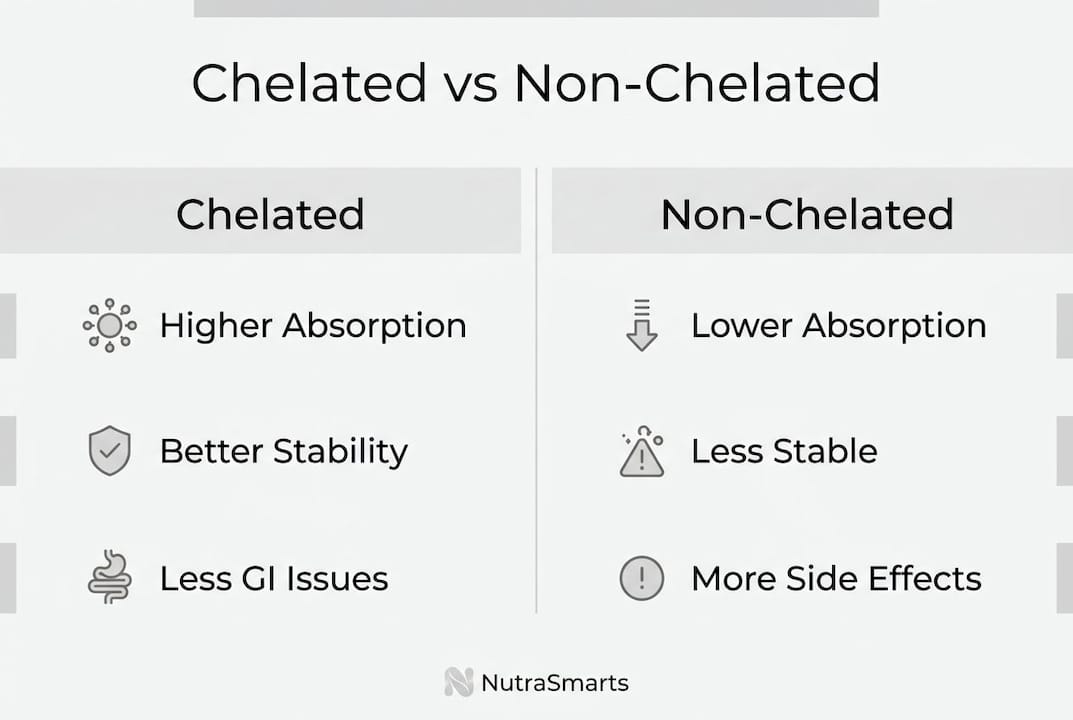
You can review absorption differences between forms in detail to understand which chelate form fits your specific health goal.
Are chelated supplements right for everyone?
Chelated mineral supplements are not necessary for every person. A healthy adult eating a varied diet with adequate protein, fruits, vegetables, and whole grains typically absorbs enough minerals from food. The body's natural digestive process handles mineral extraction reasonably well when stomach acid levels are normal and the diet is balanced.
The picture changes significantly for specific groups. Older adults, people with low stomach acid, and those with digestive disorders benefit most from chelated forms. Low stomach acid, a condition called hypochlorhydria, impairs the body's ability to free mineral ions from food and inorganic supplements. Chelated minerals bypass this step because the mineral is already bound in a stable, absorbable form. People on proton pump inhibitors or H2 blockers face the same challenge, since these medications reduce gastric acid as a side effect.
- Older adults with reduced stomach acid production
- People with Crohn's disease, celiac disease, or irritable bowel syndrome
- Individuals on long-term acid-reducing medications
- Pregnant people with elevated iron or magnesium needs
- Athletes with high mineral turnover from sweat loss
Nutrasmarts provides a deficiency risk guide by group that maps specific populations to their most common mineral shortfalls, which helps identify whether a chelated form is warranted.
Cost is a legitimate consideration. Chelated minerals cost more to manufacture than inorganic salts, and that cost passes to the consumer. The price premium is justified when absorption is genuinely impaired, but spending more on a chelated form when your gut absorbs minerals normally offers limited added benefit.
Pro Tip: If you are unsure whether you need a chelated form, check whether you experience GI discomfort with standard mineral supplements. Consistent nausea or cramping after taking magnesium oxide or ferrous sulfate is a strong signal that a chelated form would serve you better.
Chelated supplements complement, not replace, a mineral-rich diet. Their primary role is to close absorption gaps that food alone cannot bridge for specific individuals.
How to identify high-quality chelated mineral supplements
The supplement industry uses the word "chelated" loosely. A product labeled "chelated magnesium" may contain a true amino acid chelate, an organic acid chelate like magnesium citrate, or an inorganic salt with no chelation at all. Reading the Supplement Facts panel carefully is the only reliable way to tell the difference.
- Check the full chemical name. The ingredient list should name the specific chelate form, such as "magnesium bisglycinate chelate," "zinc bisglycinate," or "ferrous bisglycinate." Generic listings like "magnesium (as chelate)" without further detail are a warning sign.
- Look for the Albion TRAACS certification. The Albion TRAACS standard verifies that the mineral-amino acid bond is stable enough to survive gastric acid and reach the small intestine intact. Unstable chelates break apart in the stomach and behave like inorganic salts.
- Distinguish amino acid chelates from organic acid chelates. Amino acid chelates like bisglycinate form true ring structures and use peptide transporters. Organic acid chelates like citrate and malate improve solubility but do not use the same transporter pathway. Both outperform inorganic salts, but amino acid chelates generally show the highest absorption rates.
- Verify third-party testing. Certifications from NSF International, USP, or Informed Sport confirm that the product contains what the label claims. A supplement can list a chelated form on the label and contain a different compound entirely without independent verification.
- Avoid proprietary blends without specifics. A blend listing "mineral complex" without naming each mineral's form makes it impossible to evaluate what you are actually taking.
| Chelate type | Example | Absorption pathway | Stability |
|---|---|---|---|
| Amino acid chelate | Magnesium bisglycinate | Peptide transporters | High |
| Organic acid chelate | Magnesium citrate | Passive + active | Moderate |
| Inorganic salt | Magnesium oxide | Passive diffusion | Low |
Poorly labeled supplements often omit the chelate name entirely, which is a reliable indicator that the product contains an inorganic form. The Nutrasmarts supplement comparison tool lets you evaluate mineral forms side by side using verified ingredient data.
Key Takeaways
Chelated minerals deliver meaningfully higher absorption than inorganic salts, but only when the chelate bond is stable, properly formed, and verified by a recognized standard like Albion TRAACS.
| Point | Details |
|---|---|
| Chelation protects minerals | The ring structure shields mineral ions from phytates and stomach acid degradation. |
| Absorption rates are significantly higher | Magnesium glycinate absorbs at 70–80% versus 4% for magnesium oxide. |
| GI side effects drop sharply | Iron bisglycinate causes approximately 70% fewer GI side effects than ferrous sulfate. |
| Not everyone needs chelated forms | Healthy adults with balanced diets and normal stomach acid absorb minerals adequately from food. |
| Label specificity is the quality signal | Full chemical names and Albion TRAACS certification confirm a true, stable chelate. |
The absorption gap most people never think about
At Nutrasmarts, the question we hear most often is not "what form should I take?" It is "why isn't my supplement working?" After reviewing hundreds of ingredient profiles and clinical citations, the answer is almost always the same: the form of the mineral matters more than the dose on the label.
The most common misconception is that a higher milligram count means better results. A 500 mg magnesium oxide tablet delivers roughly 20 mg of absorbed magnesium. A 200 mg magnesium bisglycinate capsule delivers 140 mg or more. The person taking the oxide product is spending more money and getting less mineral into their bloodstream.
What I find genuinely underappreciated is how much absorption varies by individual physiology, not just by mineral form. Two people taking the same chelated magnesium product can have meaningfully different outcomes based on gut health, stomach acid levels, and concurrent medications. That is why population-level data on chelated minerals is useful as a starting point, but personal response still matters. Tracking how you feel, not just what the label says, is the most honest feedback loop available.
The emerging research on chelated minerals is also moving toward more specific clinical applications, particularly for populations with inflammatory bowel conditions and post-surgical malabsorption. The forms being studied are almost exclusively amino acid chelates, which tells you where the scientific consensus is heading. Quality over marketing claims is not just good advice. It is what the data consistently supports.
— Nutrasmarts
Find the right mineral supplement for your needs
Choosing between mineral forms is easier when you have verified ingredient data behind the decision.
Nutrasmarts organizes supplements by symptom and health goal, so you can filter by absorption need, deficiency type, or health condition rather than guessing from a shelf of generic labels. The database covers over 800 ingredients, each linked to peer-reviewed citations, including the specific chelate forms discussed here. For readers who want to compare label claims directly, the Supplement Facts Label Creator is a free, FDA-compliant tool that breaks down ingredient forms and elemental doses without requiring a spreadsheet. If you suspect a mineral deficiency is driving a symptom, the deficiency symptom finder maps your symptoms to likely nutrient gaps and the supplement forms most supported by clinical evidence.
FAQ
What does "chelated" mean on a supplement label?
"Chelated" means the mineral is chemically bonded to an organic molecule, usually an amino acid, forming a stable ring structure. This bond protects the mineral during digestion and improves its absorption compared to inorganic mineral salts.
How do chelated minerals absorb better than regular minerals?
Chelated minerals use peptide transporter pathways in the small intestine rather than passive diffusion, which allows faster and more complete uptake. They also avoid competitive inhibition from dietary phytates and oxalates that block free mineral ions.
What is the best chelated mineral supplement form?
Amino acid chelates like magnesium bisglycinate and zinc bisglycinate consistently show the highest absorption rates in clinical studies. Look for the Albion TRAACS certification on the label to confirm the chelate bond is stable enough to survive digestion.
Who benefits most from chelated mineral supplements?
Older adults, people with low stomach acid or digestive disorders, and those on acid-reducing medications benefit most from chelated forms. Healthy adults with balanced diets typically absorb minerals adequately from food and standard supplements.
Are chelated minerals safe to take daily?
Chelated minerals are generally safe at recommended doses, and their higher absorption efficiency means you need less elemental mineral to reach therapeutic levels. Always confirm the dose against established upper intake levels, particularly for zinc and iron, where excess intake carries real health risks.