

Supplement timing is defined as the deliberate scheduling of supplement intake to align with your body's absorption windows, physiological rhythms, and nutrient interactions. This practice, known in clinical research as applied pharmacokinetics, directly determines how much of a supplement your body actually uses. The difference between taking iron with coffee versus on an empty stomach can mean a 60–90% drop in absorption. Understanding why supplement timing affects results gives you a concrete way to get more from every capsule you already take, without changing what you buy.
Why supplement timing affects results: the science of absorption
Your body does not absorb every supplement the same way. Supplement absorption mechanisms depend on solubility, stomach environment, competing nutrients, and your circadian rhythm. Each of these factors shifts depending on when you take a supplement.
Solubility is the first dividing line. Fat-soluble nutrients (vitamins A, D, E, and K) require dietary fat in the gut to trigger bile salt release and dissolve into the bloodstream. Water-soluble nutrients (vitamin C, B vitamins) absorb more freely but can still cause GI distress on a completely empty stomach. Getting this distinction wrong is the most common reason a supplement routine underdelivers.

The stomach environment matters just as much. An empty stomach produces a more acidic pH, which improves absorption for minerals like iron. A fed stomach slows gastric emptying and releases digestive enzymes and bile, which is exactly what fat-soluble vitamins need. These two conditions are opposites, which is why a single "take all supplements at once" habit fails for most people.
Circadian rhythms add another layer. Your cortisol peaks in the morning, your digestive enzyme output shifts across the day, and your melatonin rises at night. Supplements with stimulating properties work with your morning cortisol surge. Calming supplements work against it if taken in the morning and with it if taken at night.
- Fat-soluble: vitamins A, D, E, K, CoQ10, fish oil, turmeric. Always take with a fat-containing meal.
- Water-soluble: vitamin C, B vitamins, most amino acids. More flexible, but avoid a completely empty stomach if you are sensitive.
- Minerals: iron, calcium, zinc, magnesium, copper. Timing and separation matter because these nutrients compete for the same transporters.
Pro Tip: If you are unsure whether a supplement is fat-soluble, check whether it is listed in an oil-based softgel. That packaging choice is the manufacturer's signal that fat is required for absorption.
Which supplements should you take with meals?
Fat-soluble vitamins need dietary fat to absorb properly. Clinical evidence shows that fat-soluble vitamins A, D, E, and K achieve 32–50% higher bioavailability when taken with a fat-containing meal compared to a fasting state. That gap is large enough to explain why some people supplement for months without measurable blood level changes.
CoQ10, fish oil, and turmeric (curcumin) follow the same rule. CoQ10 in particular is a large, lipophilic molecule that barely crosses the gut wall without fat present. Taking it with avocado, eggs, olive oil, or any meal that contains at least 10–15 grams of fat makes a real difference. Turmeric's active compound, curcumin, has notoriously poor bioavailability on its own. Pairing it with fat and black pepper extract (piperine) addresses both the solubility and the metabolic clearance problem simultaneously.
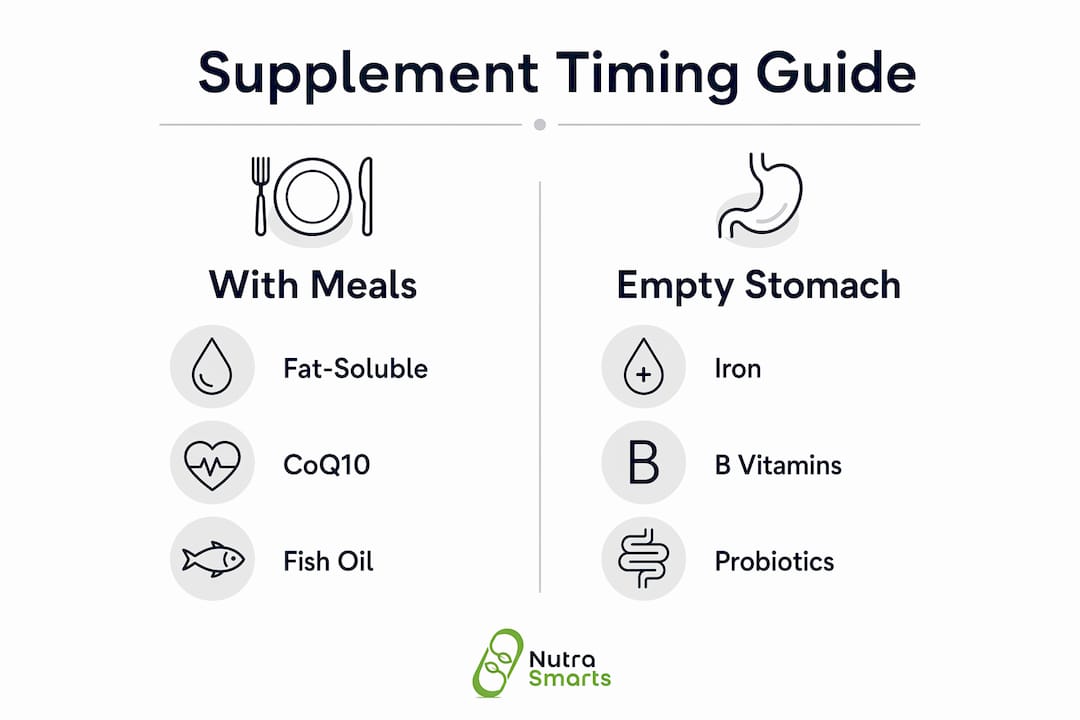
Multivitamins that contain fat-soluble vitamins also belong with meals. Taking multivitamins with food enhances absorption of the fat-soluble components and reduces the nausea that some people experience when taking them on an empty stomach. The water-soluble vitamins in the same pill are not harmed by the meal.
The practical consequence of poor timing for these supplements is not just reduced absorption. Low vitamin D levels despite supplementation, for example, are frequently traced back to taking the supplement without fat rather than a dosing problem. Before increasing a dose, check the timing.
Which supplements work better on an empty stomach?
Iron is the clearest case. Iron absorption increases 2–3 times when taken on an empty stomach 30–60 minutes before eating. That same absorption doubles again when you add 63 mg of vitamin C at the same time. The practical protocol is straightforward: take iron with a small glass of orange juice first thing in the morning, then wait at least 30 minutes before eating.
Coffee and tea destroy this advantage. Taking iron with coffee or tea reduces absorption by 60–90% because polyphenols and tannins bind to iron in the gut before it can cross the intestinal wall. Wait at least 1–2 hours between iron and any caffeinated beverage.
Mineral competition is a separate and frequently overlooked problem. Calcium and iron share the same absorption transporter (DMT-1). Taking them together reduces iron absorption by up to 50%. Zinc, copper, and magnesium also compete through overlapping transporter pathways. The solution is spacing, not elimination.
Mineral spacing guide
| Mineral pair | Conflict level | Recommended spacing |
|---|---|---|
| Calcium and iron | High | At least 2 hours apart |
| Zinc and copper | Moderate | At least 2 hours apart |
| Iron and magnesium | Moderate | At least 1–2 hours apart |
| Calcium and zinc | Low to moderate | 1 hour apart when possible |
- Take iron first thing in the morning with vitamin C, on an empty stomach.
- Take calcium with lunch or dinner, where it also benefits from food.
- Take zinc at a separate meal from both iron and copper.
- Take magnesium in the evening, well clear of iron and zinc.
Pro Tip: If iron supplements cause GI distress on a fully empty stomach, try taking them 15 minutes after a very small, low-fiber snack. Absorption drops slightly but remains far higher than taking iron with a full meal or with calcium.
How does supplement timing align with your daily routine?
Physiological effects drive timing just as much as absorption does. B vitamins and CoQ10 have stimulating properties that work best in the morning, when your body's cortisol and energy systems are naturally active. Taking them in the evening can interfere with sleep for sensitive people. This is not a theoretical concern. Many people who report poor sleep while supplementing with B-complex are simply taking it at the wrong time of day.
Calming supplements belong in the evening. Magnesium citrate or oxide taken 60–90 minutes before bed supports sleep quality and bowel regularity without causing daytime lethargy. Magnesium citrate specifically has strong clinical support for this use. L-theanine, the amino acid found in green tea, also works well in the evening because it promotes relaxed focus without sedation, making it easier to wind down.
Vitamin D timing is a subtler issue. Most people take it in the morning, which is fine. Some research suggests that vitamin D taken late at night may suppress melatonin production and disrupt sleep in sensitive individuals. Morning or midday is the safer default.
A three-window approach works well for most people:
- Morning window: B vitamins, CoQ10, vitamin D, iron (on empty stomach), water-soluble vitamins
- Midday window (with lunch): Fat-soluble vitamins A, D, E, K, fish oil, CoQ10, turmeric, calcium
- Evening window: Magnesium, L-theanine, zinc (if not taken at lunch), probiotics
Probiotics deserve a brief note. The evidence on timing is mixed, but taking them with or just before a meal appears to improve survival through stomach acid. The meal buffers the pH and gives the bacteria a better chance of reaching the intestine intact.
Practical tips for building your supplement schedule
The single most important rule is consistency. Routine adherence matters more than exact timing for most supplements. A person who takes vitamin D every morning with breakfast gets far more benefit than someone who takes it at the "perfect" time three days a week. Build your schedule around meals and habits you already have.
The three biggest mistakes people make with supplement timing are:
- Taking iron with calcium or coffee, which can cut absorption by 50–90%
- Taking fat-soluble vitamins without any fat in the meal
- Taking stimulating supplements (B vitamins, CoQ10) in the evening and then wondering why sleep suffers
Flexibility is acceptable for most supplements. If you miss your morning window for vitamin D, taking it at lunch is fine. The fat-soluble rule still applies, but the exact hour does not. The exceptions are iron (where the empty stomach rule is worth protecting) and magnesium (where evening timing is part of the mechanism).
Pro Tip: Set up a simple two-container system: one for morning supplements, one for evening. This removes the daily decision and makes the routine automatic within two weeks.
If a supplement causes GI distress, the fix is usually food, not discontinuation. Iron is the exception. If iron causes significant nausea even with food, talk to a healthcare provider about a different form (ferrous bisglycinate is generally gentler) rather than abandoning iron supplementation entirely.
Key Takeaways
The timing of supplement intake directly controls absorption rates, physiological effects, and nutrient interactions, making it one of the highest-return adjustments you can make to an existing supplement routine.
| Point | Details |
|---|---|
| Fat-soluble vitamins need fat | Take vitamins A, D, E, K, CoQ10, and fish oil with a fat-containing meal for 32–50% better absorption. |
| Iron absorbs best alone | Take iron on an empty stomach with vitamin C, and wait 1–2 hours before coffee or calcium. |
| Minerals compete for transporters | Space calcium, iron, zinc, and copper at least 1–2 hours apart to avoid mutual absorption loss. |
| Match energy to time of day | Take B vitamins and CoQ10 in the morning; take magnesium and L-theanine in the evening. |
| Consistency beats perfection | A simple, repeatable routine delivers better results than an ideal schedule followed inconsistently. |
The timing trap most people fall into
At Nutrasmarts, we see the same pattern repeatedly. Someone builds a solid supplement stack based on real clinical evidence, takes everything at once with breakfast, and then wonders why their labs barely move after three months. The supplements are not the problem. The timing is.
The uncomfortable truth is that the supplement industry rarely emphasizes timing because it does not sell more product. But getting timing right is often worth more than upgrading to a premium brand. Taking vitamin D without fat, or iron with your morning coffee, can negate a significant portion of the dose you paid for.
That said, I want to push back against the overcorrection. Some people read about mineral competition and start spacing every supplement by two hours, building a six-event daily schedule that collapses within a week. Complexity kills adherence. The practical goal is to protect the high-stakes interactions (iron away from calcium and coffee, fat-soluble vitamins with fat, magnesium in the evening) and let the rest be flexible. Most people can get 90% of the benefit from timing with three simple rules and two daily windows.
Individual tolerance matters too. If taking iron on a fully empty stomach makes you feel sick every morning, a small snack is a reasonable trade-off. The best timing protocol is the one you actually follow.
— Nutrasmarts
How Nutrasmarts can help you build a better routine
Getting supplement timing right starts with knowing exactly what each ingredient in your stack requires.
Nutrasmarts has reviewed over 800 ingredients, each linked to peer-reviewed studies and clinical trial citations. Whether you are building a routine around metabolic health supplements or looking for the right energy-focused options, every ingredient page includes absorption notes, dosage guidance, and interaction flags. You can also search by symptom, from joint pain to brain fog, to find products backed by clinical evidence rather than marketing copy. The supplement ingredient database makes it straightforward to check whether your current stack has timing conflicts before they cost you results.
FAQ
Why does supplement timing affect absorption so much?
Timing controls the stomach environment, bile availability, and competing nutrient levels at the moment of absorption. Fat-soluble vitamins need bile (triggered by dietary fat), while iron absorbs best in an acidic, empty stomach.
What is the best time to take vitamin D?
Morning or midday with a fat-containing meal is the standard recommendation. Taking vitamin D late at night may interfere with melatonin production in sensitive individuals.
Can you take calcium and iron at the same time?
Taking calcium and iron together reduces iron absorption by up to 50% because they compete for the same intestinal transporter. Space them at least 2 hours apart.
When should you take magnesium for sleep?
Magnesium taken 60–90 minutes before bed supports sleep quality and bowel regularity without causing daytime drowsiness. Magnesium citrate and magnesium glycinate are the most studied forms for this purpose.
Does it matter if you take supplements at the exact same time every day?
Consistency matters more than the exact hour for most supplements. Building timing around fixed daily habits, like meals, improves adherence and delivers better long-term results than a rigid schedule that is hard to maintain.