

For most health-conscious U.S. adults, clinician-reviewed, lab-integrated platforms deliver the most accurate personalized supplement plans because they combine objective biomarker data with human safety screening. If you want a quick shortlist before diving deeper:
- Lab-integrated, clinician-led (blood panels + RD/MD review): best for anyone with a diagnosed deficiency, chronic condition, or prescription medications
- At-home biomarker + algorithm (finger-prick or dried blood spot + AI): best for generally healthy adults who want data-driven recommendations without a clinic visit
- Quiz-based with optional clinician access (lifestyle questionnaire + nutritionist consult): best for budget-conscious users starting with general wellness
Before committing to any platform, look for four non-negotiable signals: third-party testing certification (USP or NSF International), explicit medication safety screening, dynamic plan updates when your health data changes, and a clear Supplement Facts label with exact ingredient dosages.
Table of Contents
- Which platform type fits your needs? A side-by-side comparison
- How to choose a personalized supplement platform
- What do personalized supplement plans cost, and when do you notice results?
- Safety, U.S. regulations, and when to see a clinician first
- Do platforms give you access to a real clinician?
- Nutrasmarts: verify any plan before you commit
- Key Takeaways
- The gap between "personalized" and actually personal
- Authoritative sources and further reading
Which platform type fits your needs? A side-by-side comparison
Forbes Health's evaluation of personalized vitamin subscription services confirms that cost, ingredient transparency, assessment method, and access to health consultations are the criteria that most reliably separate strong platforms from weak ones. The table below maps those criteria across the four main platform types.
| Feature | Lab-integrated clinician-led | At-home biomarker + algorithm | Quiz-based with optional clinician review | Build-your-own nutrient control |
|---|---|---|---|---|
| Personalization method | Venous blood panel + RD/MD review | Finger-prick or dried blood spot + AI | Lifestyle questionnaire + optional RD | Manual ingredient selection |
| Assessment tests included | Full lab panel (CBC, metabolic, micronutrients) | At-home biomarker kit | Questionnaire only | None |
| Clinical oversight | RD/MD/pharmacist review included | Algorithm-driven; optional add-on consult | Optional nutritionist consult | None |
| Third-party testing | COAs typically available; USP/NSF common | Varies; ask for lot-specific COAs | Varies widely | Depends on supplier |
| Form factor & delivery | Capsule packs, powders, custom blends | Daily packs or capsules | Daily packs or gummies | Capsules, powders, custom |
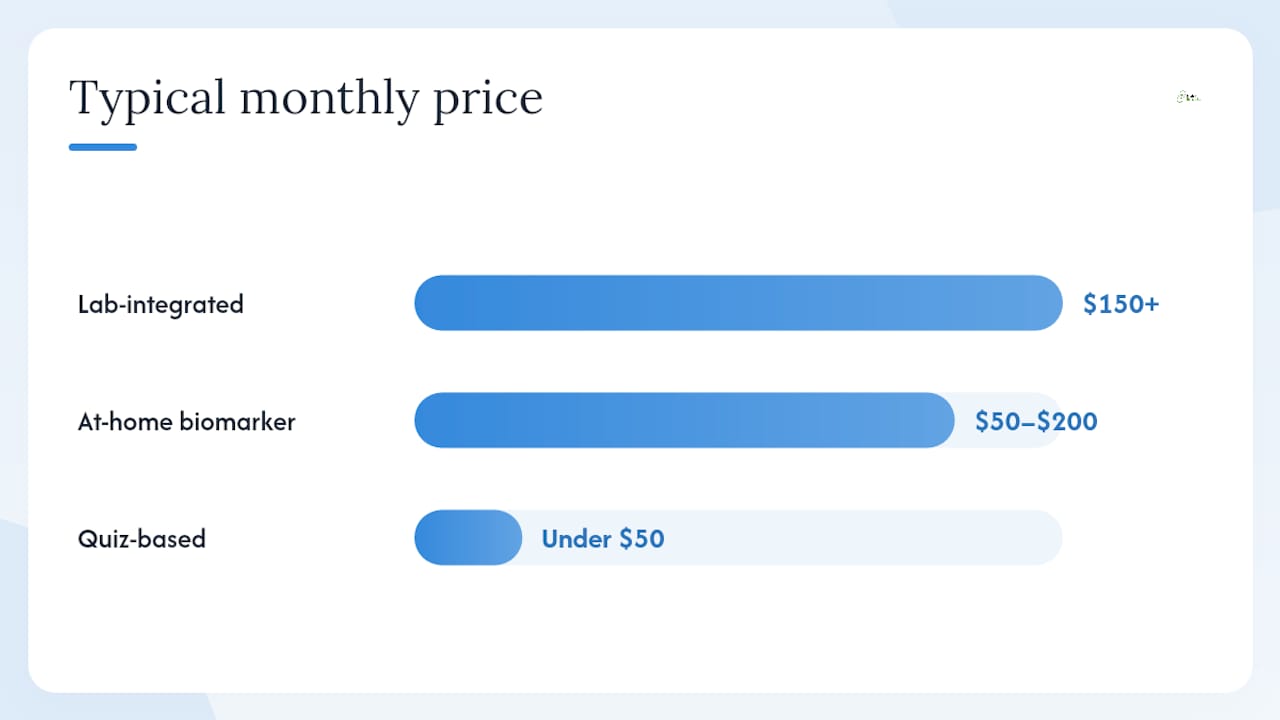
| Typical monthly price | $150+ | $50–$200 | Under $50 | — |
| Subscription flexibility | Monthly; pause/skip usually available | Monthly; some quarterly options | Monthly; easy cancellation common | Monthly or one-time |
| Best for | Deficiency correction, complex health needs | Data-driven wellness without clinic visits | General prevention, budget users | Formulators, advanced self-trackers |
Pro Tip: When a platform publishes its "personalization methodology," ask for three specifics: the exact assay panels used (e.g., 25-OH vitamin D, ferritin, TSH), the credentials of clinicians who review results, and whether certificates of analysis (COAs) are lot-specific. A methodology page that describes only the quiz flow without naming lab panels or clinician credentials is marketing copy, not a clinical process.
USP and NSF International certification marks are the most recognized third-party signals in the U.S. market. You can verify both at their respective registries before purchasing.
How to choose a personalized supplement platform
The single most important criterion is clinician oversight combined with medication safety screening. A beautifully designed quiz means nothing if the platform ships you high-dose vitamin K2 while you're on warfarin.
Checklist: what to verify before subscribing
- Assessment method: does it include lab data, or only a questionnaire?
- COAs: are they lot-specific and from an accredited third-party lab?
- Supplement Facts label: are all ingredient dosages listed, including excipients?
- Published personalization methodology: does it name specific assays and clinician credentials?
- Shipping cadence: monthly, quarterly, or on-demand?
- Pause/skip policy: can you delay a shipment without canceling?
- HSA/FSA eligibility: some platforms qualify; confirm before checkout
- Privacy policy: does it specify how health data is stored and whether it is sold?
Exact questions to ask customer support:
- Which lab panels do you accept or run, and which assay methods do you use?
- Do you screen my medications against a documented drug-nutrient interactions database?
- Can I receive lot-specific COAs for my current order?
- How often does my plan update, and what triggers a reformulation?
- Is my health data stored under HIPAA-compliant protocols?
Red flags that should stop you immediately:
- No ingredient dosages on the label (a legal requirement under DSHEA)
- No COAs available, or only brand-level rather than lot-specific
- No medication interaction screening at any point in the process
- Plans that never update regardless of new health data
- Any claim that a supplement treats, cures, or prevents a disease
Identifying high-quality supplements requires reading beyond the marketing page. Non-compliant labels are more common than most consumers realize, and knowing what label violations look like makes it easier to spot them fast.
What do personalized supplement plans cost, and when do you notice results?
Most personalized supplement plans run at various prices per month, with the spread driven by how much data collection and clinical labor goes into the recommendation.
| Tier | What's included | Typical monthly cost |
|---|---|---|
| Quiz-based | Questionnaire, daily pack or gummies, basic support | Under $50 |
| At-home lab + algorithm | Biomarker kit (one-time or recurring), AI-driven formula, optional consult | $50–$200 |
| Full clinician-led, lab-integrated | Venous panel, RD/MD review, custom formulation, follow-up consults | $150+ |
Pricing drivers beyond the tier:
- Lab tests: often a one-time upfront cost ($50–$200), sometimes bundled, sometimes billed separately
- Bespoke manufacturing: custom-blended capsules or powders cost more than pre-made packs
- Fulfillment frequency: monthly shipments cost more per unit than quarterly
Timeline expectations:
- Onboarding and assessment: 1–4 weeks depending on lab turnaround
- First shipment: 1–6 weeks (longer for custom-manufactured formulas)
- Measurable effects: 4–12 weeks for most nutrients; vitamin D and iron stores typically show movement in blood work at 8–12 weeks
Most platforms offer monthly subscriptions with the ability to pause or skip. Confirm the refund policy before your first order, particularly for custom-manufactured products that may be non-refundable once produced.
Safety, U.S. regulations, and when to see a clinician first
Always consult a clinician before starting a personalized supplement plan if you have a chronic condition, are pregnant or breastfeeding, or take any prescription medication. For users on anticoagulants, undergoing chemotherapy, or in the first trimester of pregnancy, an algorithm-only platform is insufficient regardless of how sophisticated its quiz is.
Safety essentials to confirm with any platform:
- Medication interaction screening: ask which database the platform uses and how frequently it updates
- Dose transparency: every ingredient must appear on the Supplement Facts panel with its exact amount
- Third-party testing: USP, NSF International, or independent COAs from an ISO-accredited lab
- Allergen labeling: all major allergens (soy, gluten, shellfish) must be declared
- Excipients disclosed: fillers, coatings, and flow agents should be listed
Under the Dietary Supplement Health and Education Act (DSHEA), supplement manufacturers must follow current Good Manufacturing Practices (cGMPs), but the FDA does not pre-approve supplement formulations before they reach shelves. That regulatory gap is exactly why third-party certification and COA verification matter so much. Supplement ingredient transparency explains how to read a COA and what to look for beyond the pass/fail stamp.
Pro Tip: To verify a Supplement Facts label for dosage appropriateness, compare the listed amount against the RDA (Recommended Dietary Allowance) and the UL (Tolerable Upper Intake Level) from the NIH Office of Dietary Supplements. A dose above the UL for fat-soluble vitamins (A, D, E, K) warrants a clinician conversation before you start.
On data privacy: ask whether the platform is HIPAA-covered, how long health data is retained, and whether it is shared with third parties for marketing. Platforms that integrate with Apple Health, Fitbit, or similar apps should specify what data flows in each direction and how it is stored.
Do platforms give you access to a real clinician?
Clinician access varies more than most platforms advertise. Some services include unlimited RD consultations in the base price; others charge per session or offer only asynchronous messaging with a support team that may not include licensed practitioners.

The strongest platforms employ or contract with registered dietitians, pharmacists, or physicians who review your data before finalizing a formula. Some services screen medications against databases covering thousands of documented drug-nutrient interactions, which is a meaningful safety layer. Others rely entirely on the algorithm and flag only the most obvious contraindications.
For general wellness users, an asynchronous RD review may be sufficient. For anyone managing multiple prescriptions or a diagnosed condition, synchronous access to a pharmacist or physician is worth paying for. Matching supplements to specific health goals requires the kind of goal-specific nuance that a qualified clinician brings, especially when lab data is involved.
Step-by-step guidance on selecting supplements by symptom and life stage can help you frame the right questions before your first clinician consultation.
Nutrasmarts: verify any plan before you commit
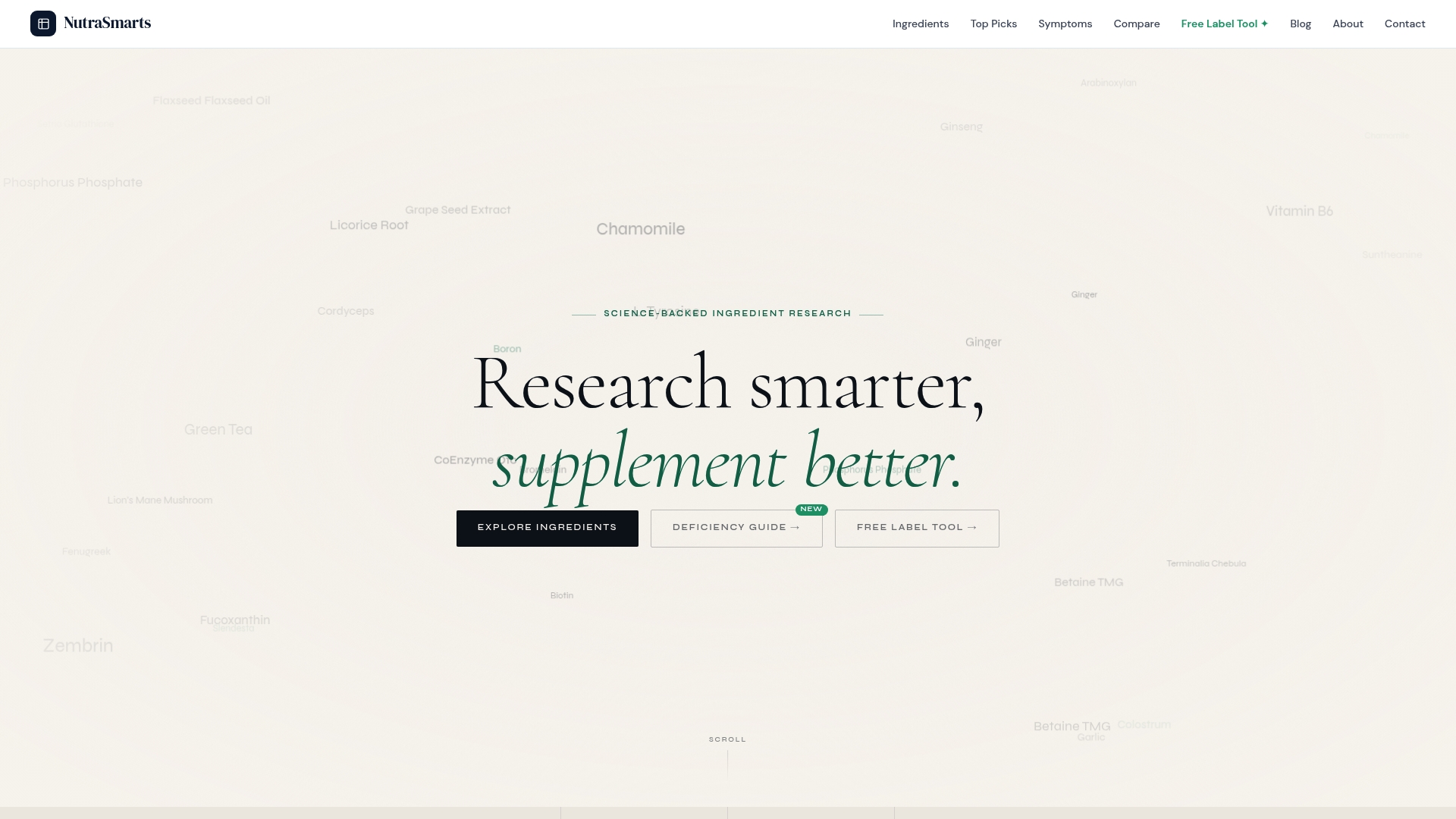
Every platform on this list makes personalization claims. Nutrasmarts gives you the tools to check them. The ingredient database at Nutrasmarts covers 1,300+ evidence-rated ingredient profiles, each linked to peer-reviewed studies and clinical trial citations, so you can confirm whether the dose a platform recommends actually matches what the research supports.
The symptom-to-supplement search lets you cross-reference a platform's recommendation against clinical evidence for your specific concern, from joint pain to brain fog. The side-by-side ingredient comparison tool shows you exactly how two formulas differ. And if you want to build or verify a label yourself, the free FDA-compliant Supplement Facts label creator generates a compliant label in minutes, no spreadsheet required.
Use Nutrasmarts to audit a vendor's formula before subscribing, or to build your own evidence-backed stack from scratch.
Key Takeaways
Lab-integrated, clinician-reviewed platforms deliver the most accurate personalized supplement plans for U.S. adults, but the right tier depends on your health complexity, budget, and how much data you want to provide.
| Point | Details |
|---|---|
| Clinician oversight is the top criterion | Always confirm RD, MD, or pharmacist review is included, especially if you take prescription medications. |
| Third-party testing is non-negotiable | Ask for lot-specific COAs from an accredited lab; USP or NSF certification adds a second verification layer. |
| Costs range from under $50 to $200+ monthly | Quiz-only plans run under $50; full lab-integrated, clinician-led plans typically exceed $150 per month. |
| Effects take 4–12 weeks to measure | Most nutrients require 8–12 weeks before blood work reflects meaningful change; set expectations accordingly. |
| Nutrasmarts for independent verification | Use Nutrasmarts's ingredient database, comparison tool, and label creator to audit any platform's formula before committing. |
The gap between "personalized" and actually personal
Most platforms calling themselves personalized are really running a sophisticated sorting algorithm against a fixed product catalog. Your quiz answers route you to one of a dozen pre-built stacks, not a formula built from your data. That is not inherently bad for a healthy adult with no medications and no deficiencies. But it is worth being clear-eyed about what you are buying.
The platforms that genuinely earn the personalization label are the ones that change your formula when your circumstances change: a new medication, a follow-up blood panel showing corrected vitamin D, a shift from endurance training to strength work. Static plans dressed up in personalization language are the norm, not the exception.
The other thing most coverage underplays: the value of using a research tool like Nutrasmarts to cross-check whatever a platform recommends. A platform has a commercial interest in keeping you subscribed. Nutrasmarts's ingredient evidence pages have no stake in whether you buy a particular formula. That independence is worth something, especially when you are deciding whether a $150-per-month plan is actually doing what it claims.
Authoritative sources and further reading
- Best Personalized Vitamin Subscription Services — Forbes Health
- NutraSmarts — Science-Backed Supplement Ingredient Research
- Match Supplements to Health Goals: Your 2026 Guide — NutraSmarts blog
- How to Identify High Quality Supplements in 2026 — NutraSmarts blog
- What Is Supplement Efficacy Evidence? A Clear Guide — NutraSmarts blog