
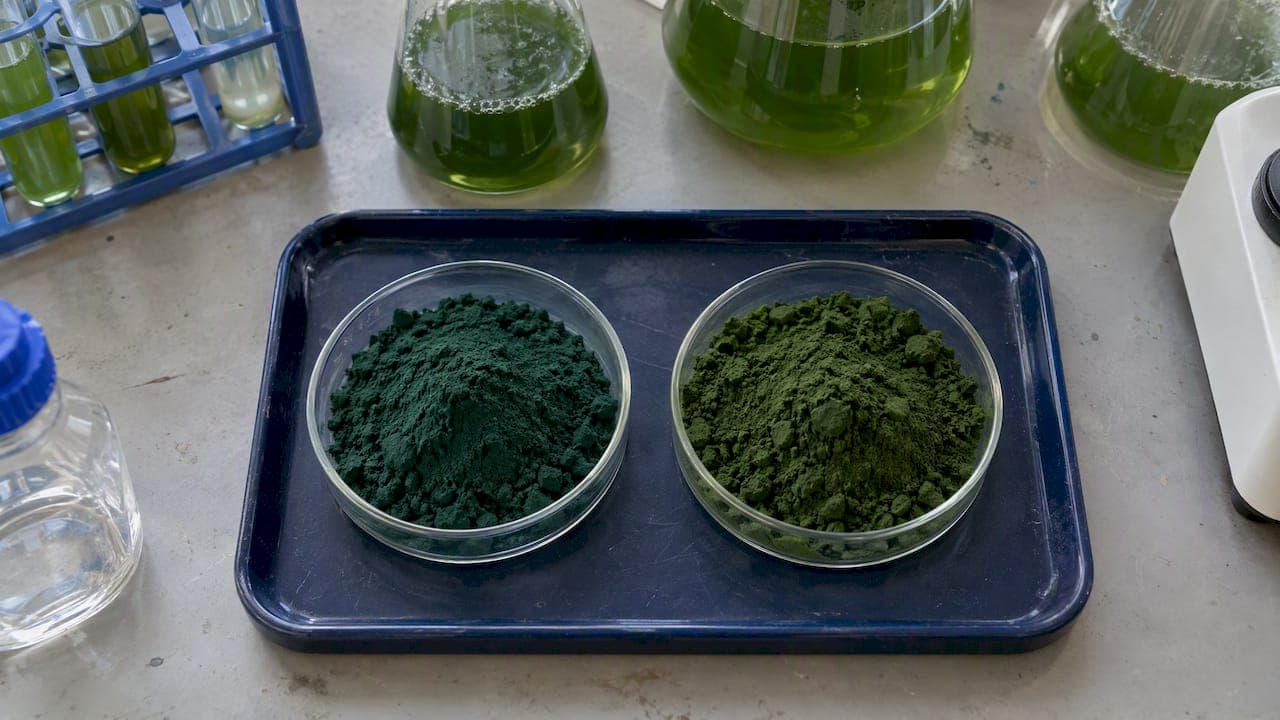
Spirulina is the better pick if you want a protein- and B-vitamin-rich green powder that is easy on the stomach. Chlorella is the better pick if you want more iron, vitamin A and chlorophyll and don't mind a stronger taste and a processing requirement. Neither has strong proof for "detox," and the quality of the specific product matters more than which alga you choose.
That is the short version. Below we cover how the two differ biologically, what the human trials show, who should be careful, and how to buy either one without gambling on contamination.
TL;DR
- Spirulina is a blue-green alga (a cyanobacterium) and is generally easier to digest. Chlorella is a green microalga with a tough cell wall, so look for a "broken cell wall" product.
- Chlorella tends to supply more iron and vitamin A; spirulina is often marketed for protein and daytime energy. Both are complete proteins, according to marketing pages, but they are not a replacement for a varied diet.
- Trial evidence for algae as a group is modest: small gains in exercise endurance and small reductions in body weight measures. The "detox" claims are far better advertised than proven.
- The biggest risk is not the algae but the product: toxins from other blue-green algae, heavy metals and contamination. Choose third-party tested products.
- You can take both, but there is no proof that the combination beats either one alone.
Table of Contents
- What spirulina and chlorella actually are
- Spirulina vs. chlorella side by side
- What the human evidence shows
- Which one fits your goal
- Safety: where most of the risk lives
- How to buy a quality algae supplement
- Our perspective
- Check the evidence for yourself
- FAQ
- Sources
What spirulina and chlorella actually are
The two are often sold side by side as "green superfoods," but they are not close relatives.
Spirulina is a blue-green alga. The FDA explains that blue-green algae are a type of bacteria, also called cyanobacteria, that grow in water, and that certain kinds grown in freshwater lakes and aquaculture ponds end up in dietary supplements. That matters for safety, as we explain below.
Chlorella is a single-celled green alga, a true eukaryotic microalga, usually grown in tanks or ponds. Its cell wall is rigid, which is why quality chlorella products are labeled "broken cell wall" or "cracked cell." Without that processing, much of the nutrition stays locked inside the cell.
In practice that gives you two different products:
- Spirulina is sold as powder, tablets and capsules. It dissolves or disperses easily, tastes distinctly "pondy," and has a deep blue-green color.
- Chlorella is sold as tablets, capsules and powder. It is a brighter, darker green and has a grassier taste.
If you want the ingredient-level detail, our spirulina profile and chlorella profile list clinical dosage ranges, mechanisms and the studies behind each rating.
Spirulina vs. chlorella side by side
Nutrient numbers vary by brand, growing method and serving size, so treat this table as a directional guide and check the Supplement Facts panel on the actual product.
| Factor | Spirulina | Chlorella |
|---|---|---|
| Type of organism | Cyanobacterium (blue-green alga) | Green microalga |
| Protein | Generally a bit higher | High, slightly lower than spirulina |
| Iron and vitamin A | Lower | Generally higher |
| Chlorophyll | Present | Generally higher |
| Digestibility | Generally easier on the gut | Needs cell wall processing; can cause GI upset in some people |
| Typical reputation | Energy, protein, blood sugar, heart health | "Detox," iron, tissue repair |
| Main quality risk | Contamination with toxin-producing blue-green algae | Heavy metals and processing quality |
| Best for | Easy daily protein and B vitamins | Iron and vitamin A support, if your diet is low |
The nutrient direction comes from a dietitian-reviewed comparison, which notes that chlorella has more iron and vitamin A than spirulina, while spirulina is generally more digestible, especially for people with irritable bowel syndrome. The same piece says both support blood sugar control and heart health, a claim we look at next.
What the human evidence shows
Most popular articles on this topic repeat the same talking points. Here is what the pooled trials of people actually say, and how far they go.
Exercise and recovery
A 2026 systematic review and meta-analysis of seaweed and microalgae on exercise performance and recovery pooled data from 822 participants. It found that algae supplementation improved time to exhaustion (SMD 1.06, 95% CI 0.16 to 1.96) and lowered creatine kinase (SMD -0.78, 95% CI -1.28 to -0.28), a marker of exercise-induced muscle damage.
Look at that first confidence interval: 0.16 to 1.96. The average effect is large, but the range of plausible effects runs from barely noticeable to very large. That is the signature of small, varied trials. It's promising, not settled, and the review covers seaweed and microalgae in general, not spirulina or chlorella head to head.

If athletic performance is your goal, our athletic performance supplement rankings put algae in context next to ingredients with deeper evidence.
Weight and body composition
A GRADE-assessed meta-analysis of algae and anthropometric indices in adults, including spirulina and chlorella, found small average reductions: body mass index by 0.27 kg/m², body weight by 0.78 kg and body fat by 0.9%. These are real but small changes. Nobody should expect algae to be a weight-loss product.
Heart and metabolic health
A 2025 meta-analysis of randomized trials on chlorella and spirulina as adjuvants for cardiovascular risk factors looked at cholesterol, triglycerides, glucose, weight and blood pressure. The word "adjuvant" is the important one: researchers are testing these as add-ons to standard care, not replacements for medication or diet changes. If metabolic health is your reason for looking, see our metabolic health supplement guide for how algae compares with other options.
Detox
Chlorella's strongest reputation is for "detoxifying," and spirulina gets the same treatment in many articles. We did not find a pooled human trial in the sources above showing that either supplement clears a specific toxin from a healthy person. Your liver and kidneys do that work. Be wary of any product page that lists the toxins it "removes."
Which one fits your goal
Start with the problem you are trying to solve, not the hype.
- You want an easy, daily protein and B-vitamin boost. Spirulina is the simpler choice. It is generally gentler on digestion and mixes into smoothies. Keep in mind the serving is small: a few grams of powder is a nutrient accent, not a protein source like eggs, beans or whey.
- Your diet is low in iron or vitamin A. Chlorella supplies more of both per the comparison above. If you suspect a real deficiency, though, get a blood test first. Fatigue, pallor and brittle nails have many causes, and our deficiency symptom guide helps you map symptoms to likely nutrients before you pick a product.
- You have a sensitive gut. Start with spirulina, and add chlorella later at a small dose if you want to try it.
- You want energy. Spirulina is widely marketed for daytime energy, but the trial evidence for algae and fatigue is thin. Our energy supplement rankings show which ingredients have the stronger record.
- You want both. Nothing in the research above says taking them together is harmful, and nothing shows the combination does more. Add one at a time for a couple of weeks so that you can tell which one causes any side effect.
For a head-to-head view of dosages, evidence ratings and mechanisms, use our side-by-side comparison tool.
Safety: where most of the risk lives
Algae are food-like, and for most healthy adults the common side effects are mild: headaches, diarrhea, bloating and gas are reported with spirulina. The real concerns are narrower and more important.
Toxins from contaminated blue-green algae
Spirulina grows in warm, alkaline water, and the NIH's LiverTox entry warns that it can be contaminated with other blue-green algae that produce toxins called microcystins. The FDA's page on blue-green algae products and microcystins discusses the same risk, with wild-harvested species such as Aphanizomenon flos-aquae a particular concern. The agency does not test or approve supplements before they reach the market, so brand language is not a safety check.
Heavy metals and unlisted drugs
A 2025 analysis of spirulina and chlorella supplements examined whether these products are only a source of valuable nutrients. It reported detecting pharmaceutical residues in some products, with higher rates of caffeine and certain other compounds in chlorella-based products, and it discusses heavy metal exposure too. That is one study of the products it sampled, not a verdict on every brand. But it illustrates why testing matters.
Who should talk to a clinician first
- If you take a blood thinner or have a bleeding disorder, ask your doctor or pharmacist before starting either. WebMD notes that spirulina may reduce blood clotting and raise bruising risk in people with bleeding conditions. Chlorella contains vitamin K, which is relevant for people on warfarin, so check with your pharmacist.
- If you are pregnant or breastfeeding, the same page says there is not enough research to confirm that blue-green algae are safe, so talk to your obstetrician or midwife.
- If you have an autoimmune condition or take immune-suppressing medication, ask the specialist managing it. Algae are marketed as immune "boosters," which may not suit you.
- If you have a liver condition, talk with your hepatologist before using any concentrated supplement.
How to buy a quality algae supplement
The differences between spirulina and chlorella are smaller than the differences between a well-made and a poorly made product of either. Use this checklist.
- Look for a third-party seal. The NIH Office of Dietary Supplements advises people to look for products tested by independent programs such as NSF Certified for Sport or Informed-Choice, because supplements are not pre-approved by the FDA for safety or effectiveness. For why that matters, read why third-party testing matters for supplements.
- Avoid wild-harvested blue-green algae. Controlled, cultivated production lowers (but does not remove) the chance of toxin-producing neighbors in the water.
- For chlorella, check the processing. "Broken cell wall," "cracked cell wall" or similar wording should be on the label or the manufacturer's site.
- Read the Supplement Facts panel. Is the serving size realistic? Does the product list a proprietary blend that hides amounts? Our guides on FDA-compliant label requirements and non-compliant label examples show what a proper label should and should not look like.
- Be skeptical of health claims. A compliant supplement label may carry only structure-function claims plus the FDA disclaimer. Promises to "flush heavy metals" or "cure" something are a red flag.
- Remember what regulators do and don't check. Supplement oversight is a recurring theme when lab promise outruns human proof, as in this look at vitamin C and bone health. Independent testing fills the gap.
Our perspective
We built NutraSmarts around a simple rule: an ingredient earns its reputation from human trials, not from the marketing around it. Spirulina and chlorella illustrate why that rule matters. Both are nutritious foods with interesting trial signals, and both are surrounded by claims that go well past the data.

When we rate an ingredient, we look at the quality and consistency of the clinical evidence, the dose actually used in trials, and the safety record. Algae come out as reasonable, low-risk additions for some people and a poor use of money for others. The honest takeaway is that the exercise and body weight findings are modest, the cardiometabolic results are being tested as add-ons, and the detox story is unsupported.
Our advice: pick based on tolerance and the nutrient you may be short of, buy a tested product, give it a defined trial period of a few weeks, and stop if you feel worse. If you want to understand how to judge a study yourself, our guides on evaluating supplement clinical evidence and what supplement efficacy evidence means walk through it step by step.
— NutraSmarts
Check the evidence for yourself
Want to see how spirulina and chlorella stack up against other ingredients for your specific concern? Our supplement ingredient database gives you clinical dosage benchmarks, evidence ratings and PubMed-cited studies, with no sign-up or paywall. You can also search supplements by symptom, from brain fog to joint pain, or, if you are a formulator, build a compliant panel with the free Supplement Facts label creator.
FAQ
Should I take chlorella or spirulina?
Choose spirulina if you want a gentler, protein-rich option and your digestion is sensitive. Choose chlorella if your goal is more iron and vitamin A, and buy a broken-cell-wall product. If you take medication, especially a blood thinner, check with your pharmacist before either.
Can I take spirulina and chlorella together?
Most healthy adults can, and nothing in the sources we reviewed shows that the pair is unsafe. There is also no proof it works better than one alone. Introduce them separately for a couple of weeks so you can identify the cause of any stomach upset.
Do spirulina or chlorella detox the body?
The pooled trials we found measure outcomes like endurance, muscle damage markers, body weight and cardiovascular risk factors, not toxin removal. Your liver and kidneys handle detoxification. Treat any "detox" claim on a label as marketing, not evidence.
What should I avoid when taking chlorella?
Avoid products without third-party testing and those that don't state the cell wall has been broken. Also be careful if you take warfarin or another blood thinner, since chlorella contains vitamin K, and ask your pharmacist or doctor. Stop and seek care if you develop a rash, breathing trouble or severe stomach symptoms.
Sources
- Blue-Green Algae Products and Microcystins, FDA
- The Effects of Seaweed and Microalgae Supplementation on Exercise Performance and Recovery, PubMed
- The Effect of Algae Supplementation on Anthropometric Indices in Adults, PubMed
- The Role of Chlorella and Spirulina as Adjuvants of Cardiovascular Risk Factor Control, PubMed
- Chlorella vs. Spirulina: A Dietitian Explains, Verywell Health
- Dietary Supplements for Exercise and Athletic Performance, NIH Office of Dietary Supplements
- Spirulina, LiverTox, NCBI Bookshelf
- Spirulina and Chlorella Dietary Supplements, PMC
- Spirulina health benefits and risks, WebMD